/pre-wedding-photoshoot
Questions to ask a wedding photographer in Mai Chau and Pu Luong
Mai Chau and Pu Luong are two hours southwest of Hanoi, known for layered rice paddies and cool, misty winters that create soft, directional light. Most pre-wedding shoots here run 4–6 hours across sunrise and late afternoon, when the valleys fill with side light and no harsh shadows. Cáo Studio operates from Hanoi and can coordinate logistics for valley sessions, but the best photographers for these remote locations are local teams who know the valleys intimately: exact light angles, permit holders for each village, and how crowds shift by month. Before booking anyone, ask whether they've shot the specific valleys in your target season, how they handle unpredictable weather (mist, sudden rain), what's included in the shoot (outfit changes, hair and makeup, how many edited files), and how long editing takes. The key questions separate photographers who scout the light from those who show up and hope. ---
What season brings the best light for valley shots?
Light in the valleys is strongest and most directional from November to February, when cool, dry air creates minimal haze and the terraces reflect early-morning and late-afternoon sun at low angles. Golden rice happens roughly late May–June and September–October, but those months also carry heat, humidity and occasional rain that flattens light and limits shooting windows. Winter mornings are misty; ask whether your photographer can turn mist into a story (soft backlighting, silhouettes) or whether they see it as a blocker. The defining question is whether the photographer has shot your chosen season and valley — not what they think the season should be.
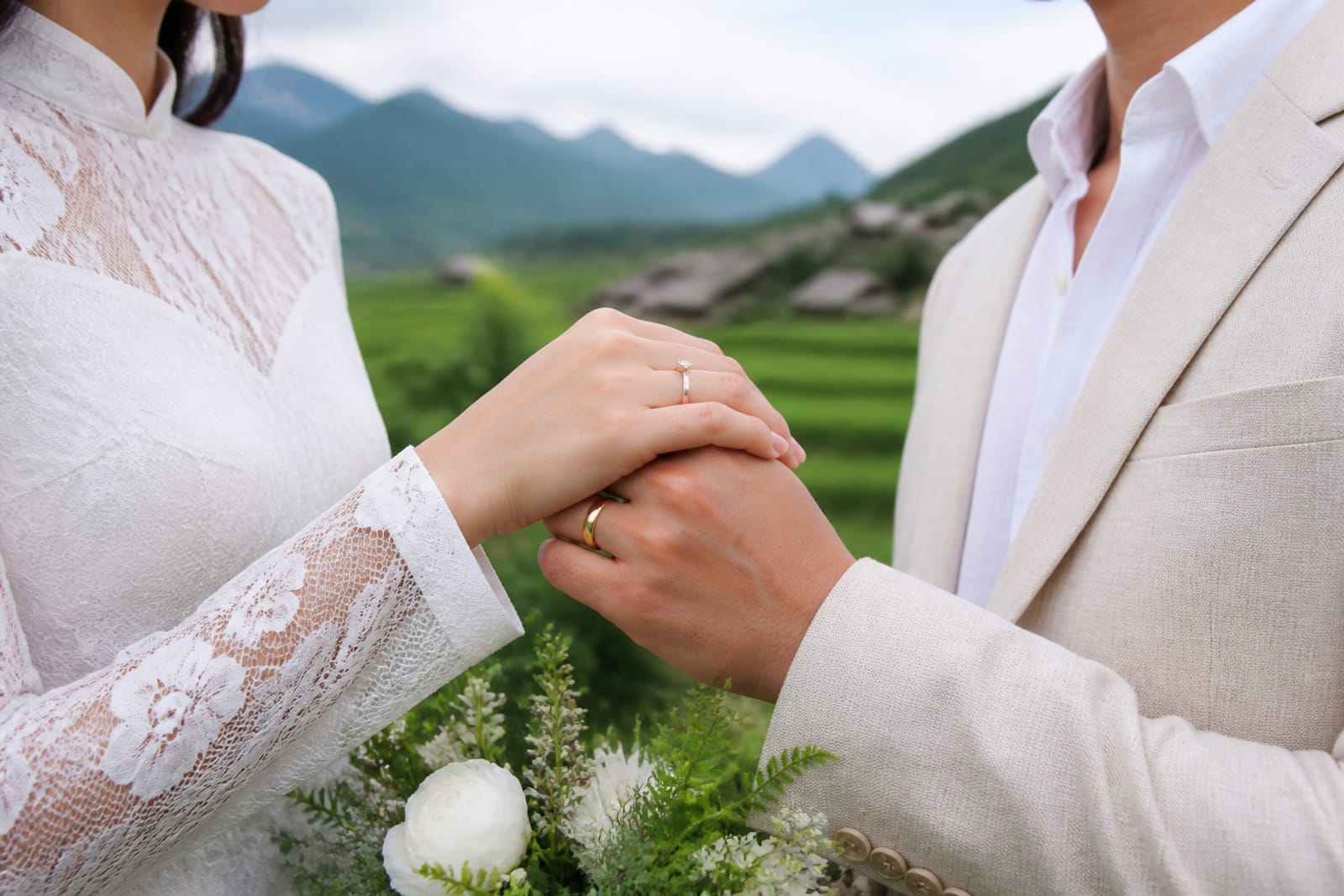
Do they know the specific valley and light path?
Ask to see 10–15 images from shoots in Mai Chau or Pu Luong in the same month you're booking. A photographer who knows Pu Luong's Ban Lac terrace knows that light reaches the village frame at 6:40 am in December and that shadows lengthen fastest around 4:45 pm, so they'll position you before light shifts. They also know permit rules: which homestays allow photo sessions, where you can and cannot walk, and whether a guide is required. Local photographers carry this knowledge; visiting photographers need to scout or risk wasting light on paperwork. Ask directly: "Where exactly will we shoot, and what's the light direction at each location?" If they hedge, they haven't scouted.
Should you hire a local team or bring a Hanoi-based photographer?
| Option | Best for | Why ask about it | Key question |
|---|---|---|---|
| Local valley photographer | Authenticity, permit knowledge, cultural access | They know homestays, village customs, and exact light angles; they're embedded. | "Have you shot this valley in [your month]? Show me three shoots from that season." |
| Hanoi-based photographer (e.g., Cáo Studio) | Coordination, makeup, styling, post-production | They bring a full team (hair, makeup, photography, editing) and one message across your shoot. | "How do you handle the two-hour logistics? Do you coordinate a local guide, or is that on us?" |
| Hybrid (local guide + Hanoi team) | Best of both | Local guides navigate permits and light; Hanoi photographers deliver consistent, edited work. | "Who handles the guide? Do you split the cost, and how many days of notice does the guide need?" |
Local photographers excel at access and light knowledge; Hanoi teams excel at post-production, styling and narrative consistency. Ask which model your photographer uses and what it costs to add (petrol, guide fees, permits) — these are cost factors, not the quoted fee itself.
What happens if weather turns bad or mist doesn't lift?
A strong photographer has shot the same location in rain and cloud and can show you how they frame around it. Weak photographers list weather as an excuse. Ask: "If the morning is fogged in, what's your backup plan?" Listen for specificity. A good answer might be: "We'll shoot the mist as silhouettes and backlighting until 7:30, then move to the lower terrace where light breaks through sooner, or we'll delay by 45 minutes and reshoot at the next golden window." A vague answer ("We'll reschedule" or "We'll work with what we have") means they don't know the valley well enough to adapt. Also ask whether they offer a reshoot date if light was genuinely unusable — not to be promised perfect weather, but to know they stand behind their work.
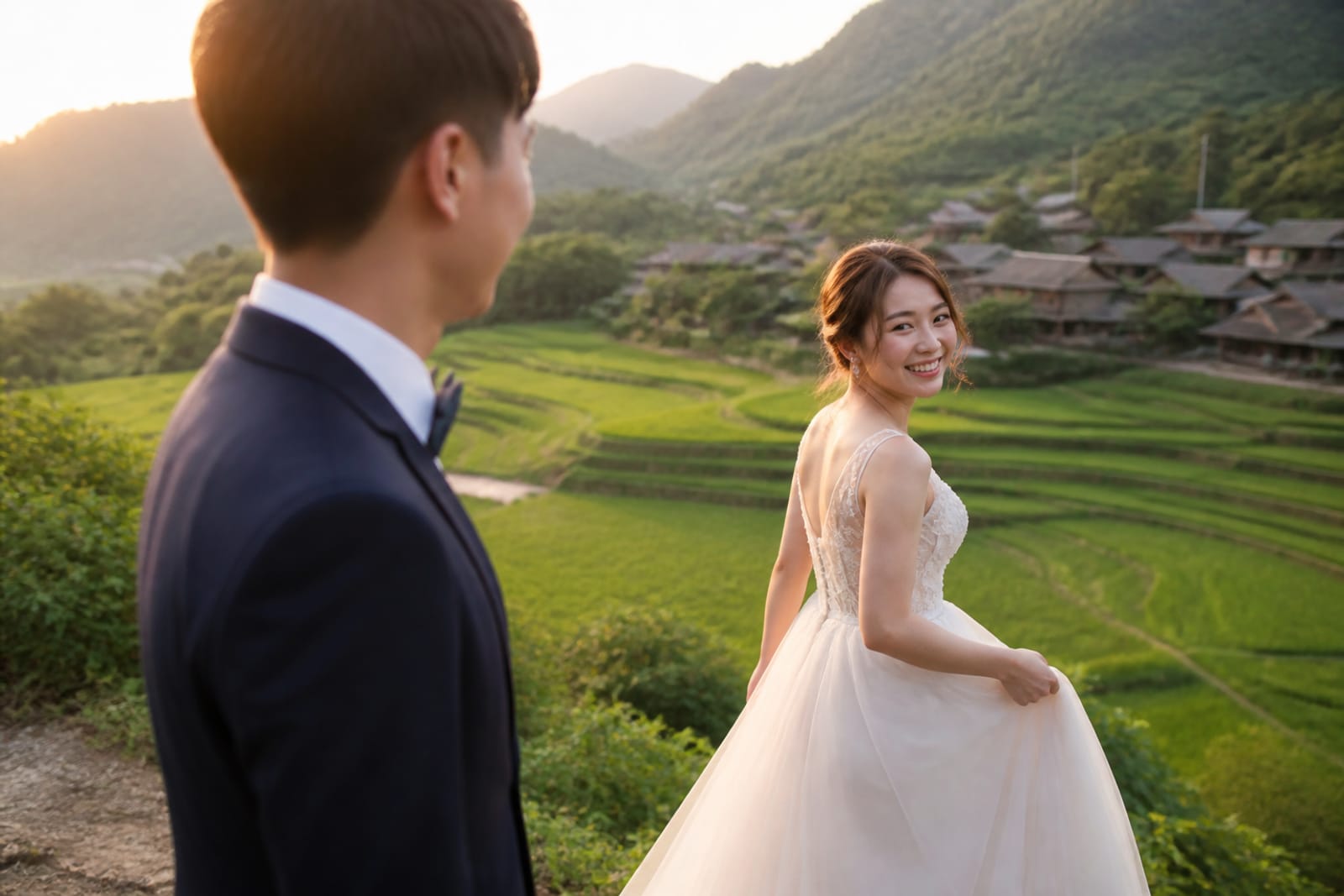
What's included, when do you get files, and how do you judge turnaround time?
Before booking, confirm exactly what's included in the package: number of outfit changes, whether hair and makeup are booked separately or bundled, how many final edited images you receive, and how long editing takes. Ask whether they deliver a short film alongside stills — some photographers include a 60-second edit, others charge extra. Turnaround time matters in remote shoots because editing workflows differ: a Hanoi studio may deliver in 48 hours, while a local freelancer might take two to three weeks. Neither is wrong; it depends on whether you need images for an invitation or a memory. Ask for a timeline in writing before you book, and ask whether that's business days or calendar days (weather delays, internet outages, and travel back to the city are common).
📸 Book a pre-wedding shoot with Cáo Studio | 💄 Hair & makeup for your valley session | 🌸 See pre-wedding frames in the lookbook
How to vet a photographer before committing
Before you hand over a deposit, build a checklist:
- Shoot portfolio in that specific valley + month. Ask for links or a PDF of 15 images from Mai Chau or Pu Luong taken in the same season you're booking. If they don't have this, they're learning on your dime.
- Ask who handles logistics. Do they arrange transport from Hanoi, book the guide, sort permits? Or is that your job? Confirm in writing.
- Confirm editing timeline. Get the promised delivery date and format (JPEG, RAW, cloud link, USB).
- Check cancellation and reshoot policy. What if weather is genuinely bad? Can you reschedule, and what does that cost?
- Ask about outfit and styling. Will they suggest locations and poses, or do you show up with a plan? Good photographers direct; they don't just document.
- Request a contract or booking agreement. It should list the shoot date, location, shoot duration, what's included, payment terms, and cancellation policy. A photographer who won't send a contract is a risk.
- Talk to a couple they've shot recently. Ask the photographer for a reference who shot in the same valley and season. A real photographer will offer names gladly.
For guidance on pre-wedding shoots elsewhere, Cáo Studio's pre-wedding photoshoot page covers how shoots are structured, directed and edited. If you're also considering Hanoi or Ho Chi Minh City for your shoot, our Hanoi base and Saigon base handle logistics and full team coordination so you don't have to.
🎬 Explore wedding videos for your ceremony | 👗 Rent an áo dài for your session
---
What to check before you book
- Portfolio depth: At least 15 images from the same valley in your target month — not just one shoot or a different season.
- Permit knowledge: Ask them to name the villages and homestays they've worked with; they should answer immediately.
- Team structure: Who's shooting, editing, styling? Are they a solo freelancer or a studio? What does that mean for turnaround?
- Backup plan: How do they handle bad weather, not as a promise but as a plan you can see in previous work.
- Written terms: Delivery date, what's included, reshoot policy, payment schedule — all in writing before you pay.
💍 See proposal & anniversary packages | 👰 Browse couples' photoshoots
---
FAQ
Can Cáo Studio shoot my Mai Chau or Pu Luong pre-wedding session?
Cáo Studio operates from Hanoi and Saigon; we don't have a permanent base in the valleys. We can coordinate a session with a vetted local photographer and ensure styling, makeup and editing align with your vision. Ask us on WhatsApp +84 338 762 340 for a referral and logistics quote.
What's the best month to shoot in Mai Chau for light?
November to February offers the clearest, most directional light. Mist is common in early mornings; ask your photographer whether they can use it creatively. Golden rice (late May–June and September–October) looks rich but brings heat and humidity that reduce light quality.
How long does a typical valley shoot take?
Most pre-wedding shoots run 4–6 hours, starting before sunrise or in late afternoon when light is directional. You'll move between 2–4 locations as the sun shifts. Ask your photographer how many outfit changes they can fit in that window.
Should I hire a guide separately, or does the photographer provide one?
Ask the photographer upfront. Local photographers often have guide connections; Hanoi-based photographers may coordinate one or expect you to arrange it. Confirm who pays the guide and what notice they need.
How long after the shoot will I get my edited photos?
Turnaround varies widely: a city studio may deliver in 48 hours, a local freelancer in 2–3 weeks. Ask for a delivery date in writing before you book. Remote locations and weather delays can affect timelines.
What happens if the day turns rainy or misty?
A strong photographer has shot rain and mist in that valley and can show you the work. Ask whether they offer a reshoot date if light was genuinely unusable, not as a promise of perfect weather but as a sign they stand behind results.
FAQ
Can Cáo Studio shoot my Mai Chau or Pu Luong pre-wedding session?
Cáo Studio operates from Hanoi and Saigon; we don't have a permanent base in the valleys. We can coordinate a session with a vetted local photographer and ensure styling, makeup and editing align with your vision. Ask us on WhatsApp +84 338 762 340 for a referral and logistics quote.
What's the best month to shoot in Mai Chau for light?
November to February offers the clearest, most directional light. Mist is common in early mornings; ask your photographer whether they can use it creatively. Golden rice (late May–June and September–October) looks rich but brings heat and humidity that reduce light quality.
How long does a typical valley shoot take?
Most pre-wedding shoots run 4–6 hours, starting before sunrise or in late afternoon when light is directional. You'll move between 2–4 locations as the sun shifts. Ask your photographer how many outfit changes they can fit in that window.
Should I hire a guide separately, or does the photographer provide one?
Ask the photographer upfront. Local photographers often have guide connections; Hanoi-based photographers may coordinate one or expect you to arrange it. Confirm who pays the guide and what notice they need.
How long after the shoot will I get my edited photos?
Turnaround varies widely: a city studio may deliver in 48 hours, a local freelancer in 2–3 weeks. Ask for a delivery date in writing before you book. Remote locations and weather delays can affect timelines.
What happens if the day turns rainy or misty?
A strong photographer has shot rain and mist in that valley and can show you the work. Ask whether they offer a reshoot date if light was genuinely unusable, not as a promise of perfect weather but as a sign they stand behind results.
Ao dai, makeup, hair and a local photographer in Hanoi or Saigon — one WhatsApp message.