/vacation-photoshoot
Solo Travel Photoshoot in Hanoi: Guide & Booking
A solo travel photoshoot in Hanoi captures you against the city's iconic temples, lakes, and streets—without needing a travel companion. Learn how to plan one, what to wear, and when light is best.
Why book a studio session instead of a freelancer for solo travel?
When you're traveling alone, hiring a photographer off a recommendation or social platform means managing communication, deposits, location scouting, and backup plans yourself—all in a city you don't know. A studio like Cáo Studio – Makeup & Photoshoot brings three logistics advantages: a fixed base (you know exactly where to meet), professional hair and makeup included in most packages (no need to book a separate artist), and backup locations scouted by the team so if weather or crowds hit one spot, you move to another without wasting time. Freelancers are cheaper as a single line item, but you'll often pay separately for makeup, hair, and wardrobe rental, and juggle their schedule against yours. Studios also carry liability insurance and have shot hundreds of solo travelers—they know exactly how to pose you and which light-times work best at each landmark. If something goes wrong (flight delay, outfit mishap, bad light), you have a team to solve it, not a single person who may go silent.
📸 Book on WhatsApp — ao dai photoshoot
What's the best season for solo photos in Hanoi?
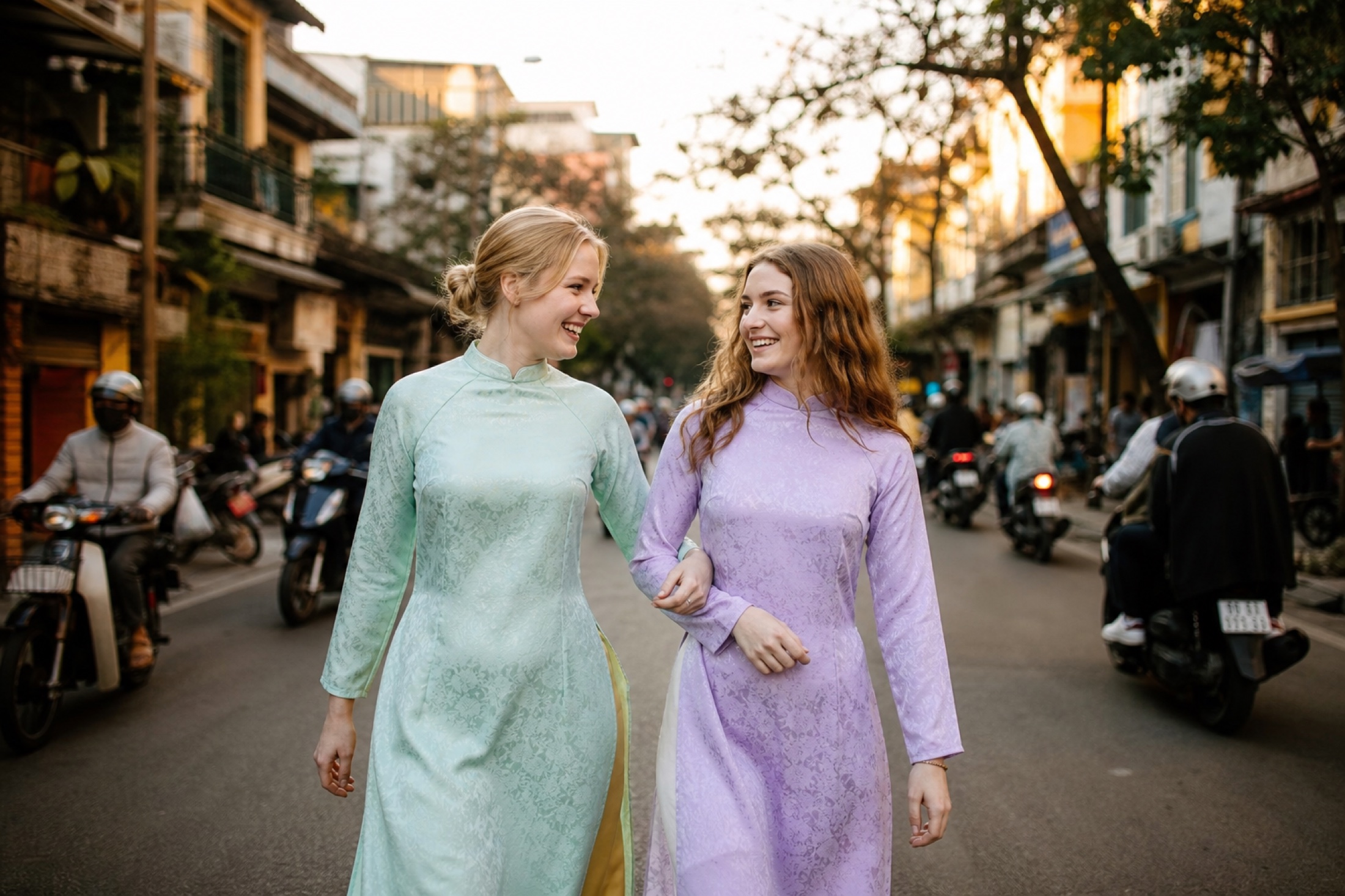
Autumn (October–November) is the peak season for a reason: daytime temperatures sit around 20–25°C, the sky is mostly clear, and the light is soft and golden in early morning and late afternoon—ideal for any outfit or skin tone. The trees along Phan Dinh Phung street glow amber, and Hoan Kiem Lake reflects a bright, shadowless sky. Winter (December–February) offers cool, crisp air perfect for layered ao dai and warm jackets, but expect frequent drizzle and heavy overcast that dulls color and flattens contrast; midday becomes your only usable window. Spring (March–April) is mild but humid with persistent haze and drizzle—faces sweat, makeup needs touch-ups every few minutes, and distant landmarks disappear into grey. Summer (May–September) is a hard no: temperatures exceed 35°C with humidity above 80%, afternoon downpours are daily, and the team's editing workload triples to fix heat-gloss and sweat. Typhoon remnants (late September–October) bring flash floods; Tet crowds (late January–mid February) clog temples and close many services for several days. Book October–November if your travel dates allow; December–February works if you love cool-toned images and don't mind overcast skies; avoid May–September entirely.
Should you rent an ao dai or bring your own clothes?
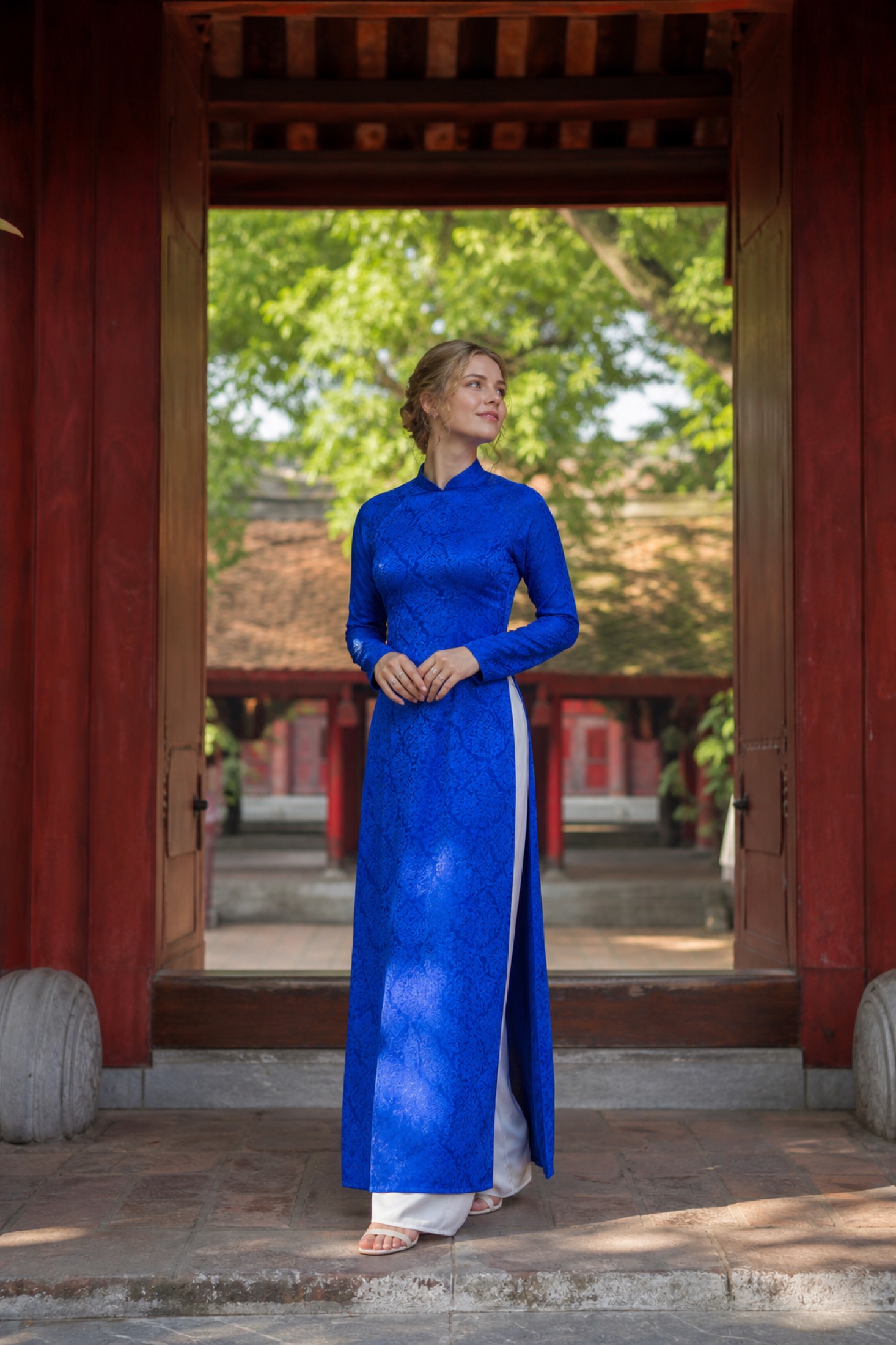
This choice depends on what story you want to tell and how much weight you want to carry. Renting an ao dai from Cáo Studio's ao dai rental or a local shop means you get 10–15 pristine options in your size and coloring, professional tailoring if needed, and no packing burden—the studio's team knows exactly how to fit and pose you in each one. You'll shoot 3–5 outfits in a session, so rental removes the logistics of matching shoes, scarves, and jewelry yourself. If you bring your own clothes, pack versatile pieces: solid jewel tones (emerald, sapphire, burgundy) photograph cleaner than pastels or busy prints; loose layers work across seasons; bring a scarf or shawl for temple visits (required for respectful coverage). Avoid white or very pale colors in bright sun (they blow out in photos) and anything with text or logos. Most solo travelers rent the ao dai—it's the iconic Hanoi shot, and you don't have to worry about wrinkles or fit after 12 hours in a carry-on.
How do light and timing affect your photos at key Hanoi spots?
Light quality changes every 30 minutes, and knowing where to be when separates flat, shadowy photos from glowing, dimensional ones. Hoan Kiem Lake (pedestrian-only on weekend evenings, busy with walkers dawn–dusk on weekdays) works best 6–7 a.m. (soft gold, few tourists) or 5–6 p.m. (golden hour, longer shadows that add depth to ao dai folds). The Old Quarter's narrow streets trap harsh midday light and heat; shoot there 7–8 a.m. or 4–5 p.m. when side-angles catch warm cross-light. Tran Quoc Pagoda (lakeside, north bank) has the best morning light 6–7:30 a.m.—the sun skims the water, backlighting trees and your face softly. Train Street (access varies; check with the studio before planning) works only on weekday mornings before 10 a.m., when light is level and foot traffic is minimal. Temple interiors are dim; bring a reflector or position near open doorways. The studio's team knows these timings by heart and will schedule your session around light, not convenience—if it means starting at 5:45 a.m., they'll do it. Avoid noon–3 p.m. everywhere; overhead sun creates harsh shadows across faces and flattens depth.
| Location | Best light window | Crowd level | Outfit fit | Why it works |
|---|---|---|---|---|
| Hoan Kiem Lake shoreline | 6–7 a.m. or 5–6 p.m. | Low at dawn; medium at dusk | Ao dai (light layers for wind) | Reflected water diffuses light; gold tones flatter skin |
| Old Quarter streets | 7–8 a.m. or 4–5 p.m. | Moderate (locals commute) | Casual or ao dai | Side-light catches texture; narrow alleys frame shots |
| Tran Quoc Pagoda grounds | 6–7:30 a.m. | Very low | Ao dai (flowing fabric catches breeze) | Backlighting from water; temple architecture anchors depth |
| Train Street | Weekday 6–9 a.m. | Very low | Casual chic (street-style) | Soft directional light; trains add visual interest |
| Temple interiors | Near open doors, early morning | Variable | Respectful layers | Natural window light avoids flash glare on gold altar |
What's the real timeline and what should you prepare?
Plan to arrive 15 minutes early at the studio's address (you'll get it on WhatsApp after booking). You'll start with a brief consultation: the photographer asks which locations feel most "you," checks weather and light forecasts, and confirms outfit order. Makeup and hair typically takes 45 minutes if booked; this is not rushed—the artist reads your face, skin tone, and the day's light to choose colors that won't look muddy or washed out in photos. Then the team drives or walks to the first location (typically 10–20 minutes depending on traffic), shoots for 20–30 minutes per outfit, and moves to the next spot. A three-hour session covers 3–4 locations and 2–3 outfit changes; a 90-minute session does 2 locations and 1–2 changes. Bring water, sunscreen (apply before makeup), phone charger, and the outfit pieces you're wearing that the studio didn't rent (shoes, jewelry, bags). Eat a light breakfast beforehand; empty stomachs look drawn in photos. Avoid alcohol the night before (dehydration shows as puffiness). Check the weather forecast the night before and the morning of—if rain is forecast, the studio will call and offer a reschedule or indoor/covered locations. Edited photos are delivered according to the package confirmed on WhatsApp; typically 2–4 weeks for a standard session. Original files and timelines vary—confirm specifics on WhatsApp.
Solo photoshoots vs. couple/family sessions: what works best for your trip?
If you're traveling alone but have a partner, friend, or family meeting you, consider whether a solo session or couple and family photoshoot fits better. A solo session is all about you—your confidence, your poses, your energy—and works best if you enjoy being the focus and want intimate, reflective images. It's also cheaper as a standalone booking. A couple or family photoshoot splits the time and cost across people, but you get fewer individual shots and the dynamic changes (you're interacting, not just posing). Many solo travelers book a solo session first, then add a couple or group session later in the trip if someone joins them—ask the studio about rolling bookings. If you're documenting a milestone (a post-breakup trip, a solo achievement, a birthday), a solo session is the right call. If you're on a tight budget and traveling with others, a family session gets everyone photos at once.
What to check before you book a solo photoshoot
- Confirm the exact package inclusions on WhatsApp. Know how many locations, outfit changes, hair/makeup hours, and edited file turnaround are covered. Cost factors (season, travel distance, number of outfits, makeup artist inclusion) shape the quote, but the studio will outline everything before you commit.
- Check the studio's exact address. You'll get it after booking; confirm it's in a neighborhood and time zone that works with your hotel and flight.
- Ask about rain and rescheduling policy. Hanoi monsoons (May–September) bring afternoon downpours; know what happens if weather closes a location or floods access.
- Review the lookbook to see real solo shoots in Hanoi. This isn't stock imagery—it's actual sessions the team has shot, so you see real poses, lighting, and how ao dai drapes on different body types.
- Discuss outfit fit and sizing. If renting an ao dai or dress, send measurements or try on at the studio before the shoot day. Rushed fittings create wrinkles and unflattering creases.
- Confirm what time sunrise/sunset is during your dates. October–March sees sunrise at 6:30–7 a.m. and sunset at 5–5:30 p.m.; May–August sunrise is 5:30 a.m. and sunset 6:30+ p.m. The studio will schedule around peak light.
- Ask about payment and deposit terms on WhatsApp. Cancellation and rescheduling policies vary; confirm what's refundable if your travel plans change.
---
FAQ
Can I do a solo photoshoot if I'm shy or have never modeled?
Yes. The photographer's job is to guide pose, angle, and energy—most solo travelers feel stiff at first, then relax into it by the second location. The studio has shot hundreds of non-models; they know how to pose you so you look natural, not rigid. Makeup and hair boosts confidence, and being alone (no strangers watching) helps.
What's the difference between booking with Cáo Studio in Hanoi vs. hiring a freelancer I find on Instagram?
The studio has three fixed locations, professional liability, a team for backup, and makeup/hair included or easily added. Freelancers are often cheaper upfront but charge separately for those services, and you manage communication and logistics alone. Studios scale faster if plans change.
Is October or November better for a solo photoshoot—which is less crowded?
Both are peak season, so tourist crowds are similar. October tends to have slightly clearer skies and less drizzle; November is marginally warmer. Pick based on your travel dates, not crowd avoidance. Early morning shoots (6–7 a.m.) dodge crowds regardless of month.
Do I need to book makeup and hair, or can I do my own?
Both work. Professional makeup is designed for camera light and editing, so it's sharper and longer-lasting through a 3-hour shoot in heat and movement. Self-done makeup often looks flat or patchy in photos. The studio's pricing varies by whether you add it; ask on WhatsApp if you're unsure.
How long until I get my edited photos after the shoot?
Delivery timelines are confirmed on WhatsApp as part of the package. Standard turnaround is 2–4 weeks; rush options may be available. Ask if you're flying home soon and need images before you leave.
Can I shoot in Hoi An instead of Hanoi?
Yes. Cáo Studio shoots in Hoi An by appointment—the team travels. Ask on WhatsApp for available dates. Ancient Town sunrise (5:30–6:30 a.m.) is stunning, and ao dai fits the lantern-lit aesthetic perfectly. Booking lead time is typically longer because the team coordinates travel.
FAQ
Can I do a solo photoshoot if I'm shy or have never modeled?
Yes. The photographer's job is to guide pose, angle, and energy—most solo travelers feel stiff at first, then relax into it by the second location. The studio has shot hundreds of non-models; they know how to pose you so you look natural, not rigid. Makeup and hair boosts confidence, and being alone (no strangers watching) helps.
What's the difference between booking with Cáo Studio in [Hanoi](/hanoi) vs. hiring a freelancer I find on Instagram?
The studio has three fixed locations, professional liability, a team for backup, and makeup/hair included or easily added. Freelancers are often cheaper upfront but charge separately for those services, and you manage communication and logistics alone. Studios scale faster if plans change.
Is October or November better for a solo photoshoot—which is less crowded?
Both are peak season, so tourist crowds are similar. October tends to have slightly clearer skies and less drizzle; November is marginally warmer. Pick based on your travel dates, not crowd avoidance. Early morning shoots (6–7 a.m.) dodge crowds regardless of month.
Do I need to book makeup and hair, or can I do my own?
Both work. Professional makeup is designed for camera light and editing, so it's sharper and longer-lasting through a 3-hour shoot in heat and movement. Self-done makeup often looks flat or patchy in photos. The studio's pricing varies by whether you add it; ask on WhatsApp if you're unsure.
How long until I get my edited photos after the shoot?
Delivery timelines are confirmed on WhatsApp as part of the package. Standard turnaround is 2–4 weeks; rush options may be available. Ask if you're flying home soon and need images before you leave.
Can I shoot in Hoi An instead of Hanoi?
Yes. Cáo Studio shoots in Hoi An by appointment—[the team travels](/hoi-an). Ask on WhatsApp for available dates. Ancient Town sunrise (5:30–6:30 a.m.) is stunning, and ao dai fits the lantern-lit aesthetic perfectly. Booking lead time is typically longer because the team coordinates travel.
Ao dai, makeup, hair and a local photographer in Hanoi or Saigon — one WhatsApp message.