/pre-wedding-photoshoot
Temple Etiquette for Wedding Photos in Vietnam
Temple etiquette for wedding photos in Vietnam rests on three pillars: permission, dress, and timing. You must obtain written consent from temple authorities (often weeks ahead); formal dress—áo dài, suits, or modest Western wear—is non-negotiable, as are covered shoulders, knees, and removal of shoes indoors. Avoid shooting during active worship (early morning, festivals, Tet); position yourself away from altars and never photograph monks without consent. At Cáo Studio – Makeup & Photoshoot, we guide couples through local protocols at each Hanoi and Ho Chi Minh City location, securing permits and timing sessions to respect both sacred space and your vision. Violations can result in session cancellation, fines, or loss of access for future couples. 📸 Book on WhatsApp — pre-wedding photoshoot ---
Do I need written permission to shoot pre-wedding photos in a temple?
Yes, always. Vietnam's temples are active religious sites governed by temple committees and, in some cases, local heritage authorities. Verbal approval from a guard or volunteer is insufficient. You need a formal letter or permit signed by the temple abbot or committee head, typically requested 2–4 weeks before your shoot date. Many popular temples (Thay Pagoda in Hanoi, An Phu Pagoda in Ho Chi Minh City) receive dozens of photo requests monthly and turn down those without advance permission. If you book with Cáo Studio – Makeup & Photoshoot, we handle permit applications for our Hanoi and Ho Chi Minh City shoots; if you're working independently, contact the temple directly (phone, in-person visit, or through local tourism boards) and bring a written request in Vietnamese or with translation. Temple closures for private ceremonies, Tet celebrations, or renovations happen without public notice—confirm dates and hours before traveling.
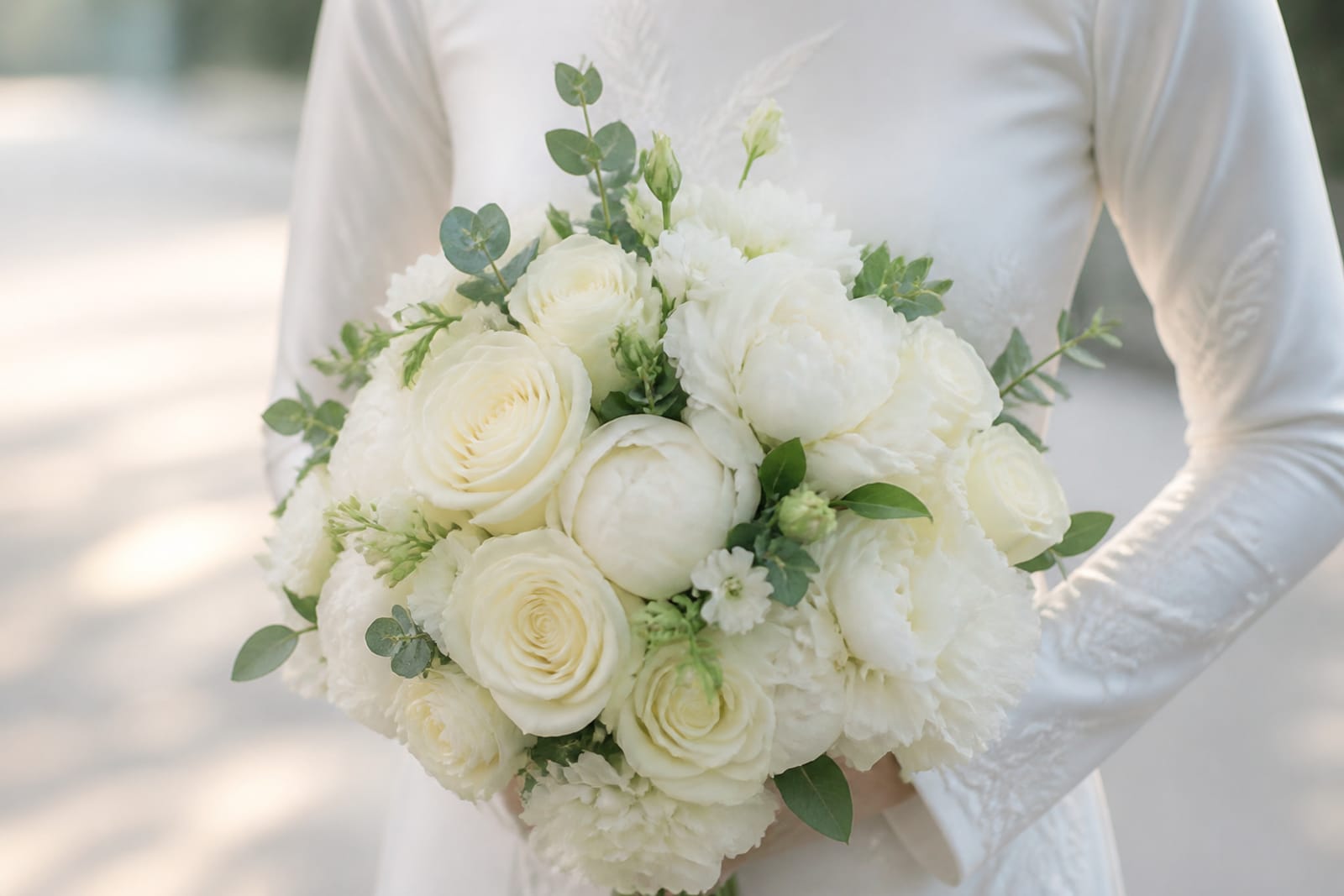
What should I wear to show respect while looking bridal?
Áo dài (traditional Vietnamese tunic) is the safest and most stunning choice—it's formal, culturally appropriate, and aesthetically perfect for temples. If you prefer Western dress, wear a modest full-length gown with covered shoulders (no low necklines or sleeveless cuts), or pair a dress with a shawl. Grooms can wear suits, traditional silk áo groom tunics, or formal Vietnamese attire. Avoid:
- Sleeveless tops or dresses
- Shorts, cropped trousers, or slit skirts above the knee
- Transparent fabrics without layering
- Athletic wear or casual beachwear
- Heavy makeup that reads as theatrical (temple interiors are intimate; soft, natural makeup photographs better)
Inside temple halls, you'll remove your shoes—wear slip-ons or easily removable footwear, and ensure your socks or bare feet are clean. If shooting outdoors in temple courtyards, keep footwear on but avoid stamping or loud stepping near prayer areas. Our Hanoi and Ho Chi Minh City makeup artists work with you beforehand to finalize a look that honors the space while celebrating your style.
When is the best time to shoot—morning, afternoon, or a specific season?
Timing has two dimensions: time of day and season. Golden hour (sunrise to 9 a.m., or 4 p.m. to sunset) delivers the soft, directional light that temples thrive on—stone carvings and gilded altars catch warm tones without harsh shadows. Midday (10 a.m.–3 p.m.) is too bright; temple interiors become dim, forcing flash, which offends many communities. Schedule shoots on weekdays outside peak pilgrimage times (early mornings before 7 a.m., or late afternoons after 4 p.m.). Avoid:
- Tet holidays (late Jan–mid Feb): temples close for private rites; crowds surge
- Festival dates tied to the temple's patron saint
- Public holidays when temple grounds flood with worshippers
Seasonally, northern temples (Hanoi, Ninh Binh) are driest and clearest Feb–Apr and Sep–Nov; central temples (Hue, Hoi An) shine Feb–Aug; southern temples (Ho Chi Minh City, Phu Quoc) suit Dec–Apr. Rainy season (May–Nov in the north, Sep–Dec on the central coast) creates dramatic moody light indoors but risks puddles and slick stone. At Cáo Studio – Makeup & Photoshoot, we coordinate with temple schedules and weather forecasts to maximize your day.
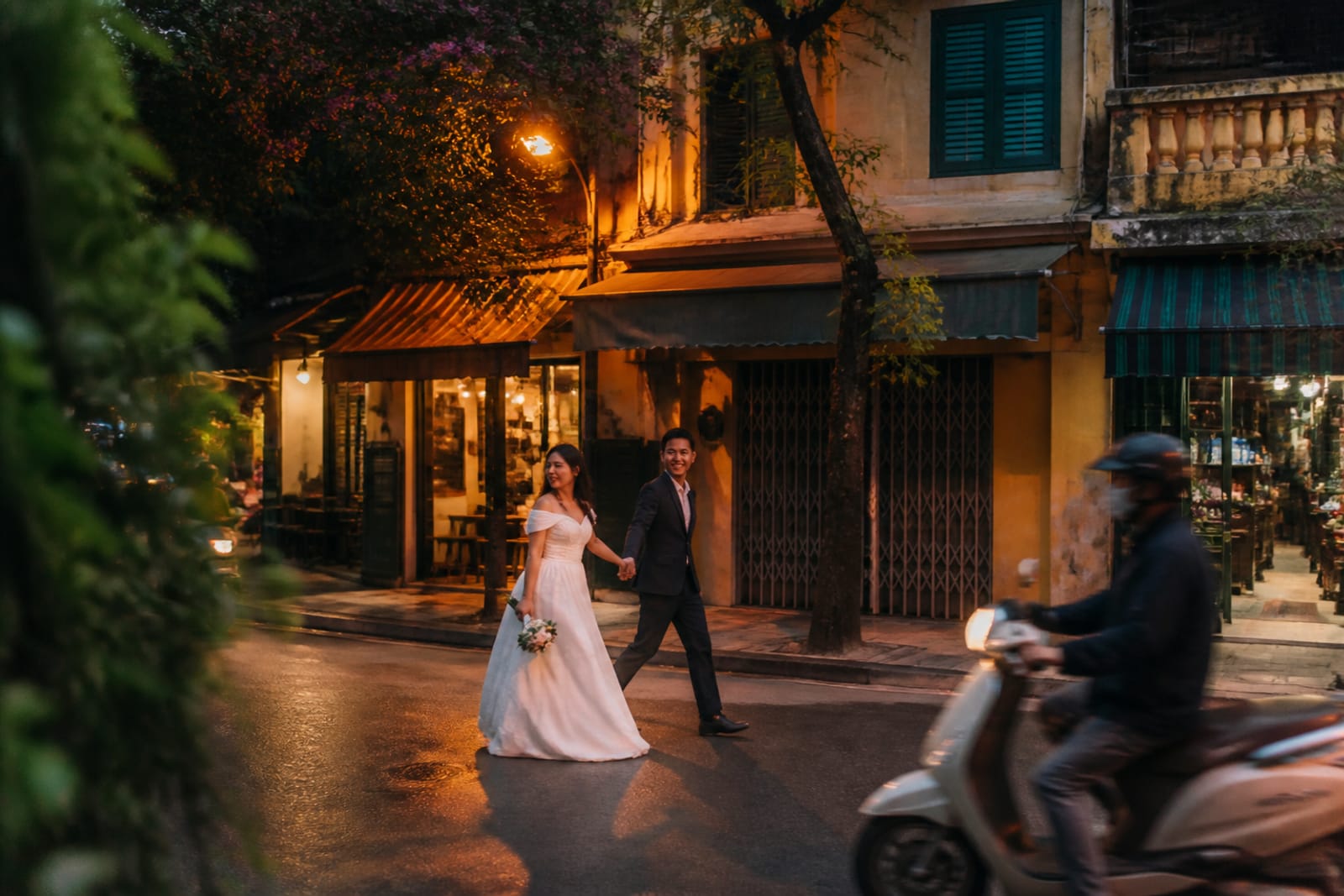
How do I position myself and the camera respectfully inside a temple?
Spatial respect protects both the sacred space and your images. Never shoot directly facing or framing the main altar as your sole backdrop (this mimics the priest's sightline and feels invasive to worshippers). Instead, photograph your couple with the altar in soft focus behind them, or position them to the side of the ritual space. Keep at least 2–3 meters between yourselves and any active shrine or prayer area. If monks are present, do not photograph them without bowing slightly and asking permission; many will politely decline or accept. Move slowly and quietly—no running, sudden hand gestures, or loud direction-giving. Avoid touching statues, offerings, or ritual objects, even for "aesthetic framing." Use natural light and available ambient illumination rather than flash whenever possible; if flash is necessary, use it sparingly and with temple approval. Sitting or kneeling to shoot is often more reverent than standing tall with a camera; it lowers your profile in the space.
| Positioning mistake | Why it fails | How to fix it |
|---|---|---|
| Camera trained at main altar | Disrespectful; worshippers feel watched | Shoot couple in front of altar, not framed by it |
| Photographer standing during active prayers | Blocks sightlines; signals irreverence | Crouch or sit; wait for quiet moments |
| Flash used on shrine interiors | Startles worshippers; damages pigments over time | Ask permission; use available light, increase ISO |
| Couple posing with hands touching sacred objects | Risk of fines or expulsion | Keep 30cm minimum distance; use mirrors or foreground blur instead |
| Shooting during morning chanting or ritual | Interrupts worship; permits revoked | Schedule 30+ minutes before or 1+ hour after ceremonies |
What permits, fees, or local laws apply?
Permit requirements vary by temple and province. Some temples charge a modest fee (check with them directly). Others request a donation to temple upkeep, or ask that you purchase a guide or pay a caretaker. A few require a formal photo-shoot license from the Department of Culture and Information if your images will be published commercially; this is rare but mandatory in some Hanoi heritage zones. Always:
- Ask the temple abbot or committee chair directly about photo permits
- Confirm whether commercial use requires separate licensing
- Request written confirmation (in Vietnamese or translated) to show your photographer
- Check local government websites for any heritage-site photography restrictions
- Verify that wedding photos don't require a media permit (usually not for personal use, but ask)
Never assume "no one stopped me before" means it's allowed. Tourism rules tighten annually, and new couples booking temple shoots risk facing stricter enforcement. When you book a pre-wedding photoshoot with Cáo Studio – Makeup & Photoshoot at our Hanoi or Ho Chi Minh City studios, we research local temple policies and secure permits on your behalf. For shoots in Hoi An—where ancient-town regulations are stricter—we advise couples in advance and ask on WhatsApp for current permit timelines.
---
Checking local permissions before your session
Before committing to a temple shoot, take these steps:
- Contact the temple 2–4 weeks ahead (by phone, in-person, or through local tourism).
- Ask for written approval in a language you can keep (Vietnamese original + English translation if available).
- Confirm the abbot's or committee head's contact information in case your photographer needs to show credentials on the day.
- Reconfirm 1 week before — ceremonies, closures, or staffing changes can invalidate earlier approvals.
- Bring printed permits and ID to your session (photographer, couple, makeup artist).
If you're arranging a shoot independently, our FAQ covers common temple questions, and our Hanoi and Saigon teams can recommend specific temples with established photography protocols. For Hoi An shoots, ask us on WhatsApp—we know which ancient-town temples welcome pre-wedding couples and which restrict photos entirely.
---
Final thoughts
Temple etiquette isn't bureaucratic hurdle—it's the foundation of a beautiful, guilt-free shoot. Couples who respect sacred spaces not only avoid legal and social friction; they often produce the most evocative images, because reverence translates into authenticity. Your pre-wedding photos should celebrate both your love and Vietnamese cultural heritage.
📸 Book on WhatsApp — pre-wedding photoshoot or explore our couple photoshoot and wedding photographer services to plan your temple session with guidance from our Hanoi and Ho Chi Minh City teams.
FAQ
Can I shoot a pre-wedding session in a temple without asking permission first?
No. Temples are active religious sites. Shooting without permission risks expulsion, fines, or a permanent ban from the temple for future couples. Always secure written approval from the temple committee 2–4 weeks ahead.
Do I have to wear an áo dài to shoot in a temple?
No, but it's the most respectful and visually stunning option. Western formal wear (full-length modest dress, suit, or jacket) works if it covers shoulders, knees, and décolletage. Avoid sleeveless, cropped, or transparent clothing.
What if it rains on my temple shoot day?
Rainy light inside temples becomes moody and intimate—many couples love it. Outdoor temple courtyards risk puddles; bring slip-on shoes for easy removal. Check weather forecasts weekly and coordinate with your temple about rescheduling if a typhoon or flood warning is issued. Our Hanoi and Ho Chi Minh City teams monitor forecasts and advise you in advance.
Can I use flash or a drone inside a temple?
Flash is often prohibited—it disturbs worshippers and can damage painted or gilded surfaces. Drones are almost universally banned in temples and heritage zones without special government permits. Ask temple staff before your shoot; plan to use natural light and high-ISO settings instead.
What happens if the temple cancels my permit at the last minute?
It's rare but possible if a private ceremony, renovation, or major festival is scheduled. Confirm your permit 1 week before your shoot date. If cancellation occurs, your photographer should have a backup outdoor temple courtyard location or a secular heritage site ready. Cáo Studio – Makeup & Photoshoot teams in Hanoi and Ho Chi Minh City maintain alternative location lists and liaise with temple staff to prevent last-minute surprises.
FAQ
Can I shoot a pre-wedding session in a temple without asking permission first?
No. Temples are active religious sites. Shooting without permission risks expulsion, fines, or a permanent ban from the temple for future couples. Always secure written approval from the temple committee 2–4 weeks ahead.
Do I have to wear an áo dài to shoot in a temple?
No, but it's the most respectful and visually stunning option. Western formal wear (full-length modest dress, suit, or jacket) works if it covers shoulders, knees, and décolletage. Avoid sleeveless, cropped, or transparent clothing.
What if it rains on my temple shoot day?
Rainy light inside temples becomes moody and intimate—many couples love it. Outdoor temple courtyards risk puddles; bring slip-on shoes for easy removal. Check weather forecasts weekly and coordinate with your temple about rescheduling if a typhoon or flood warning is issued. Our Hanoi and Ho Chi Minh City teams monitor forecasts and advise you in advance.
Can I use flash or a drone inside a temple?
Flash is often prohibited—it disturbs worshippers and can damage painted or gilded surfaces. Drones are almost universally banned in temples and heritage zones without special government permits. Ask temple staff before your shoot; plan to use natural light and high-ISO settings instead.
What happens if the temple cancels my permit at the last minute?
It's rare but possible if a private ceremony, renovation, or major festival is scheduled. Confirm your permit 1 week before your shoot date. If cancellation occurs, your photographer should have a backup outdoor temple courtyard location or a secular heritage site ready. Cáo Studio – Makeup & Photoshoot teams in Hanoi and Ho Chi Minh City maintain alternative location lists and liaise with temple staff to prevent last-minute surprises.
Ao dai, makeup, hair and a local photographer in Hanoi or Saigon — one WhatsApp message.