/pre-wedding-photoshoot
Timeline of a pre-wedding photoshoot day in Mu Cang Chai
A pre-wedding shoot in Mu Cang Chai typically runs 4–6 hours, starting before dawn or mid-afternoon to catch soft light across the terraces. The day follows a walk-and-shoot rhythm: wide establishing shots of landscape and couple, then tighter frames as you move through fields, villages and water. Weather and terrain (muddy paths, steep slopes, distance between spots) mean logistics matter more than in city photoshoots—permits are not required for couples, but a local fixer or guide helps. Cáo Studio does not operate in Mu Cang Chai; the town sits 3+ hours from Hanoi by road, making it ideal for booking a Hanoi-based photographer who travels, or hiring a local Mu Cang Chai team familiar with safe routes and seasonal water levels. Terraces water-filled May–June; golden light mid-September to early October. Plan 4 weeks ahead; confirm your photographer's experience with the terrain before committing.
Why does Mu Cang Chai attract pre-wedding couples despite being remote?
The rice terraces are visually unlike anywhere else in Vietnam—layered, symmetrical, and moody in grey or golden light. Couples choose Mu Cang Chai for frames that feel cinematic and timeless, not tied to any one city landmark. The trade-off is simple: you sacrifice convenience for scale and authentic landscape. A day there is also quieter than Old Quarter streets or Hoan Kiem Lake—fewer tourists mean you own the frame. If your priority is a dramatic, one-of-a-kind backdrop rather than quick turnaround or close proximity to Hanoi, the drive and early start are worth it.
📸 Book on WhatsApp — couple photoshoot
What does a realistic morning start look like on the ground?
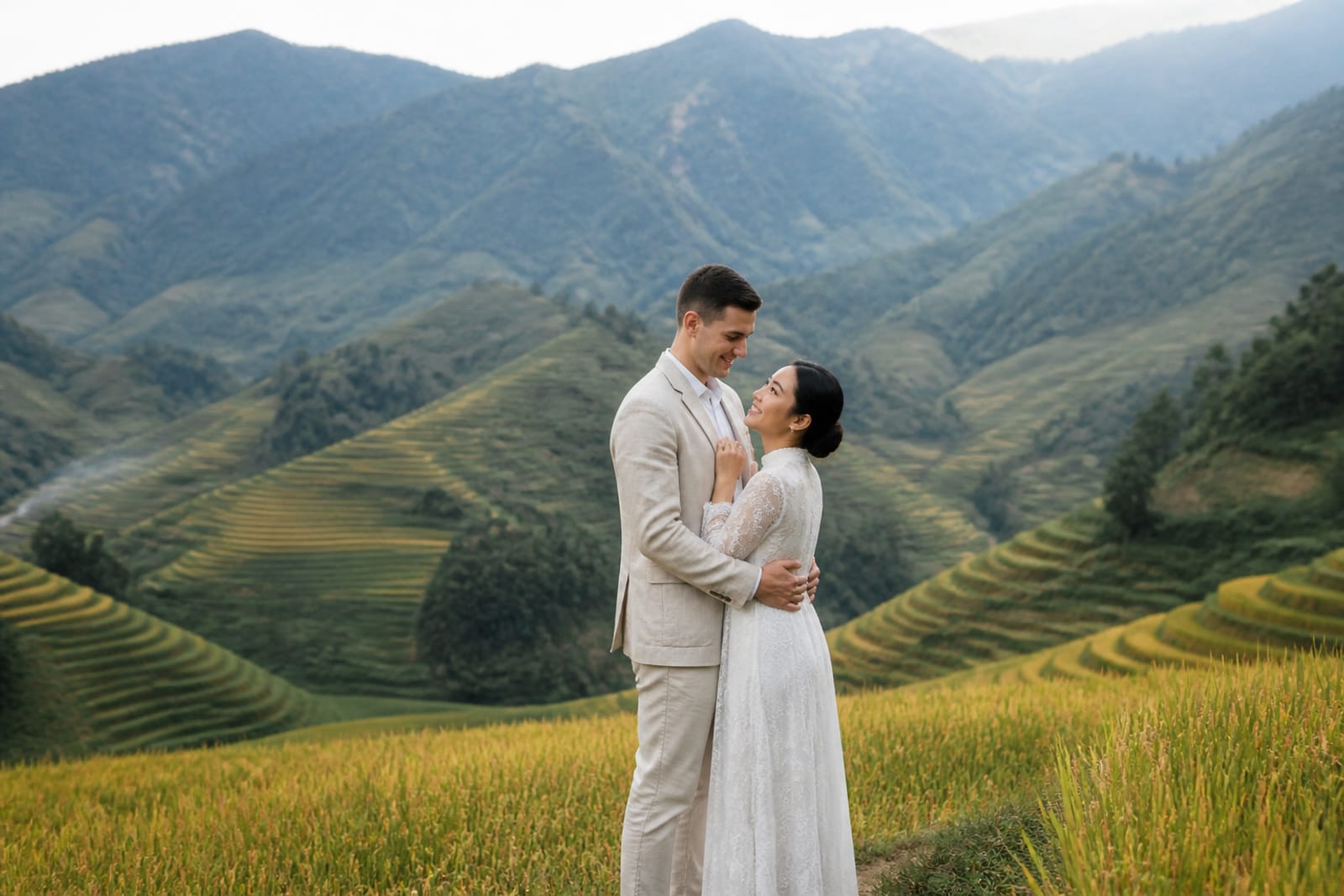
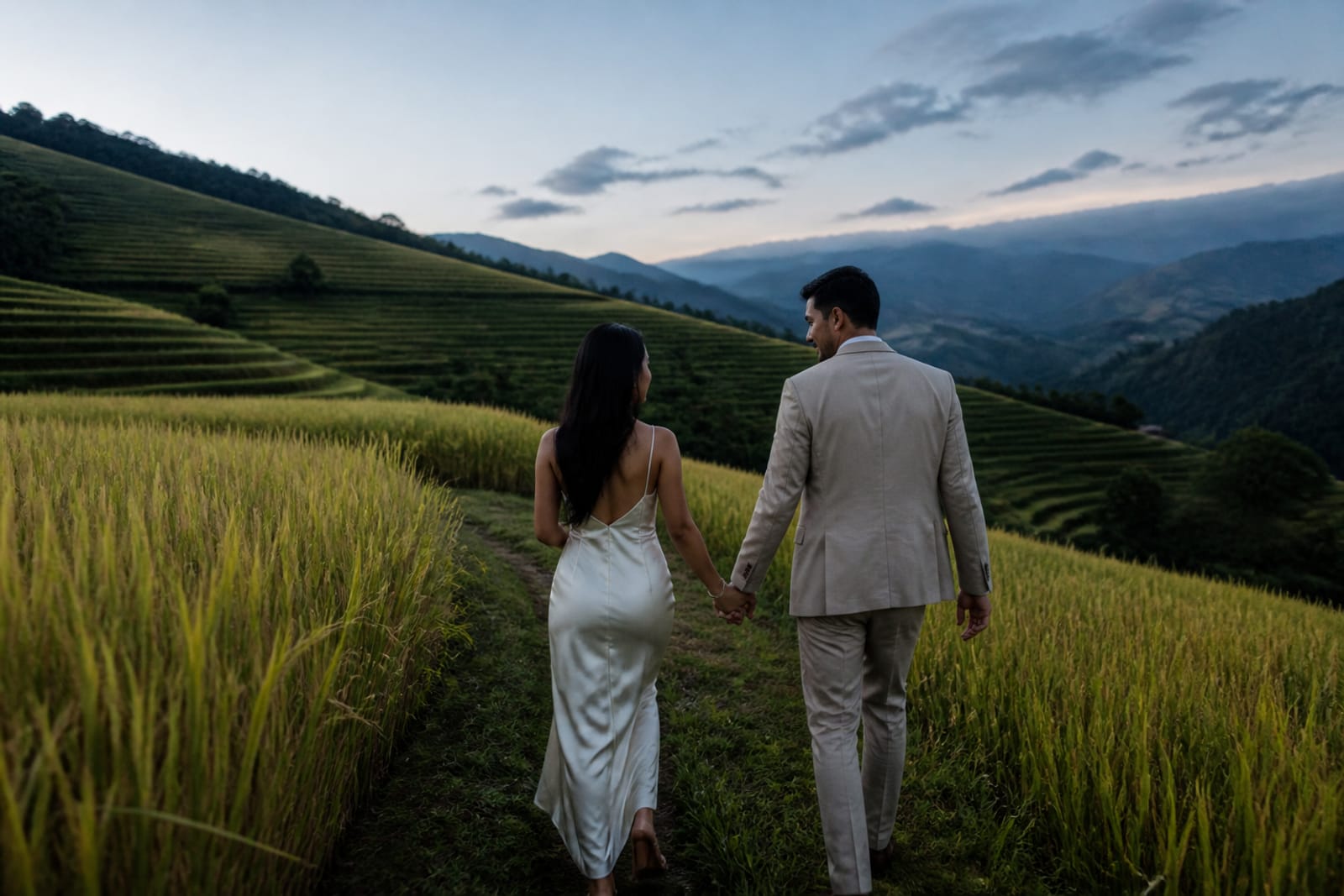
Crews meet couples at a central location (often a hotel or guesthouse in Mu Cang Chai town) by 5:00–5:30 am. The photographer, makeup artist, hair stylist and possibly a fixer or guide then travel 20–40 minutes by van or motorbike to a chosen terraced valley. Outfit changes happen at a local homestay or in the van—understandably unglamorous, but fast. Hair and makeup touch-ups happen outdoors between location moves, using natural light and a hand mirror. No studio, no changing room. The couple walks to the first vantage point as light thickens from indigo to pink. Shooting begins when the sun is still below the ridge line—that's the 10–15 minute window with the softest, most directional light. By 8:00 am the sun is harsh; crews either shift to shaded valley floors or break for breakfast and resume at 5:00 pm.
Which season delivers the look you actually want?
| Season | Terraces look | Light character | Walking difficulty | Best dates |
|---|---|---|---|---|
| May–June | Water-filled, mirror-like reflections | Soft, often overcast or cloudy | Slippery mud, streams | Early May before rain peaks |
| July–August | Wet, green, misty, occasionally flooded | Grey, diffused, minimal contrast | Muddy, insects, afternoon downpours | Avoid if possible |
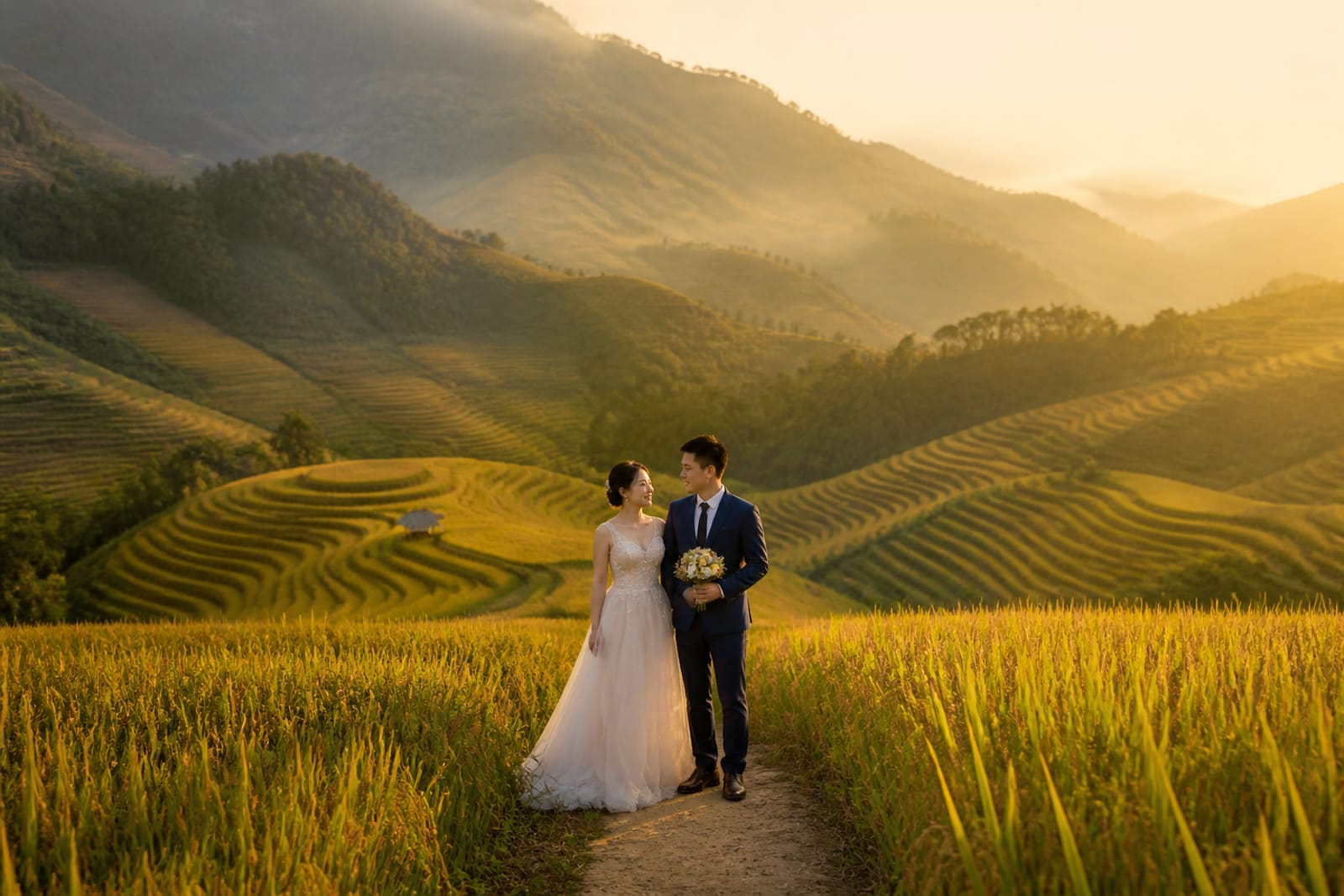
| Mid-Sept to early Oct | Golden, dry, textured, terraces visible | Warm side light, crisp air, long shadows | Dry paths, best walking comfort | Sweet spot for logistics |
| Nov–Jan | Stubble or fallow, brown-grey tones | Clear, cool, early frost | Easiest underfoot, cold mornings | Less dramatic visually |
Water-filled terraces (May–June) photograph with reflections and depth, but mud and flood risk rise. Golden-harvest light (mid-September to early October) is most forgiving: dry paths, warm tones, long shadows. Winter (Nov–Jan) is physically easiest but less visually distinctive. Choose based on the mood you want, not just comfort—each has a story.
What outfit and prep choices work in a three-hour mountain trek?
Modern fabrics and minimal layers win. Heavy ball gowns, long trains and intricate headpieces slow couples down and snag on branches; they also stain easily from mud and dust. Successful pre-wedding couples in Mu Cang Chai wear light, flowing ao dai or minimal Western dress, paired with simple footwear (flat sandals or sneakers worn under hems for walking, swapped for styled shoes in a few held frames). Makeup needs a long-wear base and waterproof eyeliner—humidity and sweat are constants. Hair works best in loose waves or a soft bun, not tight updos that look strained after climbing. Bring a change of footwear, a small towel, sunscreen and a water bottle; coordinate these with your photographer beforehand. If hiring a Hanoi team, confirm they'll handle outfit choices as part of pre-shoot consultation—a good crew will suggest practical fabrics and silhouettes without compromising the look.
How do you book a photographer who actually knows Mu Cang Chai terrain and light?
Cáo Studio operates in Hanoi, Ho Chi Minh City and Hoi An—not Mu Cang Chai. For a shoot there, you have two paths: hire a Hanoi-based photographer (such as Cáo Studio team) who travels to Mu Cang Chai, or work with a local Mu Cang Chai photographer directly. If traveling from Hanoi, ask a potential Hanoi team: Have you shot in Mu Cang Chai before? Can you show me 3–5 samples from the specific season I'm booking? Local photographers in Mu Cang Chai (found via Instagram hashtags or local tourism boards) know terrain, weather patterns and permit logistics intimately—but may not speak English fluently, so budget time for translation or liaison. A hybrid approach: book makeup and hair prep with a Hanoi team, then hire a local photographer for the shoot itself. Confirm all logistics—transport, backup locations if weather turns, guide fees—in writing at least 3 weeks before.
What costs actually change based on season and terrain?
Factors that shift cost (never quoted as fixed prices—always request a WhatsApp quote): travel time from your base (Hanoi vs. staying in Mu Cang Chai overnight), number of outfit changes (more outfits = longer hours), guide or fixer fees (essential for safe, informed scouting), weather contingencies (backup date or location), and team size (photographer + makeup artist + stylist or solo operator). Off-season (July, August, December) may carry lower rates because fewer couples book; peak season (May–June, September–October) sees higher demand. Overnight stays for the crew (if traveling from Hanoi) are an additional factor. Always discuss these openly; a transparent photographer will break down what drives the quote.
Comparison: Mu Cang Chai vs. studio or city-based pre-wedding shoots
| Option | Atmosphere | Logistics | Weather risk | Light control | Best for |
|---|---|---|---|---|---|
| Mu Cang Chai terraces | Grand, timeless, isolated | High (travel, early start, guide needed) | Flood/mud (May–Aug), cold (Dec–Jan) | Natural, uncontrolled, best at sunrise/sunset | Couples seeking cinematic landscape, willing to wake early |
| Hanoi city + landmarks | Urban, layered, recognizable | Moderate (traffic, permits, crowds) | Heat/rain (May–Sep), cool (Dec–Feb) | Mix of harsh noon light and golden hour | Couples wanting iconic frames, short timeline, walkable locations |
| Studio + controlled set | Intimate, curated, repeatable | Low (one location, controlled schedule) | None (indoors) | Fully controlled lighting | Couples wanting comfort, predictability, bad-weather backup |
Each serves a different priority. If drama and scale are your vision, Mu Cang Chai is worth the logistics. If timeline and accessibility matter more, a pre-wedding photoshoot in Hanoi or a hybrid approach makes sense.
What to check before you book a Mu Cang Chai pre-wedding shoot
- Photographer's portfolio: demand 5+ samples from the exact season and month you're booking, not just generic Mu Cang Chai images.
- Terrain experience: ask if they've worked in rain, mud or unexpected floods; have they scouted backup locations?
- Language and communication: if hiring local, confirm English-speaking liaison or translator; miscommunication on logistics is the top regret.
- Outfit and prep guidance: will they advise on fabrics, footwear and weather-appropriate styling before the day?
- Travel and accommodation: who covers crew transport? Will they stay overnight? What's the policy if weather cancels the shoot?
- Edited timeline: request samples of their editing style—some teams oversaturate the golden tones; others keep things natural.
- Payment and cancellation: get terms in writing; confirm what happens if typhoon or flood makes the day unsafe.
- Backup dates: book your trip with flexibility; a one-day shoot window is risky in monsoon season.
---
Comparison: Travel to Mu Cang Chai or book elsewhere
| Choice | Effort | Timeline | Backup option |
|---|---|---|---|
| Mu Cang Chai day trip from Hanoi | High (6+ hours round travel, 5 am start) | 4–6 weeks planning | Shoot in Hanoi instead, same day or reschedule |
| Overnight in Mu Cang Chai | Moderate (1 drive, easier pace) | 3–4 weeks | Local photographer or reschedule; Hanoi team may not travel often |
| Hanoi pre-wedding shoot + video | Low (local, walkable) | 2–3 weeks | Wedding video team coordinates same day |
---
📸 Book on WhatsApp — pre-wedding photoshoot
---
Next steps: planning your pre-wedding day
- Decide on season and mood: water-filled and moody (May–June) or golden and walkable (mid-Sep to early Oct)?
- Scout a photographer: Hanoi-based team willing to travel, or local Mu Cang Chai operator? Request 3 written quotes.
- Confirm outfit and prep: will makeup and hair happen in Hanoi before you travel, or on-site? Makeup & hair can be pre-arranged with a Hanoi team.
- Book your dates: terrain and weather mean flexibility is your friend. Book 4+ weeks out.
- Get editing samples: before paying, see how they edit terraces, skin tones and golden light.
- Communicate in writing: all logistics—transport, backup dates, payment terms—go in writing, not voice notes.
If Mu Cang Chai logistics feel overwhelming, pre-wedding shoots in Hanoi offer a similar sense of discovery (temples, old streets, lakes) with less travel. Either way, a good team will guide you through the process and flag real constraints early.
FAQ
Does Cáo Studio shoot in Mu Cang Chai?
No. Cáo Studio operates in Hanoi, Ho Chi Minh City and Hoi An. For Mu Cang Chai, hire a Hanoi-based photographer willing to travel, or work with a local team. Many Hanoi photographers travel there for pre-wedding shoots; ask for terrain references and edited samples.
What's the best month for Mu Cang Chai pre-wedding photos?
Mid-September to early October offers dry paths, warm golden light and minimal flood risk. May–June has water-filled reflections but muddy terrain. July–August brings rain and insects. Winter (Nov–Jan) is dry but visually less distinctive. Choose based on the mood you want and your tolerance for early starts and mud.
How early do crews actually start on the day?
Typical start is 5:00–5:30 am to catch sunrise light before the sun crests the ridge (around 6:15–6:45 am depending on season). Makeup and outfit prep happen at a guesthouse or in transit. Most couples shoot until 8:00–9:00 am, break for breakfast, then resume around 5:00 pm until dusk.
Can I wear a heavy gown or long train in Mu Cang Chai?
Not practically. Terraces involve walking steep, muddy paths and climbing 30–60 minutes between locations. Wear light fabrics, minimal layers and flat shoes for walking. Styled shoes can be swapped in for a few held frames. Confirm outfit choices with your photographer at least 2 weeks ahead; experienced teams will suggest practical silhouettes that still photograph beautifully.
What happens if it rains or floods on my shoot day?
Early May or late September–October have lower rain risk. July–September and October–November are typhoon/flood seasons—book a backup date or accept postponement. Confirm your photographer's cancellation policy and weather contingencies before paying. Some teams scout secondary locations; others offer a full refund or reschedule if conditions are unsafe.
Should I hire a guide in addition to the photographer?
Yes, if you're not familiar with the terrain. A local fixer or guide (separate from the photographer) ensures safe paths, respects seasonal water levels and can translate with villagers if needed. Discuss this with your photographer during planning; they'll advise whether a guide is essential for your group size and chosen dates.
How long does editing take after a Mu Cang Chai shoot?
This varies by photographer. Request a timeline upfront—typical ranges are 2–4 weeks. Ask for samples of their editing style so you know whether they oversaturate golden tones or keep a natural look. Confirm the number of edited images and whether video clips are included.
FAQ
Does Cáo Studio shoot in Mu Cang Chai?
No. Cáo Studio operates in Hanoi, Ho Chi Minh City and Hoi An. For Mu Cang Chai, hire a Hanoi-based photographer willing to travel, or work with a local team. Many Hanoi photographers travel there for pre-wedding shoots; ask for terrain references and edited samples.
What's the best month for Mu Cang Chai pre-wedding photos?
Mid-September to early October offers dry paths, warm golden light and minimal flood risk. May–June has water-filled reflections but muddy terrain. July–August brings rain and insects. Winter (Nov–Jan) is dry but visually less distinctive. Choose based on the mood you want and your tolerance for early starts and mud.
How early do crews actually start on the day?
Typical start is 5:00–5:30 am to catch sunrise light before the sun crests the ridge (around 6:15–6:45 am depending on season). Makeup and outfit prep happen at a guesthouse or in transit. Most couples shoot until 8:00–9:00 am, break for breakfast, then resume around 5:00 pm until dusk.
Can I wear a heavy gown or long train in Mu Cang Chai?
Not practically. Terraces involve walking steep, muddy paths and climbing 30–60 minutes between locations. Wear light fabrics, minimal layers and flat shoes for walking. Styled shoes can be swapped in for a few held frames. Confirm outfit choices with your photographer at least 2 weeks ahead; experienced teams will suggest practical silhouettes that still photograph beautifully.
What happens if it rains or floods on my shoot day?
Early May or late September–October have lower rain risk. July–September and October–November are typhoon/flood seasons—book a backup date or accept postponement. Confirm your photographer's cancellation policy and weather contingencies before paying. Some teams scout secondary locations; others offer a full refund or reschedule if conditions are unsafe.
Should I hire a guide in addition to the photographer?
Yes, if you're not familiar with the terrain. A local fixer or guide (separate from the photographer) ensures safe paths, respects seasonal water levels and can translate with villagers if needed. Discuss this with your photographer during planning; they'll advise whether a guide is essential for your group size and chosen dates.
How long does editing take after a Mu Cang Chai shoot?
This varies by photographer. Request a timeline upfront—typical ranges are 2–4 weeks. Ask for samples of their editing style so you know whether they oversaturate golden tones or keep a natural look. Confirm the number of edited images and whether video clips are included.
Ao dai, makeup, hair and a local photographer in Hanoi or Saigon — one WhatsApp message.