/suit-rental
Tuxedo or Ao Dai for Groom Photos in Hanoi: Which Suits You?
A tuxedo and an ao dai read utterly differently in Hanoi light and require different styling choices. Tuxedos suit sharp, formal indoor or overcast-day shoots; they photograph crisply in soft winter light (Dec–Feb) and look elegant against grey architectural backdrops. Ao dais—the traditional Vietnamese long tunic—flow beautifully in motion, photograph best in natural daylight (Oct–Nov autumn, or early morning summer), and feel culturally grounded. Both demand proper rental fit (shoulders, chest, sleeve length for tuxedo; tunic length and trouser fit for ao dai). At Cáo Studio – Makeup & Photoshoot in Hanoi, most grooms rent ao dai for pre-wedding shoots or couple sessions in temples or parks; tuxedos dominate hotel rooms and evening indoor shoots. Cost factors differ: ao dai rental often includes basic tailoring; tuxedos may need pressing or cuff adjustments on the day. Book 2–3 weeks ahead to confirm fit and delivery to your hotel.
A tuxedo conveys Western formal elegance; an ao dai embodies Vietnamese tradition. Each photographs distinctly, suits different seasons, and demands different logistics in Hanoi. Choosing between them is your first creative decision—and it changes where, when, and how you'll shoot.
Why does light matter more than you think?
Soft, diffused light flatters both outfits, but differently. Ao dai fabrics—silk or cotton blends—catch directional morning or golden-hour light, creating depth and texture in photographs. A tuxedo's crisp lines and matte jacket read sharply in overcast conditions or indoors under studio lights, where fabric drape matters less than silhouette. Hanoi's Oct–Nov autumn offers mild temperatures and consistent, honeyed daylight; a tuxedo can feel stiff in bright midday sun, while an ao dai glows. Winter light (Dec–Feb) is grey and cool—perfect for tuxedo formality but flat for ao dai silk. If your shoot falls May–Sep (very hot, humid, afternoon storms likely), an ao dai's breathable cotton construction outlasts a tuxedo in comfort; tuxedos also trap heat and sweat visibly under arms and collar. Morning shoots (6–9 a.m.) before humidity peaks favor ao dai; late afternoon (3–5 p.m.) when light softens suits both equally.
📸 Book on WhatsApp — ao dai photoshoot | 🌸 See the lookbook
Where do these outfits photograph best in Hanoi?
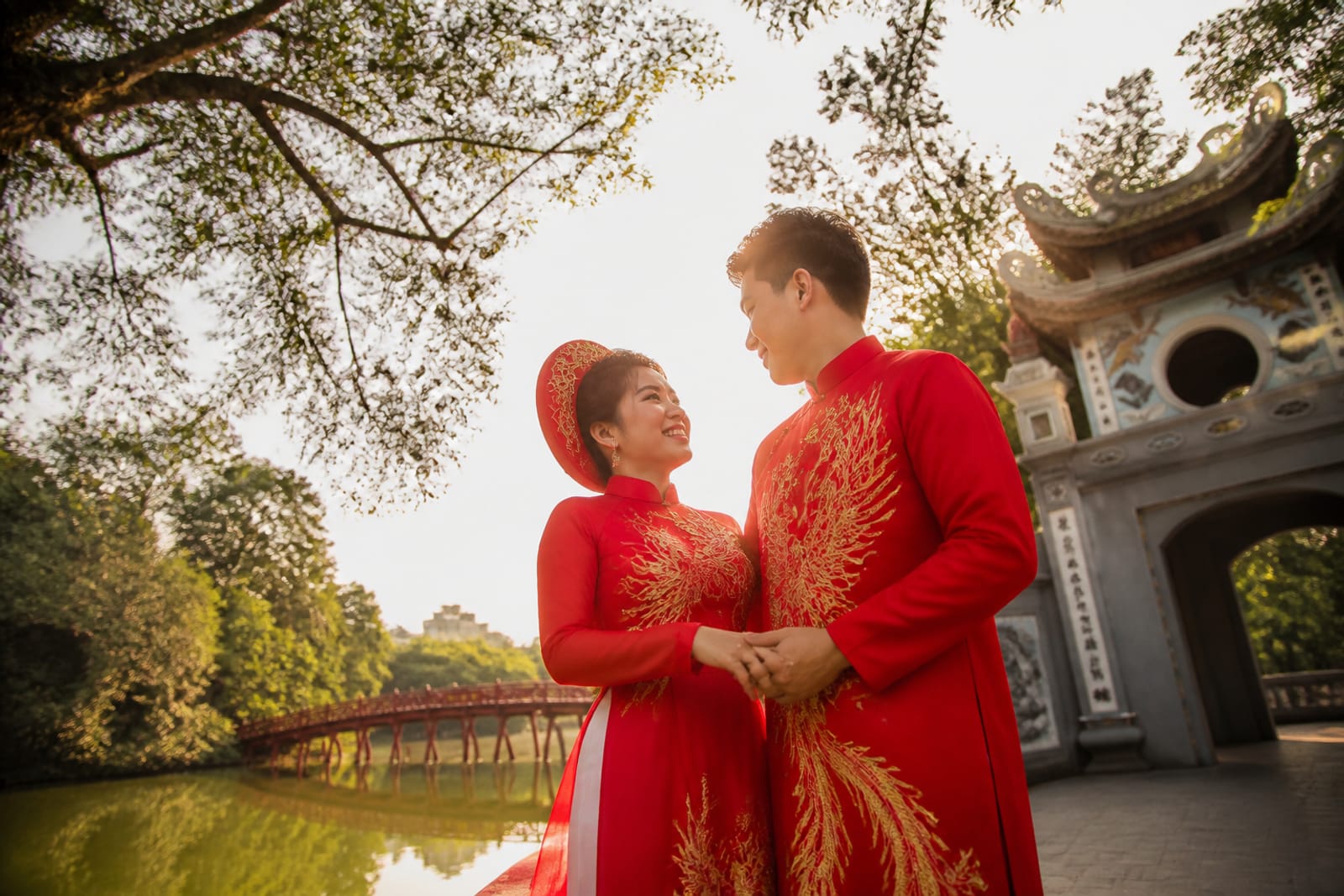
Temple courtyards and traditional gardens demand ao dai. Tran Quoc Pagoda, Tay Ho Pagoda, and the grounds around Hoan Kiem Lake feel architecturally aligned with ao dai's cultural heritage; a groom in ao dai at a temple gate or under a silk lantern reads as intentional and respectful. Indoor venues—hotel lobbies, rooftop bars, intimate rooms—suit tuxedos; they provide controlled lighting, neutral backgrounds, and professional formality that plays to tailored jacket lines. Hanoi's colonial-era French Quarter (Hoan Kiem, Trang Tien) photographs well for both, though ao dai looks fresher against weathered yellow walls and tree-lined streets. Train Street (when access permits—check locally before planning) is a gritty industrial backdrop where a tuxedo can feel overdressed, while ao dai's flowing lines contrast naturally. Cáo Studio's Hanoi team has shot at all these locations; they'll advise on which light arrives when and whether your chosen outfit needs backup styling.
Tuxedo vs. Ao Dai: The side-by-side framework
| Outfit | Best For | Season & Light | Fit Challenges |
|---|---|---|---|
| Tuxedo | Hotel rooms, evening shoots, formal couple sessions | Dec–Feb grey light; overcast days; indoors any time | Shoulders rigid if too tight; sleeves must clear wrist by ½ inch; trouser break at shoe must be perfect |
| Ao Dai | Temples, parks, ao dai photoshoots, golden-hour couple portraits | Oct–Nov autumn; sunrise/sunset; early morning in heat | Tunic length must clear shoe; trousers must not pool; undergarment (trousers) must fit precisely to avoid bunching |
Why each works: Tuxedos photograph as a complete, sharp unit; no styling guesswork. Ao dai requires confident posture and movement—slouching erases the silhouette, but flowing steps create motion even in still frames. Tuxedos suit Western guests unfamiliar with traditional Vietnamese dress; ao dai honors local culture and surprises Western guests photographically. Cost factors differ: ao dai rental often includes basic tailoring and delivery to your Hanoi hotel; tuxedo rental may charge separately for pressing, cuff adjustments, or rush sizing. Book early to avoid fit stress.
How do you rent and prep each in Hanoi?
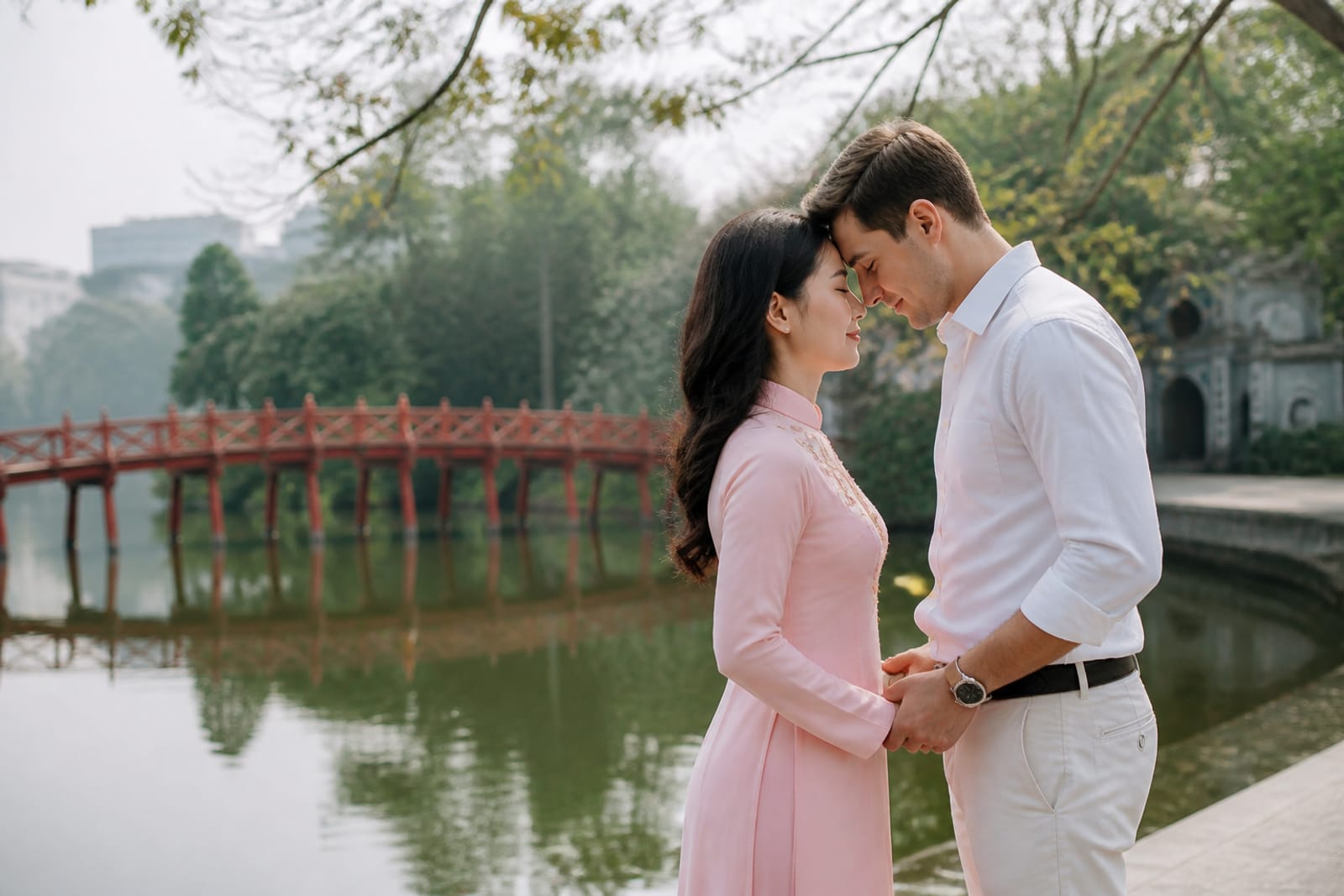
For ao dai: Contact Cáo Studio 2–3 weeks before your shoot. Provide your chest, shoulder width, and inseam measurements (or visit one of our three Hanoi locations for in-person fitting). Rental includes undertrousers and basic tailoring (hem, seam tuck). Delivery to your hotel is standard; pickup happens after the shoot. Ao dai fit is forgiving if measurements are honest—tunic length can be hemmed same-day if needed; trouser fit is crucial (too loose and the silhouette collapses). Confirm color options in advance; burgundy and navy photograph better in natural light than pure black or white. On shoot day, makeup & hair at your hotel can be booked to finish your look; ao dai styling typically includes minimal jewelry and a light-hand approach to hair (bun or loose waves, not heavy updo).
For tuxedo: Rent from a menswear specialist in Hanoi's central districts or ask Cáo Studio for local referrals. Book 2–3 weeks ahead; most rental shops require a deposit and ID. Sizing is stricter than ao dai: jacket chest must fit without pulling or excess fabric; sleeves end at the wrist bone; trousers must break at the shoe. Collect the tuxedo 1–2 days before your shoot; have any alterations (cuffs, jacket length, trouser hem) completed and pressed the night before. On shoot day, ensure the shirt, bow tie or necktie, and pocket square are pressed and ready. Cufflinks, studs, and shoes should be your own (or rented separately) to ensure authenticity. Never wear a tuxedo more than a few hours before a photoshoot—wrinkles and sweat marks show instantly under studio lights.
💄 Makeup & hair at your hotel | 📸 Book on WhatsApp — ao dai photoshoot
What does a real Hanoi photoshoot day look like in each outfit?
Ao dai day: Your Hanoi hotel provides the venue for makeup & hair (booked separately). Grooming takes 30–45 minutes. The Cáo Studio team arrives with the rented ao dai, confirms fit, and touches up the tunic and undertrousers. You move to a nearby temple, park, or street location (typically 10–20 minutes by car from central Hanoi). Shooting runs 60–90 minutes; ao dai requires frequent posture checks (stand tall, keep shoulders back, walk deliberately—slouching erases the lines). The team captures motion shots (walking toward camera, turning, gentle hand gestures) and static poses. You return to your hotel or to Cáo Studio to change and return the rental. Total time: 3–4 hours door-to-door.
Tuxedo day: You collect the tuxedo the night before (or morning-of, if rental allows). Grooming happens at your hotel or a barber. The Cáo Studio team meets you for an indoor shoot (hotel room, lobby, or rooftop—light and location locked in advance). Tuxedo photography focuses on precision: jacket buttoned/unbuttoned as planned, cufflinks and tie knot visible in close frames, hand placement to avoid jacket bulging. Shooting runs 45–60 minutes; tuxedos tolerate standing still and seated poses better than ao dai (fabric doesn't wrinkle as visibly). You return to your hotel or rental shop same-day. Total time: 2–3 hours.
What to check before you book
- Rental fit: Provide honest measurements or visit in person. Ao dai tunic length and tuxedo sleeve length are non-negotiable.
- Season & light: Oct–Nov suits both; Dec–Feb favors tuxedo; May–Sep demands heat-conscious ao dai choice.
- Backup outfit: If you're unsure, book a couple photoshoot that includes both (one outfit per location). Cost factors vary; WhatsApp for a quote.
- Hotel delivery: Confirm rental pickup/delivery times with your hotel concierge before finalizing.
- Styling sync: Ao dai pairs with minimal jewelry and soft makeup; tuxedo pairs with crisp grooming and statement accessories. Discuss with Cáo Studio's makeup team during booking.
- Weather contingency: If rain threatens, an ao dai can pivot to an indoor temple or gallery; a tuxedo shoot indoors was the plan anyway. No cancellations needed.
Most Hanoi grooms choose ao dai for its cultural resonance and photographic flow; Western guests often opt for tuxedo to feel secure in formal dress. Cáo Studio has shot both with equal frequency. The real choice is which photograph—and which memory—you want to keep. Book 2–3 weeks ahead to secure your rental, hotel dates, and a shoot window that aligns with Hanoi's light.
📸 Book on WhatsApp — ao dai photoshoot | 💄 Makeup & hair at your hotel | 🌸 See the lookbook
Explore pre-wedding photoshoots, couple sessions, and the full Hanoi studio experience. For other outfit options or wedding day photography, check the FAQ.
FAQ
Can I wear both ao dai and tuxedo in one shoot day?
Yes. A couple photoshoot or pre-wedding shoot can include two locations and two outfits; outfit changes add time and coordination. WhatsApp Cáo Studio for the exact timeline and logistics; cost factors include rental fees for both, hotel delivery, and extended shooting time.
What temperature inside a tuxedo during a Hanoi summer shoot?
Tuxedos trap heat badly in May–Sep humidity. Shirt, jacket, and waistcoat create layers; even indoors, sweat shows under arms and collar within 30–45 minutes. Ao dai cotton breathes far better. If summer is your only option, shoot indoors with strong A/C and plan outfit changes to keep the tuxedo fresh.
Does ao dai rental include tailoring if my measurements are off?
Basic tailoring (hem, seam tuck) is typically included; major alterations (chest let-out, shoulder recut) may incur extra cost. Confirm with the rental shop or Cáo Studio when you book. This is why in-person fittings (available at our three Hanoi locations) are safer than remote measurements.
Which outfit is easier for a non-Vietnamese groom?
Tuxedos. A Western groom in a tuxedo requires only confidence in formality. Ao dai demands posture awareness—slouching erases the silhouette, and hand placement matters. Cáo Studio's team guides you through ao dai posture on the day; it feels natural quickly, but first-time wearers benefit from a brief on-set rehearsal.
Should I wear the tuxedo or ao dai to my pre-wedding dinner after the shoot?
Wear whatever you're more comfortable in. A tuxedo transitions smoothly to an evening event; an ao dai is less common at Western-style restaurants or bars. If you rent both, wear one to shoot and one to dinner—plan with Cáo Studio so rental timing works (collection/return windows matter).
FAQ
Can I wear both ao dai and tuxedo in one shoot day?
Yes. A [couple photoshoot](/couple-photoshoot) or [pre-wedding shoot](/pre-wedding-photoshoot) can include two locations and two outfits; outfit changes add time and coordination. WhatsApp Cáo Studio for the exact timeline and logistics; cost factors include rental fees for both, hotel delivery, and extended shooting time.
What temperature inside a tuxedo during a Hanoi summer shoot?
Tuxedos trap heat badly in May–Sep humidity. Shirt, jacket, and waistcoat create layers; even indoors, sweat shows under arms and collar within 30–45 minutes. Ao dai cotton breathes far better. If summer is your only option, shoot indoors with strong A/C and plan outfit changes to keep the tuxedo fresh.
Does ao dai rental include tailoring if my measurements are off?
Basic tailoring (hem, seam tuck) is typically included; major alterations (chest let-out, shoulder recut) may incur extra cost. Confirm with the rental shop or Cáo Studio when you book. This is why in-person fittings (available at our three Hanoi locations) are safer than remote measurements.
Which outfit is easier for a non-Vietnamese groom?
Tuxedos. A Western groom in a tuxedo requires only confidence in formality. Ao dai demands posture awareness—slouching erases the silhouette, and hand placement matters. Cáo Studio's team guides you through ao dai posture on the day; it feels natural quickly, but first-time wearers benefit from a brief on-set rehearsal.
Should I wear the tuxedo or ao dai to my pre-wedding dinner after the shoot?
Wear whatever you're more comfortable in. A tuxedo transitions smoothly to an evening event; an ao dai is less common at Western-style restaurants or bars. If you rent both, wear one to shoot and one to dinner—plan with Cáo Studio so rental timing works (collection/return windows matter).
Ao dai, makeup, hair and a local photographer in Hanoi or Saigon — one WhatsApp message.