/wedding-photographer
Vietnamese Wedding Traditions for Couples' Photo Sessions
Vietnamese wedding traditions most photogenic for couples include the tea ceremony (formal, intimate family moment), áo dài dress (national symbol, sculptural silhouette), ancestral altar veneration (symbolic, candlelit), coin toss or red envelope exchange, and garden or temple settings that echo cultural heritage. These rituals work because they carry genuine emotion, create clear compositional frames, and allow couples to wear formal or traditional dress that photographs powerfully. Timing matters: morning light suits áo dài fabric best; evening suits altar ceremonies. Cáo Studio – Makeup & Photoshoot documents these traditions across Hanoi, Ho Chi Minh City, and Hoi An by arranging shoots before or after real weddings, during pre-wedding sessions, or in styled couple photoshoots. Success depends on booking a photographer who understands both the ritual's significance and its lighting demands—often requiring flexibility, a second camera operator, and knowledge of temple or family-home layout. ---
Which traditions actually look good on camera?
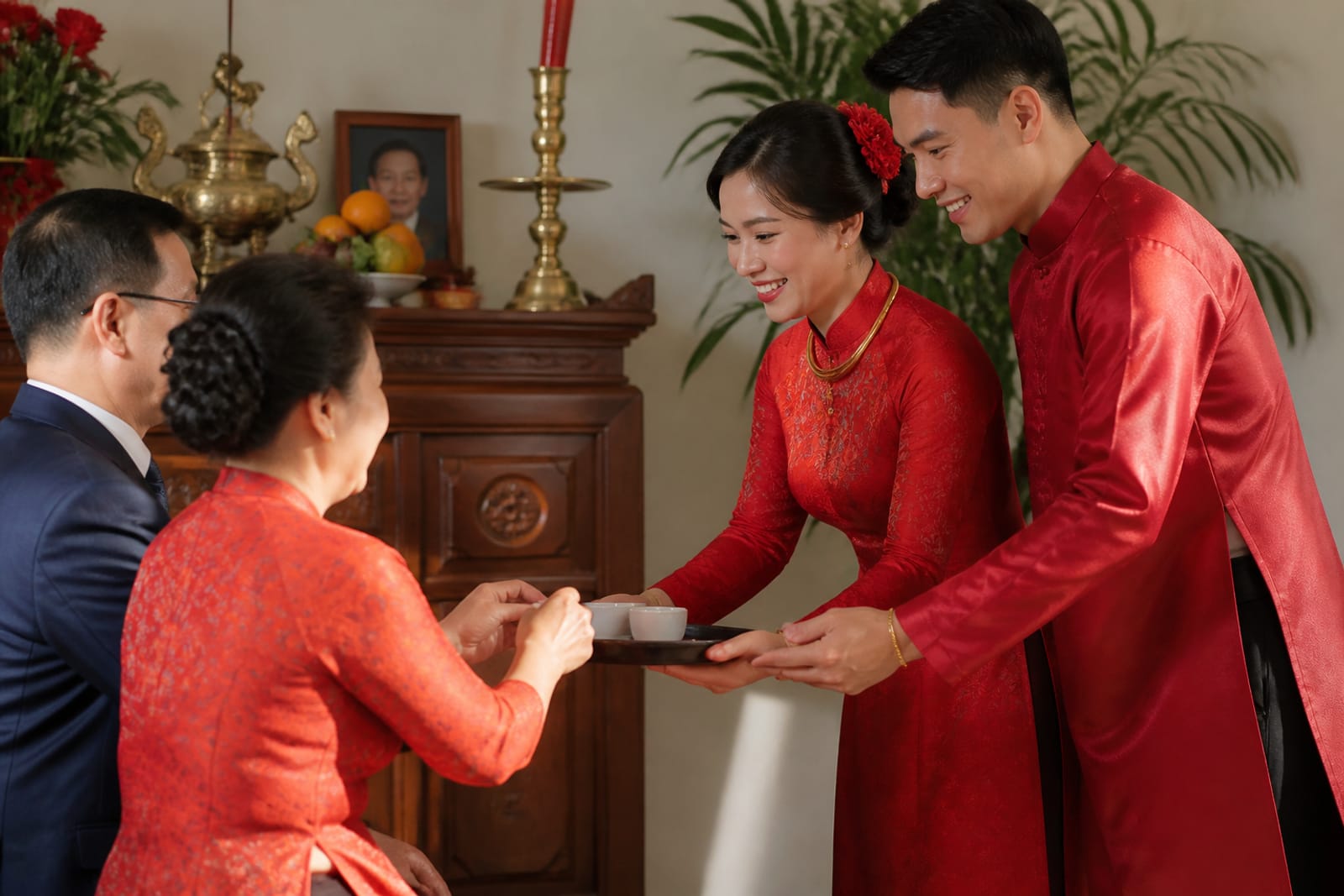
Not every Vietnamese wedding custom translates visually. The tea ceremony works because it's intimate, formally staged, and naturally lit if shot in a home parlor or family room. The bride and groom kneel or bow to elders, create a clear focal point, and wear their most formal attire—all compositionally strong. Ancestral altar veneration conveys respect and emotion: incense smoke, candlelight, and the couple's bowed heads form a cohesive frame. Áo dài photography is essentially guaranteed—the fabric falls in clean lines, the color contrasts with skin tone, and the silhouette reads at distance. By contrast, the betrothal gift exchange (trầu cau, betel and areca nut) is culturally significant but often happens quickly, in a crowded setting, under variable light. A photographer who understands your family's rituals will flag which moments will photograph well and help you plan lighting or timing accordingly.
When during the wedding day do traditions happen?
Vietnamese wedding days typically unfold in a fixed sequence: bride's family home (tea ceremony, gift exchange) in morning or early afternoon; groom's family home (second tea ceremony) shortly after; restaurant or banquet venue by evening. Morning light indoors is unpredictable—often grey, requiring reflectors or off-camera flash to avoid harsh shadows on faces. Tea ceremonies held 8–10 a.m. often sit in a room lit only by windows; late-morning (10–11 a.m.) shifts light to warmer, side angles that flatter áo dài fabric and skin tone. If you plan a pre-wedding photoshoot to recreate tea ceremony moments, you can choose the exact time and location, controlling both light and setting. Altar veneration typically happens before the banquet begins—usually late afternoon or early evening—which naturally provides warm, directional light if shot near a window, or calls for supplemental lighting if indoors under fluorescent fixtures. Book your photographer early enough to scout the family home or venue, identify light sources, and plan backup positions if the primary moment happens in shadow.
How do you style for ancestral honor and good photos?
Áo dài is non-negotiable for tradition and visual impact, but its fit determines how it photographs. An áo dài sits loose at the torso and splits thigh-high at the sides; a well-tailored version skims the body without clinging, and moves fluidly in wind or during bows. Worn over loose white silk pants, it creates a clean vertical line. Bridesmaids and groomsmen wearing áo dài in coordinating colors strengthen the frame and emphasize hierarchy—dark áo dài for groom and father figures, lighter shades for bride and female relatives. Jewelry should not compete: delicate gold earrings and a simple bracelet work; chunky costume pieces create distraction. Makeup needs to withstand incense smoke and the flush of emotion—waterproof foundation and lip stain matter, especially if you're kneeling for the tea ceremony. Ask your photographer or makeup artist whether the family home's lighting is warm or cool; cool indoor light reads flat on skin without slightly deeper, cooler-toned makeup. If you're renting an áo dài, confirm the hem length (ideally brushes the top of your shoe when standing) and the neckline comfort—you'll bow repeatedly, and a loose neckline will gape. Many couples book makeup and hair at the hotel on the morning of the wedding to ensure the áo dài fits over the styled hair without pulling out waves or curls.
| Tradition | Best light | Dress code | Why it photographs |
|---|---|---|---|
| Tea ceremony | Mid-morning window light or warm indoor lamp | Áo dài, bride often wears red or gold | Intimacy, formal posture, color contrast |
| Ancestral altar | Late afternoon near window, or candlelit | Formal áo dài, neutral jewelry | Symbolic gesture, warm tone, bowed reverence |
| Red envelope or coin toss | Golden hour or diffused afternoon | Áo dài or formal dress, close-up framing | Joy, gesture clarity, connection between couple |
| Garden procession (if planned) | Morning or late afternoon side-light | Áo dài in motion, groom suit or áo groom | Movement, fabric flow, landscape backdrop |
| Family portrait (post-ceremony) | Overcast morning or shaded outdoor spot | Mixed formal wear (áo dài, suits) | Multiple people, cultural mix, even exposure |
What lighting challenges should you anticipate?
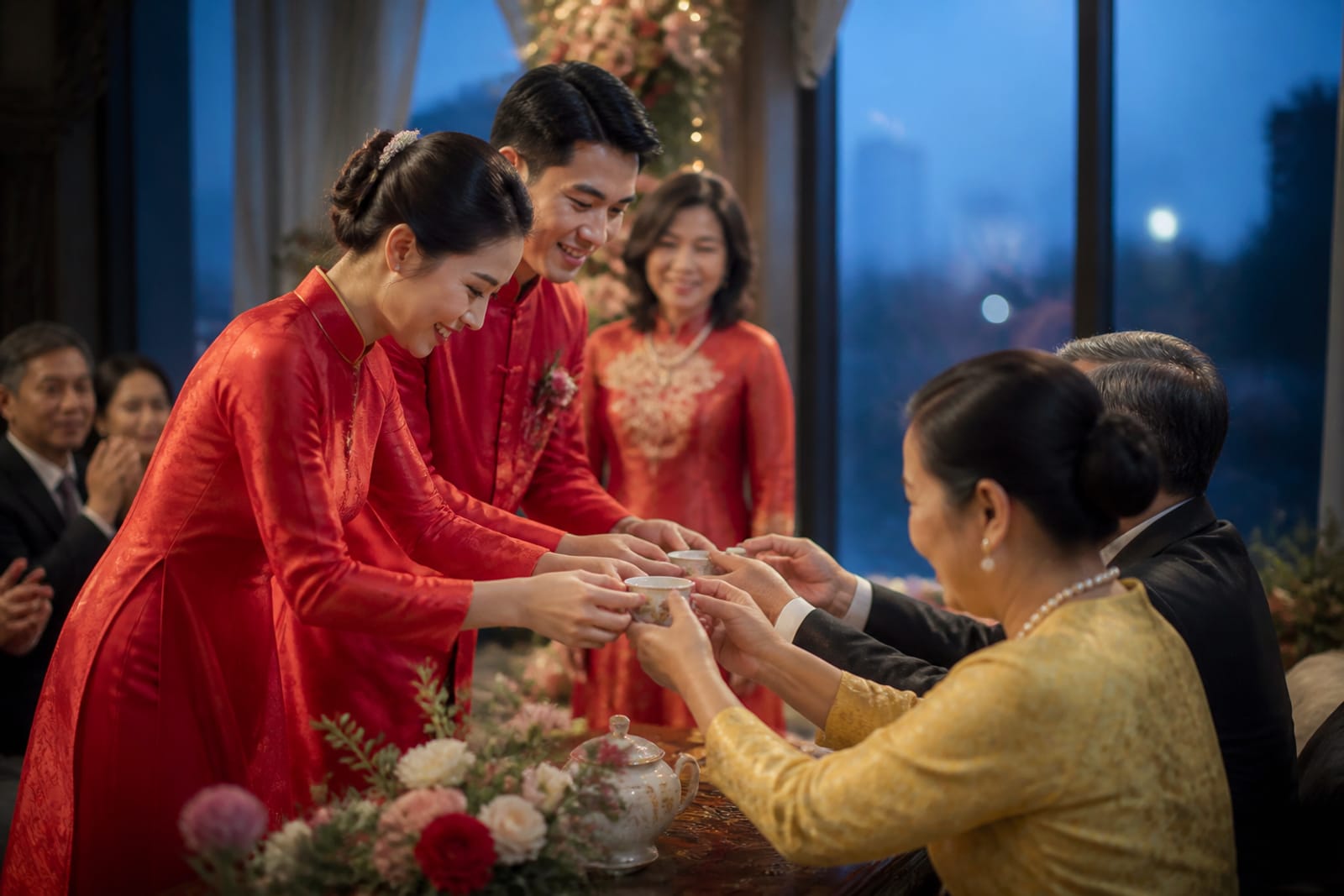
Vietnamese family homes often have small windows and darker interiors, especially in urban Hanoi or Ho Chi Minh City apartments. A tea ceremony held in a living room with one window and overhead fluorescent lights will cast mixed color temperature and harsh shadows on the couple's faces unless the photographer uses a fill flash or reflector. Ancestral altars are typically placed against a wall in a corner or bedroom—naturally shadowed—and lit by candles and small electric lights that create amber, low-contrast illumination. Without supplemental lighting, images look murky; with on-camera flash, they look flat. A skilled photographer uses bounce flash off a white ceiling or wall, or brings a small off-camera reflector to redirect sunlight. Temple or outdoor venues for couple photoshoots where traditions are reenacted offer better baseline light, but overcast skies (common in winter in Hanoi, or during the rainy season) diffuse color and flatten skin tone. The solution: shoot during the hour of softest light available (usually 8–10 a.m. or 4–6 p.m.), position the couple between the light source and the camera, and have the photographer arrive early to test exposure and position reflectors. If you're planning a styled pre-wedding session to capture traditions without the real wedding pressure, you can book it during your area's best light season—February to April in central Vietnam (Hoi An, Da Nang), or October to November for Hanoi.
How do you honor tradition without slowing the real wedding day?
Traditions are time-bound during a real wedding: the tea ceremony happens once, the gift exchange is quick, and the banquet starts at a set hour. A photographer cannot pause or re-stage these moments. The most common mistake couples make is trying to fit too many photo traditions into one session—asking for 30 minutes of photos at the bride's house, then the groom's house, then the temple, then the banquet, all on a fixed timeline. This fragment attention, exhaust the photographer, and risk missing key moments because of travel or light change between venues. A better approach: book your photographer for the core 4–5 hours when traditions actually unfold (typically morning through late afternoon), choose 2–3 priorities (e.g., tea ceremony and altar veneration), and clearly communicate the family home's layout and timing to the photographer in advance. Alternatively, hire a videographer or second photographer to capture traditions in parallel while you focus on posed couple shots. Many couples book a separate pre-wedding photoshoot 1–2 weeks before the wedding to stage and perfect traditions (tea ceremony reenactment, áo dài detail shots, altar poses) under controlled light and time. This strategy lets you include traditions in your photo collection without gambling on real-day logistics.
📸 Book on WhatsApp — ao dai photoshoot
What to check before you commit to photographing traditions
Ask your photographer:
- Have they shot a Vietnamese tea ceremony in a home or venue before? Ask for one sample image.
- What is their backup plan if the family home's main room has no windows or natural light?
- Will they arrive 30 minutes early to scout light and positions?
- Do they own a fill flash or reflector, and will they use it?
- Can they explain the cultural significance of each tradition so they don't miss a moment?
Confirm with your family:
- Which traditions are non-negotiable for your family? Communicate this to the photographer.
- Will the family home allow a photographer and possible second light source (reflector, flash)?
- Is there a designated time window for each tradition, or is timing flexible?
- Are there private family-only moments the photographer should not document?
Scout the venue:
- Visit the family home or temple one week before the wedding at the same time of day the tradition will happen.
- Note window positions, overhead lighting type, and wall colors (they affect light reflection).
- Measure the room—cramped spaces limit the photographer's distance and angle options.
- Check whether candles or incense will be lit (they create warm tone and smoke, which looks good but can obscure faces if positioned incorrectly).
---
FAQ
Should I wear áo dài or a Western wedding dress if traditions are important to me?
Wear áo dài. It is the visual anchor of Vietnamese traditions and photographs with far more cultural resonance. If you want Western dress, consider a Western-style engagement shoot separately and reserve áo dài for pre-wedding or wedding-day tradition moments. Many couples wear both: áo dài for the tea ceremony and áo groom or suit for the banquet.
Can I recreate traditions for photos if my real wedding is civil or non-traditional?
Yes. Book a pre-wedding photoshoot or couple photoshoot and stage a tea ceremony, altar veneration, or garden procession in a rented venue or family home. This lets you include traditions in your portfolio without committing to them on the actual wedding day.
What's the best time of year to photograph Vietnamese wedding traditions outdoors?
February to April (Hanoi, northern Vietnam) and February to August (central coast: Hoi An, Da Nang) offer the most consistent daylight and least rain. Avoid the monsoon season (October–November on the central coast; May–September in Hanoi) unless you're shooting indoors or plan for grey light.
Do I need a second photographer to capture traditions safely?
If your wedding is long (8+ hours) or spans multiple venues, a second photographer ensures you don't miss the tea ceremony while they're shooting couple portraits elsewhere. If your traditions happen in a compact 2–3 hour window, one experienced photographer with a backup camera body is usually sufficient.
How much does it cost to include tradition photography in a wedding session?
Pricing depends on the length of the session, number of edited photos, deliverables (prints, album, video), and travel between venues. Message us on WhatsApp to discuss your tradition priorities and get a tailored quote.
Will my photographer understand the emotional meaning if they're not Vietnamese?
A skilled photographer learns each couple's traditions and their family's significance beforehand. Share a short brief: what the tea ceremony means, which moments matter most, and who must be in each shot. Cáo Studio's wedding photographer team works with international and local couples; clear communication about your priorities replaces cultural fluency.
FAQ
Should I wear áo dài or a Western wedding dress if traditions are important to me?
Wear áo dài. It is the visual anchor of Vietnamese traditions and photographs with far more cultural resonance. If you want Western dress, consider a Western-style engagement shoot separately and reserve áo dài for pre-wedding or wedding-day tradition moments. Many couples wear both: áo dài for the tea ceremony and áo groom or suit for the banquet.
Can I recreate traditions for photos if my real wedding is civil or non-traditional?
Yes. Book a [pre-wedding photoshoot](/pre-wedding-photoshoot) or [couple photoshoot](/couple-photoshoot) and stage a tea ceremony, altar veneration, or garden procession in a rented venue or family home. This lets you include traditions in your portfolio without committing to them on the actual wedding day.
What's the best time of year to photograph Vietnamese wedding traditions outdoors?
February to April (Hanoi, northern Vietnam) and February to August (central coast: Hoi An, Da Nang) offer the most consistent daylight and least rain. Avoid the monsoon season (October–November on the central coast; May–September in Hanoi) unless you're shooting indoors or plan for grey light.
Do I need a second photographer to capture traditions safely?
If your wedding is long (8+ hours) or spans multiple venues, a second photographer ensures you don't miss the tea ceremony while they're shooting couple portraits elsewhere. If your traditions happen in a compact 2–3 hour window, one experienced photographer with a backup camera body is usually sufficient.
How much does it cost to include tradition photography in a wedding session?
Pricing depends on the length of the session, number of edited photos, deliverables (prints, album, video), and travel between venues. Message us on WhatsApp to discuss your tradition priorities and get a tailored quote.
Will my photographer understand the emotional meaning if they're not Vietnamese?
A skilled photographer learns each couple's traditions and their family's significance beforehand. Share a short brief: what the tea ceremony means, which moments matter most, and who must be in each shot. Cáo Studio's [wedding photographer](/wedding-photographer) team works with international and local couples; clear communication about your priorities replaces cultural fluency.
Ao dai, makeup, hair and a local photographer in Hanoi or Saigon — one WhatsApp message.