/wedding-photographer
Wedding photos in Vietnam: mixed Vietnamese-foreign family guide
Mixed Vietnamese-foreign weddings in Vietnam succeed when you book 2–4 weeks ahead in a city with reliable weather and cultural infrastructure: Hanoi (cool winters, grey light but intimate), Ho Chi Minh City (warmer, busy, faster logistics), or Hoi An (coastal light, fewer crowds, team travels by appointment). Cáo Studio – Makeup & Photoshoot handles bilingual families across all three locations, coordinating ao dai and Western dress changes, temple and civil ceremonies, and multi-generational group shots in one session. Avoid October–November (typhoons, floods, unpredictable light) and peak Tet (late January–mid February: closures, crowds, high prices). Book makeup and hair if your family spans time zones—the team arrives at your hotel, coordinates outfits with your photographer, and manages quick changes between ceremonies. Confirm temple booking rules, family group preferences, and outfit order on WhatsApp; provide a detailed timeline so the photographer anticipates key moments (tea ceremony, first look, family portraits) without missing anyone's reaction or cultural cue.
Which Vietnam cities work best for mixed-culture weddings?
Hanoi, Ho Chi Minh City, and Hoi An each suit different family priorities. Hanoi offers intimate temple ceremonies, French colonial backdrops, and grey winter light (December–February) that flatters skin across all tones; expect crowded pagodas during Tet and cooler mornings requiring a changing room nearby. Ho Chi Minh City is faster-paced: ceremonies happen year-round, but April–May heat and October–November storms demand flexible timing; the city has more hotels with bridal suites and easier logistics for large families spread across districts. Hoi An combines coastal light, slower pace, and photo-rich ancient town backdrops—book the Hoi An photoshoot team by WhatsApp to confirm travel dates; the town quiets after 9 a.m., ideal for family portraits before crowds. Choose based on weather stability, family access to cultural sites, and whether you need hotel logistics or outdoor mobility.
📸 Book on WhatsApp — wedding day photographer
What outfit order avoids stress when both cultures have dress codes?
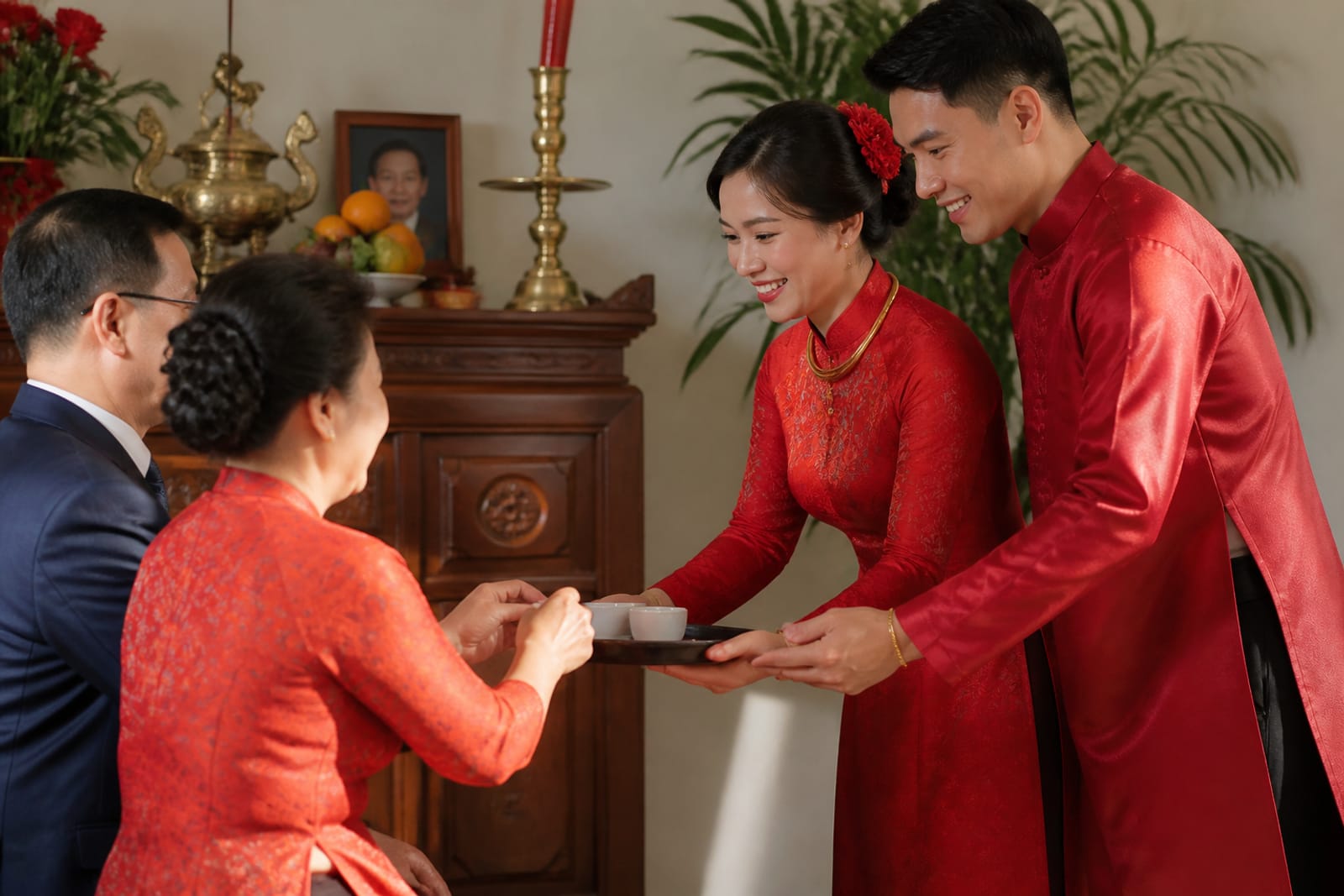
Many mixed families wear an ao dai (traditional Vietnamese tunic), Western wedding dress, and sometimes a suit or formal Vietnamese groom's wear—changing between each creates timing pressure. Start with whichever outfit requires the most setup (often the ao dai, due to fabric folds and jewelry); photograph that in optimal light (morning soft light outdoors, 6–9 a.m., or late afternoon after 4 p.m.). Move indoors or to shade for the Western dress, where softer light suits white fabric better. End with quick casual shots in the groom's final outfit. A professional makeup and hair team at your hotel (book on WhatsApp) manages each change in under 15 minutes—they pack touch-up kits, coordinate with the photographer on timing, and adjust makeup between outfits (ao dai often needs warmer tones; Western dress suits cooler, brighter makeup). Provide a written outfit timeline to both teams the day before; photograph each outfit in its cultural setting (temple grounds for ao dai, hotel ballroom or civil registry for Western dress).
How do you photograph ceremonies without offending temple or cultural rules?
Vietnamese Buddhist and ancestor-worship spaces restrict photography during active worship: verify with the temple 3–5 days ahead what zones are off-limits. Most temples allow photos in courtyards before the ceremony starts and after the family has paid respects; shoot candid moments during tea ceremony at home, which is typically unrestricted if family invites the photographer. Civil registries (Sở HKKN) allow photography in waiting areas but not inside offices—capture couple reactions just before and after signing. If grandparents or extended family wear formal traditional dress, ask permission before close-up shots; some elders prefer group photos only. Foreign family members unfamiliar with bowing or incense handling: brief them beforehand so the photographer captures natural reactions rather than awkward moments. Always have the Vietnamese spouse or a family liaison introduce the photographer to temple staff; a respectful greeting ("xin phép chụp hình"—ask to take photos) and clear timeline (30 minutes, no flash) prevent last-minute conflicts. Schedule family portraits in a quiet temple courtyard or nearby outdoor space after ceremonies end; late afternoon gives warm, forgiving light for multi-generational groups.
| Ceremony type | Best time to shoot | Light & backdrop | Key rule |
|---|---|---|---|
| Temple offering / ancestor worship | Before ceremony starts or after family finishes | Early morning soft light (7–9 a.m.) or dappled courtyard shade | Confirm photo zones with temple staff; no flash during worship. |
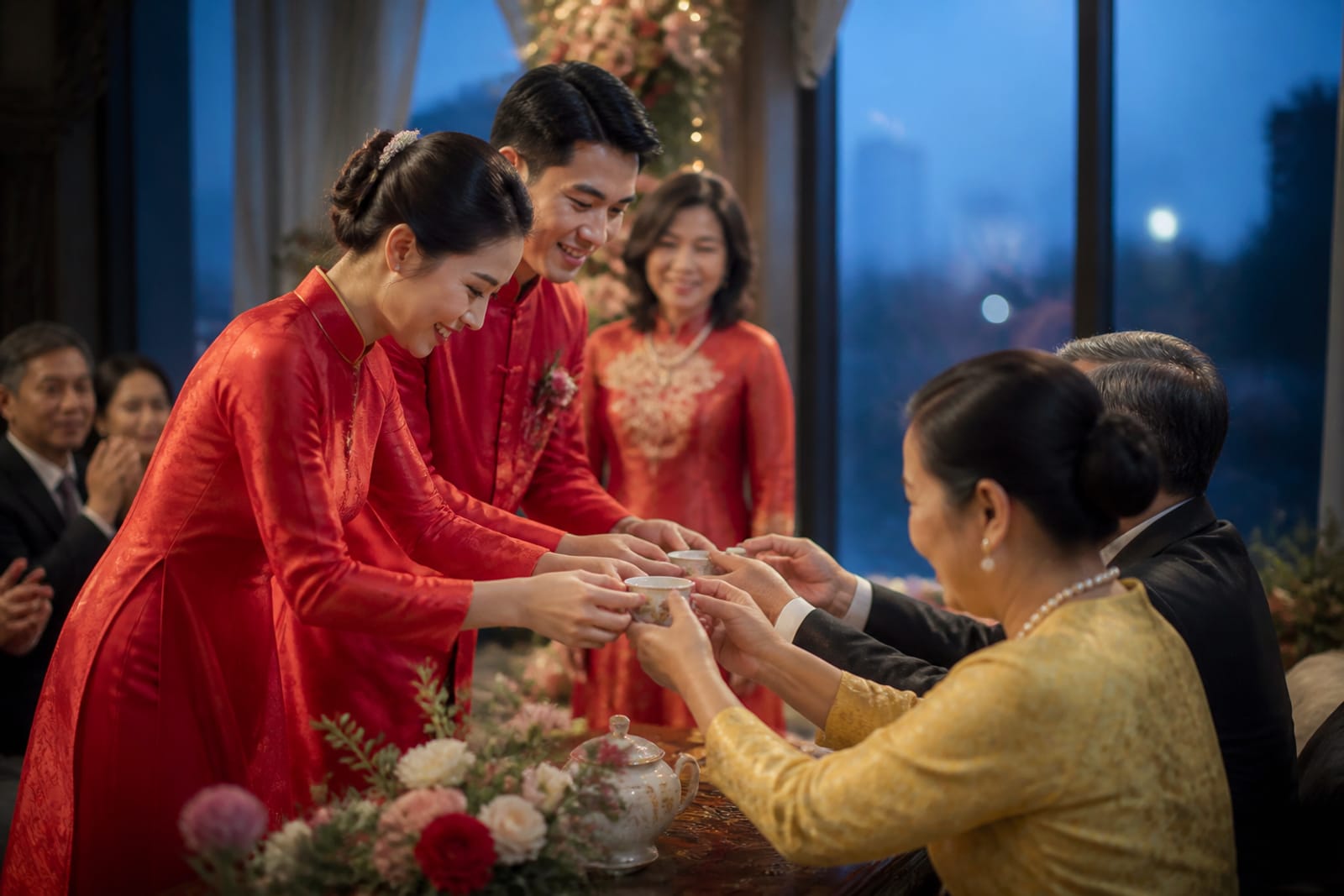
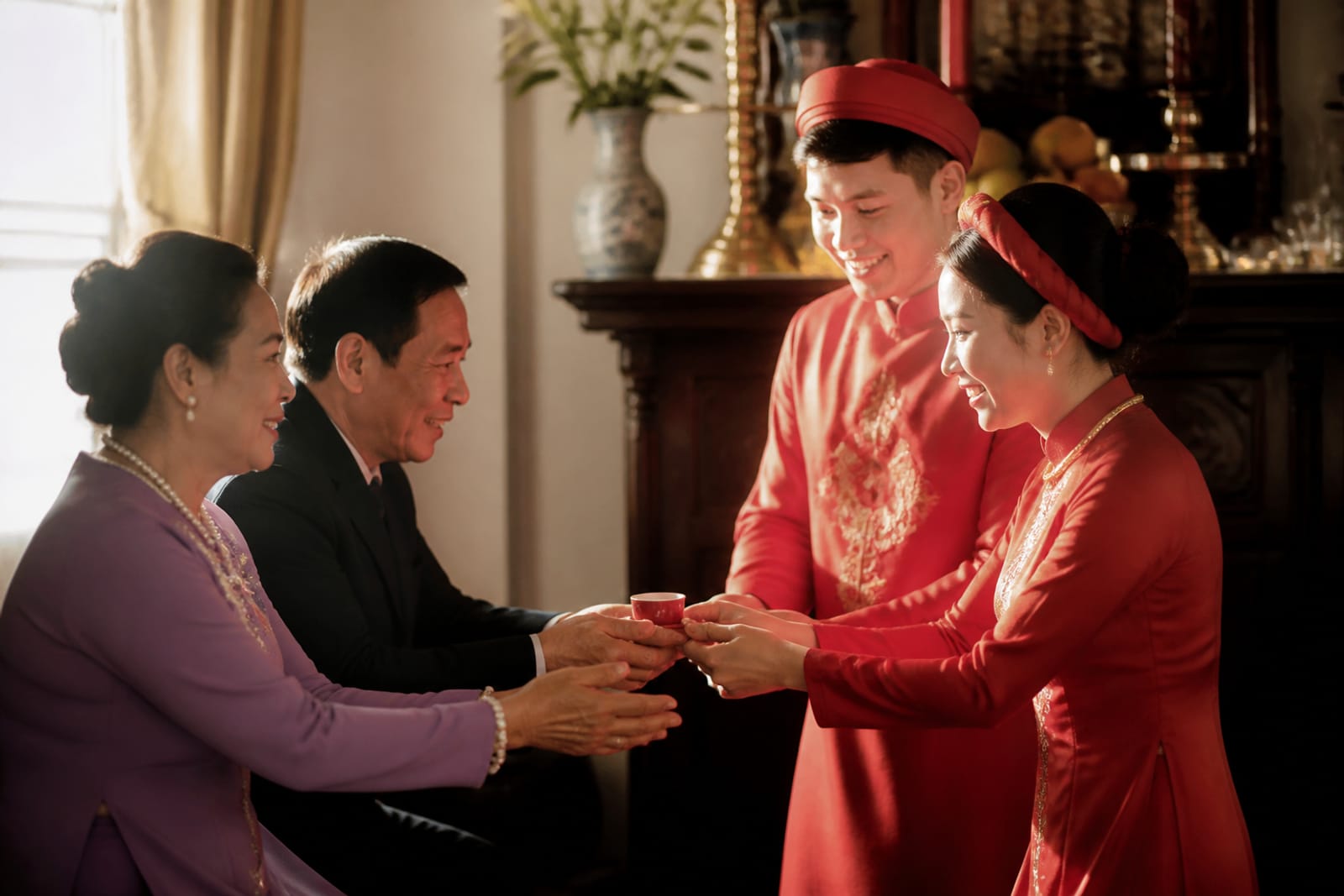
| Tea ceremony at home | During service, from side angles | Indoor soft window light or warm indoor lamps | Capture grandparents' expressions; stay out of family circle. |
| Civil registry | Just before & after signing; not inside office | Bright hallway or outside registry building | No photos inside offices; focus on couple's reactions in public space. |
| Outdoor family portraits | Late afternoon, 4–5:30 p.m. (all cities year-round) | Golden hour; long shadows create depth | Position so sun lights faces, not backlighting; easiest for mixed ages & skin tones. |
| Banquet toast or dinner | Start of reception, during key toasts | Ambient light + gentle flash; avoid harsh overhead | Get close-ups of emotional moments; watch for family connections (elders, children). |
What weather and season patterns protect photo quality across two cultures?
Northern Vietnam (Hanoi) winters (December–February) bring cool, consistent grey light—ideal for outdoor family portraits but requires layers and a changing room at your hotel or venue. Spring (March–April) warms up; mornings are clearer for outdoor shots, but humidity rises by May. Avoid May–September (hot, unpredictable afternoon storms, harsh midday light). Central Vietnam (Hoi An, Da Nang) is driest February–August; book Hoi An photoshoots in April–July for predictable light and low rain risk. Southern Vietnam (Ho Chi Minh City) has a dry season December–April (best for mixed families with jet lag—fewer afternoon storms mean flexible scheduling). October–November is typhoon season nationwide—flooding, grey skies, cancelled transport; postpone if you've booked these months. Tet (late January–mid February) shuts down temples and studios for days; book before or after, never during. Allow 1–2 backup dates in your wedding timeline; if outdoor light fails, move to hotel interiors, gardens, or indoor venues without disrupting family schedules.
How should a mixed family coordinate a photo timeline with the photographer?
Provide a detailed written schedule to Cáo Studio (via WhatsApp) at least one week before the wedding: list each ceremony (tea at home, temple, civil registry, banquet), exact times, locations, outfit changes, and key family moments you want captured. Flag elderly grandparents, young children, or family members with mobility needs so the photographer anticipates group positions. Designate one family coordinator (often the Vietnamese spouse or mother-in-law) to confirm room access, light conditions, and guest flow with the photographer each morning. Build 15–20 minutes of buffer time between major shots; travel between temple and venue often takes longer than expected, and traffic delays are common in Hanoi and Ho Chi Minh City. If the photographer is new to your family's traditions, email photos of similar ceremonies or a short written description of each ritual (what happens, who stands where, what emotion you want captured). Schedule a 15-minute call on the day before the wedding to walk through the timeline, confirm phone numbers, and clarify weather backup plans. On the day, send the photographer one clear message with the morning's start time and first location; leave them to work without constant updates—trust allows them to anticipate and capture genuine moments rather than posed reactions.
How do makeup and outfit changes work in one day across two cultures?
Hotel-based makeup and hair (book at your Hanoi, Saigon, or Hoi An accommodation) simplifies multi-outfit days. The team arrives 2–3 hours before the first ceremony, applies makeup suited to your ao dai's colors and lighting, and coordinates with the photographer on the first location and light conditions. After ao dai photos, the makeup artist touches up your look for Western dress (often brightening eyes, adjusting lip tone for white fabric, and refreshing base). If groom or family members also change outfits, the artist manages quick touch-ups (powder, lip, brow checks) between locations. Bring a changing room (hotel suite, private ceremony space, or vehicle with privacy screens) to avoid public changes; the makeup artist packs touch-up kits, pressed powders, and blotting tissues for humid weather. For large families, book makeup for key individuals (bride, groom, mothers, grandmothers) rather than everyone; it reduces chaos and costs. Coordinate timing with the photographer: if you're wearing ao dai from 7–9 a.m., the makeup artist should finish by 6:45 a.m.; if Western dress photos happen at 11 a.m., confirm makeup touch-up ends by 10:45 a.m. On WhatsApp, confirm exact hotel address, room access time, water and mirror availability, and backup plan if you're delayed (the artist can pause and resume).
What should you finalize before booking the photographer?
A final pre-wedding check (1–2 weeks before) prevents miscommunication:
- Timeline confirmation: Send exact times, locations, and outfit order via WhatsApp; ask the photographer to confirm photo plan for each ceremony.
- Family group shots list: Email a list of which family combinations matter (couple, parents, all siblings, grandparents with grandchildren, etc.); this prevents rushed group-assembly on the day.
- Outfit details: Photos of each outfit (ao dai fabric color, Western dress style, groom suit) help the photographer plan lighting (blue ao dai needs different light than red).
- Temple rules: Confirm permission to photograph, restricted zones, and whether flash is allowed; share this with the photographer.
- Hotel logistics: If booking makeup & hair, provide room number, check-in time, water access, and parking info; coordinate with photographer on pickup time.
- Backup date & weather plan: Agree on what happens if typhoons or storms hit; outline alternate indoor venues or rescheduling.
- Accessibility needs: If elderly family members tire easily or children need breaks, flag this so the photographer plans rest time and avoids back-to-back long shoots.
- Photo delivery: Confirm on WhatsApp what files you'll receive, when, and in what format (edited full gallery, album, prints, etc.); exact details are confirmed in your booking.
Cáo Studio's wedding photographer team handles these details across Hanoi, Ho Chi Minh City, and Hoi An; use the WhatsApp conversation to clarify every expectation upfront rather than discovering gaps on the wedding day.
FAQ
Can a single photographer cover a mixed-culture ceremony involving temple, home tea ceremony, and civil registry on the same day?
Yes, if locations are within 30 minutes of travel and ceremonies don't overlap. Book by WhatsApp with exact times and routes; the photographer plans outfit changes and light shifts. For ceremonies happening simultaneously (e.g., groom's family at temple, bride's family at home), you'll need two photographers or staggered timing.
What language does the Cáo Studio photographer speak for mixed families?
Cáo Studio works with English-speaking photographers and coordinators for international families. Confirm language abilities when you WhatsApp your inquiry; provide a translated timeline if family members don't speak Vietnamese or English.
Is the ao dai photoshoot separate from a wedding ceremony shoot, or can they overlap?
They can overlap, but are typically booked as distinct services. A wedding day photographer documents the ceremony and receptions; ao dai photoshoots are styled sessions in separate locations (gardens, ancient town, studio). Mix both by booking the wedding package and adding an ao dai session before or after the ceremony.
If my family is split between Hanoi and Ho Chi Minh City, can Cáo Studio coordinate both locations?
Cáo Studio has Hanoi and Saigon teams; if your ceremonies span cities, you'll need separate photographers for each location. Book each team on WhatsApp and share family info so both understand the overall vision and style consistency.
What if weather ruins outdoor photos—are there indoor alternatives?
Yes. Hotel lobbies, ballrooms, colonial buildings, and covered market archways work year-round. Brief the photographer on backup venues when you book; most mixed-culture weddings include indoor reception photos anyway. October–November typhoon season risks outdoor shoots; plan primarily indoors and use outdoor time only if weather permits.
FAQ
Can a single photographer cover a mixed-culture ceremony involving temple, home tea ceremony, and civil registry on the same day?
Yes, if locations are within 30 minutes of travel and ceremonies don't overlap. Book by WhatsApp with exact times and routes; the photographer plans outfit changes and light shifts. For ceremonies happening simultaneously (e.g., groom's family at temple, bride's family at home), you'll need two photographers or staggered timing.
What language does the Cáo Studio photographer speak for mixed families?
Cáo Studio works with English-speaking photographers and coordinators for international families. Confirm language abilities when you WhatsApp your inquiry; provide a translated timeline if family members don't speak Vietnamese or English.
Is the ao dai photoshoot separate from a wedding ceremony shoot, or can they overlap?
They can overlap, but are typically booked as distinct services. A [wedding day photographer](/wedding-photographer) documents the ceremony and receptions; [ao dai photoshoots](/ao-dai-photoshoot) are styled sessions in separate locations (gardens, ancient town, studio). Mix both by booking the wedding package and adding an [ao dai session](/ao-dai-photoshoot) before or after the ceremony.
If my family is split between Hanoi and Ho Chi Minh City, can Cáo Studio coordinate both locations?
Cáo Studio has [Hanoi](/hanoi) and [Saigon](/saigon) teams; if your ceremonies span cities, you'll need separate photographers for each location. Book each team on WhatsApp and share family info so both understand the overall vision and style consistency.
What if weather ruins outdoor photos—are there indoor alternatives?
Yes. Hotel lobbies, ballrooms, colonial buildings, and covered market archways work year-round. Brief the photographer on backup venues when you book; most mixed-culture weddings include indoor reception photos anyway. October–November typhoon season risks outdoor shoots; plan primarily indoors and use outdoor time only if weather permits.
Ao dai, makeup, hair and a local photographer in Hanoi or Saigon — one WhatsApp message.