/pre-wedding-photoshoot
What to Wear for Couple Photos at Japanese Covered Bridge
The Japanese Covered Bridge (Chùa Cầu) in Hoi An Ancient Town offers soft, golden-hour light reflecting off the canal below—ideal for couple photography Feb–Aug, when the sky is clear and crowds thin at sunrise. An ao dai (traditional Vietnamese tunic) photographs beautifully on the bridge's wood and lanterns; Western formal wear (dress, suit) works equally well and suits travelers who want to honor the setting without cultural appropriation concerns. A mixed approach—one partner in ao dai, one in formal Western dress—creates visual balance. Hoi An requires an entrance ticket; the bridge opens at sunrise (about 5:30 a.m. Feb–Aug), when light is softest and tourists fewest. Cáo Studio – Makeup & Photoshoot teams travel to Hoi An by appointment to capture these sessions with on-location makeup and hair. Avoid Oct–Nov: typhoon season floods the Ancient Town, making the bridge unsafe and light unpredictable. Book your session 2–3 weeks ahead and ask on WhatsApp about Hoi An dates and outfit rental options. ---
Which outfit type suits your story best?
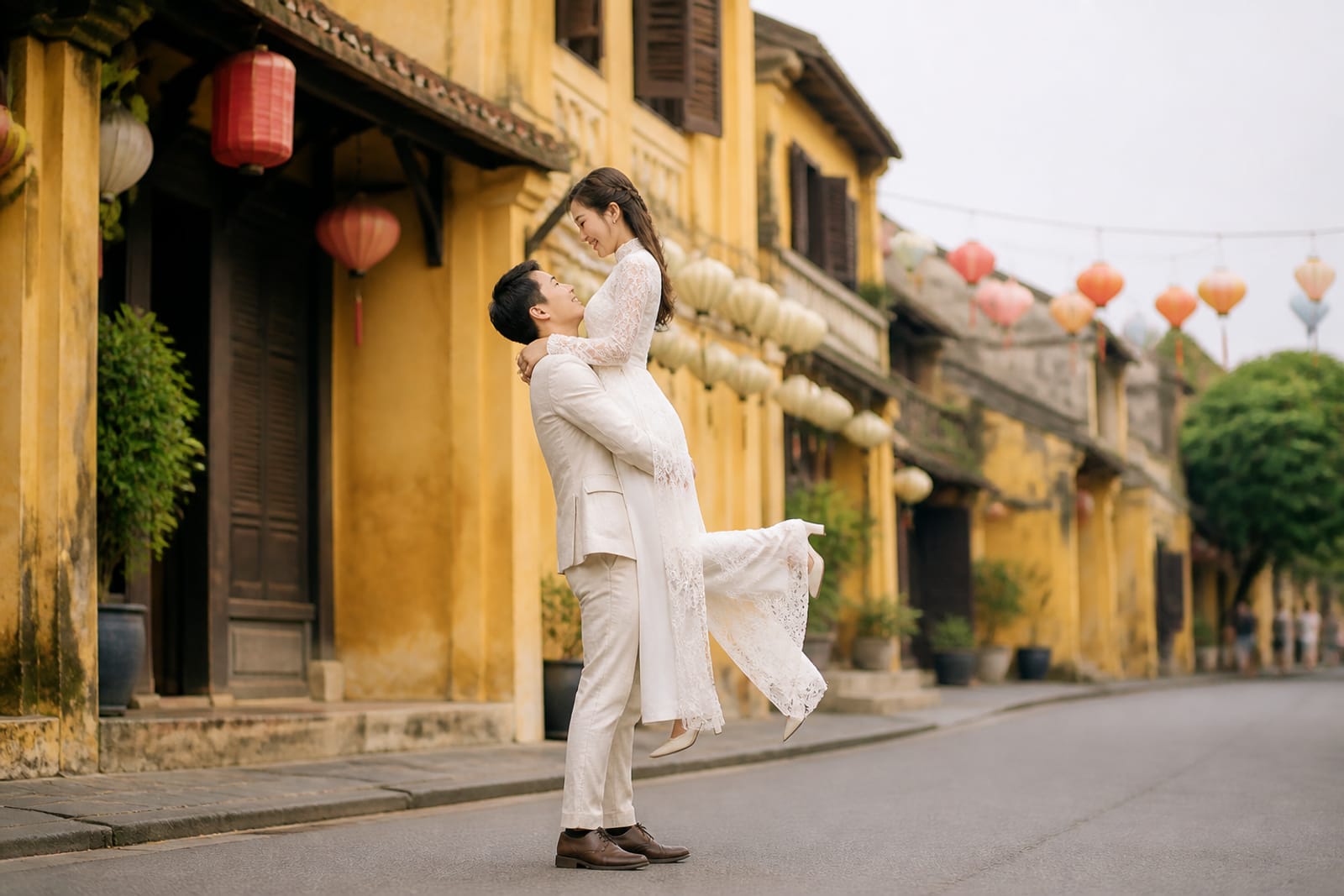
Your outfit choice tells a story. An ao dai signals cultural immersion and honors Vietnamese heritage—couples often choose it for pre-wedding shoots that feel intimate and place-specific. Western formal wear (ballgown, tuxedo, suit dress) projects timeless elegance and works beautifully if you're uncomfortable in a tunic or prefer outfits you already own. A mixed-pairing approach (ao dai + Western dress, or vice versa) balances cultural respect with personal comfort, and creates visual rhythm across the bridge's warm wood tones. Ask yourself: Do I want to feel like a visitor honoring the place, or a traveler in my own style? Neither answer is wrong—the bridge photographs all three equally well under the right light.
📸 Book on WhatsApp — ao dai photoshoot | 💄 Makeup & hair at your hotel
What's the best time of day to shoot at the bridge?
Sunrise (5:30–6:30 a.m. Feb–Aug) is non-negotiable if you want solitude and soft, directional light. The bridge faces west-southwest; golden light hits the lanterns and wooden railings, creating warm tones on skin without harsh shadows. By 7:30 a.m., domestic tourists and school groups arrive; by 10 a.m., crowds are thick and light is flat. Late afternoon (4:30–6 p.m.) offers a second window—warm light, fewer visitors—but the bridge interior (where most couples pose) darkens quickly as the sun drops behind buildings. Cloudy mornings (common Feb–Mar) diffuse light evenly, eliminating shadows but reducing contrast. A 2–3 hour session starting at dawn gives you the bridge quiet, then lets you move to nearby Ancient Town streets (Tran Phu Street, lantern makers' shops) as light strengthens. Hoi An's entrance ticket is required; purchase it the evening before or arrive 15 minutes early.
Ao dai rental: fit, alterations, and what to expect on the day
An ao dai (tunic + pants) must fit your shoulders, chest, and waist exactly—ill-fitting fabric drapes poorly on camera and restricts movement on narrow bridge steps. Hoi An tailor shops offer rentals; if you rent, collect the outfit the day before your shoot and try it on with the shoes you'll wear (usually silk flats or embroidered flats, never heels—the bridge's wooden slats are slippery). Ask the tailor to check the hem length: the tunic should skim your hip and fall just above the ankles. If you're taller than 5'9" (175 cm) or have broad shoulders, request an alteration consultation; a rushed hem or tight armhole ruins photographs. Cáo Studio teams can advise on fit during booking; many couples also rent from the studio or pre-arrange rentals in Hoi An. Transport the ao dai carefully—fold it loosely in a large bag, never roll—and keep it away from humid hotel bathroom air (hang it in the room's main space the night before). Makeup and hair services work best with ao dai; the studio applies makeup that won't smudge in the morning humidity.
🌸 See the lookbook | 💄 Makeup & hair at your hotel
Comparing outfit options across light, crowd, and season
| Outfit type | Best for | Ideal season | Light quality | Crowd factor | Why it works |
|---|---|---|---|---|---|
| Ao dai (rented or owned) | Cultural story, romantic couples | Feb–Apr | Golden, warm | Sunrise is quiet; evenings vary | Frames lanterns, reflects in water, honors place |
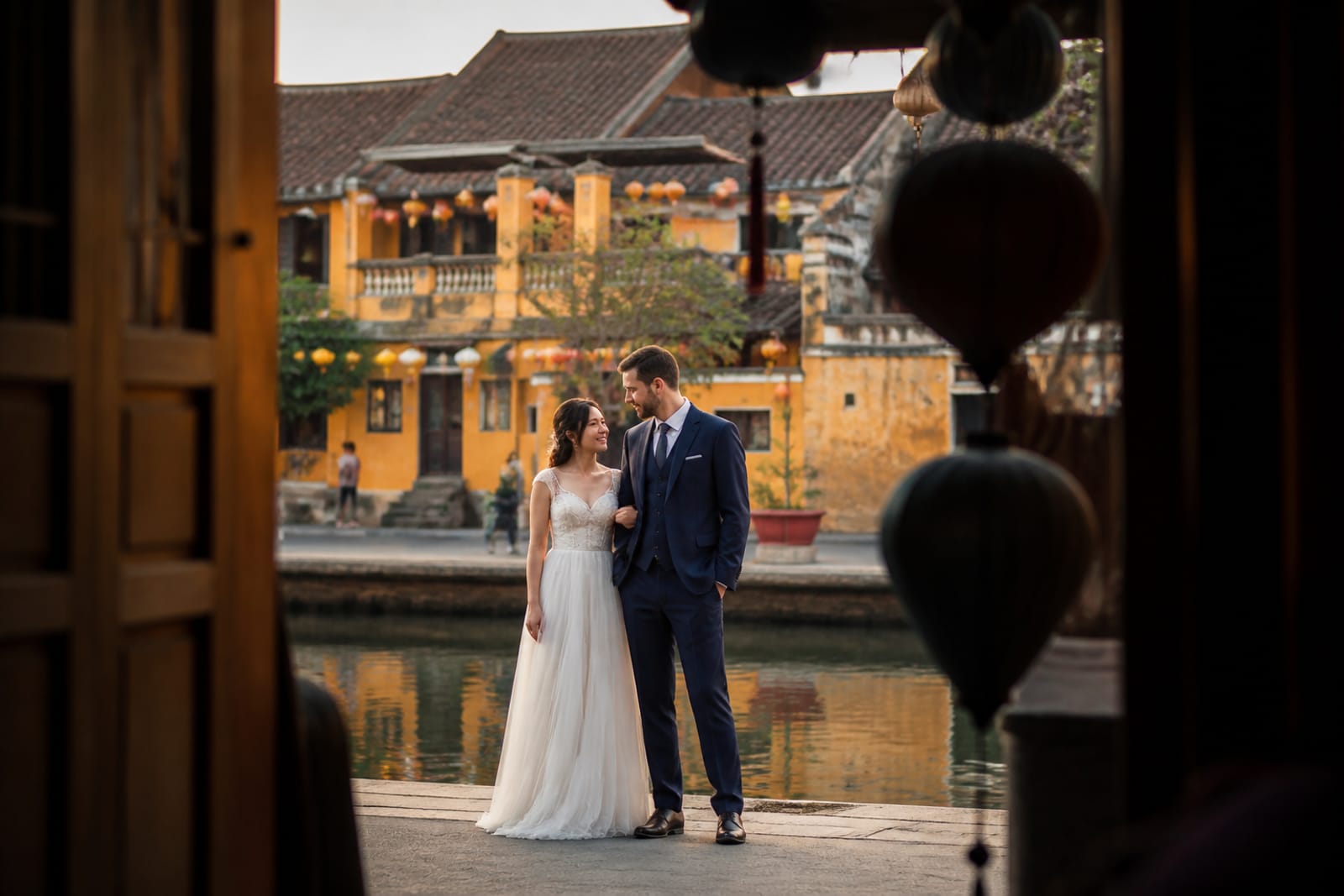
| Western formal (dress, suit) | Timeless elegance, no rentals | Feb–Aug any | Any light works | Sunrise quietest | Personal comfort, easy styling, owned pieces |
| Mixed pairing (ao dai + Western) | Balance of both worlds | Feb–Apr | Varies per outfit | Sunrise best | Visual contrast, respects both partners' comfort |
| Casual + ao dai (one partner) | Relaxed, playful | Feb–May | Soft morning light | Very quiet before 7 a.m. | Authentic feel, less formal pressure |
Season note: Feb–Apr is driest with mild mornings (15–22°C); May–Aug is dry but hot (30–35°C at sunrise), so hydration matters. Sep–Dec is rainy and typhoon-prone; Oct–Nov sees flooding in the Ancient Town that makes the bridge unsafe.
Weather, light, and season: when to actually book
Book for Feb–Apr if possible: mild mornings (15–22°C), low humidity, and skies that clear by sunrise. Ao dai fits comfortably; no sweat concerns during makeup application. May–Aug is dry but hot—morning temperatures still reach 25–28°C by 6:30 a.m., and makeup may set unevenly. Humidity demands waterproof mascara and long-wear foundation; ask the makeup artist about sweat-proof products during booking. Sunrise light is identical to Feb–Apr, so the only trade-off is comfort. Sep–Dec is off-season: typhoons (especially Oct–Nov) flood the bridge steps and Ancient Town streets, wind gusts knock lanterns, and visibility drops. Hoi An's entrance gates sometimes close for weather. Dec–Jan brings occasional drizzle and cooler temps (12–18°C), which suits formal wear but complicates makeup timing. Never shoot Oct–Nov. The full-moon lantern night (monthly, dates vary) draws enormous crowds; avoid it unless you want a festival backdrop. Ask on WhatsApp for Hoi An dates and book 2–3 weeks ahead to secure sunrise slots.
📸 Book on WhatsApp — couple photoshoot | 🌸 See the lookbook
What to check before you book your session
Outfit details:
- Confirm whether you're renting or wearing owned pieces; if renting, collect the day before and try on with final shoes.
- If wearing ao dai, ask the renter or Cáo Studio about alteration availability for fit.
- Request makeup + hair services in advance; morning touch-ups on the bridge are impossible.
Logistics:
- Verify entrance ticket cost and whether your booking includes it (ask on WhatsApp).
- Confirm sunrise start time with the studio (typically 5:30–6 a.m., varies by month).
- Arrange hotel pickup or meeting point; the Ancient Town is a 10-minute walk from most hotels.
- Check the full-moon lantern night calendar if you want that backdrop—ask the studio.
Light & backup plan:
- Ask what happens if sunrise is cloudy (diffused light is still usable; ask to see examples in the lookbook).
- Confirm whether the studio shoots alternate times (late afternoon, dusk) if dawn light is poor.
- Request a mix of bridge shots, lantern-maker street, and quiet side-canal poses for variety.
Delivery & keepsakes:
- Confirm turnaround time for edited images (ask on WhatsApp).
- Ask about printed keepsakes: photo albums, framed prints, or canvas options appeal to many couples.
---
Related services and next steps
A Japanese Covered Bridge couple session pairs beautifully with pre-wedding shoots elsewhere in Hoi An or nearby Ninh Binh (ask the studio about additional location packages). If you're preparing for a wedding day, a pre-wedding session builds rapport with your photographer and yields stunning engagement portraits. Couples in Hanoi can explore pre-wedding and elopement packages across the city's lakes and French Quarter; those in Ho Chi Minh City can book couple photoshoots at rooftop venues or riverside spots. If you're unsure whether the bridge session is right for you, review the lookbook to see real couples and outfits—or ask on WhatsApp for custom advice.
---
FAQ
Is the Japanese Covered Bridge crowded? When is it quietest?
Yes, very crowded by 8 a.m. Sunrise (5:30–6:30 a.m.) is quietest; you'll have 10–15 minutes solo before tour groups arrive. Book a sunrise session. Late afternoon (after 4 p.m.) is slightly less packed but light fades quickly indoors.
Can I wear a wedding dress on the bridge?
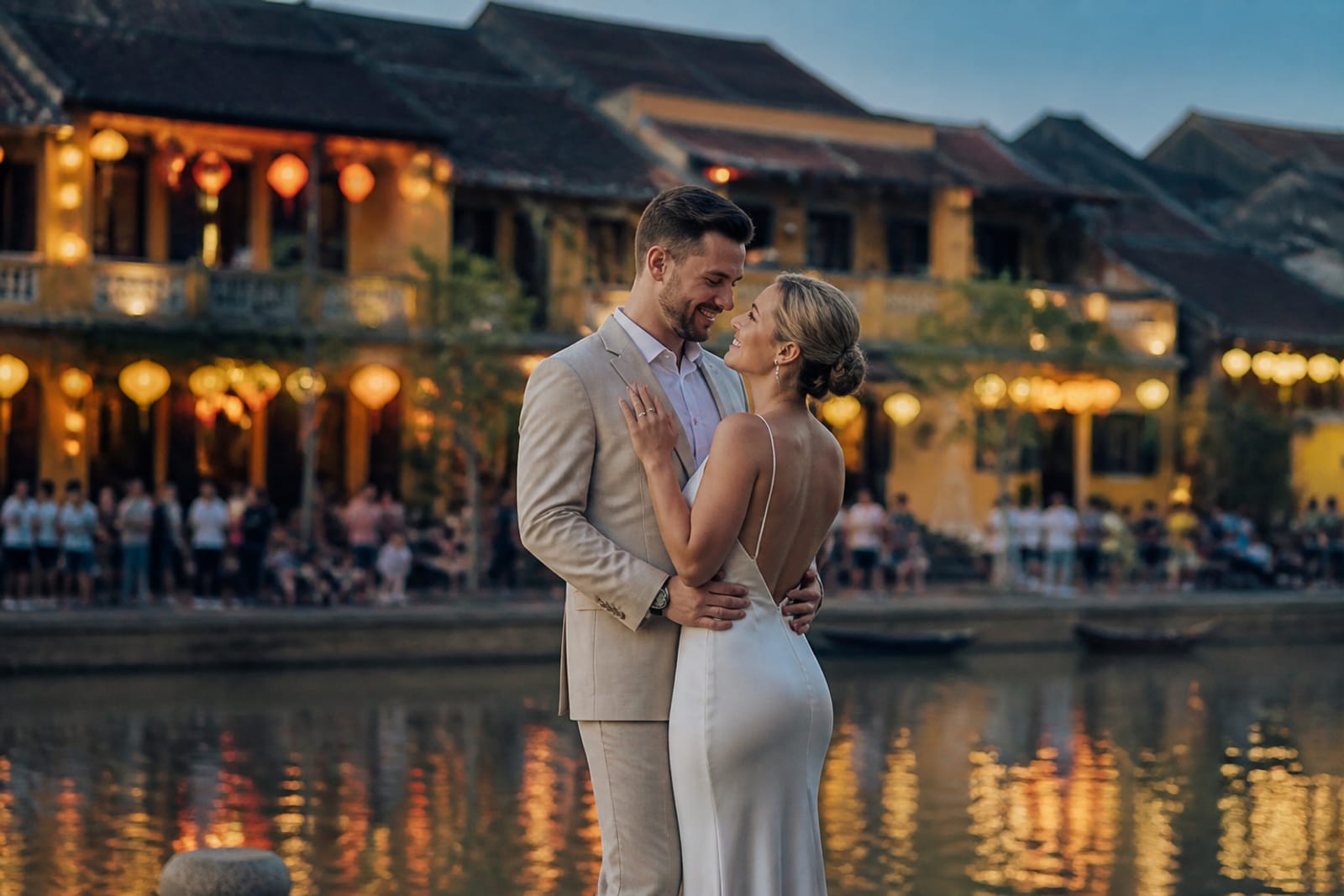
Yes, formal gowns photograph beautifully. Avoid very heavy trains—the wooden steps are narrow and slippery in humidity. Full-length skirts work best; keep shoes flat or low-heel for safety. Ask the makeup artist about sweat-resistant foundation.
Should I rent an ao dai in Hoi An or bring one?
Renting in Hoi An is convenient: fit is guaranteed by local tailors, and you avoid luggage. Quality rentals are available throughout the Ancient Town. If you own one, bring it only if you're confident it fits perfectly and won't wrinkle in transit.
What happens if it rains on my shoot day?
Light rain (drizzle) is manageable; soft, diffused light actually works well. Heavy rain or typhoon conditions force rescheduling—ask the studio's policy on rebooking. Oct–Nov is typhoon season; avoid these months entirely for safety.
How long does a Japanese Covered Bridge couple session take?
Typical sessions run 2–3 hours starting at sunrise, including bridge shots, nearby lantern-maker streets, and side-canal poses. Exact timing depends on your package; confirm on WhatsApp when booking.
Do I need to buy an entrance ticket separately?
Yes, Hoi An Ancient Town requires an entrance ticket. Confirm with Cáo Studio whether your package includes it or if you purchase it on arrival. Tickets are required whether you're a tourist or booking a professional photoshoot.
Can we do a couple session and a solo or family shoot in Hoi An?
Yes. Book a couple session, then add individual or family photoshoot time the same morning or a separate day. Discuss with the studio on WhatsApp to bundle bookings and optimize light.
FAQ
Is the Japanese Covered Bridge crowded? When is it quietest?
Yes, very crowded by 8 a.m. Sunrise (5:30–6:30 a.m.) is quietest; you'll have 10–15 minutes solo before tour groups arrive. Book a sunrise session. Late afternoon (after 4 p.m.) is slightly less packed but light fades quickly indoors.
Can I wear a wedding dress on the bridge?
Yes, formal gowns photograph beautifully. Avoid very heavy trains—the wooden steps are narrow and slippery in humidity. Full-length skirts work best; keep shoes flat or low-heel for safety. Ask the makeup artist about sweat-resistant foundation.
Should I rent an ao dai in Hoi An or bring one?
Renting in Hoi An is convenient: fit is guaranteed by local tailors, and you avoid luggage. Quality rentals are available throughout the Ancient Town. If you own one, bring it only if you're confident it fits perfectly and won't wrinkle in transit.
What happens if it rains on my shoot day?
Light rain (drizzle) is manageable; soft, diffused light actually works well. Heavy rain or typhoon conditions force rescheduling—ask the studio's policy on rebooking. Oct–Nov is typhoon season; avoid these months entirely for safety.
How long does a Japanese Covered Bridge couple session take?
Typical sessions run 2–3 hours starting at sunrise, including bridge shots, nearby lantern-maker streets, and side-canal poses. Exact timing depends on your package; confirm on WhatsApp when booking.
Do I need to buy an entrance ticket separately?
Yes, Hoi An Ancient Town requires an entrance ticket. Confirm with Cáo Studio whether your package includes it or if you purchase it on arrival. Tickets are required whether you're a tourist or booking a professional photoshoot.
Can we do a couple session and a solo or family shoot in Hoi An?
Yes. Book a couple session, then add individual or [family photoshoot](/family-photoshoot) time the same morning or a separate day. Discuss with the studio on WhatsApp to bundle bookings and optimize light.
Ao dai, makeup, hair and a local photographer in Hanoi or Saigon — one WhatsApp message.