Cáo Studio · Mga gabay sa photoshoot sa Vietnam · Ao Dai Photoshoot Vietnam: Mga Opsyon at Gabay sa Pagbili 2026
Ao dai couple photos at Fansipan summit — booking options and light gu
Cáo Studio team · Hanoi · 2026-10-03
A Fansipan couple ao dai shoot means taking the cable car to Vietnam's highest peak (Sapa region, in the north) and framing you two against rock faces, mist or rare clear sky — typically 30–45 minutes on summit before conditions change. Cáo Studio does not operate in Sapa; you'll need to hire a local Sapa photographer or travel to Hanoi or Ho Chi Minh City for our full team (outfit, hair, makeup, camera, same-day direction). Fansipan light works best in Mar–May and Sep–Nov when the sky clears for 2–4 hours mid-morning (7–10 am); summer is rainy and grey, winter is fog. The cable car is open daily; entry and transport cost factors vary by season and advance booking. Avoid Tet (late Jan–mid Feb) — the site closes, crowds are heaviest, and vendors shut down for weeks.
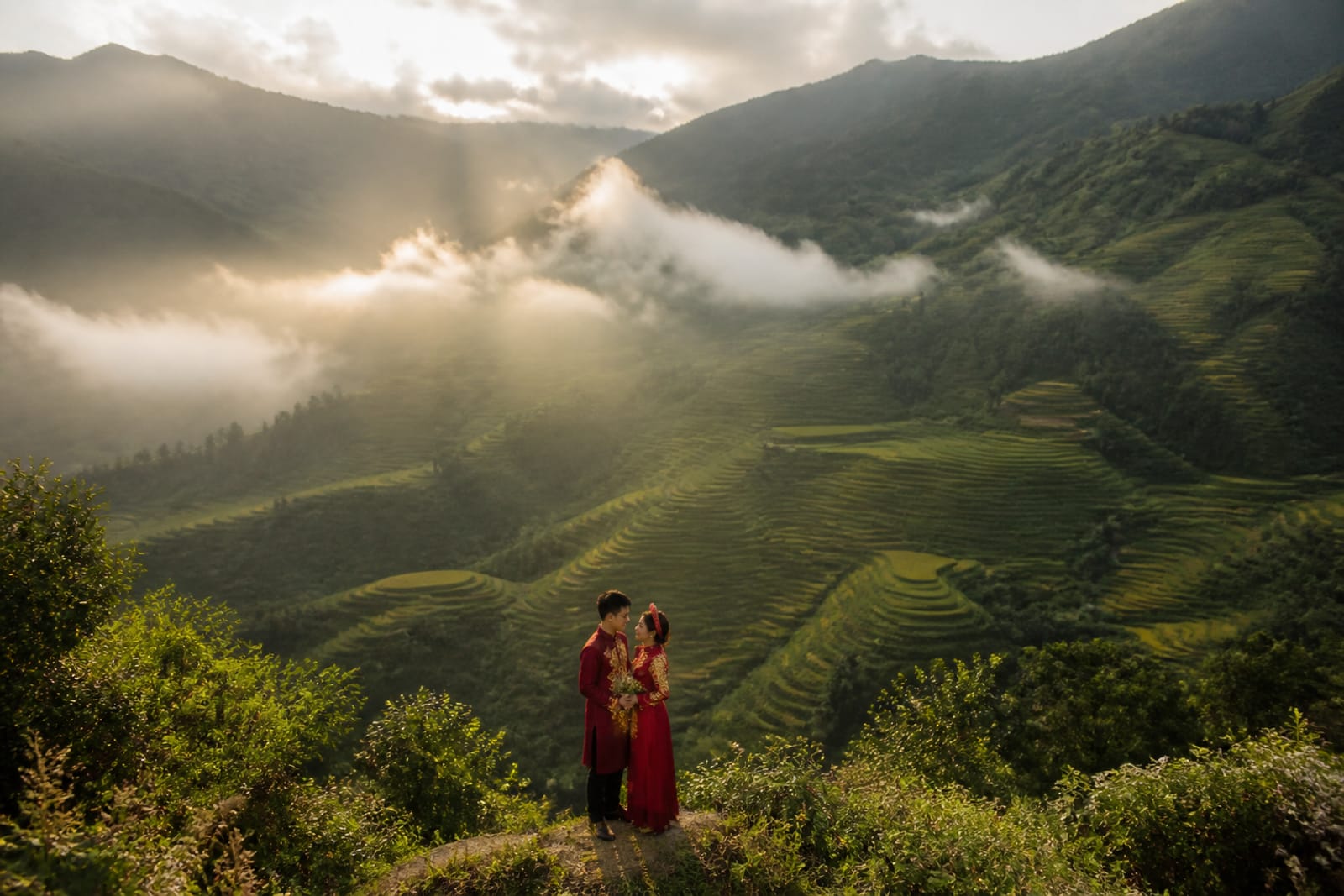
Fansipan couple ao dai shoots are a niche ask: the summit sits 3,143 meters above Sapa town in northwest Vietnam's mountainous Lao Cai province. The light is elemental — raw rock, fast-moving cloud, rare clear sky — and the walk to photo spots is steep and exposed. This is not a leisurely hotel-lobby session; it demands weather luck, acclimatization, proper footwear and a photographer who knows summit conditions.
Cáo Studio's team works Hanoi, Ho Chi Minh City and Hoi An. If Fansipan is your chosen location, you'll hire a local Sapa-based photographer and plan your outfit, hair and makeup beforehand, or book a pre-shoot session in a nearby city before you climb. This guide walks you through realistic options, light timing, season choice and what to watch for.
Fansipan location and cable car: what are the real access facts?
The cable car departs Sapa town (about 140 kilometers from Hanoi; roughly 3–4 hours' drive) and climbs roughly 1,600 meters in 20 minutes. The summit station opens daily; you buy round-trip tickets on site or in advance (check the operator's current rates and opening times — they change seasonally and for weather closures). The site is exposed, weather changes fast, and afternoon cloud rolls in by 11 am even in good seasons. Most photographers aim for first-light departure (cable car opens at 7 am or 8 am depending on season) to catch 7:30–10:30 am light before the mist rises.
📸 Book on WhatsApp — ao dai photoshoot
Mar–May and Sep–Nov: why are these the two shooting windows?
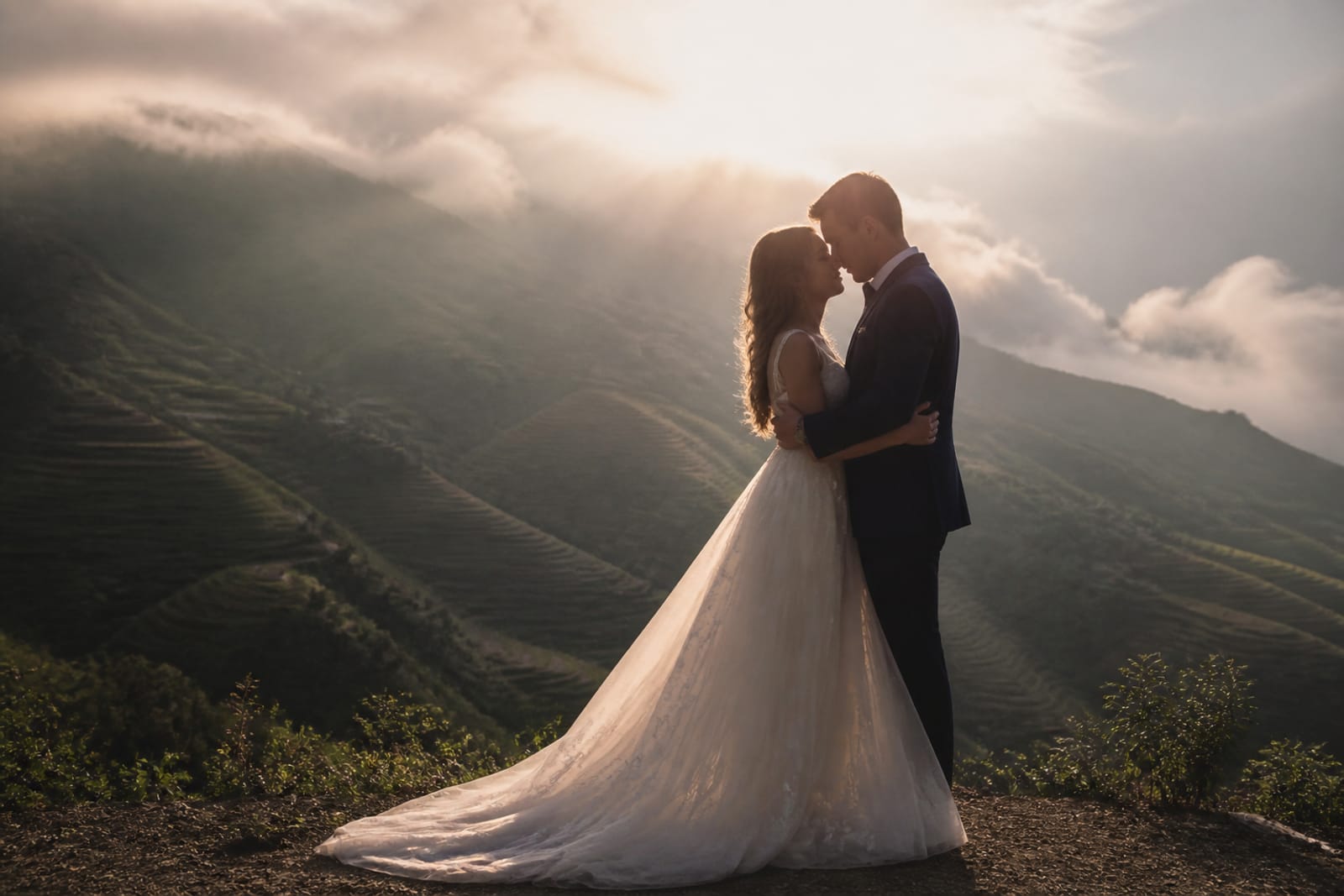
North Vietnam has three seasons: cool, grey winter (Dec–Feb); hot, rainy summer (May–Sep); and mild spring and autumn (Mar–May, Sep–Nov). Fansipan in winter is often cloud-bound and cold (near 0°C on the peak, with frost and occasional snow); dawn light is weak. Summer brings afternoon downpours and persistent grey skies — clouds roll up the mountain by 10 am. Mar–May and Sep–Nov are the reliable windows: daytime highs are 12–18°C, and the first 3–4 hours after dawn often see clear or partly clear skies with soft side light. Sep–Nov is slightly drier; Mar–May has higher cloud risk but stronger morning light. Book your session 2–3 weeks ahead and check the 7-day forecast — if rain is forecast, postpone.
The comparison table below shows why season choice matters as much as time of day:
| Season | Light Quality | Cloud Risk | Temperature | Walking Effort | Best Shoot Window |
|---|---|---|---|---|---|
| Dec–Feb (winter) | Weak, diffuse, short hours | Very high (fog, mist) | 0–8°C, frost possible | Slippery, slow | Avoid for photos |
| Mar–May (spring) | Soft, golden early morning | Moderate (clears by 8 am if clear) | 12–16°C | Normal | 7:00–9:30 am |
| May–Sep (summer) | Weak, grey, rainy | High (clouds by 10 am) | 18–24°C, humid | Muddy when wet | Avoid; unpredictable |
| Sep–Nov (autumn) | Crisp, clear, side light | Low to moderate (driest Oct) | 12–18°C | Normal to firm | 7:00–10:00 am |
Fansipan light timing: where is the light source and how long does it hold?
Fansipan's summit runs roughly east–west (the cable car ascends from the south, the rock faces and viewing platforms spread north and east). Dawn light comes from the east; it hits the eastern rock faces first, casting the western platforms in shadow. A director working Fansipan will shoot east-facing slopes first (6:50–8:00 am), then walk you to north and west-facing platforms as the sun climbs (8:30–10:00 am). By 11 am, the light is overhead and flat, and afternoon cloud is rising from the valley.
You'll need strong footwear (hiking boots, not dress shoes) because the summit stone is uneven, often wet, and sloped. A light ao dai is risky — the hems drag on rock and the fabric catches wind; many couples bring a backup casual outfit or work with a shorter, structured ao dai rental. The shoot itself (wide framing, then medium, then close detail) takes 40–60 minutes, leaving 20–30 minutes buffer before you descend. Total time on summit should be 90 minutes maximum — longer and you risk afternoon cloud, cold, and fatigue.
Local Sapa photographers vs. traveling to Hanoi or Saigon: which option suits your timeline and vision?
Cáo Studio does not have a Sapa base. You have three realistic paths:
Option 1: Hire a local Sapa photographer. Sapa has freelance and small studios offering couple shoots. Vet them by portfolio (ask for outdoor, ao dai or couple samples — not just studio work). Ask how they handle wind, cold, and fast-changing light; whether they scout the summit beforehand; and what they'll deliver and when. Many deliver JPEGs within 3–5 days, often unedited. This is the cheapest option and fastest turnaround, but quality varies widely — some shooters default to static poses against the landmark rather than light-driven framing. Cost is a factor; ask locally.
Option 2: Travel to Hanoi, book a Cáo Studio pre-shoot, then do Fansipan solo or with a local guide. Cáo Studio's Hanoi team handles outfit fitting, hair, makeup and a directed couple session in the city (1–2 hours, real light, story-driven framing). This locks in creative direction and professional grooming. You then climb Fansipan and either bring a phone for casual frames or hire a local to shoot candid while you walk and sit. Your Cáo Studio session becomes the keepsake; Fansipan photos are memory backup. Suits couples who want one polished shoot and are okay with casual summit frames.
Option 3: Hire a traveling photographer from Hanoi or Halong who will climb with you. Some Hanoi-based photographers make Sapa trips for couple shoots. They know the light and poses better than village-based operators, but cost is higher and you're booking 2–3 weeks ahead. Ask Cáo Studio on WhatsApp — we can recommend vetted Sapa partners or advise on a Hanoi pre-shoot strategy.
Read our guide to couple photoshoots for more direction options.
Outfit, makeup and what to prepare before you climb: how do you stay ready at 3,143 meters?
An ao dai at high altitude faces wind, cold, uneven ground and moisture (mist, rain, spray from mist). Here's what works:
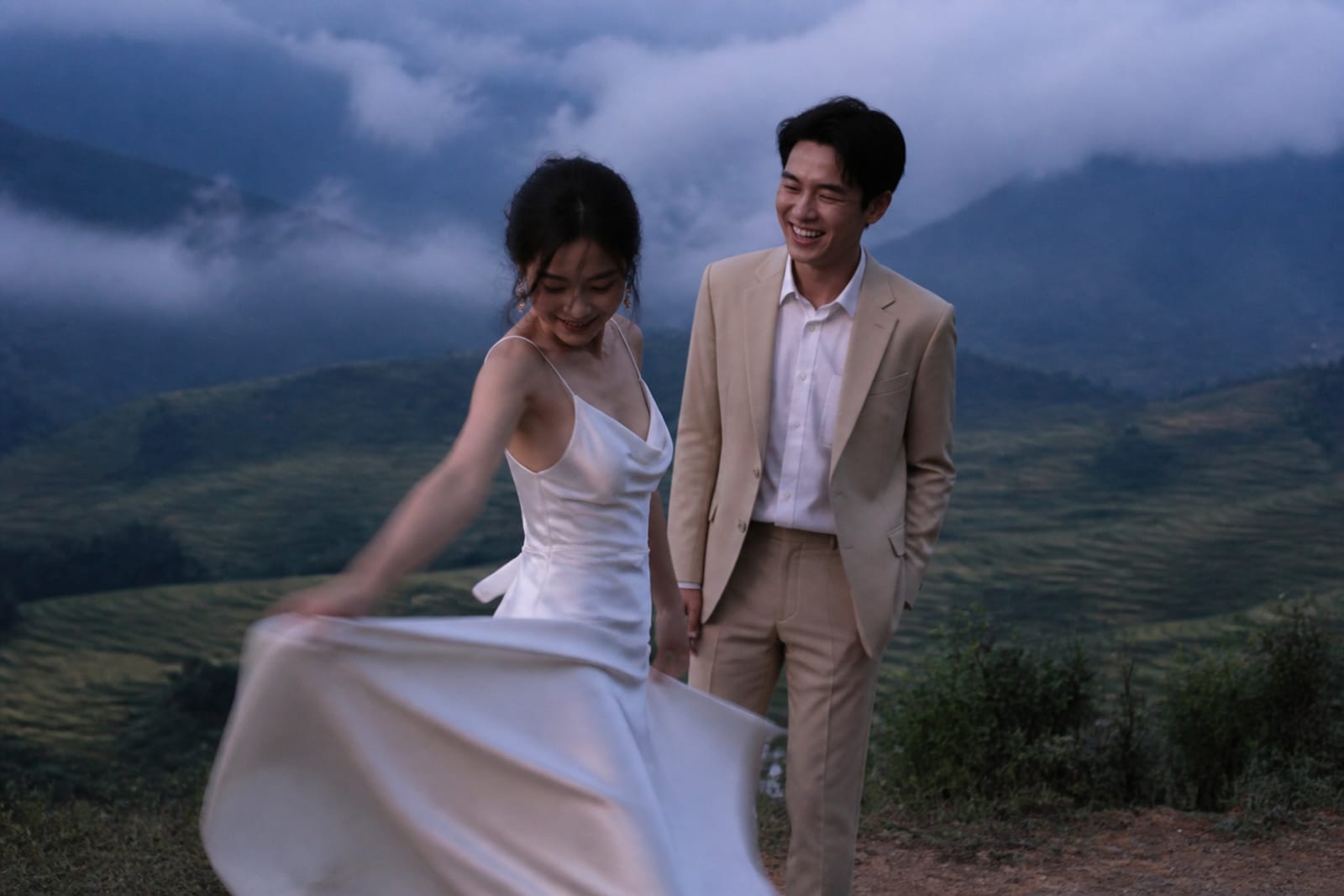
Ao dai selection: Shorter length (knee or mid-calf rather than full-floor) or fitted, structured fabric that won't catch rock or drag. Ask your rental supplier in Sapa or Hanoi which styles are "hiking-friendly." Bring a backup — a silk slip dress, simple outfit or cropped pants + fitted blouse — in case the ao dai is too fragile or the light calls for movement shots.
Hair and makeup: Plan it the evening before or early morning in Sapa town (book a local salon or bring makeup with you). At 3,143 meters, wind is constant and humidity is near 100% if there's mist; hairspray won't hold. A braid, low bun or loose waves that move with the wind photograph better than pinned updos. Makeup should be waterproof; the air is cool and skin oils won't run, but mist settles on the face. Keep powder and a lip brush in your pocket.
Footwear: Hiking boots or sturdy trail shoes. Change into them before the cable car. A director will ask you to walk, sit on rocks, turn into wind — none of that works in heels or dress shoes.
Undergarments: Wear thermal or moisture-wicking base layers under the ao dai (cold + wind + mist = fast chill). A thin merino or nylon layer is invisible under the silk and keeps you warm for a 60-minute shoot.
What to bring: Small backpack with water, energy bar, extra jacket, waterproof bag for phone/keys, tissues. You'll be at high elevation and moving; dehydration and cold creep up fast.
For a full ao dai photoshoot guide, see our pillar article.
Timing, turnaround and what to check before you book a Sapa photographer: the real-world checklist.
Before you contact a local Sapa photographer or book a Fansipan climb, nail these decisions:
- Dates: Pick two backup dates 1 week apart (Sapa weather changes daily; you may need to reschedule).
- Departure time: Aim to leave your hotel by 6:30 am to catch the first cable car at 7:00–7:30 am.
- Photographer: Ask for portfolio samples taken on Fansipan (not studio or lowland shots). Ask how they frame ao dai on rocks and in wind. Do they scout beforehand? Will they climb at your pace?
- Delivery: Confirm turnaround — same day, next day, or 3–5 days? What format (JPEGs, edited, unedited)? How many final photos?
- Backup plan: If weather closes the cable car (rare but it happens), does the photographer offer a rescheduled date or refund? Ask upfront.
- Outfit logistics: If renting locally in Sapa, confirm the rental shop holds the ao dai until you return from the summit (plan 4–5 hours total on-site time). If bringing from Hanoi, pack it carefully and have the hotel iron it the night before.
If you're considering alternatives or want a full team handling outfit, hair, makeup and photography together, book a couple photoshoot or pre-wedding session with Cáo Studio in Hanoi or Ho Chi Minh City, then visit Fansipan for personal frames. You'll have one professional keepsake and the freedom to explore the summit at your own pace.
FAQ
Does Cáo Studio shoot at Fansipan?
No. Cáo Studio operates in Hanoi, Ho Chi Mihn City and Hoi An only. For Fansipan, hire a local Sapa photographer or book a pre-shoot in Hanoi before your climb. We can recommend partners on WhatsApp.
What time of year has the clearest light at Fansipan for couple photos?
Sep–Nov and Mar–May are best. Autumn (Sep–Nov) is typically drier; spring (Mar–May) has slightly higher cloud risk but stronger early-morning light. Avoid Dec–Feb (fog, cold, weak light) and May–Sep (summer rain, grey skies).
How early do I need to wake up for a Fansipan shoot?
Leave your hotel by 6:30 am to catch the first cable car at 7:00–7:30 am. You'll be on the summit by 8 am, with 3–4 hours of good light ahead before clouds rise.
Can I wear a traditional ao dai on Fansipan, or do I need a shorter version?
A full-length ao dai can work, but shorter length (knee or mid-calf) and fitted fabric are safer — the hems won't catch on rock and wind won't whip the fabric. Bring a backup outfit (slip dress or casual wear) in case the light or terrain calls for movement shots.
What should I prepare the day before a Fansipan couple shoot?
Book hair and makeup in Sapa town the evening before or early morning (waterproof makeup, loose waves or braid work best in wind and mist). Confirm your ao dai rental and have it pressed. Pack hiking boots, thermal base layers, a light jacket, water and snacks. Check the weather forecast and confirm your photographer's rescheduling policy in case of closures.
How long does a Fansipan couple shoot usually take?
Expect 40–60 minutes of active shooting on the summit (wide framing, medium, close detail). Total time on-site should be 90 minutes — enough to catch good light and descend before afternoon cloud. A local photographer will deliver JPEGs within 1–5 days; turnaround varies by studio.
Mga karaniwang tanong
Does Cáo Studio shoot at Fansipan?
No. Cáo Studio operates in Hanoi, Ho Chi Mihn City and Hoi An only. For Fansipan, hire a local Sapa photographer or book a pre-shoot in Hanoi before your climb. We can recommend partners on WhatsApp.
What time of year has the clearest light at Fansipan for couple photos?
Sep–Nov and Mar–May are best. Autumn (Sep–Nov) is typically drier; spring (Mar–May) has slightly higher cloud risk but stronger early-morning light. Avoid Dec–Feb (fog, cold, weak light) and May–Sep (summer rain, grey skies).
How early do I need to wake up for a Fansipan shoot?
Leave your hotel by 6:30 am to catch the first cable car at 7:00–7:30 am. You'll be on the summit by 8 am, with 3–4 hours of good light ahead before clouds rise.
Can I wear a traditional ao dai on Fansipan, or do I need a shorter version?
A full-length ao dai can work, but shorter length (knee or mid-calf) and fitted fabric are safer — the hems won't catch on rock and wind won't whip the fabric. Bring a backup outfit (slip dress or casual wear) in case the light or terrain calls for movement shots.
What should I prepare the day before a Fansipan couple shoot?
Book hair and makeup in Sapa town the evening before or early morning (waterproof makeup, loose waves or braid work best in wind and mist). Confirm your ao dai rental and have it pressed. Pack hiking boots, thermal base layers, a light jacket, water and snacks. Check the weather forecast and confirm your photographer's rescheduling policy in case of closures.
How long does a Fansipan couple shoot usually take?
Expect 40–60 minutes of active shooting on the summit (wide framing, medium, close detail). Total time on-site should be 90 minutes — enough to catch good light and descend before afternoon cloud. A local photographer will deliver JPEGs within 1–5 days; turnaround varies by studio.