Cáo Studio · Panduan sesi foto di Vietnam · Sesi Fotografi Pra-Perkahwinan Vietnam: Panduan Lengkap 2026
Hoi An Wedding Photos: What to Wear & When to Shoot
Pasukan Cáo Studio · Hanoi · 2026-10-03
Hoi An Ancient Town photographs best in its own clothes: an ao dai (silk, traditional Vietnamese tunic) for brides and áo dài yếm (indigo everyday dress) for the groom or alternative groom look. The best months are February to April—dry, mild, and green rice fields light from the west by afternoon. Avoid October to November (floods and typhoons darken the Ancient Town). The most photographed moment is dusk, when lanterns glow 18:00–19:30 and the river reflects warm light. Cáo Studio shoots in Hanoi and Ho Chi Minh City, and comes to Hoi An by appointment; ask on WhatsApp for travel dates and booking. A single session typically captures one outfit choice, because changing mid-location wastes light and crew time. Choose fabric weight for the month: silk and cotton for Feb–Apr; linen or cotton-silk blend for May–Aug (heat above 35°C is common). Walk, look at the river, and let the photographer frame the light—not statue poses in front of monuments.
Hoi An Ancient Town is not a studio. It is a 500-year-old walking museum where light, crowds, and weather dictate everything—including what you wear and when to shoot.
The question is not "What looks best?" but "What photographs in this light, this season, this hour without looking stiff?" Cáo Studio directs pre-wedding shoots here by working backward from light, not forward from a wish list. This means one outfit per session, real movement, and a schedule locked to sunrise (05:30–06:30) or dusk (18:00–19:30), when the Ancient Town's lanterns and river reflect soft, directed light. Here is what to wear and why.
Ao Dai or Western Dress: Which Photographs Better in Hoi An Light?
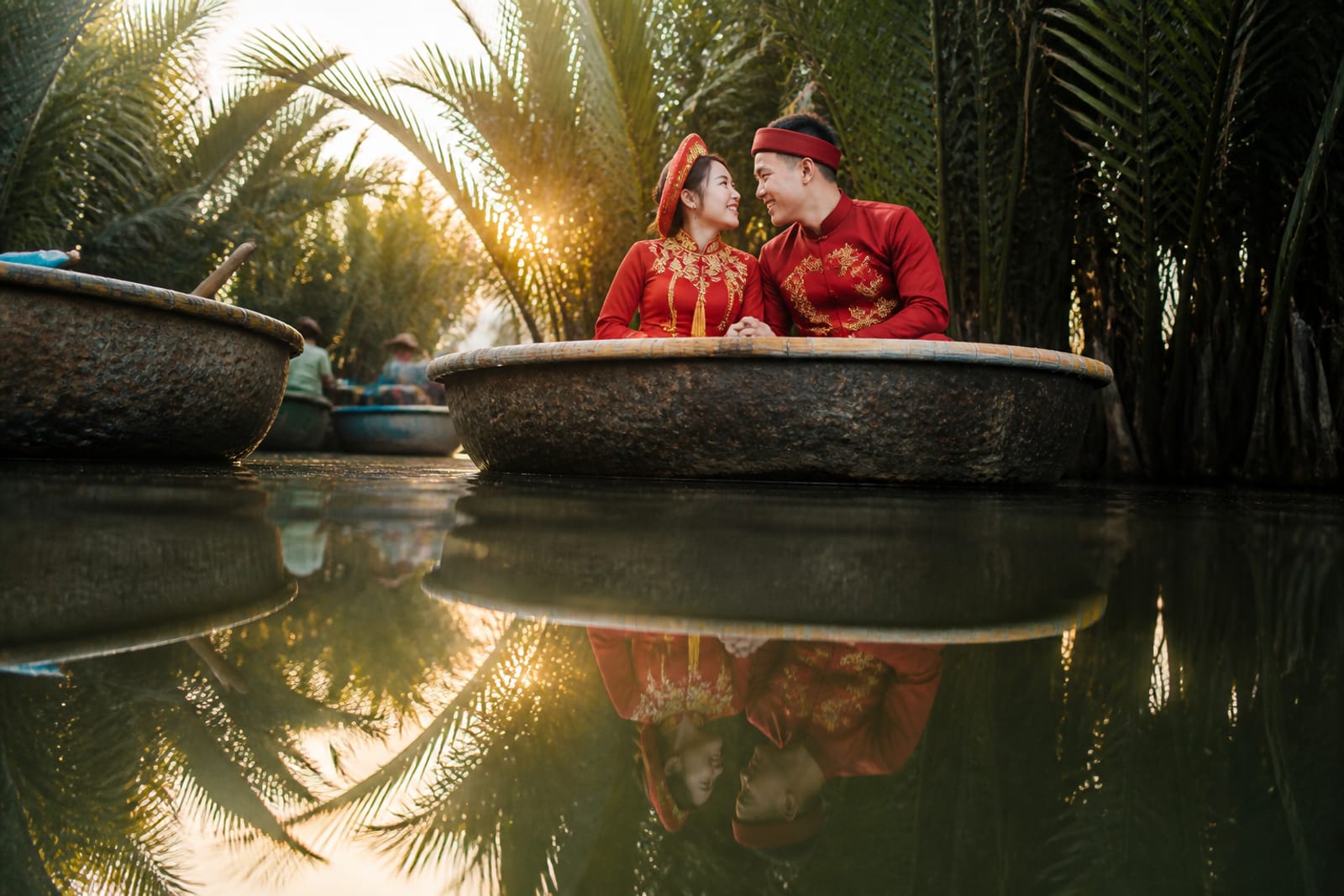
The ao dai (silk tunic over trousers, traditional Vietnamese wedding gown) photographs better in Hoi An's narrow streets and river light than a Western dress for three reasons. First, silk moves and catches light as you walk—a stationary Western wedding dress flattens against stone walls. Second, the ao dai's length and sleeves suit the Ancient Town's modest temple etiquette: no entry fines, no crew friction. Third, ao dai color—cream, gold, rose, deep red—reads clearly in the warm, golden hour light that dominates Hoi An shoots (16:00–19:30).
A Western dress works if it is structured (not flowing chiffon), lightweight (cotton or linen blend, not satin), and chosen for the season. Lightweight styles photograph well in May–Aug morning shoots, but midday heat (35°C+) makes you sweat visibly in video. If choosing Western, bring a backup: a linen or cotton blend, not silk (silk wrinkles fast in humidity and creases show in close-ups).
Conclusion: Ao dai suits Hoi An's light and season year-round. Western dress works in Feb–Apr or May–Aug sunrise shoots only.
Groom Outfit in Hoi An: Suit, Áo Dài Yếm, or Casual Linen?
The groom has three real choices in Hoi An, each suited to a different season and light angle.
Áo dài yếm (indigo, traditional collarless tunic over white shirt, worn by Hoi An boat rowers and locals) photographs as a storytelling choice: it says "we chose the place" rather than "we dressed for the photo." It reads dark in morning light (06:00–07:00), but glows against the river at dusk. Works Feb–Apr and Sep–Dec (cool months). Heat-heavy in May–Aug. Photography benefit: movement looks natural, color contrasts the ao dai, and it fits temple etiquette without debate.
Lightweight suit (linen, cotton-silk blend, neutral grey or cream) works Feb–Apr and Sep–Dec mornings and dusk. Afternoon heat (May–Aug, 13:00–17:00) makes jacket fabric shine with sweat in close-ups. In dusk light, a light suit reads clear and formal. In sunrise mist (06:00–06:30), it can blur into the grey.
Casual linen shirt and trousers works May–Aug sunrise shoots (cooler at 05:30–07:00, before heat climbs). Avoids formality and suits "walking the river" framing. Weak in dusk light—linen photographs flat without structure.
| Groom outfit | Best season & hour | Why it photographs | Light factor |
|---|---|---|---|
| Áo dài yếm + white shirt | Feb–Apr dusk; Sep–Dec any hour | Storytelling, movement, dark reads against water | Dusk golden 18:00–19:00 or overcast morning |
| Lightweight linen suit | Feb–Apr sunrise; Sep–Dec dusk | Formal, clean line, local tailor option | Golden hour 16:00–19:00 or soft sunrise mist |
| Linen shirt + trousers | May–Aug sunrise only (05:30–07:00) | Heat-appropriate, casual walking frame | Early light before 07:30 |
Season & Light: Why February–April Beats May–August in Hoi An
Hoi An's light and weather change the outfit choice more than personal taste does.
February to April (dry, 22–28°C). This is the shoot window. The sky is overcast or clear, morning mist lifts by 06:30, and afternoon light is golden from 16:00 onward. Ao dai photographs in full color. Groom's jacket does not show sweat. Streets are green (rice fields outside town are at their brightest). Only drawback: crowds peak, and entry tickets are required—arrive 05:30 to shoot empty streets before 07:00.
May to August (hot, 32–36°C+, dry). Sunrise shoots work (05:30–06:30, before heat climbs). Afternoon is too bright and you sweat visibly in video. Ao dai feels heavy on skin and silk wrinkles fast. Groom's jacket, if worn, shows moisture. This season demands lightweight cotton-linen blend and sunrise timing only. Lantern dusk (18:00–19:30) is humid; ao dai clings.
September to December (rainy season, 20–28°C). September and early October are still workable—light is soft, cool, and clouds diffuse harsh shadows. October to November is dangerous: typhoons, flooding in the Ancient Town streets, and grey, dark light that makes silk look dull. December and January are cool and drizzly; lantern light reflects in wet stone beautifully, but the ao dai hem gets wet. We do not recommend Oct–Nov shoots.
Conclusion: Feb–Apr light and temperature suit any outfit. May–Aug demands sunrise timing and lightweight fabric. Sep–Dec is risky; Jan–Apr is ideal.
Ao Dai Rental vs. Personal Dress: What Fits Hoi An's Humidity and Movement?
Hoi An's streets are narrow, humid, and require walking—not standing still. This changes the ao dai choice.
Rental ao dai from a local tailor (common in Hoi An Ancient Town or Saigon) offers fit for your body on the day. A custom-fit ao dai moves with you; a loose rental bunches and requires posture adjustments that read as stiff on camera. Humidity (60–80% in warmer months) makes rental silk feel heavy and wrinkle fast; personal fabric chosen for humidity works better.
Personal dress brought from home works if it is fitted, lightweight (cotton, cotton-linen, or silk-cotton blend), and packed without creasing. Weight matters: a heavy silk ao dai soaks sweat; a light cotton blend breathes and moves more naturally on camera. Cáo Studio can do makeup and hair at your hotel, so your dress arrives unwrinkled and stays fresh for shooting.
Fit check before booking: Try movement—walking, sitting on a bench, sitting in a low boat—in the dress at least once. Hoi An shoots involve river walks, temple steps, and narrow alley movement. A dress that feels perfect standing still can restrict your stride or gap at the shoulders when you walk. Rental shops in Hoi An offer try-on; if shipping from abroad, order samples or photos of back seam, shoulder fit, and sleeve length before finalizing.
Conclusion: Lightweight personal dress (cotton, linen, or silk-cotton blend) photographs better than heavy rental silk. Bring it packed flat; we handle makeup and hair the morning of the shoot.
📸 Book on WhatsApp — ao dai photoshoot
Color & Detail: What Reads in Hoi An's Lantern Light and River Reflections?
Hoi An Ancient Town is famous for lanterns (silk, paper, wooden frames lit at dusk) and the river that reflects them. Color choice changes how the shoot reads in this specific light.
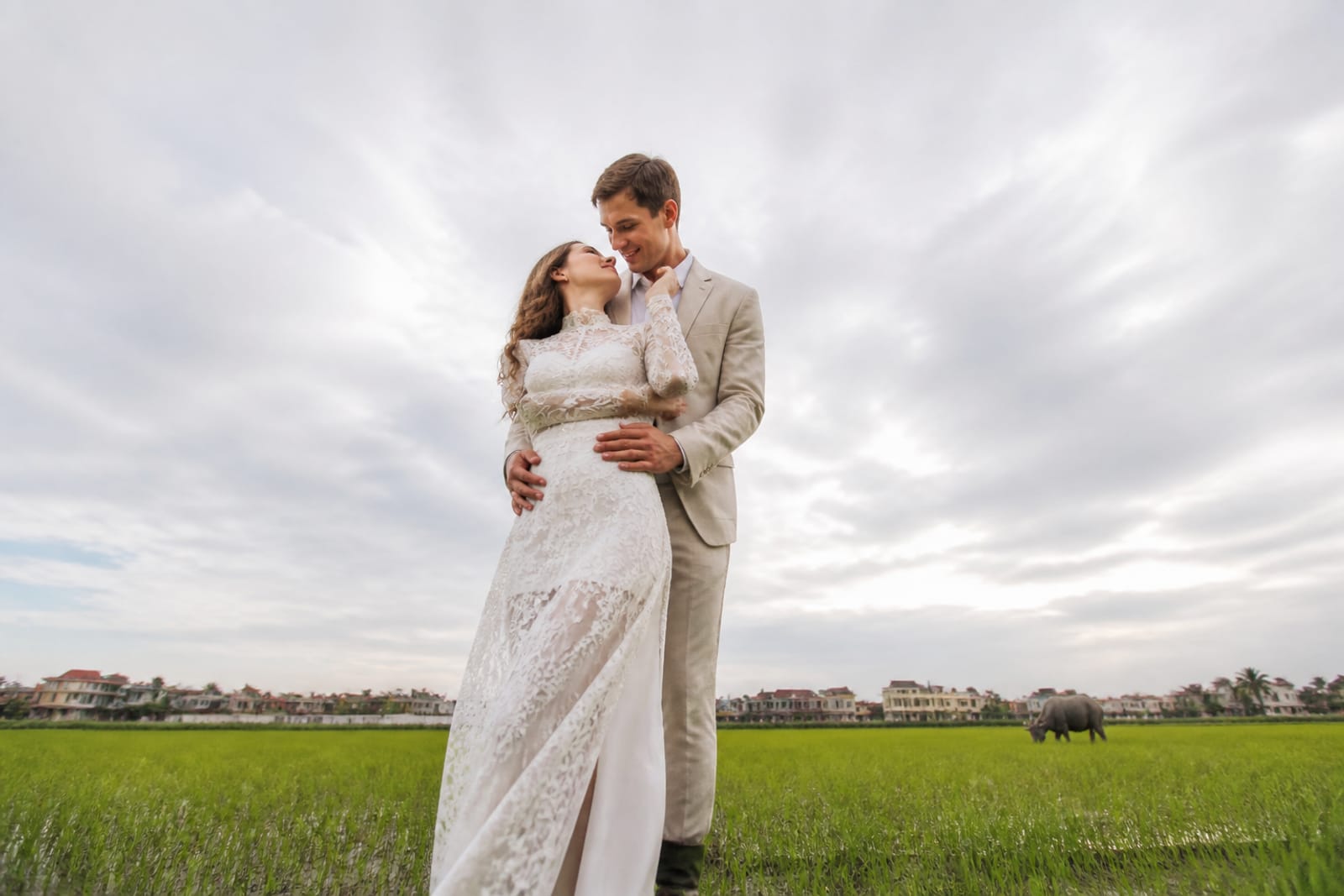
Warm tones (cream, gold, blush, terracotta, deep red ao dai) read clearly in golden-hour light (16:00–19:30) and lantern glow. They photograph distinct and warm. The groom's white or cream shirt glows next to warm-colored ao dai.
Cool tones (silver, pale blue, grey, white ao dai) can look washed out in golden hour unless the light is very clear. They photograph better in Feb–Apr morning mist (soft, even light) or in dusk lantern glow (the warmth of lanterns balances cool fabric). If choosing cool-toned ao dai, plan a dusk shoot (lanterns lit, 18:00–19:30) or Feb–Apr sunrise (clear morning light, no golden-hour warmth to compete).
Detail and embroidery. Hoi An lanterns cast patterned shadow. If your ao dai has embroidery, the lantern shadows can wash it out or create noise in framing. Simple silk with one focal color photographs cleaner in lantern light than heavily detailed or patterned fabric. Save intricate embroidery for close-up detail shots (wide first, medium, detail—the standard Cáo Studio approach).
Groom color contrast. The groom's outfit should contrast the bride's ao dai color enough to separate them in group or couple frames. White or light-cream shirt reads clear against warm or rich-toned ao dai. Against pale blue ao dai, the white shirt blends. A cream or grey linen shirt is safer for contrast; ask the director during WhatsApp booking.
What to Check Before You Book a Hoi An Pre-Wedding Shoot
1. Season and light hour. Decide Feb–Apr morning (05:30–06:30 arrival), Feb–Apr dusk (lanterns 18:00–19:30), or May–Aug sunrise only (05:30–07:00). Avoid Oct–Nov. Confirm the exact hour on WhatsApp after booking; light dictates the shot list, not the other way around.
2. Outfit weight and fit. If renting ao dai in Hoi An, arrive 2–3 days early to try on and have seams adjusted. If bringing your own, ensure it is packed flat and test mobility (walk, sit, lean) before the shoot day. Humidity will make silk and cotton heavier than at home.
3. Makeup and hair durability. Hoi An morning shoots (Feb–Apr sunrise) are cooler; makeup lasts well without sweat. Dusk shoots (18:00–19:30) are humid; waterproof makeup and a hair-set spray matter. Cáo Studio offers makeup and hair services at your hotel; confirm this is included in your booking package.
4. Temple and street etiquette. Hoi An's temples require shoulders covered, knees below mid-thigh, and no hats. Ao dai suits this automatically. Western dress must be modest. Entry to the Ancient Town requires a ticket (check current price on the official site). Ask on WhatsApp if your outfit choice is temple-approved.
5. Groom outfit continuity. If the groom is wearing a jacket (suit or linen), pack a lightweight undershirt to change into after the formal framing. Groom sweat shows in video close-ups; a fresh undershirt for the final walking sequence solves this.
6. One outfit, multiple locations. Hoi An shoots typically cover one outfit per session (bride ao dai, groom suit or yếm). This maximizes light and movement without outfit-change time loss. If you want two outfit changes, confirm this adds session time and travel between locations; ask on WhatsApp for the impact on your schedule.
---
How Cáo Studio Directs a Hoi An Pre-Wedding Shoot
Cáo Studio works backward from light, not from a list of poses. Here is what happens:
1. Confirm the month, hour, and outfit choice on WhatsApp. We recommend Feb–Apr dusk (lanterns, golden hour, warm light) or sunrise (soft, empty streets, cool temperature). If May–Aug, sunrise only. We confirm the direction: Which way faces the light at your chosen hour? Where is the river? Where are the lanterns?
2. We arrive with one director, one photographer, one makeup artist, and one hair stylist. No shuttle vendors, no separate makeup shop. One team = one message.
3. We shoot wide first (you walking, the alley behind you, lanterns or river light framing the space). Then medium (you together, turning to look at each other, the river or alley in soft focus). Then detail (your ao dai hem on wet stone, hands holding, the groom's collar detail, lantern light on fabric).
4. Within 48 hours, we deliver edited photos and a short vertical film. Exact count and format are confirmed on WhatsApp at booking.
5. We handle everything. Outfit choice is locked at booking; we do not spend shoot time on "which outfit?" questions. Light is locked to hour (e.g., "lanterns at 18:15, river light at 18:20, walking out of frame at 18:30—done by 19:00"). You walk, look at each other, and let the photographer frame the light.
---
🌸 Ideas & lookbook | 💄 Makeup & hair at your hotel
To learn more about pre-wedding and elopement photoshoots with Cáo Studio, visit /ms/pre-wedding-photoshoot. For ao dai photoshoots, see /ms/ao-dai-photoshoot. To inquire about Hoi An shoots, ask on WhatsApp—the team travels by appointment.
FAQ
Can we change outfits during a Hoi An shoot?
Yes, but it costs shoot time and light. One outfit per hour (sunrise or dusk) is standard. If two outfits are important, book two separate hours—morning and dusk—or ask on WhatsApp whether back-to-back sessions are possible. Moving between locations, changing, and resetting hair and makeup takes 20–30 minutes.
What is the best month for Hoi An wedding photos?
February to April (dry, 22–28°C, golden light, green fields). Avoid October to November (floods, typhoons, dark light). May to August works only for sunrise shoots (05:30–07:00, before heat climbs above 35°C). September and early October are cool but risky. December and January are cool and drizzly but workable.
Should we rent ao dai in Hoi An or bring our own from abroad?
Bring your own if it is lightweight (cotton, cotton-linen, silk-cotton blend), fits you precisely, and can be packed flat. If renting, arrive 2–3 days early to try on and have seams adjusted. Rental ao dai from shops in the Ancient Town or Saigon often fit loose and wrinkle fast in humidity. Confirm rental durability and fit before booking the shoot.
Do we need to wear shoes in Hoi An? What photographs best?
Barefoot or in soft sandals photographs better than formal shoes. Hoi An's wet stone is slippery in shoes; bare feet or simple leather sandals (no sneakers, no loud colors) move naturally and photograph clean. Bare feet work for dusk river walks. Confirm with the director on WhatsApp; temple entry may require covered feet.
Can we shoot at sunrise and dusk in the same day?
Yes, but as two separate bookings. Sunrise (05:30–06:30, bright and cool, one outfit) and dusk (18:00–19:30, lanterns and golden hour, same or different outfit) are different light conditions and require different crew energy. Confirm availability and exact times on WhatsApp. Back-to-back sessions in one day are possible but add travel time between locations.
What if it rains or floods in Hoi An?
October to November carries typhoon and flood risk; streets can be impassable. January to March can be drizzly, which softens light beautifully but makes stone wet and slippery. If you are flexible, choose Feb–Apr to avoid weather risk. If your shoot date falls in the rainy season and weather is poor, ask on WhatsApp about rescheduling. We do not shoot in typhoon conditions or flooding.
How much does a Hoi An pre-wedding shoot cost?
Exact pricing and package details are confirmed on WhatsApp. Costs depend on season, outfit choices, whether makeup and hair are included, travel time for the team, and number of photos and films delivered. Ask for a quote; we respond with detailed breakdown and timing.
Do we need to buy entry tickets to the Hoi An Ancient Town?
Yes, entry tickets are required. Check the current price on the official Hoi An Heritage Site website. Arrive early (05:30–06:00 for sunrise shoots) to enter before crowds peak. The ticket grants access to all interior temple and heritage sites within the Ancient Town boundaries.
Soalan lazim
Can we change outfits during a Hoi An shoot?
Yes, but it costs shoot time and light. One outfit per hour (sunrise or dusk) is standard. If two outfits are important, book two separate hours—morning and dusk—or ask on WhatsApp whether back-to-back sessions are possible. Moving between locations, changing, and resetting hair and makeup takes 20–30 minutes.
What is the best month for Hoi An wedding photos?
February to April (dry, 22–28°C, golden light, green fields). Avoid October to November (floods, typhoons, dark light). May to August works only for sunrise shoots (05:30–07:00, before heat climbs above 35°C). September and early October are cool but risky. December and January are cool and drizzly but workable.
Should we rent ao dai in Hoi An or bring our own from abroad?
Bring your own if it is lightweight (cotton, cotton-linen, silk-cotton blend), fits you precisely, and can be packed flat. If renting, arrive 2–3 days early to try on and have seams adjusted. Rental ao dai from shops in the Ancient Town or Saigon often fit loose and wrinkle fast in humidity. Confirm rental durability and fit before booking the shoot.
Do we need to wear shoes in Hoi An? What photographs best?
Barefoot or in soft sandals photographs better than formal shoes. Hoi An's wet stone is slippery in shoes; bare feet or simple leather sandals (no sneakers, no loud colors) move naturally and photograph clean. Bare feet work for dusk river walks. Confirm with the director on WhatsApp; temple entry may require covered feet.
Can we shoot at sunrise and dusk in the same day?
Yes, but as two separate bookings. Sunrise (05:30–06:30, bright and cool, one outfit) and dusk (18:00–19:30, lanterns and golden hour, same or different outfit) are different light conditions and require different crew energy. Confirm availability and exact times on WhatsApp. Back-to-back sessions in one day are possible but add travel time between locations.
What if it rains or floods in Hoi An?
October to November carries typhoon and flood risk; streets can be impassable. January to March can be drizzly, which softens light beautifully but makes stone wet and slippery. If you are flexible, choose Feb–Apr to avoid weather risk. If your shoot date falls in the rainy season and weather is poor, ask on WhatsApp about rescheduling. We do not shoot in typhoon conditions or flooding.
How much does a Hoi An pre-wedding shoot cost?
Exact pricing and package details are confirmed on WhatsApp. Costs depend on season, outfit choices, whether makeup and hair are included, travel time for the team, and number of photos and films delivered. Ask for a quote; we respond with detailed breakdown and timing.
Do we need to buy entry tickets to the Hoi An Ancient Town?
Yes, entry tickets are required. Check the current price on the official Hoi An Heritage Site website. Arrive early (05:30–06:00 for sunrise shoots) to enter before crowds peak. The ticket grants access to all interior temple and heritage sites within the Ancient Town boundaries.