Cáo Studio · Przewodniki po sesjach zdjęciowych w Wietnamie · Sesja zdjeciowa w ao dai w Wietnamie – poradnik i rezerwacja
Ao dai couple photos at Muong Hoa valley rice terraces
Zespół Cáo Studio · Hanoi · 2026-10-03
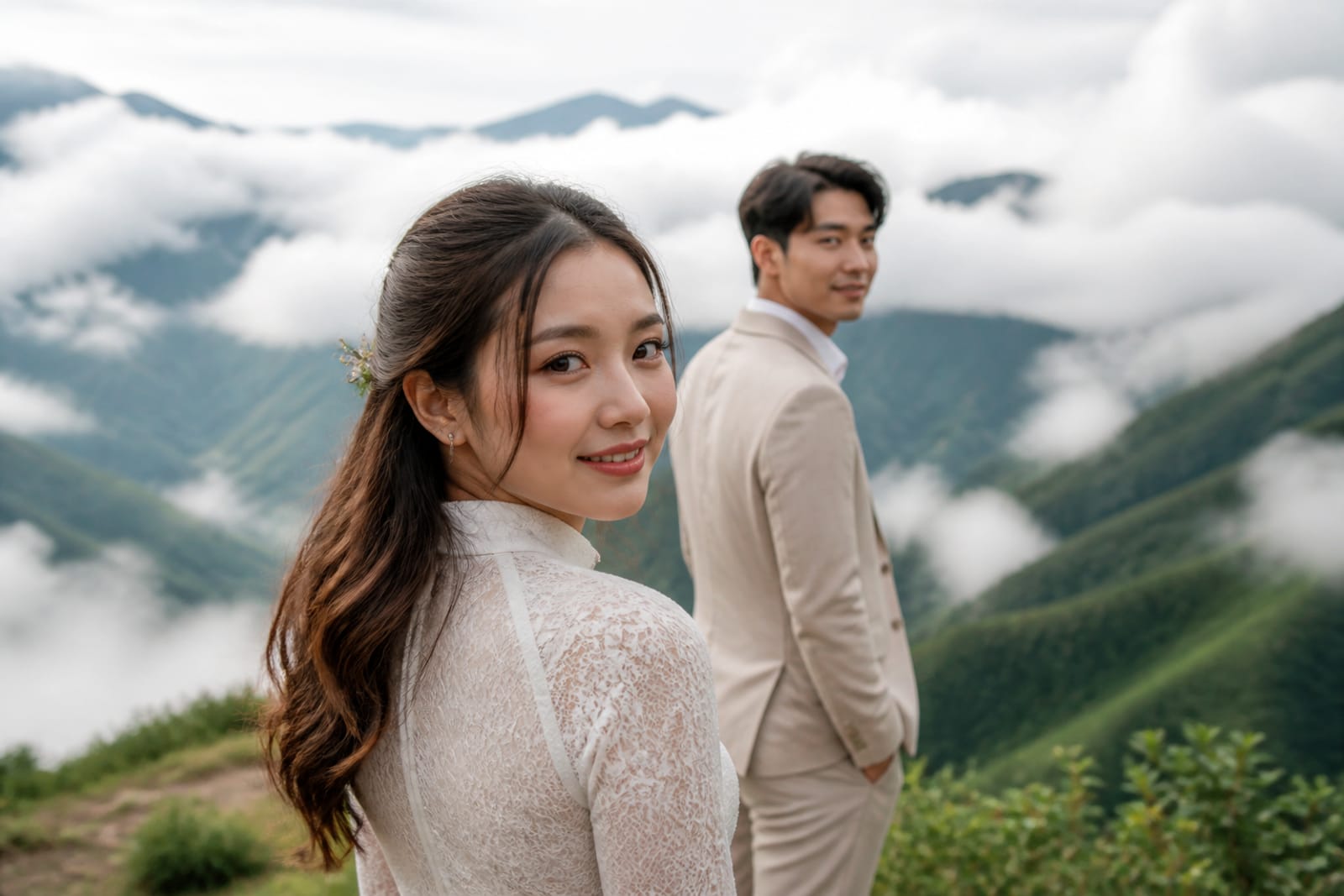
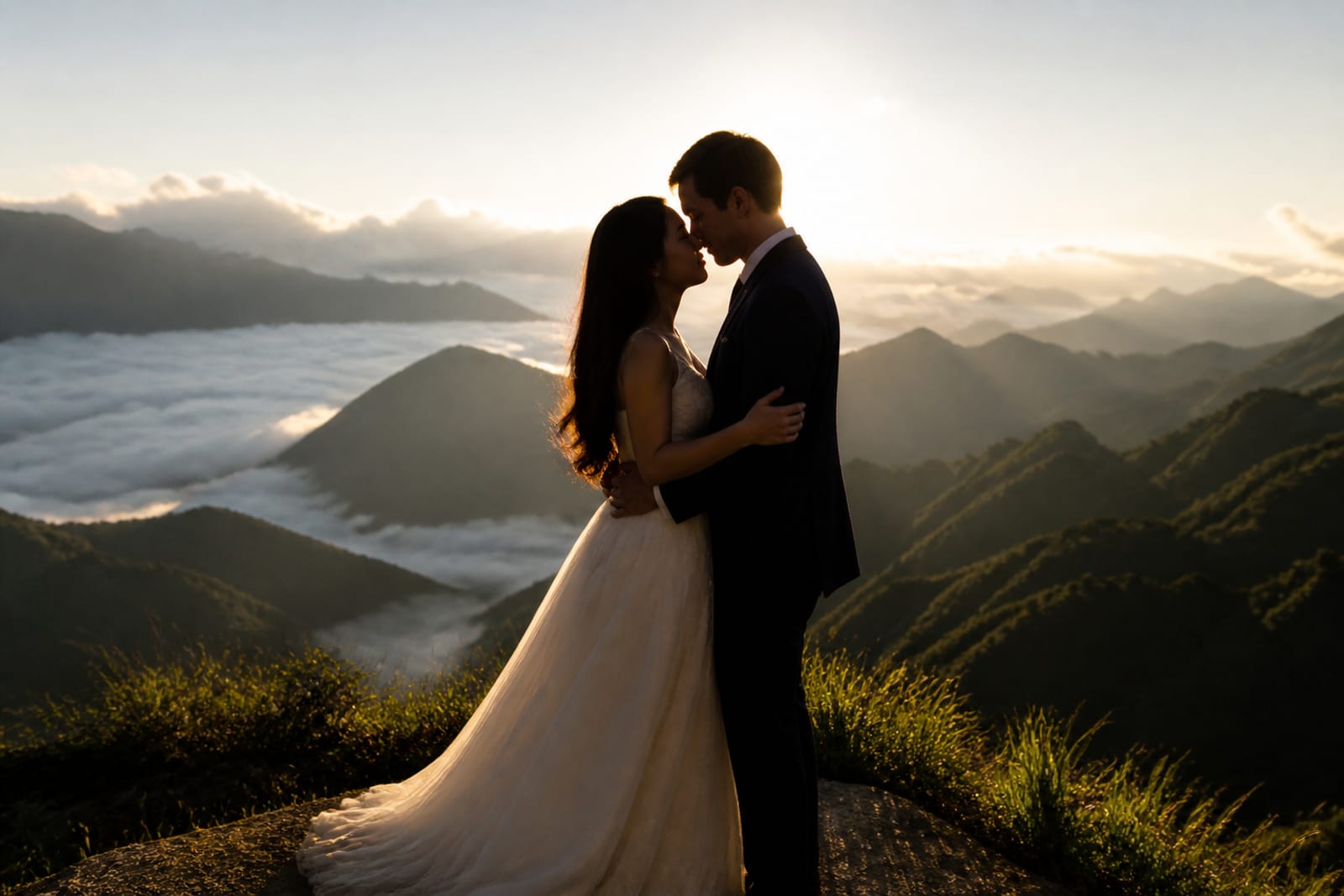
Muong Hoa Valley (Sapa, Lao Cai) offers rolling rice terraces, mountain mist, and intimate paths ideal for ao dai couple photography. The valley sits at roughly 1,000–1,200 metres elevation; best light and green water run May–June and September–November, with golden harvest mid-September through early October. A typical session works like this: arrive at 5:30–6:00 am to catch side light before crowds, shoot for 2–3 hours across multiple terrace levels, then return for breakfast. You'll need sturdy footwear (mud on paths), a lightweight ao dai or rented set, and realistic walking expectations — the terrain is steep, uneven and wet in rainy season. Cáo Studio does not operate in Sapa; if you're based in Hanoi, we offer couple shoots in the capital or Hoi An; for Sapa, hire a local guide-photographer who knows the valley's light and terrace access, or coordinate via a Sapa-based travel agency.
Kto powinien zaplanować sesję ao dai w Muong Hoa Valley?
Muong Hoa is best for couples who want landscape-driven frames, not studio polish. If you're renting an ao dai, Sapa's cool, misty mornings suit silk better than lowland heat—no sweat damage, no glare squinting. The valley works for anniversary shoots, elopement photos, and pre-wedding sessions where you're happy walking for 3+ hours. If you prefer changing outfits, a makeup artist on standby, or same-day editing, Muong Hoa's remote location and early starts make that logistically hard. Choose this shoot if you're already spending 2–3 days in Sapa for trekking or leisure; it's not a fly-in-and-shoot destination.
Conclusion: Pick Muong Hoa if landscape, stamina and early mornings excite you; skip it if you want quick glam shots or multiple outfit changes.
Kiedy jest najlepsze światło do fotografii ao dai w Sapa?
Golden-hour light in Muong Hoa peaks May–June (green water, fewer tourists) and September–November (cool weather, stable skies). Mid-September through early October hits harvest gold—terraces turn ochre, water drains, and the look is iconic but busier. December–February brings cold, fog, and grey skies; sunrise often stays hidden until 7:30 am, cutting into shooting time. March–April and August are warm and lush, but afternoon rain arrives by noon. Book your shoot between 5:30–8:00 am to shoot side light across the terraces; by 9:00 am, sun goes overhead and shadows flatten. A local guide who knows Muong Hoa's microclimates is essential—mist clears at different times depending on which ridge you're on.
Conclusion: September–November and May–June offer the strongest light and fewest weather surprises.
Co powinieneś nosić pod ao dai, aby być wygodnym w terenie Muong Hoa?
Wear moisture-wicking base layers (long-sleeved, if you sunburn easily) under your ao dai—terraces face open sky, and morning mist disappears fast. Bring thick socks (mud and wet stone); sturdy hiking shoes or trail boots, not flip-flops (paths are slippery). A lightweight shawl or cardigan fits under the ao dai's loose outer layer for warmth during 5:30 am waits. Skip heavy jewelry; bangles catch on ao dai fabric when you're climbing. If you're renting an ao dai in Sapa, confirm the seller knows you're walking terrain and can suggest a fit that doesn't drag on wet grass. Pack a small towel or microfiber cloth to dry your feet and shoes between locations; wet fabric clings and shows in photos.
Conclusion: Layer under, choose proper footwear, and rent from someone who understands valley conditions.
Jak znaleźć i ocenić fotografa lokalnego w Sapa, jeśli Cáo Studio nie pracuje tam?
Cáo Studio operates only in Hanoi, Ho Chi Minh City, and Hoi An. For Sapa shoots, vet a local photographer using these steps:
- Ask your guesthouse or hotel for referrals—they know who's reliable and punctual.
- Check Instagram or Facebook for portfolios labeled "Muong Hoa" or "Sapa rice terraces couple"; look for sharp focus, accurate color, and frames that show walking/interaction, not stiff monument poses.
- Message 2–3 candidates with your exact date, time, outfit (ao dai rental or personal), and preferred terrace area; ask how many photos you'll receive, delivery timeline, and editing style.
- Confirm they own transport or guide connection (some photographers need 4WD early mornings); ask about weather backup dates.
- Pay a deposit only (never full upfront); request a contract detailing delivery date and file format (digital copies, prints, or both).
- Avoid anyone who guarantees "perfect Instagram shots" or won't show unedited samples—real light means soft shadows and honest color.
A good Sapa photographer charges based on session length and outfit count, not per-image; expect a turnaround of 1–2 weeks, since remote editing from Sapa is slower than studio-based work.
Conclusion: Use local guesthouse intel and portfolio review; avoid hype, confirm delivery terms, and book only after seeing unedited samples.
| Option | Best for | Light & season | Why it works |
|---|---|---|---|
| Sunrise solo shoot (you + local hired guide-photographer, early 5:30–8:00 am) | Couples who want landscape-driven frames, fewer tourists, one ao dai outfit | Sep–Nov (gold harvest), May–Jun (green water); sunrise side light, 2–2.5 hrs max before crowds | Intimate, authentic light; low photo count but high keepers; budget-friendly if you negotiate per-hour rates locally |
| Mid-morning with a trekking guide (photography as secondary to guided valley walk) | Solo travelers, families, or couples adding photos to an already-booked trek | Mar–Nov (weather stable); softer light by 8–10 am, less glare but flatter shadows | Combines activity and photos; guide speaks local history; more relaxed pace; unposed frames while walking |
| Planned multi-outfit session (stylist, makeup, 2+ ao dai or modern outfits) | Couples prioritizing variety, pre-wedding prep shoots, or elopement coverage | May–Jun (cool, green); early start 5:30 am, 4–5 hours including outfit changes | Requires coordination (makeup, hair, outfits staged); best done via a Sapa-based event planner or travel company, not a freelance photographer alone |
| Group tour with photographer included (organized by a Sapa travel agency or hotel) | Couples on a tight schedule, first-time Sapa visitors, those wanting zero logistics | Fixed dates (usually Fri–Sun); tour operator picks time and light; standard backup (sunny day or misty day both included) | No individual negotiation; set price; group may share photographer time; good for those wanting zero planning stress |
Jakie są główne wyzwania fotografii ao dai w Muong Hoa i jak ich unikać?
Mud and wet fabric. Terraces become a mudslide in May and September–October if there's recent rain. Test the ground before sunrise; if it's slick, move to the upper, drier ridges or postpone. Ao dai fabric absorbs water fast—wring the hem out between shots.
Mist layers blocking light. Morning fog sometimes stays until 8:00 am, especially November–December. A local guide knows which ridge clears first; arrive and scout by 5:15 am so you're not shooting blind.
Crowd arrival by 8:30 am. Tour groups arrive mid-morning; shoot early and move fast. If you want solitude, commit to 5:30 am start.
Ao dai rental limits. Sapa rental shops often stock heavy brocade or scratchy fabrics. Order (or bring) your own if possible, or rent at least 24 hours early to test fit and comfort.
Photographer inexperience with moving subjects. A photographer used to portrait studios may struggle with ao dai movement and valley slopes. Ask to see their previous walk-and-shoot frames (not posed monument shots) before booking.
Conclusion: Scout terrain early, hire someone with valley experience, and rent or bring ao dai yourself.
Co sprawdzić przed zarezerwowaniem sesji fotograficznej ao dai w Muong Hoa?
- Photographer's portfolio: Do they show unedited samples? Can they frame moving couples, not just stiff poses?
- Access & timing: Can they reach the valley by 5:30 am? Do they own a vehicle or rely on guides? Confirm no hidden wait costs.
- Outfit: Do you rent locally or bring your own ao dai? Rental shops close early; plan a day ahead.
- Weather backup: If it rains, will they reschedule free, or charge a fee? Get this in writing.
- Delivery & files: Will you get edited JPEGs, RAW files, or prints? Turnaround time for edits (1–2 weeks is normal for remote areas).
- Price factors: Session length (2–3 hours typical), outfit count, and post-edit time affect cost—ask how each is quoted.
- Local regulations: Some terrace areas require a guide license; confirm your photographer has one or works with a licensed trekking company.
---
📸 Book on WhatsApp — ao dai photoshoot
---
Czym Cáo Studio różni się dla sesji fotografii ao dai w Hanoi lub Hoi An?
If you're open to shooting elsewhere, Cáo Studio brings one integrated team—photographer, makeup artist, stylist, and ao dai outfit—to Hanoi's ancient temples and old-quarter light, or Hoi An's lantern-lit riverside. No separate vendors means consistent direction, faster editing (48-hour turnaround), and cohesive frames. Hanoi ao dai shoots use golden-hour light at Huc Bridge or Tran Quoc Pagoda; Hoi An sessions capitalize on morning riverside calm before tourist crowds. Both cities have better ao dai rental variety and makeup studios on standby if weather forces an indoor pivot. Sapa remains logistically remote for this model, but if you're already visiting Hanoi, a couple photoshoot there takes 3–4 hours with full outfit and makeup included. For Sapa, a local photographer or trekking-plus-photos hybrid remains the practical choice.
Conclusion: Muong Hoa suits independent travelers comfortable with local guides; Cáo Studio studios suit those prioritizing integrated teams and quick turnarounds in urban settings.
---
💄 Makeup & hair at your hotel | 🌸 Ideas & lookbook
---
Czego oczekiwać po otrzymaniu zdjęć z sesji ao dai w Muong Hoa?
Turnaround from a local Sapa photographer typically runs 1–2 weeks for basic editing (color correction, shadow lift, crop). If you request more (retouching, custom presets, prints), add another week. Ask your photographer upfront: Do they deliver JPEGs only, or high-resolution files? Are prints available? Some Sapa-based photographers partner with labs in Hanoi for printing, which adds a few days and shipping cost. Always request uncompressed files (not heavily compressed social-media versions) so you can print large or edit later. Compare this timeline with Cáo Studio's 48-hour edit promise if you shoot in Hanoi or Hoi An instead—speed is one trade-off of shooting remote.
Conclusion: Plan for 1–2 weeks post-shoot; confirm file formats and printing options before you book.
---
📸 Book on WhatsApp — ao dai photoshoot
FAQ
Czy mogę wynająć ao dai w Sapa, czy powinienem przynieść własny?
Sapa has ao dai rental shops, but stock is limited and fit varies. Rent 24 hours early to test comfort and check for loose seams. If you own one or have access in Hanoi, bring it—terrain is rough, and a familiar fit reduces stress during early-morning hikes.
Ile czasu zajmuje sesja fotografii w Muong Hoa Valley?
Most shoots run 2–3 hours, starting before sunrise (5:30 am). Morning light peaks until 8:30–9:00 am, when tour groups arrive and sun flattens shadows. Longer sessions (4+ hours) are possible if you're changing outfits, but terrain makes it physically tiring.
Czy mogę zarezerwować fotografa Cáo Studio do Sapa?
Nie. Cáo Studio operates only in Hanoi, Ho Chi Minh City, and Hoi An. For Sapa, hire a local guide-photographer or book a trekking-plus-photos package through your hotel or a Sapa travel agency. If you're willing to travel to Hanoi, we offer full-team couple shoots with makeup, ao dai, and same-day-edit turnaround.
Jaki jest najlepszy miesiąc do sesji ao dai w Muong Hoa?
September–November (especially mid-September to early October for golden harvest terraces) and May–June (green water, fewer crowds). December–February is foggy and cold; March–April and August are warm but prone to afternoon rain. Avoid Tet (late January–mid-February), when many services close and tourist crowds surge.
Ile kosztuje zatrudnienie fotografa lokalnego w Sapa do zdjęć ao dai?
Pricing depends on session length, outfit count, and local photographer experience. Ask three candidates for quotes; costs vary widely based on travel time and editing. Expect payment in local currency; confirm what's included (edited files, prints, or both) before booking, and pay a deposit only until you see unedited samples.
Czy mogę chodzić w ao dai po mokrych tarasach ryżu?
Tak, ale ostrożnie. Ao dai hem absorbs water; wring it out between locations. Wear sturdy, water-resistant hiking shoes (not flip-flops). Paths are slippery—slow pace, hold handrails where available, and trust your guide. Early morning mist means less glare but more moisture; bring a towel to dry fabric.
Co robić, jeśli pogoda będzie zła w dniu sesji?
Confirm with your photographer before booking whether they offer free rescheduling or refund if conditions are unsafe (heavy rain, zero visibility). Some local guides work rain-or-shine for trekking but may not want to shoot in extreme weather. Agree on a backup date when you book; flexibility is key for high-altitude locations.
Najczęstsze pytania
Czy mogę wynająć ao dai w Sapa, czy powinienem przynieść własny?
Sapa has ao dai rental shops, but stock is limited and fit varies. Rent 24 hours early to test comfort and check for loose seams. If you own one or have access in Hanoi, bring it—terrain is rough, and a familiar fit reduces stress during early-morning hikes.
Ile czasu zajmuje sesja fotografii w Muong Hoa Valley?
Most shoots run 2–3 hours, starting before sunrise (5:30 am). Morning light peaks until 8:30–9:00 am, when tour groups arrive and sun flattens shadows. Longer sessions (4+ hours) are possible if you're changing outfits, but terrain makes it physically tiring.
Czy mogę zarezerwować fotografa Cáo Studio do Sapa?
Nie. Cáo Studio operates only in Hanoi, Ho Chi Minh City, and Hoi An. For Sapa, hire a local guide-photographer or book a trekking-plus-photos package through your hotel or a Sapa travel agency. If you're willing to travel to Hanoi, we offer full-team [couple shoots](/pl/couple-photoshoot) with makeup, ao dai, and same-day-edit turnaround.
Jaki jest najlepszy miesiąc do sesji ao dai w Muong Hoa?
September–November (especially mid-September to early October for golden harvest terraces) and May–June (green water, fewer crowds). December–February is foggy and cold; March–April and August are warm but prone to afternoon rain. Avoid Tet (late January–mid-February), when many services close and tourist crowds surge.
Ile kosztuje zatrudnienie fotografa lokalnego w Sapa do zdjęć ao dai?
Pricing depends on session length, outfit count, and local photographer experience. Ask three candidates for quotes; costs vary widely based on travel time and editing. Expect payment in local currency; confirm what's included (edited files, prints, or both) before booking, and pay a deposit only until you see unedited samples.
Czy mogę chodzić w ao dai po mokrych tarasach ryżu?
Tak, ale ostrożnie. Ao dai hem absorbs water; wring it out between locations. Wear sturdy, water-resistant hiking shoes (not flip-flops). Paths are slippery—slow pace, hold handrails where available, and trust your guide. Early morning mist means less glare but more moisture; bring a towel to dry fabric.
Co robić, jeśli pogoda będzie zła w dniu sesji?
Confirm with your photographer *before booking* whether they offer free rescheduling or refund if conditions are unsafe (heavy rain, zero visibility). Some local guides work rain-or-shine for trekking but may not want to shoot in extreme weather. Agree on a backup date when you book; flexibility is key for high-altitude locations.