/pre-wedding-photoshoot
Avoid crowds at Ba Son Bridge: pre-wedding photo guide
Ba Son Bridge (Long Biên Bridge's smaller neighbour in central Hanoi) draws couples year-round for its colonial iron arch and Red River backdrop. Crowds peak on weekends, late afternoon (golden hour), and October–November. To avoid them: shoot weekday mornings (6–8 a.m.) in dry season (October–April), or book an early slot with a studio that knows the bridge's light and permits. Cáo Studio – Makeup & Photoshoot schedules pre-wedding shoots in Hanoi on weekday mornings when foot traffic is lowest; the team handles location logistics and guides you through ao dai fit, movement, and which angles work as light shifts. Allow 1.5–2 hours on-site; bring water, expect stone steps, and check your ao dai hem length beforehand so it won't catch. Midday light is harsh; avoid noon–3 p.m. if you can. ---
What makes Ba Son Bridge so popular for pre-wedding photos?
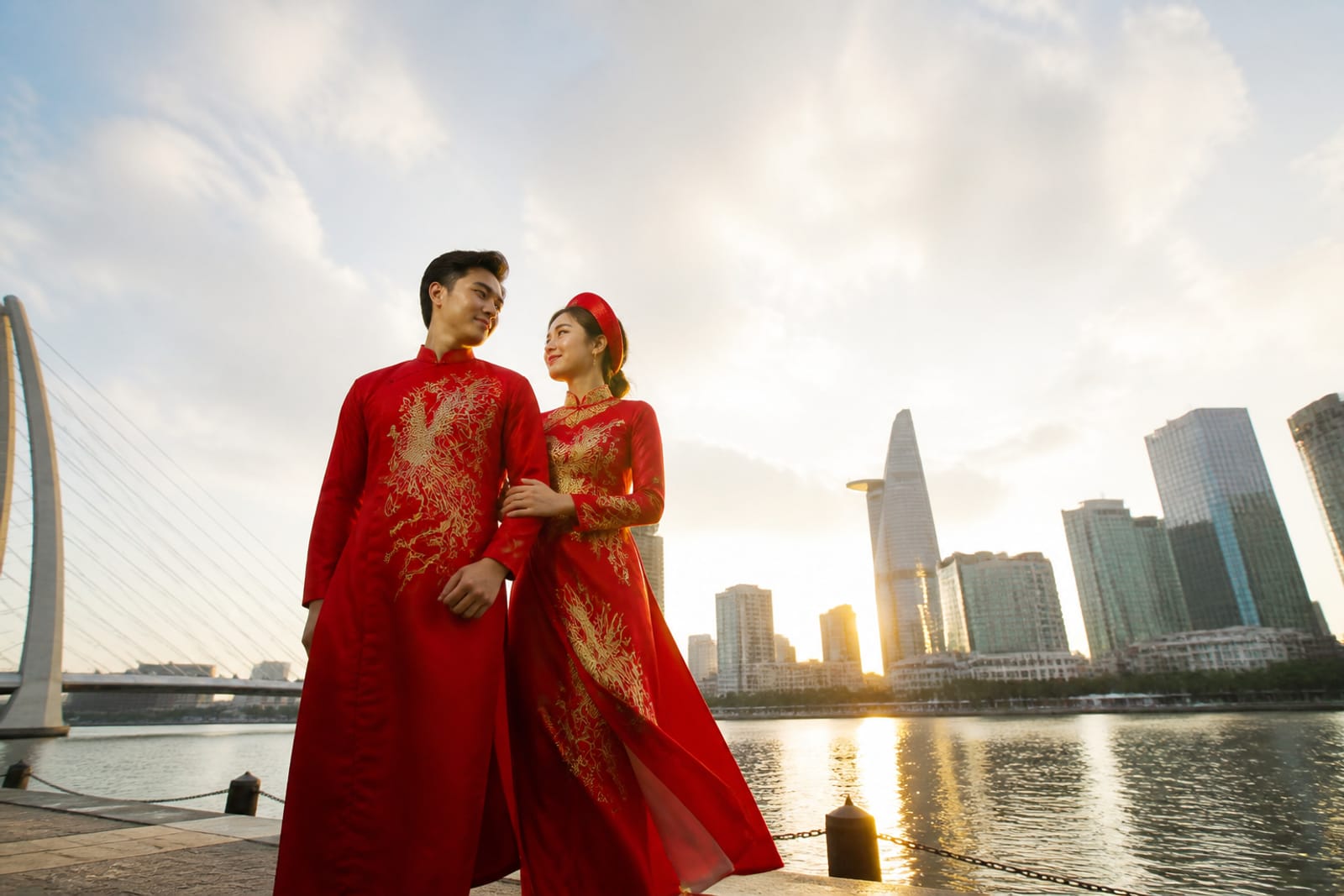
Ba Son Bridge offers a cinematic mix most couples want: a century-old French colonial steel arch, the Red River, and old Hanoi charm in one frame. The bridge itself is a working road, so you're shooting among light traffic and local pedestrians, which adds candid energy. The iron railings photograph sharp and moody; the river light bounces back and softens faces. Close-ups of hands on the railing, silhouettes at sunset, and wide shots with the Old Quarter in the background all work here. That combination—heritage, water, intimate geometry—is rare in Hanoi. But popularity means you'll share the space. Early mornings and weekdays are quieter; weekends and golden hour bring tourists and other couples. If you book with Cáo Studio, the team knows the exact quiet pockets and times when permits allow free movement for a shoot.
📸 Book on WhatsApp — pre-wedding photoshoot
When do crowds peak at Ba Son Bridge?
Weekends (Saturday–Sunday, especially 3–6 p.m.) and Tet season (late January–mid February) are busiest. October–November sees the highest foot traffic because weather is cool and dry—everyone wants photos then. Rainy season (May–September) thins crowds but leaves grey light and slippery stone. Weekday mornings (Monday–Friday, 6–9 a.m.) are quietest; you'll see only joggers and early commuters. December–February is dry but sometimes misty; March–April warms up fast. Midday (11 a.m.–3 p.m.) is harsh and crowded regardless of season. If you're flexible, aim for a Tuesday or Wednesday in late February, March, or early April—cool enough for an ao dai, dry enough for clean light, and few enough people that you can move freely without stopping for passersby.
Can you shoot pre-wedding photos there without a permit?
Technically, Ba Son Bridge is a public road and pedestrians can walk freely. However, if you're stopping traffic, setting up tripods, or changing clothes on the bridge, locals and police may ask questions. Many couples hire a photographer (including Cáo Studio) who knows the bridge's unwritten etiquette: shoot while moving, don't block lanes, and avoid peak commute hours (7–9 a.m., 5–7 p.m.). A professional studio team also carries liability awareness and moves faster, so you're less visible. For a personal shoot with a friend's camera, stay mobile and brief. If you want a relaxed, permitted shoot with zero hassle, book a pre-wedding session where the studio handles logistics and timing.
What should you wear under your ao dai at Ba Son Bridge?
Ao dai fabric is often silk or cotton blend—light, drape-heavy, and semi-transparent in bright light. Beneath it, wear a slip (full-length, neutral tone: white, beige, or black) to prevent see-through silhouettes, especially if light hits from behind. The slip should be smooth so it doesn't bunch under the fitted bodice. Wear a thin, supportive bra or bandeau so straps don't show. For bottoms, the ao dai's pants should fit snug but not tight; check your length beforehand—on stone steps, a hem that's too long catches and tears. Wear clean, flat shoes (ballet flats, white sneakers, or sandals) if you're walking; the bridge has uneven paving. If you're hiring makeup and hair services at your hotel before the shoot, ask the team to check your ao dai fit and suggest a slip style. Cáo Studio's makeup artists have dressed hundreds of ao dai clients and know which undergarments photograph best and move safely.
| Outfit choice | Best for | Light condition | Why it works |
|---|---|---|---|
| Ao dai (traditional, silk-like) | Formal, romantic, heritage feel | Morning or golden hour | Drapes beautifully; breathes in heat; slip essential for transparency |
| Ao dai + light shawl or veil | Softness, ethereal movement | Early morning, misty light | Adds layers and motion; works in dim light; suits cool season |
| Western wedding dress | Modern, bold contrast | Golden hour or midday (if covered with shawl) | Stands out against iron railings; risky in heat and humidity—bring a backup ao dai |
| Casual couplefit (linen shirts, tailored trousers) | Intimate, everyday feel | Morning or overcast | Practical for walking; less formal; suits weekday, low-pressure shoot |
---
How light changes on Ba Son Bridge throughout the day
6–8 a.m.: soft, low golden light from the east; shadow detail is sharp; faces glow without squinting; crowd smallest. Best time to shoot.
8 a.m.–11 a.m.: light gets brighter and more direct; white stone glares; you'll need to angle away from the sun or step into the bridge's shade pockets.
11 a.m.–3 p.m.: harsh overhead or angled light; shadows are dark and unflattering on faces; crowd peaks; avoid this window.
3–5:30 p.m.: golden hour returns from the west; low, warm light skims the river and bridge structure; long shadows are romantic; crowds pick up with tourists and other couples.
5:30 p.m.–dusk: moody, dim light; silhouettes possible; humidity rises; mosquitoes emerge; shooting becomes slower (longer exposures needed).
A studio like Cáo Studio (with Hanoi branches) times your session to hit peak light: usually 6:30–8 a.m. or 4–5 p.m. on a quiet weekday. If you're self-shooting, go early.
---
How does booking with a studio change the experience?
Hiring a professional pre-wedding photographer removes logistics and timing stress. Cáo Studio – Makeup & Photoshoot coordinates with you on WhatsApp to pick a quiet slot, confirm your ao dai (or arrange rental), and arrange makeup and hair at your hotel before or after the shoot. The team arrives early, scouts the light, and moves you through poses while staying aware of foot traffic and bridge rules. You get edited files and a curated selection—not hundreds of raw frames—so you don't waste time sorting. Cost factors include season (October–November is busier and sometimes books faster), number of outfits, and travel time (Hoi An shoots are by appointment; Hanoi and Ho Chi Minh City have standard rates—ask on WhatsApp for a quote). Solo or couple shoots are faster (1.5–2 hours) than family sessions; elopements or proposal shoots are more intimate. A studio shoot also means you can relax and be yourself—the photographer handles framing while you focus on your partner. Self-shooting with a friend's camera lets you stay anonymous and move freely, but you'll spend time posing, adjusting, and reviewing, so you're more visible and it takes longer.
---
What to check before you book a Ba Son Bridge pre-wedding shoot
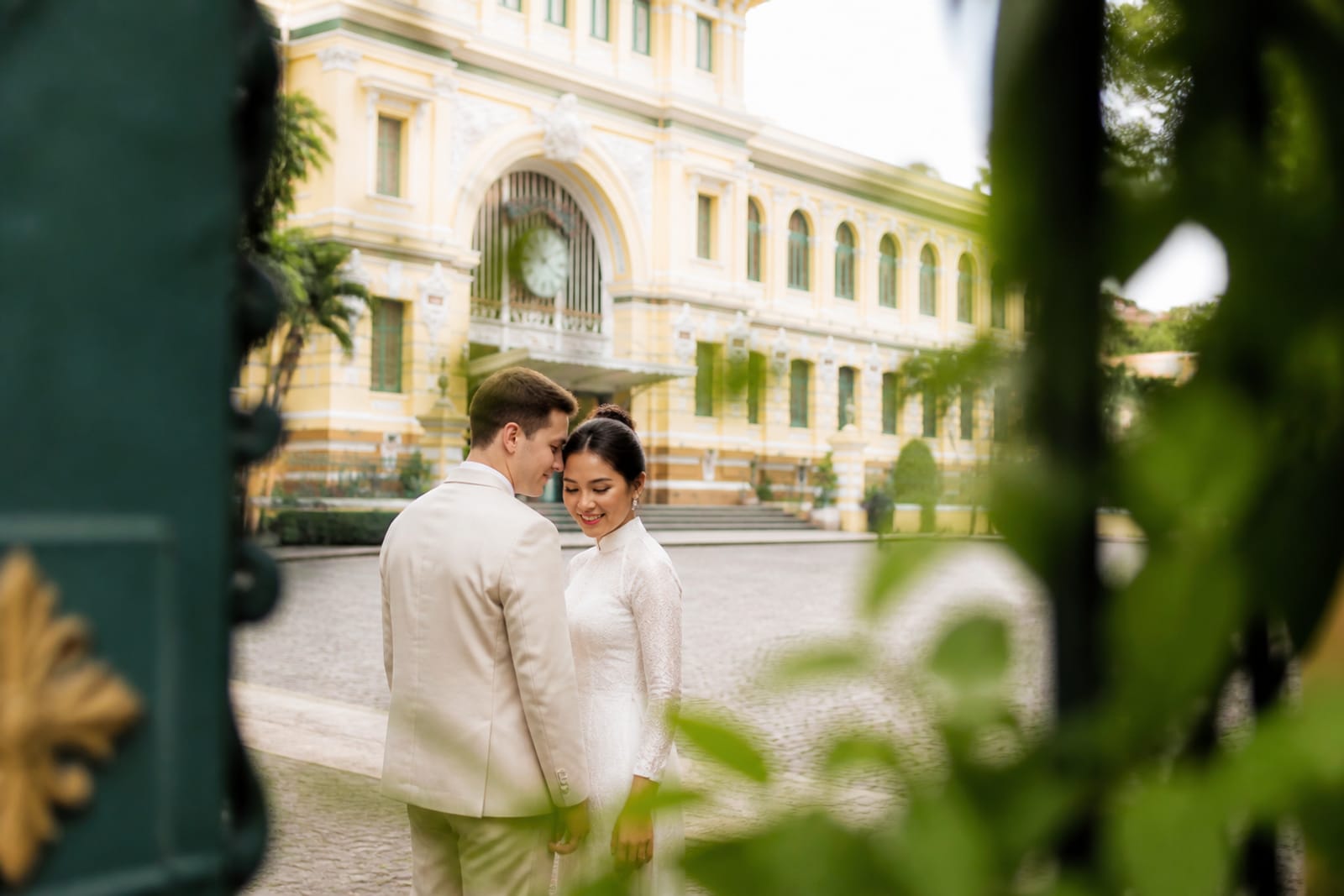
Outfit fit and undergarments: If wearing an ao dai, try it on at home and check the hem length—it should hit mid-foot when you stand, not pool on the ground. Bring or rent a proper slip. Confirm color: jewel tones and pastels photograph richly; white can blow out in morning light unless your photographer underexposes.
Season and light: Pick a month based on comfort and light quality. October–April is dry; May–September is humid and grey. Cold or misty December–February suits moody, intimate shots; warm March–April requires an ao dai in breathable fabric. Check a weather forecast 1–2 weeks before; if rain is predicted, ask your studio about rescheduling.
Timing and availability: Book a weekday morning (Tuesday–Thursday, 6:30–8:30 a.m.) for the quietest, best light. Weekend and golden-hour slots fill faster. Confirm with your studio whether they offer early-morning availability—not all do.
Physical demands: Ba Son Bridge has narrow pavements, uneven stone, and stairs. Wear shoes you can walk in (not heels). If you're pregnant, have mobility issues, or are uncomfortable near traffic, ask your studio about quieter Hanoi locations or indoor alternatives.
Studio logistics: Clarify what's included: edited files, print options, album packaging, makeup and hair, transportation. Ask how they handle reshoot requests and delivery timelines. Confirm cancellation or weather-reschedule policy. Cáo Studio provides these details on WhatsApp; check the FAQ or pricing pages to understand the process.
---
Real challenges and how to avoid them
Other couples or tourists in your shots: Early mornings and weekdays limit this. If a tour group appears mid-shoot, pause and move to a quieter section of the bridge or wait 10 minutes. A studio team knows alternative angles that exclude foot traffic.
Harsh shadows on faces: Shoot in open shade (under the bridge's arch) or face away from direct sun during midday. Golden hour (6–8 a.m., 4–5 p.m.) solves this; book then.
Ao dai catching or slipping: Check hem length beforehand. Ask a studio's makeup team to pin or tape the pants if needed. Bring a safety pin. Don't walk too fast on wet stone.
Humidity and sweat: Morning shoots avoid peak heat. Bring a handkerchief for touch-ups; ask your makeup artist for long-wear, humidity-resistant products. Avoid heavy foundation if you're sensitive.
Traffic noise: Ba Son Bridge is a working road—trucks and motorcycles pass. Early mornings have less noise. You can't shoot silent video here, but photos capture light, not sound, so it's a non-issue for stills.
Permit or local questions: If stopped, explain you're having photos taken (couples do this daily). Move to the pavement if asked. A studio's presence usually diffuses tension; locals recognize professional crews.
---
Comparing pre-wedding shoots: Ba Son Bridge vs. alternatives in Hanoi
If you want colonial, urban romance with river light, Ba Son Bridge is ideal—intimate scale, iconic structure, few competitors' shoots there. If you prefer fewer crowds and more privacy, ask Cáo Studio about alternative Hanoi locations: quieter riverside paths, Old Quarter lanes at dawn, or studio-owned indoor backdrops. If you want variety and a full day, consider a pre-wedding elopement package that includes multiple locations, outfit changes, and makeup and hair—you get intimate timing at each spot. If you're in Ho Chi Minh City, Saigon's photoshoot options offer different backdrops (colonial villas, street markets, Binh Quoi Village). Each has different crowd patterns and seasons; discuss your vision with the studio to pick what fits your story and comfort.
---
How to coordinate the shoot day itself
1 day before: Confirm timing with your studio via WhatsApp. Check weather forecast; discuss any adjustments. Pick up your ao dai or confirm rental delivery. Lay out undergarments and shoes; test fit.
Morning of: Eat lightly; drink water. Arrive at your hotel for makeup and hair on time (usually 1–2 hours before the shoot). Review poses or mood with your makeup artist.
En route to Ba Son Bridge: Leave extra time for traffic (Hanoi is unpredictable). Bring water, phone charger, and a small bag. The studio will meet you at an agreed spot (usually the bridge's pedestrian entrance).
At the location: Trust the photographer's eye; listen to pose cues; move naturally between setups. Bring your partner into the moment—laugh, hold hands, look at each other. The best shots come from genuine connection, not stiffness. The shoot usually lasts 1.5–2 hours depending on outfit changes and location moves.
After: Ask when you'll receive previews and edited files. Confirm any album, print, or frame options before you leave.
---
Next steps: booking your Ba Son Bridge pre-wedding shoot
Pre-wedding shoots with Cáo Studio start with a WhatsApp conversation about your vision, date, outfit, and must-have locations. The team sends a personalized quote and timeline; you choose a quiet weekday morning or arrange makeup and hair at your hotel the same day. Check the lookbook for style inspiration, browse ao dai rental or wedding dress rental options if you need them, and read the FAQ for common questions. If you're also planning a wedding day photographer or video team, mention it—Cáo Studio coordinates across services so your pre-wedding aesthetic flows into your big day.
📸 Book on WhatsApp — pre-wedding photoshoot
FAQ
Is Ba Son Bridge free to visit and shoot at?
Yes. It's a public bridge open to pedestrians. No entry fee or permit is required for personal photos. Commercial or large-scale shoots may need permissions—ask your studio.
What's the best month to shoot at Ba Son Bridge?
October–November offers cool, dry weather and golden light, but it's crowded. Late February–April is less busy, still dry, and perfect for ao dai comfort.
Can I shoot in an ao dai and Western wedding dress on the same day?
Yes. Book a pre-wedding session with outfit changes and makeup and hair support. The studio will manage touch-ups between looks.
How far is Ba Son Bridge from central Hanoi?
About 2–3 km north of the Old Quarter. Taxi ride is short (10–15 minutes from central Hanoi in light traffic). Ask your studio about transportation or meeting logistics.
What happens if it rains on my shoot day?
Confirm your studio's reschedule or weather policy on WhatsApp before booking. Rainy, misty light can be moody and romantic for ao dai; some couples love it. Others prefer a dry slot.
Do I need to hire a makeup artist if I book a photoshoot?
No, but makeup and hair services ensure you look polished and camera-ready under bridge light. Most couples add it; ask your studio about bundling or separate pricing.
FAQ
Is Ba Son Bridge free to visit and shoot at?
Yes. It's a public bridge open to pedestrians. No entry fee or permit is required for personal photos. Commercial or large-scale shoots may need permissions—ask your studio.
What's the best month to shoot at Ba Son Bridge?
October–November offers cool, dry weather and golden light, but it's crowded. Late February–April is less busy, still dry, and perfect for ao dai comfort.
Can I shoot in an ao dai and Western wedding dress on the same day?
Yes. Book a [pre-wedding session](/pre-wedding-photoshoot) with outfit changes and [makeup and hair support](/makeup-and-hair). The studio will manage touch-ups between looks.
How far is Ba Son Bridge from central Hanoi?
About 2–3 km north of the Old Quarter. Taxi ride is short (10–15 minutes from central Hanoi in light traffic). Ask your studio about transportation or meeting logistics.
What happens if it rains on my shoot day?
Confirm your studio's reschedule or weather policy on WhatsApp before booking. Rainy, misty light can be moody and romantic for ao dai; some couples love it. Others prefer a dry slot.
Do I need to hire a makeup artist if I book a photoshoot?
No, but [makeup and hair](/makeup-and-hair) services ensure you look polished and camera-ready under bridge light. Most couples add it; ask your studio about bundling or separate pricing.
Ao dai, makeup, hair and a local photographer in Hanoi or Saigon — one WhatsApp message.