/pre-wedding-photoshoot
Beach pre-wedding photos in Hoi An: timing, outfit, and booking tips
Beach pre-wedding photos in Hoi An work best February through April, when the sea is calm and dawn light arrives around 5:30–6:30 a.m. — before crowds and heat. You'll need a photographer who understands tidal flats, sunrise direction (east, over the sea), and how to move quickly across sand without sinking or soiling your ao dai hem. Cáo Studio books beach sessions with a dedicated makeup artist and stylist traveling to Hoi An; the team shoots wide (landscape, couple walking), medium (embrace at water's edge), and detail (hands, fabric, light on your face) in real light, then delivers edited photos and a short vertical film within 48 hours. Avoid October–November (typhoon season and flooding in the Ancient Town); May–August is hot but possible if you shoot only at dawn. Confirm tides and beach access with your photographer before booking — some stretches are private or inaccessible at certain hours.
Which Hoi An beaches work for pre-wedding shoots?
An Bang and Cua Dai beaches, north of the Ancient Town, are the most accessible. An Bang is shallower and has fewer rocks; Cua Dai is wider at low tide but exposed and windy. Both need a low-tide window (check local tide times before you arrive — they shift monthly) and a sunrise arrival to avoid heat and swimmers. An Bang offers softer sand and fishing boats; Cua Dai has a straighter horizon. Most photographers scout the spot one day ahead and choose the beach based on tide time and wind direction.
Why does timing matter more on a beach than in the Ancient Town?
Beaches are open and shadowless; only early morning (5:30–7:30 a.m.) gives directional, soft light from the east. By 8 a.m., the sun is overhead and harsh; shadows under your eyes and chin become unavoidable. Swimmers and vendors arrive after 8 a.m. Sand also reflects light upward, which can look cool in close-up but washes out skin if you're not angled correctly. Tides control your walking space — high tide shrinks the shore to rocks and shells; low tide creates a flat, usable canvas but lasts only 2–3 hours. Plan your session in the lowest-tide window during golden hour (sunrise to 1 hour after).
How do you keep an ao dai and makeup fresh on the beach?
Wear a lightweight robe or cover-up over your ao dai until the first frame. Ask your makeup artist to use waterproof products and apply extra primer — salt spray and humidity are constant. Bring a small towel to dry your hands and feet before the shoot starts. If your ao dai is silk or delicate, confirm with your photographer beforehand that you'll walk on sand, not wade into water — wet fabric is heavy and takes hours to dry. Most couples change into a second outfit (a lighter dress or suit) for the last 30 minutes if the session runs long. Cáo Studio brings a steamer and garment bag; the team handles outfit swaps on location.
What's the real cost difference between a beach session and a studio or Ancient Town shoot?
Cost factors include travel time (the photographer and makeup artist must leave Hanoi or Saigon earlier to reach Hoi An), tidal planning (some beaches require a second scouting day), and season. February–April sessions cost the same as other Hoi An shoots, but May–August early starts (4:30 a.m. pickup) or October–November weather contingency (rescheduling) can add logistics. There is no "beach premium" at Cáo Studio — instead, ask on WhatsApp whether your dates fall in a high-demand week (Lunar New Year, mid-year holidays) or require extra travel.
How do you choose between beach, Ancient Town, and rice-field sessions?
| Option | Best for | Light & season | Why it works |
|---|---|---|---|
| Beach (An Bang, Cua Dai) | Couples wanting open sky, fishermen, horizon | Dawn Feb–Apr; May–Aug dawn only; avoid Oct–Nov | Soft sea light, minimal crowds before 7 a.m., reflects on water |
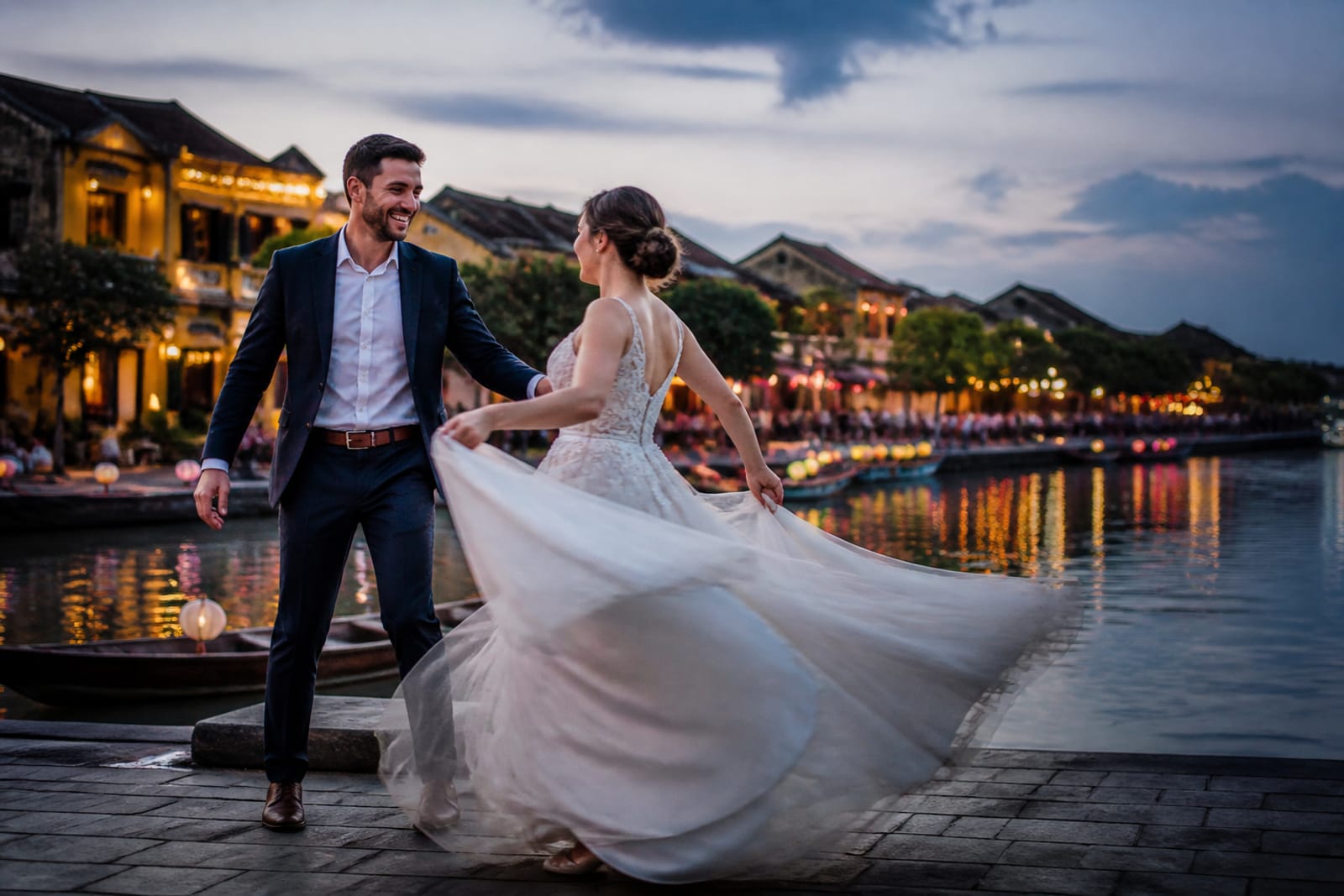
| Ancient Town (lantern streets) | Couples preferring intimate, built heritage | Dusk year-round (best Feb–Apr, May–Aug indoors); avoid Oct–Nov flooding | Lanterns, narrow streets, storytelling with texture |
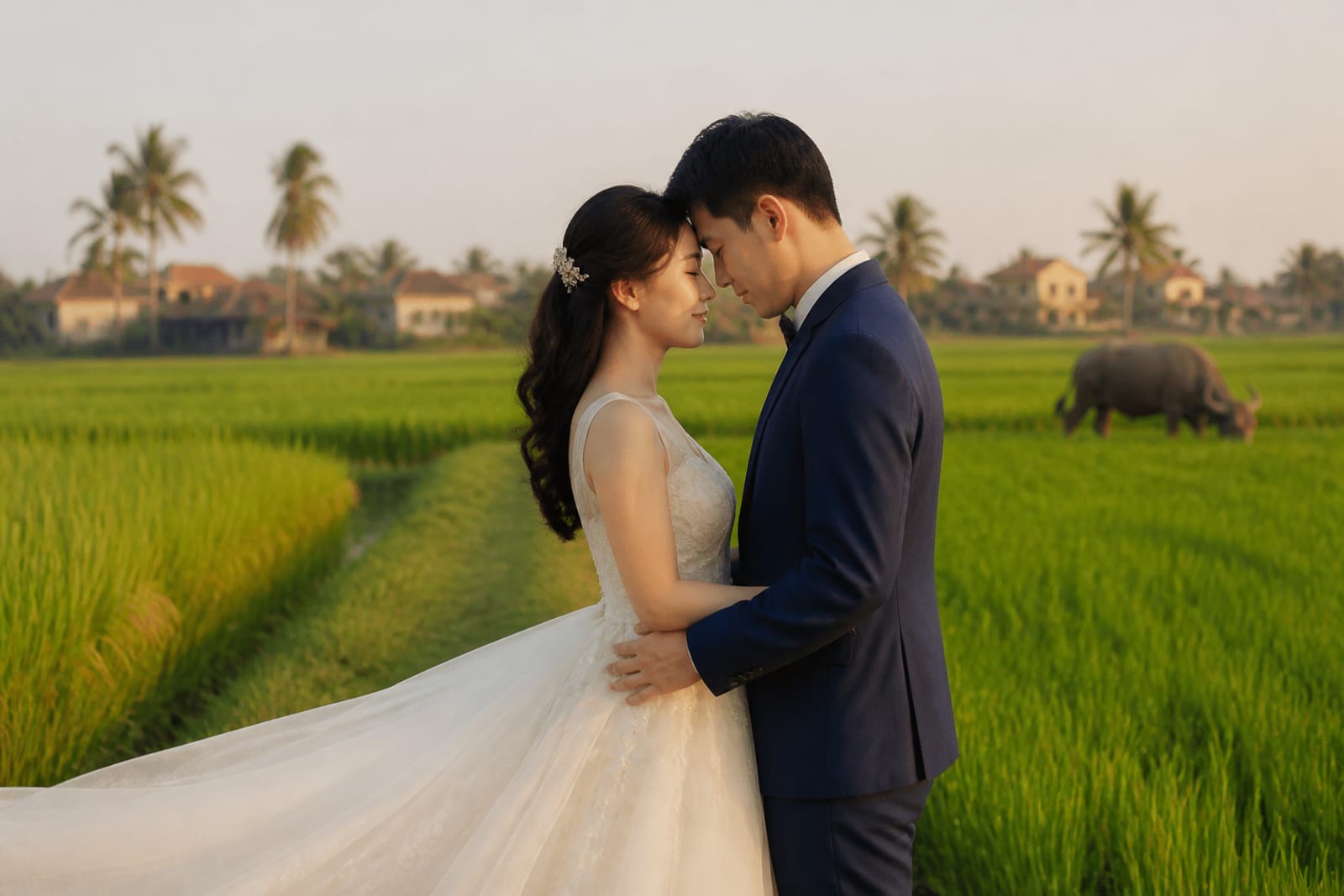
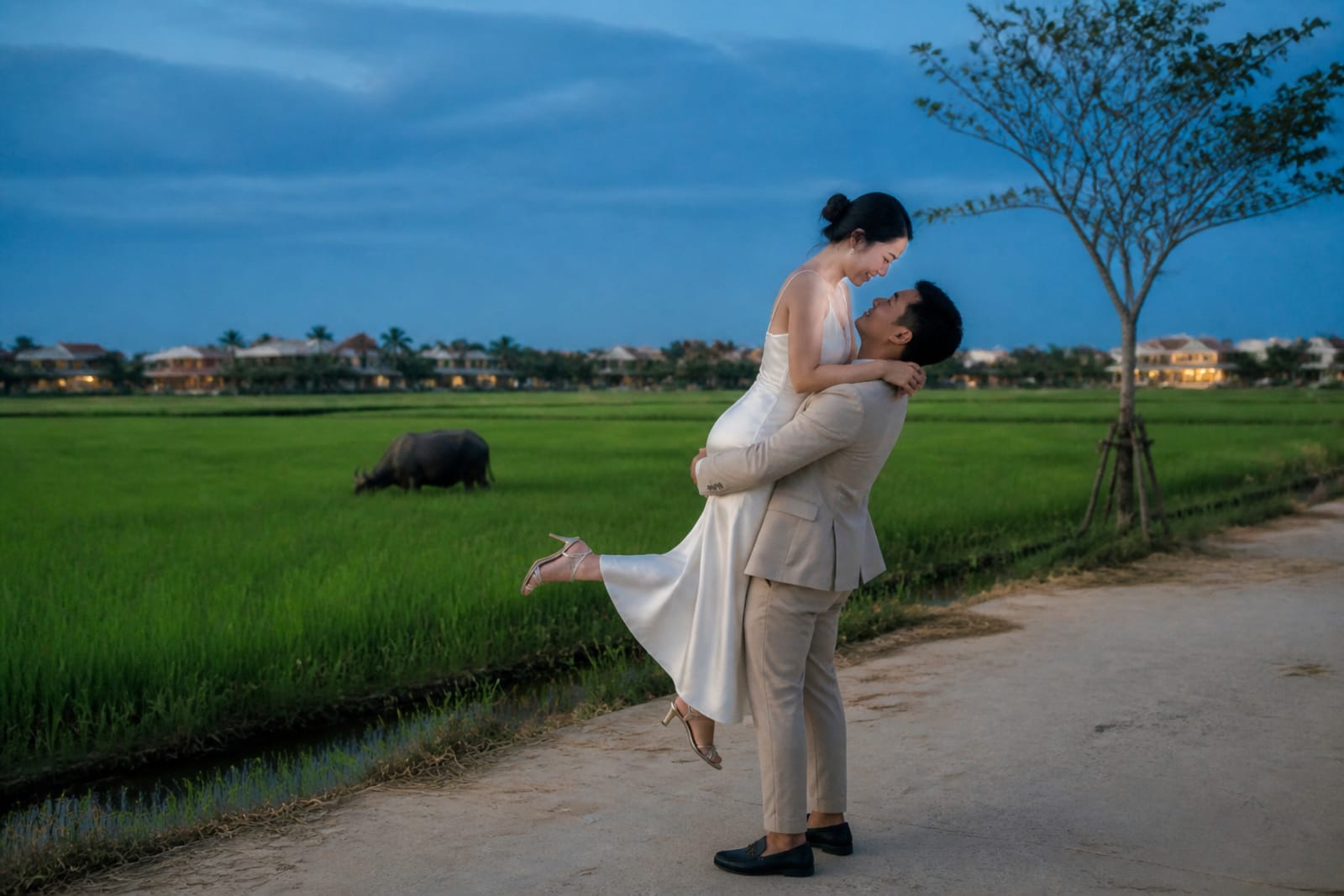
| Rice fields (near Hoi An) | Couples wanting lush green and isolation | Feb–Apr (planted); May–Aug (tall, shadowy); avoid Oct–Nov | Golden reflections, no people, horizon line |
Beach sessions feel cinematic and suit couples who want a "horizon backdrop" — the sea does the work. Ancient Town sessions are tactile and storytelling; light bounces off walls and lanterns. Rice fields are pastoral and take longer to reach (30+ min drive), so factored into the session timeline. Most couples shoot two settings (beach + Ancient Town, or beach + fields) in a single day or split over two mornings.
When should you book a beach pre-wedding shoot in Hoi An?
Book 4–6 weeks ahead if you're visiting February–April or during a school holiday; beach sessions fill first because light and tide windows are narrow. Confirm your exact travel dates early so the photographer can lock in tide times and sunrise direction. If you're flexible, Tuesday–Thursday mornings see fewer tourists and calmer seas. Avoid Lunar New Year week (late January–early February) when many services close and beaches are crowded. Check the weather forecast one week out — a typhoon swell or rain shuts down beach shoots, but the team will reschedule to a covered location (the Ancient Town, your hotel, or rice fields) at no extra cost. Ask on WhatsApp about Hoi An dates and availability; Cáo Studio's Hoi An photoshoots are booked by appointment with the team traveling from Hanoi or Saigon.
📸 Book on WhatsApp — pre-wedding & elopement
What should you pack and prepare before the shoot?
Bring two pairs of flat shoes (sandals and bare feet work, but rocks and shells hurt; ask your photographer whether to wear anything). Pack a sarong or lightweight cover-up, a small towel, a comb, and a phone charger — the session runs 2–3 hours and the beach has no services nearby. Wear minimal jewelry (it catches light and sand, and looks dated in photos). If your ao dai is rented, confirm with the rental place that salt water and sand won't void the agreement — most ask you to rinse it afterward. Bring water and a light snack; early-morning low blood sugar shows in your face. Hair should be pinned or in a loose braid (wind moves it constantly; the photographer will guide you to hold or release it). Most couples also shoot photos of getting ready at the hotel — that's when the makeup & hair team captures morning light and detail. Cáo Studio's makeup artist arrives at your hotel 90 minutes before beach pickup.
What to check before you book
- Confirm tidal times. Ask your photographer to send you the tide table for your shoot date. You need low tide within your dawn window (typically 5:30–7:30 a.m.). If high tide falls at sunrise, the beach is unusable; reschedule or choose the Ancient Town.
- Verify beach access. Some beaches (especially private resorts' shores) require permission or a pass. The photographer should confirm access; if they can't, they'll suggest An Bang or Cua Dai as public alternatives.
- Ask about second outfits. Confirm whether the package includes two ao dai sets, or if you're bringing one and changing into a casual dress for the final 30 minutes. Cáo Studio handles outfit changes; clarify this on WhatsApp.
- Understand weather contingency. A storm or unexpected swell can cancel the beach shoot. Ask the photographer how they'll reschedule — most offer a covered location (Ancient Town, hotel, indoor studio) on the same day or within 48 hours.
- Check editing timeline. Pre-wedding photos are often needed for save-the-dates or rehearsal-dinner slideshows. Confirm the delivery date (usually 48 hours) before booking, especially if you're traveling far or have a tight wedding date.
- Clarify who travels to Hoi An. If booking with an out-of-town studio, verify that the photographer, makeup artist, and hair stylist are the same people who shot your engagement session or test shoot. Consistency matters; ask to see a Hoi An lookbook from the team beforehand.
Beyond the beach: related sessions in Hoi An and nearby
If you love Hoi An's light and culture, consider pairing a beach session with an ao dai photoshoot in the Ancient Town (sunset lantern light), or book a couple photoshoot across rice fields one morning and the beach the next. Many couples also add a proposal or anniversary package if they're renewing vows or celebrating an engagement in Hoi An. For full wedding coverage, Cáo Studio's wedding day photographer and wedding video team can follow the ceremony and reception; pre-wedding beach photos become your announcement and rehearsal-dinner film.
For detailed logistics and season-by-season breakdown, see pre-wedding photoshoot planning.
---
FAQ
Do I have to wear an ao dai on the beach, or can I wear a wedding dress?
Ao dai works best because it's lightweight, moves with the wind, and photographs beautifully against the sea. A heavy wedding dress traps sand and salt; it's hard to walk in and takes days to clean. Most couples wear an ao dai for the beach and change into a dress for the resort or town afterward.
What if the tide is wrong on my shoot date?
Ask the photographer to check the tide table 4 weeks ahead. If low tide falls outside sunrise (e.g., 9 a.m.), you have two choices: reschedule to a date with better timing, or shoot in the Ancient Town or rice fields instead. Most photographers offer a second date at no extra cost if tides don't cooperate.
Will sand damage my ao dai or makeup?
Sand is abrasive, but brief exposure (2–3 hours) is fine if you wear a cover-up and rinse afterward. Makeup lasts longer with waterproof primer and setting spray. Ask your photographer and makeup artist about their routine — Cáo Studio brings garment bags and touch-up kits to protect your outfit during the session.
How early do we need to start a beach shoot?
Sunrise in Hoi An is 5:30–6:30 a.m. (depending on season). Plan to meet your photographer at 5:00–5:15 a.m. on the beach, which means hotel pickup around 4:30–4:45 a.m. This feels early, but it's the only window for soft light and no crowds.
Can we shoot during the full-moon lantern night at the beach?
Full-moon nights are crowded in the Ancient Town but quieter on the beaches. Lantern light is magical for close-ups but doesn't reach far (you'll see lanterns in shops, not reflected at sea). Most couples combine a beach sunrise session with an evening lantern stroll in town — two different moods, one day.
What happens if it rains on my shoot date?
Rain cancels the beach (no light, unsafe sand); the photographer will reschedule to an indoor venue (hotel, covered market, lantern street at dusk) or offer a new date within 7 days. Heavy typhoon rain (Oct–Nov) may require a week's delay. Always ask the contingency plan before booking.
How many photos will we get from a beach session?
The exact number is confirmed on WhatsApp when you book. Cáo Studio delivers edited photos (gallery) plus a short vertical film. Ask about the specific breakdown — the team typically culls and edits only the strongest frames, not hundreds of unfinished raw shots.
FAQ
Do I have to wear an ao dai on the beach, or can I wear a wedding dress?
Ao dai works best because it's lightweight, moves with the wind, and photographs beautifully against the sea. A heavy wedding dress traps sand and salt; it's hard to walk in and takes days to clean. Most couples wear an ao dai for the beach and change into a dress for the resort or town afterward.
What if the tide is wrong on my shoot date?
Ask the photographer to check the tide table 4 weeks ahead. If low tide falls outside sunrise (e.g., 9 a.m.), you have two choices: reschedule to a date with better timing, or shoot in the Ancient Town or rice fields instead. Most photographers offer a second date at no extra cost if tides don't cooperate.
Will sand damage my ao dai or makeup?
Sand is abrasive, but brief exposure (2–3 hours) is fine if you wear a cover-up and rinse afterward. Makeup lasts longer with waterproof primer and setting spray. Ask your photographer and makeup artist about their routine — Cáo Studio brings garment bags and touch-up kits to protect your outfit during the session.
How early do we need to start a beach shoot?
Sunrise in Hoi An is 5:30–6:30 a.m. (depending on season). Plan to meet your photographer at 5:00–5:15 a.m. on the beach, which means hotel pickup around 4:30–4:45 a.m. This feels early, but it's the only window for soft light and no crowds.
Can we shoot during the full-moon lantern night at the beach?
Full-moon nights are crowded in the Ancient Town but quieter on the beaches. Lantern light is magical for close-ups but doesn't reach far (you'll see lanterns in shops, not reflected at sea). Most couples combine a beach sunrise session with an evening lantern stroll in town — two different moods, one day.
What happens if it rains on my shoot date?
Rain cancels the beach (no light, unsafe sand); the photographer will reschedule to an indoor venue (hotel, covered market, lantern street at dusk) or offer a new date within 7 days. Heavy typhoon rain (Oct–Nov) may require a week's delay. Always ask the contingency plan before booking.
How many photos will we get from a beach session?
The exact number is confirmed on WhatsApp when you book. Cáo Studio delivers edited photos (gallery) plus a short vertical film. Ask about the specific breakdown — the team typically culls and edits only the strongest frames, not hundreds of unfinished raw shots.
Ao dai, makeup, hair and a local photographer in Hanoi or Saigon — one WhatsApp message.