/pre-wedding-photoshoot
Elopement photos at Hoi An Ancient Town: plan your shoot
An elopement photo session at Hoi An Ancient Town is a 2–4 hour intimate shoot (exact timing confirmed on WhatsApp) in the UNESCO-listed old quarter, famous for its yellow-painted shophouses, red-tile roofs, and silk lanterns. Cáo Studio – Makeup & Photoshoot travels to Hoi An by appointment to capture you in ao dai, Western wedding dress, or casual couple wear against these backdrops. Light is strongest before 7 a.m. (sunrise ~5:30–6:30 in summer) when crowds are absent; midday (11 a.m.–1 p.m.) floods narrow streets with harsh shadows. The dry season (February–April, early August) avoids rain; avoid October–November (typhoon flooding in the Ancient Town). Entry to the Ancient Town requires a ticket—check current price on the official Hoi An Heritage site. Book makeup and hair in advance; ask on WhatsApp for Hoi An travel dates and exact package details. ---
What makes Hoi An elopement shoots different from city studio backdrops?
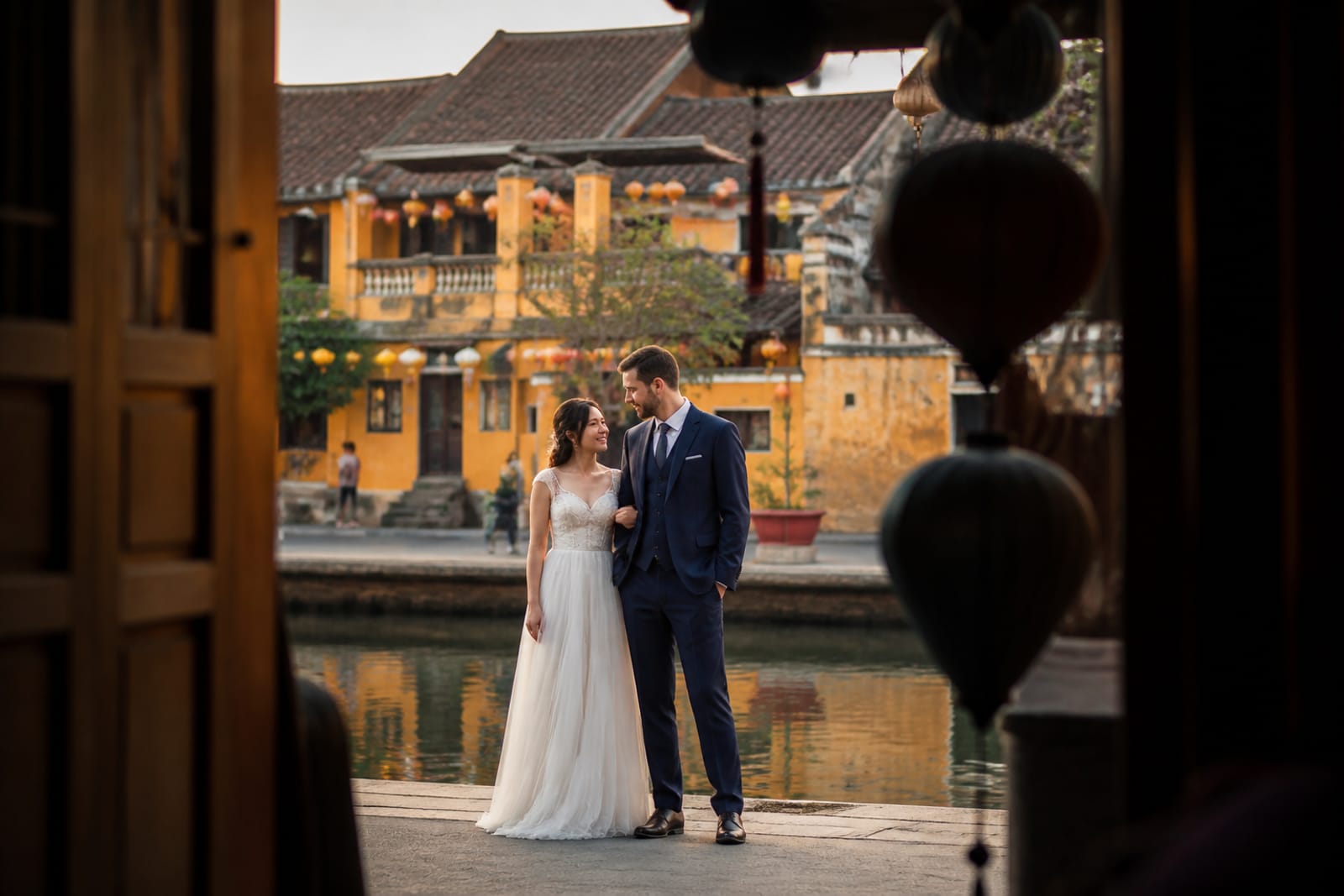
Studio light is controllable; Hoi An's lantern-lit lanes, river reflections, and narrow alleyways demand you shoot within the environment, not against backdrops. Sunrise golden hour wraps around 300-year-old timber buildings; midday sun fractures into 10-foot shadows between shophouses. The Ancient Town's texture—weathered plaster, hanging silk—becomes part of the image, not a prop. You trade studio perfection for authenticity. Sessions here suit couples who want heritage, not polished minimalism. The tradeoff: crowds. Late morning onward, tour groups fill every corner, slowing your movement and cluttering frames. Early shoots (sunrise through 7 a.m.) cost more in logistics (team travel, early call time), but deliver solitude and clean compositions.
When is the best light at Hoi An for an elopement shoot?
Best window: sunrise to 7 a.m. (February–April, early August). Soft, directional light skims the red-tile roofs, illuminates lantern textures, and casts long shadows that frame narrow alleys. By 8 a.m., sun climbs and contrast hardens. Noon–3 p.m. produces harsh shadows pooled in street centers; shophouse eaves block light, darkening portraits. Late afternoon (4–5:30 p.m.) revives light quality but brings crowds (shops stay open, tour groups linger for sunset photos). Dusk (6–7 p.m.) is atmospheric—lanterns ignite, streets glow yellow—but requires fast film speeds to avoid blur; couples often book a two-session day: sunrise for clean light, dusk for lantern mood. Hoi An's geography (river-bounded old town, narrow lanes running north–south) means backlit alleys face the morning sun; west-facing riverside paths glow in late afternoon. Plan your alley and riverside shots accordingly.
How do seasons affect elopement photos in Hoi An?
| Season | Light & Weather | Crowds | Why Choose / Why Avoid | Walking Comfort |
|---|---|---|---|---|
| Feb–Apr (dry, mild) | Golden, consistent; few clouds; sunrise sharp | Moderate (local holidays, Tet tail) | Ideal light, green rice fields nearby, mild temperature | Best—cool mornings, manageable walking |
| May–Aug (hot, dry) | Bright, clear; intense midday heat; sunrise mandatory | Lighter than peak (fewer Western tours) | Shoot sunrise only; very hot by 7 a.m. | Exhausting—high heat, sweat on makeup; sunrise rush needed |
| Sep–Dec (rainy, typhoon) | Overcast (soft light but flat); Oct–Nov flooding in streets | Heavy (Tet prep), plus tour surge | Avoid. Rain ruins makeup, flooding closes alleys, typhoons delay flights | Poor—wet, humid, muddy streets, no light |
| Dec–Jan (cool, drizzly) | Grey, diffuse; occasional rain; flat light | Moderate (Tet proximity) | Soft light if no rain; cool; fewer crowds | Good if dry; wet stones slip |
Verdict: Book February–April for light and walkability; May–August sunrise-only sessions if you can tolerate pre-dawn heat; skip September–November entirely for elopement work.
What should you wear under and over an ao dai for your elopement session?
Ao dai (the Vietnamese tunic dress) is a two-piece: long front and back panels over fitted trousers. For elopement shoots, fabric matters. Silk ao dai photograph beautifully in natural light but wrinkle if you sit on damp Ancient Town stone; cotton blends hold color longer. Wearing a strapless or thin-strap undergarment prevents visible bra lines in photos; the ao dai's high neckline and fitted waist flatter most frames. If you're sensitive to cold (early morning humidity at 5:30 a.m. feels cooler than 35°C afternoon heat), bring a light shawl or cardigan to wrap between outfit changes. Under trousers, wear minimal undergarments to avoid visible panty lines; the trousers are thin. If shooting also in a Western wedding dress, pack it in a garment bag (the studio can store it); the ao dai's elaborate folds (especially brocade on older styles) take 10–15 minutes to arrange, so allow time if you're swapping outfits. Ask Cáo Studio on WhatsApp what's included in makeup and hair for a two-outfit session—timing and outfit-change space are key logistics.
📸 Book on WhatsApp — ao dai photoshoot
How do you navigate the Ancient Town's layout and avoid clutter during your elopement shoot?
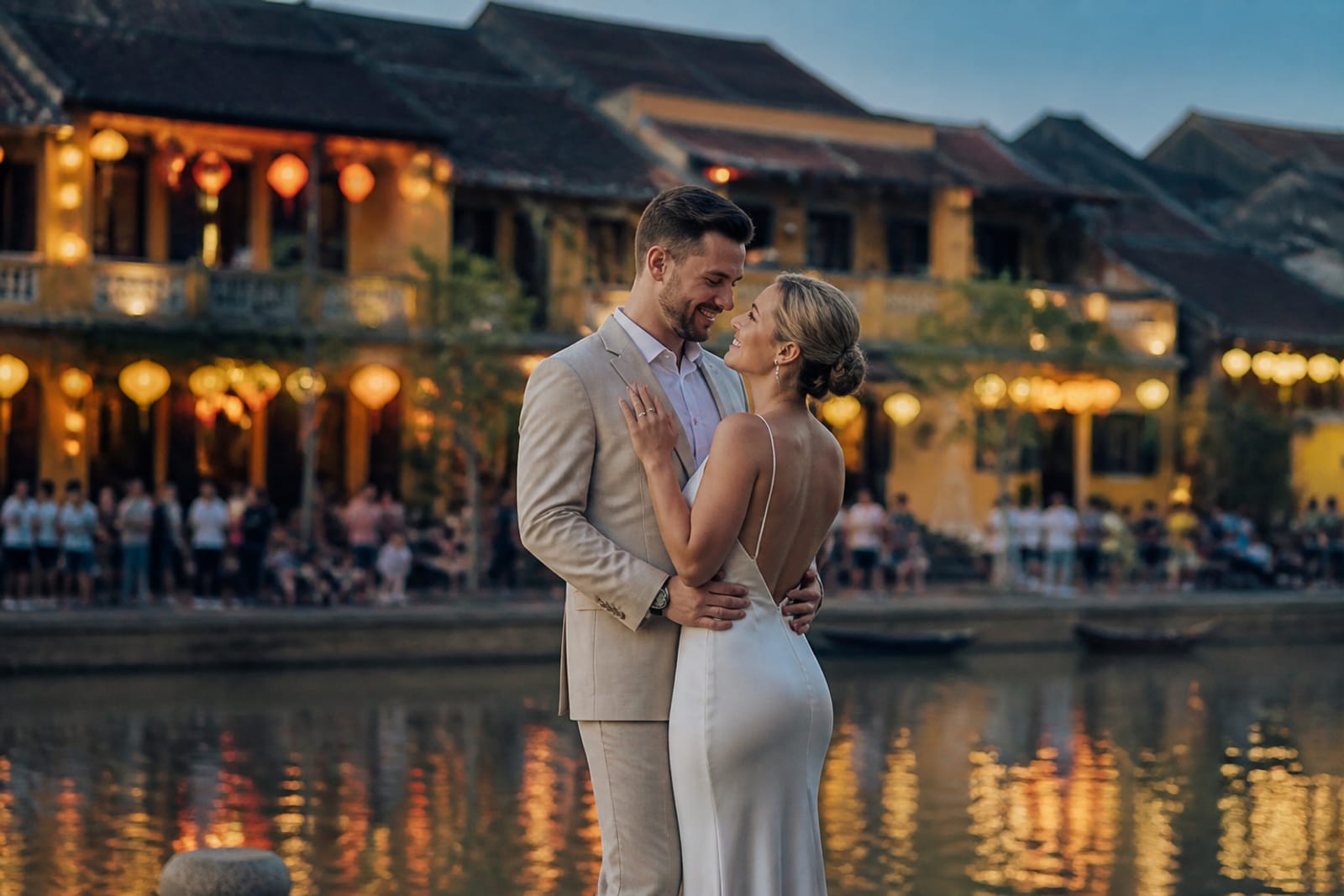
Hoi An Ancient Town is roughly 6 city blocks (walking loop ~1.5 km). Main streets (Nguyen Hue, Tran Phu) are the widest and most tourist-heavy by 8 a.m. The quietest lanes are east of Tran Phu (toward the old market and residential alleys) and north-facing side streets that stay shaded until mid-morning. The Japanese Bridge and Assembly Hall (on Tran Phu) are Instagram-famous; expect 30+ tourists at sunrise, 100+ by 7:30 a.m. If you want the bridge alone, shoot 5:45–6:15 a.m. (yes, very early). Riverside paths (along Thu Bon River, west of Tran Phu) are less crowded and offer water reflections; light quality is diffuse under the canopy. Your photographer (Cáo Studio team) will know which alleys are open and passable on your shoot date; ask about flooding risk (Oct–Nov) or temporary closures (maintenance, events) on WhatsApp before booking. Wear comfortable, non-slip shoes—cobblestones are uneven, and post-rain slickness is real. The entrance ticket required for the Ancient Town covers your full session (check current price on the official Hoi An Heritage website).
What's the real timeline for an elopement shoot at Hoi An, and what usually gets delayed?
Most couples book a sunrise session (arrive ~5:15 a.m., shoot until 7–8 a.m., total ~3 hours with setup and outfit changes) or a half-day (sunrise + late afternoon = 5–6 hours, plus a few hours of break/refreshment mid-day). Timing breakdown: makeup & hair at your hotel or a local salon (1–1.5 hours); travel to Ancient Town entrance (10–15 minutes); entry ticket queue and setup (10 minutes if you arrive early, 20+ if not); actual shooting and outfit changes (1.5–2 hours for sunrise; 2–3 hours if adding afternoon session). Delays to expect: unexpected crowds at the bridge, a street event you can't foresee, outfit folds that take longer to arrange, or a sudden light change (passing clouds flatten the sky). Makeup touch-ups between outfits add 10–15 minutes. Weather delays are real—if it rains unexpectedly, you'll pivot to sheltered alleys (soft light, but fewer open vistas). Ask Cáo Studio on WhatsApp for exact session timings and contingency plans before you commit. Confirm whether hotel pickup and makeup application are included or separate bookings.
How does booking an elopement shoot at Hoi An with Cáo Studio work, and what costs depend on?
Cáo Studio – Makeup & Photoshoot travels to Hoi An by appointment (not a permanent branch); ask on WhatsApp for current available dates. Cost factors include travel time from Hanoi or Saigon, number of outfits, makeup/hair inclusion, editing timelines, and file delivery format—exact inclusions and quotes are confirmed on WhatsApp. The studio's pre-wedding & elopement page outlines the service model; the pricing page does not list Hoi An rates separately (because they vary by season and team logistics). Compare Cáo Studio's Hoi An elopement service against local Hoi An photographers by asking the same questions of each: Do they know the best light times and quiet alleys? Do they scout the day before? Do they handle two-outfit sessions? What are their contingency plans for rain or unexpected crowds? Can they deliver edited files and albums? International couples often prefer Cáo Studio for English-language coordination, consistent style across sessions, and familiarity with ao dai handling and vintage film aesthetics—but a local solo photographer may offer lower travel costs and deeper knowledge of micro-locations. Visit the lookbook to compare styles before reaching out.
What to check before booking your elopement shoot
- Light & season: Confirm your shoot date falls in dry season (Feb–Apr or early Aug). Avoid Oct–Nov. Ask on WhatsApp if rain is forecast—get a contingency plan.
- Ancient Town entry: Verify the current entry ticket price and hours on the official Hoi An Heritage site. Confirm whether your session covers multiple outfit changes inside the ticket.
- Makeup & hair location: Ask if Cáo Studio applies makeup at your hotel (usually included for elopement packages, but confirm on WhatsApp) or if you book separately through makeup & hair service.
- Outfit & outfit changes: Decide between ao dai, Western dress, casual wear, or a mix. Confirm how many outfits are possible in your booked time. Bring backup undergarments.
- File delivery & timeline: Ask on WhatsApp how many edited images you'll receive, when, and in what format (digital files, album, prints). Confirm turnaround time.
- Photographer scouting: Ask if the team will scout the location in advance or arrive on shoot day. Early scouting (especially for sunrise) reduces on-the-day surprises.
- Contingency plans: Rain, crowds, unexpected closures—ask Cáo Studio for backup alley locations and timing adjustments.
- Couple dynamics: Elopement shoots are intimate. Confirm the photographer is comfortable with candid, emotional moments (not just posed "look at camera" shots). Check the lookbook for style alignment.
---
Related services & reads
For a fuller pre-wedding experience, pair your Hoi An elopement shoot with:
- Pre-wedding & elopement photoshoots — full planning guide
- Ao dai photoshoots — style, fit, and heritage garment advice
- Couple & family photoshoots — group dynamics and posing tips
- Makeup & hair at your hotel — day-of logistics
- Cáo Studio in Hanoi and Saigon for studio-based elopement alternatives
- Wedding photographer — if you need both elopement and wedding-day coverage
- Wedding & pre-wedding video — moving footage alongside stills
---
FAQ
Can we do an elopement shoot at Hoi An without entering the paid Ancient Town zone?
Yes, but quality drops. The UNESCO-listed shophouses, lanterns, and red-tile roofs that make Hoi An iconic are within the ticketed zone. Outside, streets are modern and lack character. Most couples book the ticket for access to the best backdrops. Ask Cáo Studio on WhatsApp if you prefer an alternative route or hybrid location.
What's the difference between a sunrise Hoi An elopement shoot and booking a Hanoi or Saigon studio session?
Hanoi and Saigon studio sessions (at Cáo Studio's branches) offer controlled light, no crowds, and flexible timing year-round. Hoi An on-location shoots trade studio perfection for authentic heritage and natural light—ideal if you want lantern-lit streets, old architecture, and a storytelling aesthetic. Book Hoi An for heritage romance; book the studio for polish and speed.
How early do we need to arrive for a sunrise Hoi An shoot to avoid tour groups?
Arrive at the Ancient Town entrance by 5:45 a.m. to shoot between 5:45–7 a.m. while streets are empty. By 7:30 a.m., early tour groups begin; by 8:30 a.m., crowds are thick. If you can't wake before dawn, book a late-afternoon session (4–6 p.m.) instead, though evening brings more tourists and you'll sacrifice sunrise golden-hour light.
Do I need to hire a separate hair and makeup artist in Hoi An, or does Cáo Studio handle it?
Cáo Studio includes makeup and hair in most elopement packages (exact inclusions confirmed on WhatsApp). The team typically applies makeup at your Hoi An hotel before the shoot, saving time and ensuring consistency. Confirm this when you book; if you prefer a local artist, ask Cáo Studio for a referral on WhatsApp.
What if it rains on our Hoi An elopement shoot day?
Light rain is manageable (soft, diffuse light in sheltered alleys; shoot under shophouse eaves). Heavy rain, flooding, or typhoon warnings may warrant rescheduling—ask Cáo Studio on WhatsApp about their rain policy and rebooking options before you commit. October–November carries flood risk; avoid these months if possible.
Can we shoot in both ao dai and a Western wedding dress in one Hoi An session?
Yes, but confirm timings on WhatsApp. Two outfits require two makeup touch-ups and outfit changes (20–30 minutes total between sets). This works best in a half-day or full-day session. Ask what's included in your package: do timings allow for two outfit changes, or does a second outfit cost extra?
How far in advance should we book a Hoi An elopement shoot with Cáo Studio?
At least 6–8 weeks is safe (accounts for team travel scheduling to Hoi An). Peak seasons (February–April) fill faster; ask on WhatsApp about availability. Last-minute bookings (under 3 weeks) may incur rush fees or require confirmation that the team can travel to Hoi An on your date.
FAQ
Can we do an elopement shoot at Hoi An without entering the paid Ancient Town zone?
Yes, but quality drops. The UNESCO-listed shophouses, lanterns, and red-tile roofs that make Hoi An iconic are within the ticketed zone. Outside, streets are modern and lack character. Most couples book the ticket for access to the best backdrops. Ask Cáo Studio on WhatsApp if you prefer an alternative route or hybrid location.
What's the difference between a sunrise Hoi An elopement shoot and booking a Hanoi or Saigon studio session?
Hanoi and Saigon studio sessions (at Cáo Studio's branches) offer controlled light, no crowds, and flexible timing year-round. Hoi An on-location shoots trade studio perfection for authentic heritage and natural light—ideal if you want lantern-lit streets, old architecture, and a storytelling aesthetic. Book Hoi An for heritage romance; book the studio for polish and speed.
How early do we need to arrive for a sunrise Hoi An shoot to avoid tour groups?
Arrive at the Ancient Town entrance by 5:45 a.m. to shoot between 5:45–7 a.m. while streets are empty. By 7:30 a.m., early tour groups begin; by 8:30 a.m., crowds are thick. If you can't wake before dawn, book a late-afternoon session (4–6 p.m.) instead, though evening brings more tourists and you'll sacrifice sunrise golden-hour light.
Do I need to hire a separate hair and makeup artist in Hoi An, or does Cáo Studio handle it?
Cáo Studio includes makeup and hair in most elopement packages (exact inclusions confirmed on WhatsApp). The team typically applies makeup at your Hoi An hotel before the shoot, saving time and ensuring consistency. Confirm this when you book; if you prefer a local artist, ask Cáo Studio for a referral on WhatsApp.
What if it rains on our Hoi An elopement shoot day?
Light rain is manageable (soft, diffuse light in sheltered alleys; shoot under shophouse eaves). Heavy rain, flooding, or typhoon warnings may warrant rescheduling—ask Cáo Studio on WhatsApp about their rain policy and rebooking options before you commit. October–November carries flood risk; avoid these months if possible.
Can we shoot in both ao dai and a Western wedding dress in one Hoi An session?
Yes, but confirm timings on WhatsApp. Two outfits require two makeup touch-ups and outfit changes (20–30 minutes total between sets). This works best in a half-day or full-day session. Ask what's included in your package: do timings allow for two outfit changes, or does a second outfit cost extra?
How far in advance should we book a Hoi An elopement shoot with Cáo Studio?
At least 6–8 weeks is safe (accounts for team travel scheduling to Hoi An). Peak seasons (February–April) fill faster; ask on WhatsApp about availability. Last-minute bookings (under 3 weeks) may incur rush fees or require confirmation that the team can travel to Hoi An on your date.
Ao dai, makeup, hair and a local photographer in Hanoi or Saigon — one WhatsApp message.