/ao-dai-rental
Khan Đóng: How to Wear It for Hanoi Photoshoots
A khan đóng is a rectangular silk scarf tied over the crown of the head, with fabric draping down the back or sides—formal wear for temples, weddings, and heritage portraits. Worn with an ao dai, it sits above the hairline, held in place by the hair's weight and a center knot or twist. Sessions typically take 15–30 minutes to style properly; the tight wrap can feel cool on the forehead. It suits winter or early spring shoots (Dec–Feb in Hanoi) when your skin won't overheat, and works best with hair down or in a low bun. Cáo Studio – Makeup & Photoshoot includes khan đóng styling for ao dai photoshoots if you book it in advance; mention it on WhatsApp to confirm availability and fit. Avoid khan đóng in hot months (May–Sep) or if you have short hair—it'll slip without enough length to anchor it. 📸 Book on WhatsApp — ao dai photoshoot
Is Khan Đóng Right for Your Shoot?
Khan đóng suits formal or heritage sessions more than casual ones. If you're shooting at a temple, attending a pre-wedding ceremony, or creating a wedding lookbook with period pieces, it elevates the look. Casual beach ao dai or city-street shoots often skip it—the weight and formality can feel stiff in relaxed frames. Think about whether your story calls for elegance or ease. Check your shoot concept with Cáo Studio when you book; they'll advise whether khan đóng fits your vision or if a simpler style works better.
| Shoot Style | Khan Đóng Fit | Best Season | Why? |
|---|---|---|---|
| Temple/heritage | Excellent—formal required | Dec–Feb | Drapes elegantly; forehead stays cool |
| Wedding/proposal | Good—adds ceremony | Dec–Feb | Blends with formal wear; no hair frizz in humidity |
| Casual city walk | Weak—may feel stiff | Any | Looks overdressed; harder to reposition for candid shots |
| Hoi An ancient town | Excellent—period-appropriate | Dec–Feb | Complements historic backdrop; cooler weather |
| Solo vacation portrait | Optional—depends on vision | Dec–Feb | Adds sophistication; can feel formal for relaxed mood |
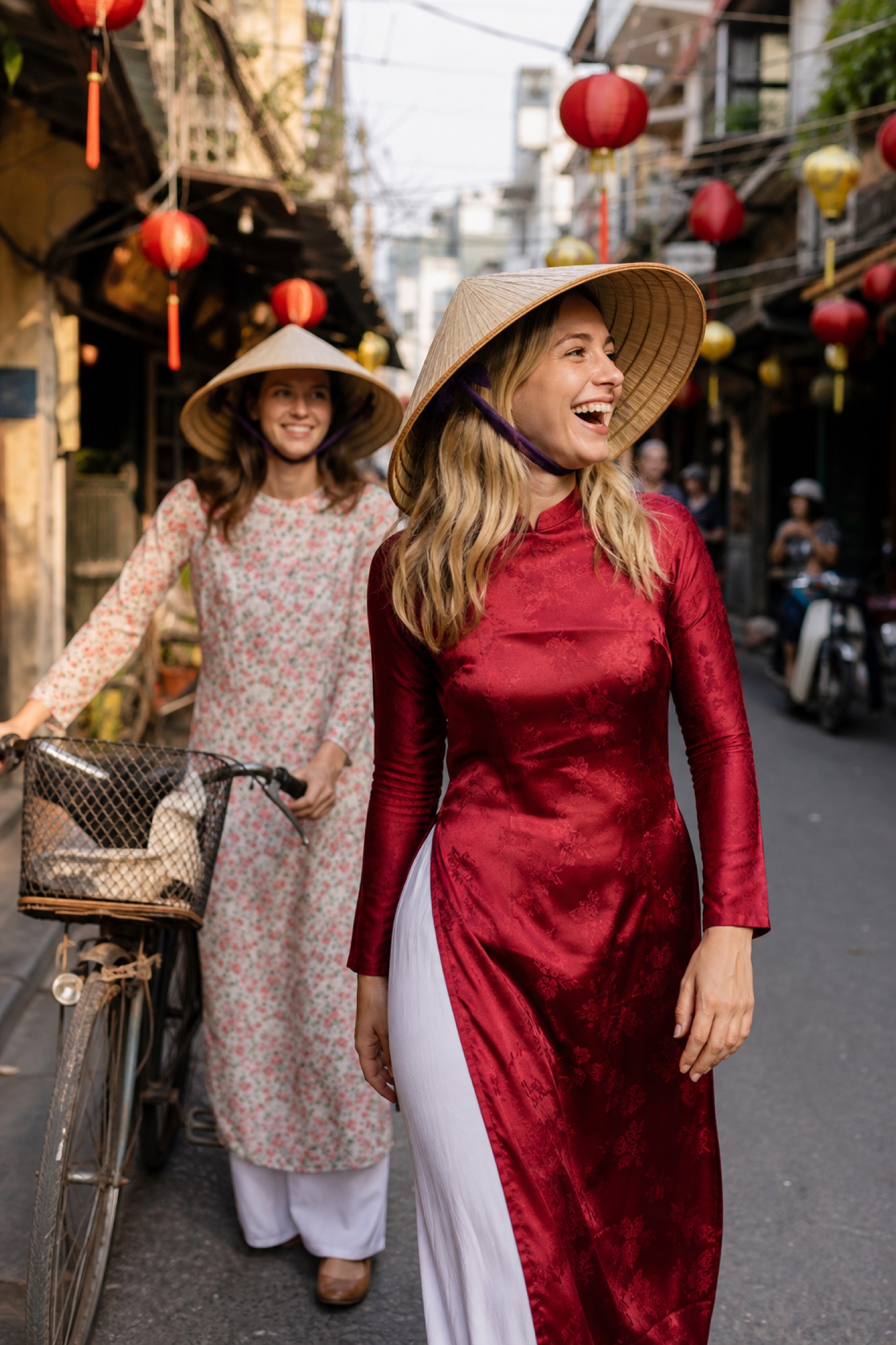
How to Tie a Khan Đóng Step by Step
Start with hair down or in a low, loose bun at the nape. Fold the silk scarf in half lengthwise into a long band. Drape it across the crown from one temple to the other, then bring both ends to the back of the head and twist or tie them together at the nape. Adjust so the front edge sits 1–2 fingers above the eyebrows—too low clips your face in photos. The back drape should fall evenly down the spine or rest on the shoulders. Take 3–4 minutes to settle it; the fabric will slip slightly as you move, so Cáo Studio's makeup artists re-check the tie and tuck loose strands before each shot. Practice tying it at least once at home before your session; rushing on shoot day leads to awkward repositioning and wasted light.
Why Hanoi Winter Is Ideal for Khan Đóng
December to February brings cool, grey light and lower humidity—perfect for khan đóng shoots. Your forehead stays dry, the silk lies flat against your scalp, and your hair holds the knot better than it would in the May–September haze. Hanoi's winter light is soft and even, flattering for formal portraits; strong midday sun (April–Oct) casts harsh shadows under the scarf's edge. If you're booking a couple photoshoot or family shoot with khan đóng, winter gives the steadiest conditions. Shoot between 10 a.m. and 3 p.m. on cloudy days for the gentlest contrast. Rainy days (common Jan–Feb) actually work—clouds diffuse light beautifully, though you'll need a cover-up between frames. Cáo Studio's Hanoi team scouts weather daily and adjusts timing to catch the best window.
Khan Đóng Care and Fit Issues Before You Book
Silk khans đóng can cost between budget and luxury depending on material—ask Cáo Studio on WhatsApp whether your session includes one or if you're bringing your own. If you own a scarf, bring it to your shoot; the team will tie it to fit your head and hair. If renting, confirm fit and color (cream, gold, or jewel tones complement skin tone differently) in your pre-shoot chat. The scarf shouldn't leave a red mark on your forehead or slip within 5 minutes of tying—that signals poor fit or wrong knot tension. If you have very fine or slippery hair, ask the makeup artist about bobby pins or a thin headband underneath to grip the silk better. Test-wear your scarf at home for at least 20 minutes before the session to know how it feels when you smile, turn your head, or look down. Bring the scarf in a small drawstring bag to protect it from creases in transit.
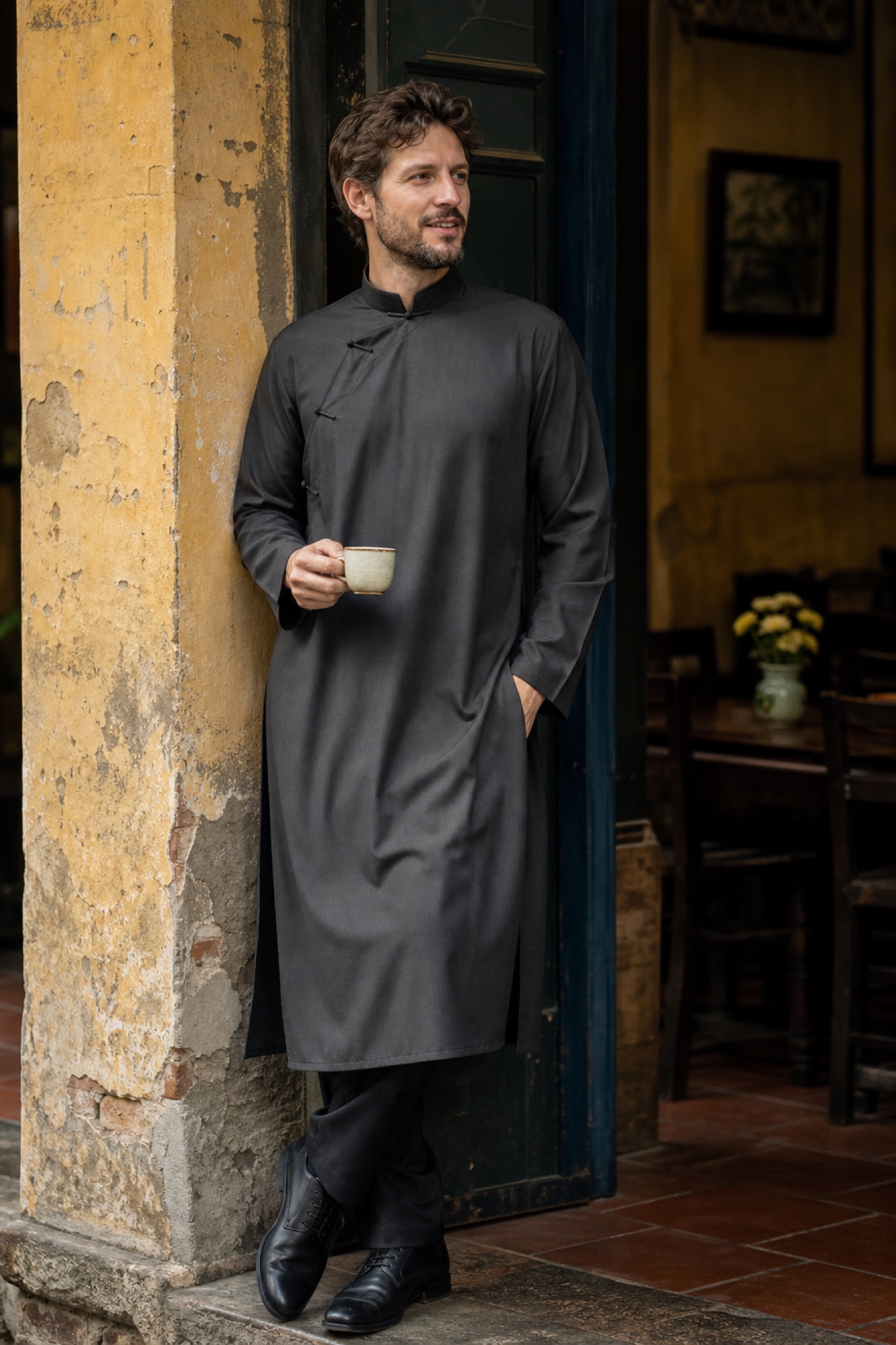
Mixing Khan Đóng with Other Ao Dai Styling Choices
Khan đóng works alongside jewelry, makeup, and undergarments—each choice affects the final frame. Pair it with minimal jewelry on the neck and ears so the focus stays on your face and the scarf's drape. Avoid dangling earrings that catch the scarf's edge. Makeup should be richer and more defined than casual looks; grey winter light can flatten soft colors, so a deeper lip and sharpened eyes work better. Underneath the ao dai, wear control undergarments to keep the áo (tunic) and quần (trousers) lines clean; loose fabric bunches under the scarf's weight and breaks the formal silhouette in side profiles. If you're booking a pre-wedding photoshoot or proposal session, combine khan đóng with a coordinated second outfit (no scarf) to show range; the contrast between formal and relaxed shots tells a richer story. Ask Cáo Studio how many outfit changes your package allows and whether the makeup artist can refresh your face between looks.
When to Skip Khan Đóng and Choose Alternatives
If you have short hair, sensitive skin, or you're shooting in warm months, khan đóng may not serve you well. Hair shorter than shoulder-length won't grip the scarf securely, and constant re-tying breaks the flow of your shoot. If your forehead gets irritated by pressure or heat, the tightness will show as redness in close-ups. In May–September, the combination of humidity and a warm scarf can cause frizz and sweat, even in shaded locations; Hanoi's heat peaks around 3–4 p.m., and a khan đóng session in July will feel exhausting. For vacation photoshoots or casual city walks, a simple hair clip, floral crown, or loose braid often capture more natural joy than formal dressing. Cáo Studio's team can advise on your shoot date, hair type, and comfort level; they've styled hundreds of travelers and know which aesthetic works for your vibe and season. If unsure, ask them on WhatsApp—they'll recommend the best look without pressure to choose khan đóng if it doesn't fit your plan.
📸 Book on WhatsApp — ao dai photoshoot
What to Check Before You Book Your Khan Đóng Shoot
Hair length & texture: Confirm it's at least shoulder-length and can hold a bun or knot. Thin or very straight hair may slip—ask the makeup artist about grip tricks.
Season & weather: Book Dec–Feb for coolest, most stable conditions. Check the 7-day forecast before your shoot date; reschedule if heavy rain or extreme humidity is forecast.
Session length: Khan đóng styling and re-positioning takes extra time. Confirm your total session duration on WhatsApp matches a longer-than-basic shoot timeline.
Scarf ownership: Decide if you'll bring your own silk scarf or rent/use the studio's. Confirm color and fit at least 48 hours before your appointment.
Outfit pairing: Ensure your ao dai is pressed and fits well under the scarf's weight. Loose or wrinkled fabric will show in photos.
Touch-up plan: Ask whether makeup and scarf re-tying are included if you're doing multiple outfit changes or shooting longer than 90 minutes.
Browse Cáo Studio's ao dai rental collection to see khan đóng styling in context, or check the lookbook for real session examples. If you're coupling khan đóng with formal jewelry, check the wedding & pre-wedding video page to see how styling elements work together. For makeup planning, see makeup & hair at your hotel.
---
FAQ
Can I wear khan đóng if I have hair extensions or a hairpiece?
Yes, but the knot must grip the base of your real hair, not the extension. Cáo Studio's makeup artist will tie it closer to your scalp for stability. Tell them on WhatsApp so they plan extra styling time.
Does khan đóng work for outdoor shoots in windy conditions?
Not ideally—wind loosens the knot and lifts the drape unpredictably. Book indoor locations (temples, studios) or shoot on calm, overcast days. Cáo Studio can advise on best-light outdoor spots in Hanoi with natural windbreaks (alleys, courtyards).
How long does it take to tie a khan đóng correctly?
3–5 minutes for the initial tie; 1–2 minutes for touch-ups between shots. Budget an extra 15–20 minutes for your entire session if it's your first time wearing one.
What if my khan đóng slips during the shoot?
The makeup artist keeps bobby pins and small mirrors on-set and re-ties it as needed—no extra charge. Slipping is normal; the team expects it and builds time into the session for adjustments.
Can I wear khan đóng with Western makeup or a modern ao dai?
Yes—khan đóng pairs with any ao dai style and any makeup preference. The contrast between formal scarf and contemporary makeup or a sleek ao dai design actually creates visual interest. Cáo Studio's lookbook shows modern-traditional blends; browse it for inspiration.
Is khan đóng worn differently for temple visits than for photoshoots?
The knot and drape are the same, but temple etiquette requires it to stay on for the entire visit, whereas in a photoshoot you can remove it between outfit changes. For temple shoots specifically, ask Cáo Studio about session flow—they've shot at Hanoi temples like Trấn Quốc and know the light, access, and dress code.
FAQ
Can I wear khan đóng if I have hair extensions or a hairpiece?
Yes, but the knot must grip the base of your real hair, not the extension. Cáo Studio's makeup artist will tie it closer to your scalp for stability. Tell them on WhatsApp so they plan extra styling time.
Does khan đóng work for outdoor shoots in windy conditions?
Not ideally—wind loosens the knot and lifts the drape unpredictably. Book indoor locations (temples, studios) or shoot on calm, overcast days. Cáo Studio can advise on best-light outdoor spots in Hanoi with natural windbreaks (alleys, courtyards).
How long does it take to tie a khan đóng correctly?
3–5 minutes for the initial tie; 1–2 minutes for touch-ups between shots. Budget an extra 15–20 minutes for your entire session if it's your first time wearing one.
What if my khan đóng slips during the shoot?
The makeup artist keeps bobby pins and small mirrors on-set and re-ties it as needed—no extra charge. Slipping is normal; the team expects it and builds time into the session for adjustments.
Can I wear khan đóng with Western makeup or a modern ao dai?
Yes—khan đóng pairs with any ao dai style and any makeup preference. The contrast between formal scarf and contemporary makeup or a sleek ao dai design actually creates visual interest. Cáo Studio's lookbook shows modern-traditional blends; browse it for inspiration.
Is khan đóng worn differently for temple visits than for photoshoots?
The knot and drape are the same, but temple etiquette requires it to stay on for the entire visit, whereas in a photoshoot you can remove it between outfit changes. For temple shoots specifically, ask Cáo Studio about session flow—they've shot at Hanoi temples like Trấn Quốc and know the light, access, and dress code.
Ao dai, makeup, hair and a local photographer in Hanoi or Saigon — one WhatsApp message.