/pre-wedding-photoshoot
Photography rules at Hanoi French Quarter: permits, drones and what to
The Hanoi French Quarter—the grid of yellow-ochre villas, tree-lined streets and shuttered shopfronts south of Hoan Kiem Lake—is a working heritage district, not a film set. Tourist photography (static tripods, a few poses) is tolerated on public streets without a permit. Drone flights are prohibited in the city center zone, including overhead French Quarter shots. Commercial shoots (weddings, paid photoshoots, model work) require a permit from Hoan Kiem District authorities—processing takes 5–7 working days and involves your passport, shoot plan and venue letters. Hanoi's autumn (Oct–Nov) and winter (Dec–Feb, though cooler and greyish) offer the softest light; avoid midday sun on narrow streets where reflections off painted walls blow highlights. At Cáo Studio – Makeup & Photoshoot, we handle permit coordination for pre-wedding photoshoots in the French Quarter; confirm your dates and outfit plan on WhatsApp, and we'll advise you on restrictions specific to your chosen locations.
The Hanoi French Quarter draws photographers because its scale, street furniture and light are consistent—unlike Hoi An's rural temples or Sapa's mountain fog, you can predict your backdrop. But that consistency comes from it being a protected historic zone, and that protection has teeth. Before you book a session here, understand what "permitted" actually means in Hanoi and which corners of the quarter suit your style.
Do you need a permit for a photoshoot in the French Quarter?
Yes, if you're paying a photographer to shoot you. A self-guided tourist taking selfies or casual phone photos does not need paperwork. The moment you hire a professional—even if the session lasts an hour—you're running a commercial activity, and Hoan Kiem District's authorities treat it that way. A permit application requires your full name, passport number, shoot date, specific street addresses, the names of any models or participants, your photographer's details and (ideally) letters of consent from any business owners at your chosen locations. Processing is officially 5–7 working days but can stretch longer if documents are incomplete or if Tet, typhoon season or public holidays fall in that window. The permit itself is issued to the photographer or the organizer, not the subject, so check with your studio—if they're licensed and used to running shoots in Hanoi, they'll have a streamlined process. At Cáo Studio, we coordinate this step for all pre-wedding and elopement sessions booked in the district; you'll confirm dates and location preferences on WhatsApp, and we liaise with authorities on your behalf.
📸 Book on WhatsApp — pre-wedding photoshoot
Can you fly a drone over the French Quarter?
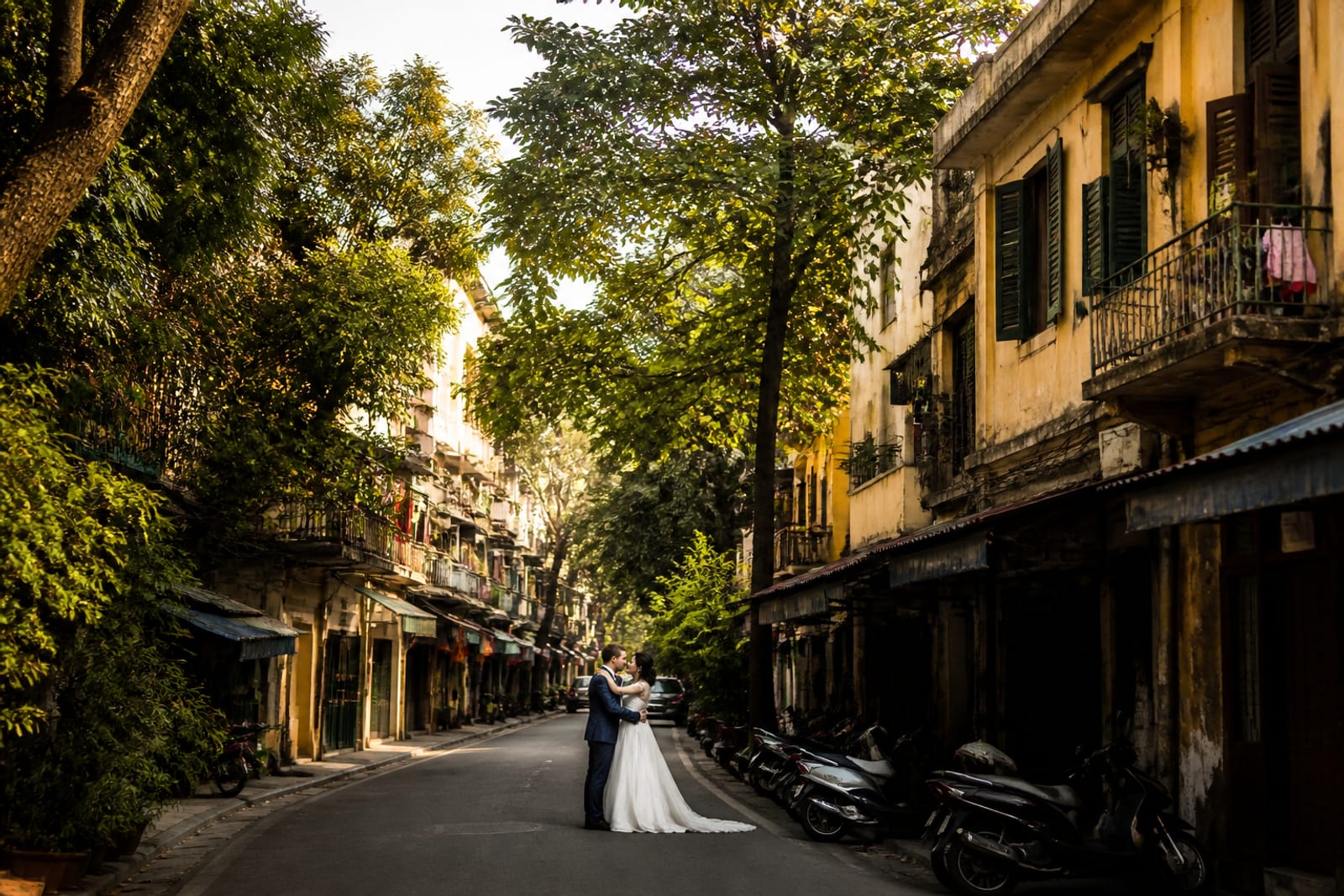
No. Hanoi's no-fly zone for civilian drones encompasses the entire city center, including the French Quarter and the Old Quarter. The prohibition is enforced by Vietnam's Civil Aviation Authority and is non-negotiable. Even a small consumer drone (DJI Mini or similar) cannot legally operate in that airspace without a military-grade permit, which civilian tourism operators do not receive. If drone shots are part of your vision, you'll need to shoot elsewhere—Truc Bach Lake (just north of the city center, outside the restricted zone) or suburban parks allow drones, but the vibe and architecture are different. Ground-level and street-level shots are where the French Quarter's real charm lives anyway: the dappled light through tamarind trees on Phan Dinh Phung Street, the yellow-painted row houses on Hang Be, the colonial shutters and bistro chairs of Ngo Gai. Those details disappear from the sky. Plan your shot list around what's visible from eye level.
What are the best times of day and season for light in the French Quarter?
Autumn (Oct–Nov) is the standard recommendation: temperatures are 20–28°C, humidity drops, and the tamarind and rain trees on Phan Dinh Phung Street are in their greenest phase. Morning light (6:30–9:00 am) hits the east-facing facades with warm, soft directional light; shadows are long enough to add depth but not so harsh they blow out the yellow ochre walls. Afternoon (3:00–5:30 pm) works for west-facing streets and creates a golden-hour glow on the shutters and doorways. Avoid 10:30 am–3:00 pm: the sun is high, shadows are short and dark, and the narrow street-grid traps heat without diffusing light evenly. Winter (Dec–Feb) is cooler but often overcast and drizzly, which flattens color and requires longer exposures—good for moody, muted tones, harder for bright, vibrant couple shots. Spring (Mar–Apr) brings haze and frequent light rain; humidity rises, and the light is often milky rather than crisp. Summer (May–Sep) is too hot and humid, afternoon thunderstorms are frequent, and the street villas attract condensation on their shutters, creating uncontrollable reflections. Book your session 6–8 weeks ahead so the studio can secure a permit slot in the window you prefer.
How do you compare a studio photoshoot versus a self-guided walk with a hired photographer?
| Option | Best for | Light & logistics | Why it works |
|---|---|---|---|
| Studio with permit | Couples wanting a full session, makeup & styling, outfit changes | Fixed timing; autumn optimal; controlled locations | Pre-coordinated with authorities; hair/makeup on-site; dedicated crew; no time pressure |
| Self-guided walk with freelancer | Travelers with tight budgets, short notice, single outfit | Flexible hours; early morning or late afternoon only | No permit if you frame it as "personal use"; faster booking; less formal |
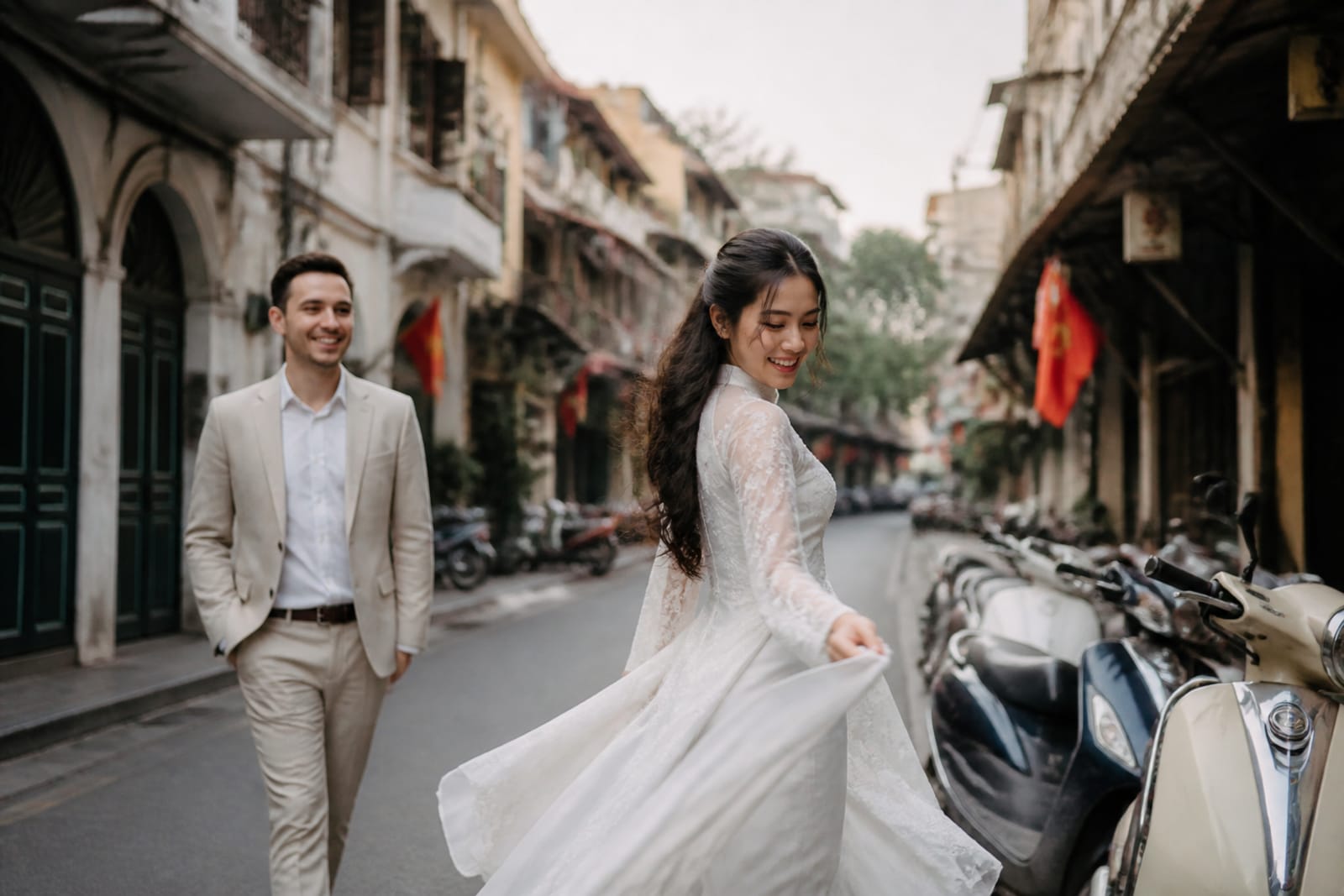
| Ao dai rental + session | First-time visitors wanting cultural authenticity | Soft morning light essential (ao dai folds and silks need gentle raking light) | Costume adds historical context to colonial backdrop; seasonal peach-blossom or lotus shoots add layers |
The studio option (like Cáo Studio's pre-wedding photoshoot service in Hanoi) includes permit coordination, professional hair and makeup, a set shot list with backup locations, and a dedicated timeline—you're not racing against fading light or dodging street vendors. It costs more because the photographer has licensed insurance, the studio covers permit fees, and you get a larger final gallery. The freelancer walk is cheaper and faster to book, but you're responsible for checking local rules, and many freelancers operate in a grey zone regarding permits. If your session involves professional styling or more than one outfit, the studio route is more reliable. The ao dai photoshoot adds a cultural layer: the French Quarter's colonial geometry looks striking against traditional Vietnamese silk, especially in autumn when light is soft enough to show the fabric's drape without blowing out the highlight.
What should you check before booking a French Quarter photoshoot?
Before you commit, verify these points with your photographer:
- Permit status: Is the studio licensed to operate in Hoan Kiem District? Do they cover permit fees in their quote, or is it extra? How much advance notice do they need? Ask on WhatsApp and request confirmation that permit paperwork will be filed before your session date.
- Specific streets and addresses: The French Quarter is not one monolithic zone—Phan Dinh Phung, Ngo Gai, Hang Be and Trang Tien feel and photograph differently. Which streets does the photographer typically use? Are they flexible if you have a favorite spot? Will they scout for you in advance?
- Weather backup: If your date is in the rainy season (May–Sep) or Tet window (late Jan–mid Feb), what's the rebooking or refund policy if weather cancels the session? Do they have covered or alternative indoor locations (studios, hotel lobbies, galleries)?
- Outfit and styling: If you're renting an ao dai or suit, will the studio coordinate fittings before the shoot? Does their quote include hair and makeup, or is hotel makeup and hair booked separately? Confirm exact inclusions on WhatsApp.
- Final files and timeline: How many edited photos will you receive? When? In what format and resolution? How many outfit changes are included? These details vary widely and should be confirmed before payment.
- Solo travelers and non-couples: If you're booking a vacation or solo photoshoot, ask whether the French Quarter session can be adapted for solo portraits instead of couple poses, and whether the photographer has experience with that style.
At Cáo Studio – Makeup & Photoshoot, all of these details are confirmed on WhatsApp once you've selected your service. We have three Hanoi branches and one Saigon location; if you're interested in Hoi An photoshoots, ask on WhatsApp for available dates (the team travels there by appointment). Check our lookbook to see real sessions shot in the French Quarter and other Hanoi locations, and review the pricing and FAQ pages for general service scope.
What outfits and styling work best for the colonial backdrop?
The French Quarter is a pastel and cream-colored stage, so clothing choice heavily influences the final image. Soft, neutral tones (ivory, blush, sage, warm grey) echo the villa palette and create a cohesive, editorial look. Bold jewel tones (emerald, sapphire, burgundy) pop against the architecture and suit darker, moody autumn light. White and cream are highest-risk: they can blow out in direct midday sun or look washed-out in overcast winter light—save those for sunset or studio sessions with controlled backlighting. The ao dai is a natural fit: the contrast between silk and colonial shutters, the silhouette against doorways, and the historical pairing all compound the storytelling. Couples often choose coordinating or contrasting ao dai sets for an entire session or as a second outfit after Western formal wear. If you're not doing traditional dress, bring two or three outfit options—narrow streets and repetitive facades mean changing clothes partway through refreshes the visual palette without moving location. Discuss outfit logistics with the studio in advance; they can advise on which fabrics and colors photograph best in your chosen season and street list.
FAQ
Do I need a permit if I'm just taking selfies or asking a friend to shoot me?
Tourist self-photography needs no permit. Only hired professional photographers require paperwork. If you're paying someone to be your photographer, a permit is legally required; confirm your studio handles this before booking.
Can we shoot at Hoan Kiem Lake in the French Quarter area?
The lake's shores are public, but the surrounding area is pedestrian-only on weekend evenings, and permit rules still apply if you're hiring a photographer. The lake's reflective water and tree-framed backdrop are iconic but crowded at sunrise and golden hour—book early morning (before 7 am) for fewer people.
What's the difference between booking a studio photoshoot and hiring a freelancer for a walk?
A studio (like Cáo Studio) covers permit coordination, professional styling and makeup, a planned shot list, and backup locations—higher cost but lower stress. Freelancers are cheaper and faster to book but you may be responsible for permit knowledge, and they often work informally without insurance or licensed status.
How far in advance should we book a French Quarter photoshoot?
6–8 weeks is ideal to secure a permit slot in your preferred season. Autumn (Oct–Nov) fills fastest. If you're booking for a date within 3–4 weeks, ask the studio about rush-permit options or whether they can fast-track paperwork on WhatsApp.
Can we add a pre-wedding videographer or album printing to the French Quarter photoshoot?
Yes. Cáo Studio offers wedding video services and photo album printing as add-ons to photoshoots. Discuss bundling options on WhatsApp—combining services often streamlines logistics and permit coordination. The studio can also arrange wedding dress or ao dai rental alongside the session.
FAQ
Do I need a permit if I'm just taking selfies or asking a friend to shoot me?
Tourist self-photography needs no permit. Only hired professional photographers require paperwork. If you're paying someone to be your photographer, a permit is legally required; confirm your studio handles this before booking.
Can we shoot at Hoan Kiem Lake in the French Quarter area?
The lake's shores are public, but the surrounding area is pedestrian-only on weekend evenings, and permit rules still apply if you're hiring a photographer. The lake's reflective water and tree-framed backdrop are iconic but crowded at sunrise and golden hour—book early morning (before 7 am) for fewer people.
What's the difference between booking a studio photoshoot and hiring a freelancer for a walk?
A studio (like Cáo Studio) covers permit coordination, professional styling and makeup, a planned shot list, and backup locations—higher cost but lower stress. Freelancers are cheaper and faster to book but you may be responsible for permit knowledge, and they often work informally without insurance or licensed status.
How far in advance should we book a French Quarter photoshoot?
6–8 weeks is ideal to secure a permit slot in your preferred season. Autumn (Oct–Nov) fills fastest. If you're booking for a date within 3–4 weeks, ask the studio about rush-permit options or whether they can fast-track paperwork on WhatsApp.
Can we add a pre-wedding videographer or album printing to the French Quarter photoshoot?
Yes. Cáo Studio offers [wedding video services](/wedding-video) and [photo album printing](/photo-album) as add-ons to photoshoots. Discuss bundling options on WhatsApp—combining services often streamlines logistics and permit coordination. The studio can also arrange [wedding dress](/wedding-dress-rental) or [ao dai rental](/ao-dai-rental) alongside the session.
Ao dai, makeup, hair and a local photographer in Hanoi or Saigon — one WhatsApp message.