/pre-wedding-photoshoot
Pre-wedding photo ideas and poses at Kim Bong carpentry village
Kim Bong carpentry village, five kilometers north of Hoi An Ancient Town, is a working community of wood artisans whose family workshops and hand-carved storefronts create authentic, textured settings for pre-wedding photos. Sessions typically run 90 minutes to 2 hours, moving between active workshops, narrow lanes, and riverside spots where natural light shifts dramatically by hour. Best light is 5:30–7:00 am (sunrise, soft amber, minimal foot traffic) and 4:30–6:00 pm (golden hour, longer shadows on weathered wood). You'll wear an áo dài, western formal, or casual-chic outfit; the village is working, not touristy, so respect artisans by not blocking entrances and asking before framing someone's workspace. Cáo Studio – Makeup & Photoshoot books Kim Bong shoots by appointment (team travels from Hanoi or Saigon), confirming dates and logistics on WhatsApp because opening hours and artisan availability vary by season and day.
Kim Bong carpentry village offers weathered wooden backdrops and artisan energy for pre-wedding photos. Learn which poses work, best light windows, and how to decide if it fits your vision.
Why choose Kim Bong over Hoi An Ancient Town for a pre-wedding shoot?
Kim Bong feels lived-in, not heritage-packaged. The Ancient Town requires entry tickets, crowds peak mid-morning, and lantern-lit backgrounds compete with other couples. Kim Bong has no entrance fee, authentic workshop activity, and you're rarely jostled. The trade-off: no guaranteed lighting (you're among working artisans), narrower lanes mean less reflector space, and sunrise shoots demand an early vehicle pickup. Choose Kim Bong if you want editorial, unpolished character; choose the Ancient Town if you prefer iconic, staged landmarks.
What poses and framing work best in a carpentry workshop setting?
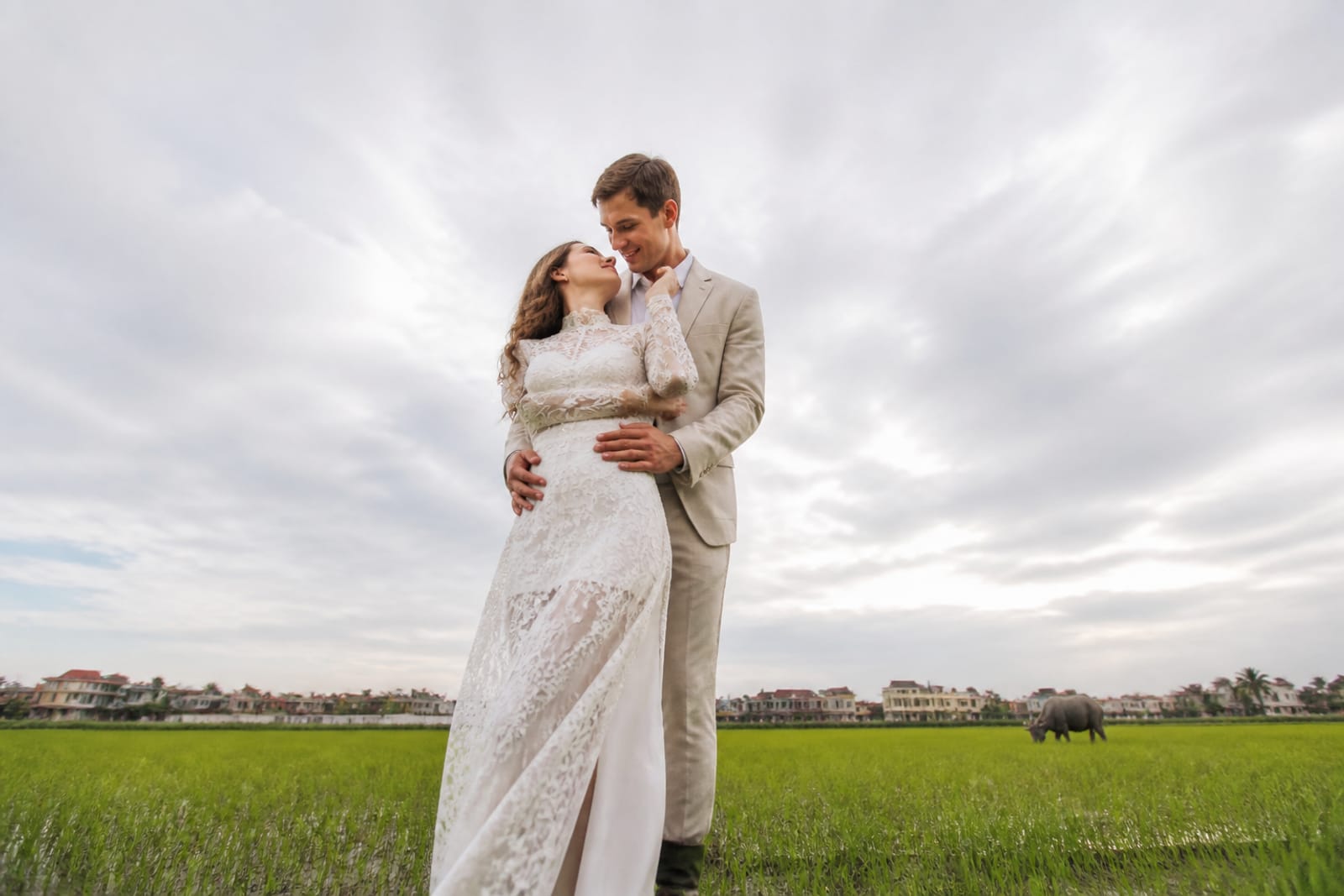
Lean against a heavy wooden door or doorframe—the grain and patina frame your silhouette. Sit on a wooden step or bench while your partner stands behind, creating layers; the workshop clutter naturally softens the background. Walk through a lane holding hands, letting the photographer shoot from the front or side; morning light streaming between buildings casts directional shadows that flatter motion. Pose near a wooden carving or half-finished piece without handling it; respect the artisan's work. Avoid stiff, centered poses; the village rewards movement and proximity. A close-up of hands on carved wood (yours, theirs, shared) humanizes the frame and avoids generic couple-portrait feel.
How does light change through the day, and when should you book?
| Time | Light quality | Crowds | Best for | Why it works |
|---|---|---|---|---|
| 5:30–7:00 am | Soft golden, low angle | Almost none | Intimate portraits, silhouettes | Long shadows on wood textures; no artisans yet so lanes are clear |
| 7:00–10:00 am | Bright, harsh, dappled | Light foot traffic | Motion shots, layered framing | Moving light through lanes; artisans opening—energy builds |
| 10:00 am–4:00 pm | Overhead, flat, hot | Medium | Avoid or shoot in shade | Unflattering on faces; heat makes áo dài wear uncomfortable |
| 4:30–6:00 pm | Golden hour, side-lit | Medium | Portraits, detail close-ups | Long shadows and warm tone; artisans still working (visual interest) |
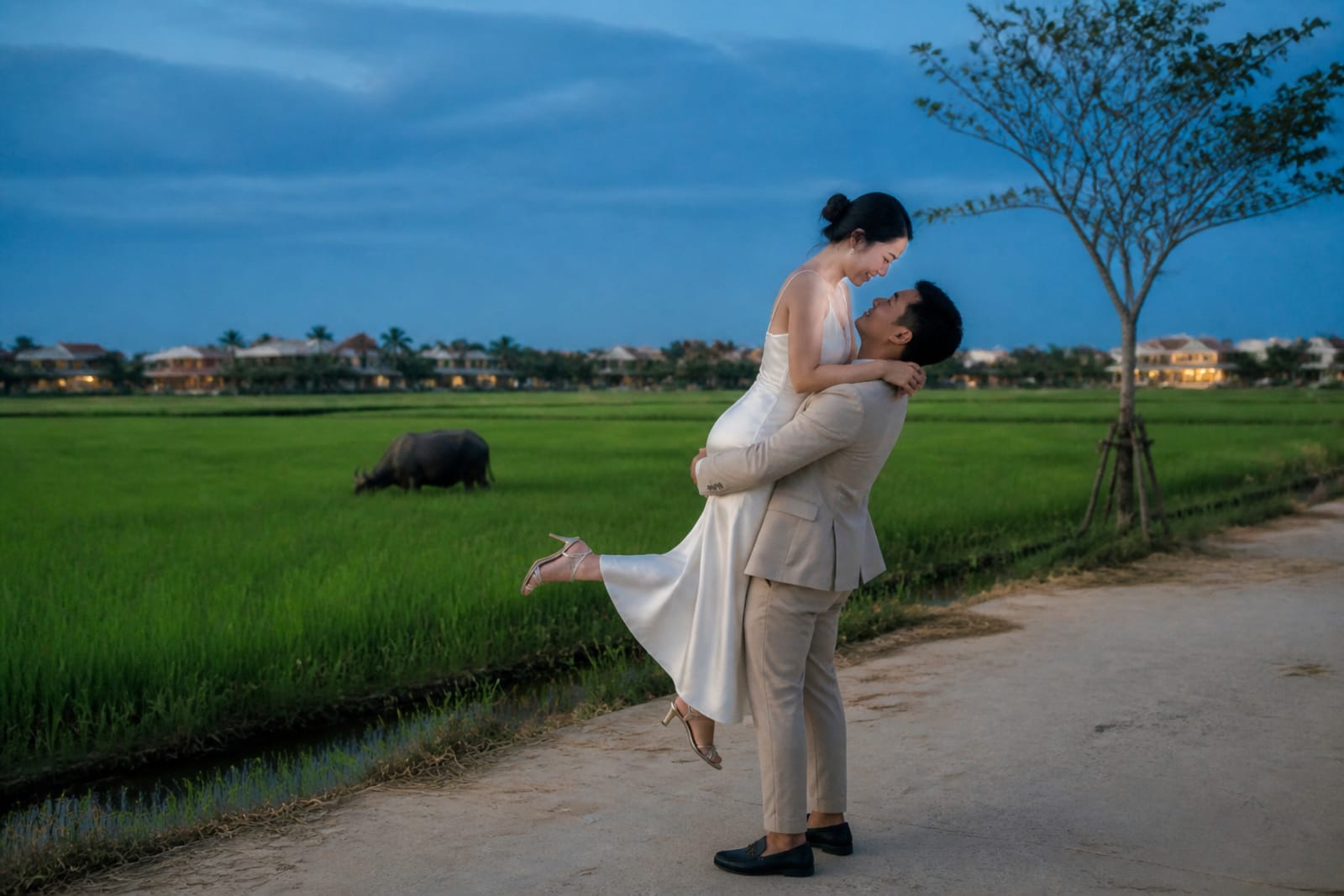
| After 6:00 pm | Dim, cooler blue | Light | Twilight mood shots (risky) | Romantic but requires high ISO and steady hands; artisans closing |
Sunrise (5:30–7:00 am) is ideal: soft light, empty lanes, textured backgrounds glow. Golden hour (4:30–6:00 pm) is second-best but busier. Mid-day (10:00 am–4:00 pm) is punishing—flat light and heat make áo dài uncomfortable; avoid if possible.
What should you wear, and does Kim Bong suit all outfit styles?
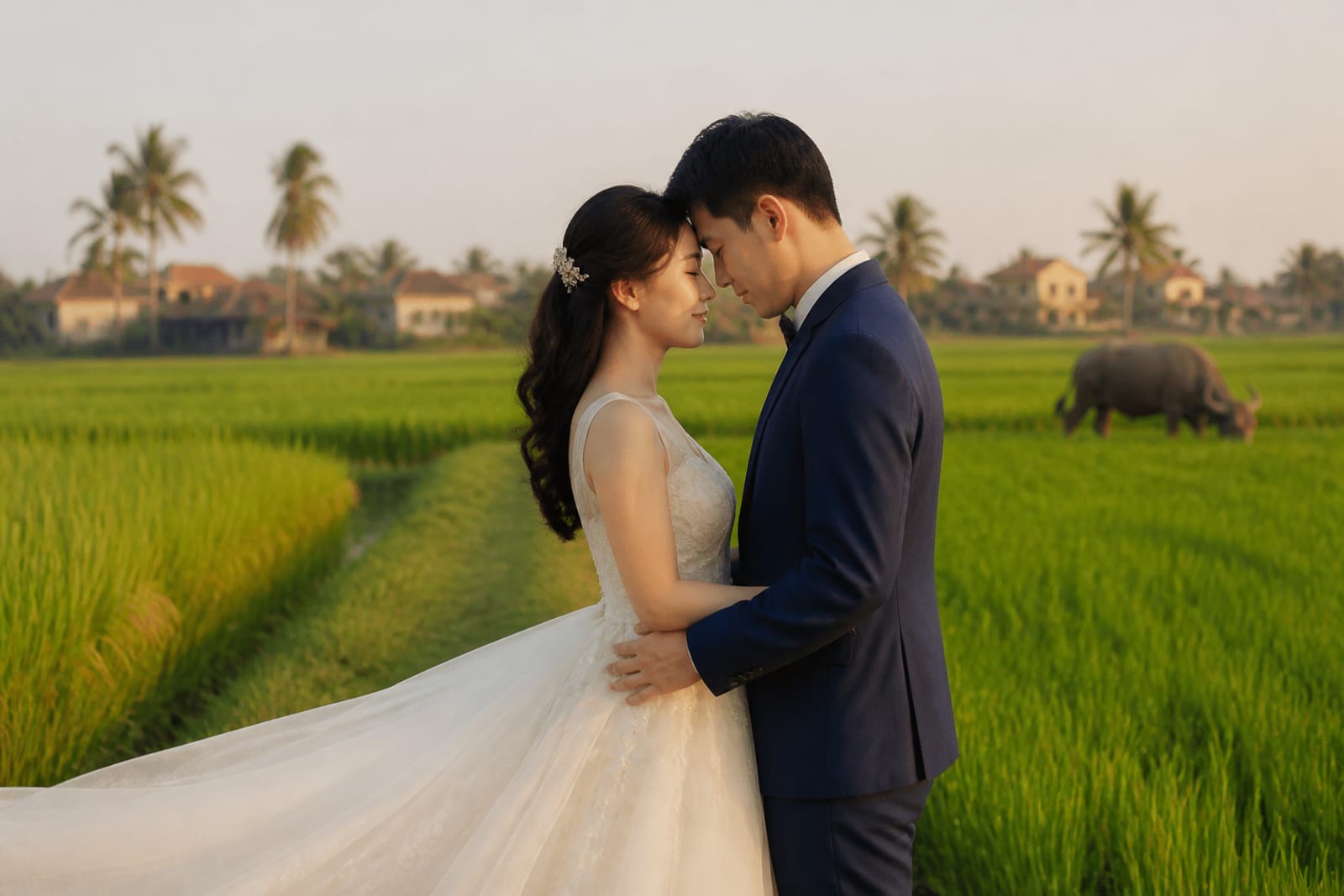
Áo dài works beautifully on wood tones—pastels and jewel tones pop against grey, weathered surfaces. Formal western wear (structured dress, suit, blazer) reads editorial and modern against heritage backdrops. Casual-chic (linen, neutral layers, minimal jewelry) fits the artisan vibe and photographs naturally in natural light. Avoid bright primary colors, shiny fabrics, or busy prints—they compete with the environment instead of complementing it. Wear neutral or metallic shoes (no white sneakers; they draw the eye). If you're in áo dài, your photographer and makeup artist (book via makeup & hair at your hotel) should arrive at your hotel 90–120 minutes before departure to allow travel time to Kim Bong.
Is Kim Bong right for you, or should you book Hoi An Ancient Town instead?
Choose Kim Bong if you want:
- Raw, artisan-focused storytelling over postcard scenery.
- Fewer crowds and a faster, less formal shoot experience.
- Flexibility to move between multiple locations without re-entry fees.
- Authentic Vietnamese craft heritage as your backdrop (not tourist landmarks).
Choose Hoi An Ancient Town or Hanoi if you want:
- Guaranteed iconic architecture and lanterns.
- Comfort of known light paths and managed foot traffic.
- Easier coordination for multi-location, multi-outfit shoots.
- Established, photographed poses with recognizable landmarks.
Many couples do both: an early sunrise session at Kim Bong (editorial, intimate), then a midday rest, then golden-hour photos in the Ancient Town. This requires longer overall time but maximizes visual variety. Ask Cáo Studio on WhatsApp whether a dual-location session suits your timeline and energy.
How do you book a Kim Bong pre-wedding shoot, and what logistics should you confirm?
A pre-wedding photoshoot at Kim Bong requires advance coordination because the team travels from Hanoi or Saigon by appointment. Contact us on WhatsApp with your preferred date, time, outfit choices, and shot list. Confirm:
- Exact pickup time and location (usually your hotel).
- Whether sunrise or golden hour works for your energy level and áo dài comfort.
- Travel time from your hotel (typically 30–45 minutes from Hoi An center; factor in early-morning traffic or road conditions in rainy season).
- Whether makeup and hair are included or booked separately.
- The exact inclusions (number of outfits, edited files, album options, delivery timeline).
Weather varies by season: February–April is dry, mild, and ideal; May–August is hot and dry but expect heat exhaustion in áo dài; September–December is rainy and cool with typhoon risk (October–November sees flooding in town, making travel unpredictable). Avoid October–November unless you're confident in weather. December–January is cool and sometimes drizzly but manageable.
📸 Book on WhatsApp — pre-wedding photoshoot
What else complements a Kim Bong pre-wedding session?
After Kim Bong, many couples add a wedding day photographer package to cover the ceremony itself, or book a wedding & pre-wedding video to capture the artisan environment and couple moments in motion. If you're wearing áo dài, consider renting from our áo dài rental collection or wearing your own (confirm the condition and style with your photographer so they can frame it properly). For keepsake prints or albums, order from our photo prints & frames or wedding photo album collection after the shoot; these add tangible beauty to your memory.
Couples who've done Kim Bong often pair it with a couple photoshoot elsewhere (city or nature) to diversify mood and location. Check the lookbook to see how other couples have used Kim Bong; it may spark pose or outfit ideas unique to your story. Review FAQ for common questions, and visit pricing to understand how location, season, and outfit count affect overall cost.
What to check before you book
- Season and weather: Is your preferred month in the dry window (Feb–Apr best; Dec–Jan cool but viable; avoid Oct–Nov typhoon season)?
- Time commitment: Sunrise shoots demand early hotel pickup; golden hour is less rushed. Which suits your pre-wedding energy?
- Outfit and comfort: Will you wear áo dài (hot in May–Aug, beautiful in Feb–Apr)? Does your photographer have experience framing it in artisan settings?
- Makeup resilience: Kim Bong is outdoors and warm; confirm your makeup artist uses long-wear formulas and brings touch-up supplies.
- Artisan respect: Are you prepared to move quickly through narrow lanes, avoid blocking doorways, and ask before framing people's workspaces?
- Transport and accessibility: Can you comfortably travel 30–45 minutes from your hotel in the dark (sunrise) or be flexible if traffic delays the start?
- Editing timeline: Confirm when edited images are delivered; if you need prints for a wedding album, order well in advance.
FAQ
Is Kim Bong carpentry village free to photograph in, or are there entrance fees?
There is no entrance ticket to Kim Bong itself—it's a working village, not a managed heritage site. However, some artisans may request permission to photograph their workspace or finished pieces; always ask politely. Transportation, makeup, and your photographer's time are separate costs; ask Cáo Studio on WhatsApp for a quote.
Can I do a Kim Bong pre-wedding shoot if I don't speak Vietnamese?
Yes. Your photographer communicates respect to artisans—they'll ask permission and keep movement brief so you don't disrupt work. Smile, avoid lingering, and let the team guide the timing. English-speaking customers photograph Kim Bong regularly with Cáo Studio.
What's the difference between a sunrise (5:30 am) and golden hour (4:30 pm) shoot at Kim Bong?
Sunrise offers solitude, soft directional light, and clear skies but demands early energy and coordination. Golden hour has warmer color, active artisans visible in the background, but more foot traffic and requires less time at each spot. Many couples prefer sunset because it feels less brutal and pairs well with a village dinner afterward.
Can I wear a formal western wedding dress (not áo dài) at Kim Bong?
Yes, but it works best in structured or modern styles (A-line, sheath, minimalist). Ornate ball gowns photograph beautifully but are difficult to move in and may drag on dusty lanes. Discuss your dress shape with your photographer during booking so they can plan poses that flatter the silhouette against wooden backdrops.
If I book Kim Bong, should I also do photos in Hoi An Ancient Town?
Many couples do both because they offer different moods: Kim Bong is artisan and editorial; the Ancient Town is iconic and romantic. A combined shoot requires longer overall time but maximizes outfit variety. A single location session is also valid—pick whichever resonates with your story. Ask Cáo Studio on WhatsApp whether a dual session fits your timeline and budget factors.
What's the best time of year to photograph at Kim Bong?
February–April combines dry weather, mild temperatures, and green rice fields nearby. May–August is dry but intensely hot; áo dài wear becomes uncomfortable. September–December is rainy and cool; October–November carries typhoon and flooding risk around Hoi An—avoid unless weather is confirmed clear. December–January is cool and sometimes drizzly but manageable for short shoots.
FAQ
Is Kim Bong carpentry village free to photograph in, or are there entrance fees?
There is no entrance ticket to Kim Bong itself—it's a working village, not a managed heritage site. However, some artisans may request permission to photograph their workspace or finished pieces; always ask politely. Transportation, makeup, and your photographer's time are separate costs; ask Cáo Studio on WhatsApp for a quote.
Can I do a Kim Bong pre-wedding shoot if I don't speak Vietnamese?
Yes. Your photographer communicates respect to artisans—they'll ask permission and keep movement brief so you don't disrupt work. Smile, avoid lingering, and let the team guide the timing. English-speaking customers photograph Kim Bong regularly with Cáo Studio.
What's the difference between a sunrise (5:30 am) and golden hour (4:30 pm) shoot at Kim Bong?
Sunrise offers solitude, soft directional light, and clear skies but demands early energy and coordination. Golden hour has warmer color, active artisans visible in the background, but more foot traffic and requires less time at each spot. Many couples prefer sunset because it feels less brutal and pairs well with a village dinner afterward.
Can I wear a formal western wedding dress (not áo dài) at Kim Bong?
Yes, but it works best in structured or modern styles (A-line, sheath, minimalist). Ornate ball gowns photograph beautifully but are difficult to move in and may drag on dusty lanes. Discuss your dress shape with your photographer during booking so they can plan poses that flatter the silhouette against wooden backdrops.
If I book Kim Bong, should I also do photos in Hoi An Ancient Town?
Many couples do both because they offer different moods: Kim Bong is artisan and editorial; the Ancient Town is iconic and romantic. A combined shoot requires longer overall time but maximizes outfit variety. A single location session is also valid—pick whichever resonates with your story. Ask Cáo Studio on WhatsApp whether a dual session fits your timeline and budget factors.
What's the best time of year to photograph at Kim Bong?
February–April combines dry weather, mild temperatures, and green rice fields nearby. May–August is dry but intensely hot; áo dài wear becomes uncomfortable. September–December is rainy and cool; October–November carries typhoon and flooding risk around Hoi An—avoid unless weather is confirmed clear. December–January is cool and sometimes drizzly but manageable for short shoots.
Ao dai, makeup, hair and a local photographer in Hanoi or Saigon — one WhatsApp message.