/pre-wedding-photoshoot
Pre-wedding photoshoot at Cua Dai Beach, Hoi An: complete guide
Cua Dai Beach, a long sandy shore 4 km west of Hoi An Ancient Town, is a pre-wedding photoshoot location that works best February–August when the coast is dry and light is soft. Sessions run at sunrise (roughly 5:30–6:30 a.m., depending on season) to avoid midday heat and crowds; the beach is emptiest before 7 a.m. Tides shift the waterline and sand texture throughout the morning, affecting walking ease and your ao dai's trail movement—check the tide schedule the evening before. Cáo Studio – Makeup & Photoshoot travels to Hoi An by appointment; the team handles makeup, styling and shooting on-site. You'll wear an ao dai, possibly a second outfit, and spend 1–2 hours on the beach. The main challenge is sand in fabrics and wet hems in shallow water—wear undergarments that don't show when wet, and communicate your comfort level with water beforehand. ---
Why is Cua Dai Beach better than other Hoi An shorelines?
Cua Dai is quieter than Tam Ky or Cham Island landing spots because fewer vendors and tour groups operate there. The sand is fine and compact near the waterline, reducing sinking; the shoreline runs long and straight, giving your photographer multiple angles without resetting. Sunrise light reflects off wet sand, doubling the glow on your ao dai fabric—this is the single reason most pre-wedding couples choose early morning here. Tourist-heavy spots like the Ancient Town's Thu Bon bridge fill with day-trippers after 8 a.m., forcing rushed timing and harsh overhead light.
📸 Book on WhatsApp — pre-wedding photoshoot
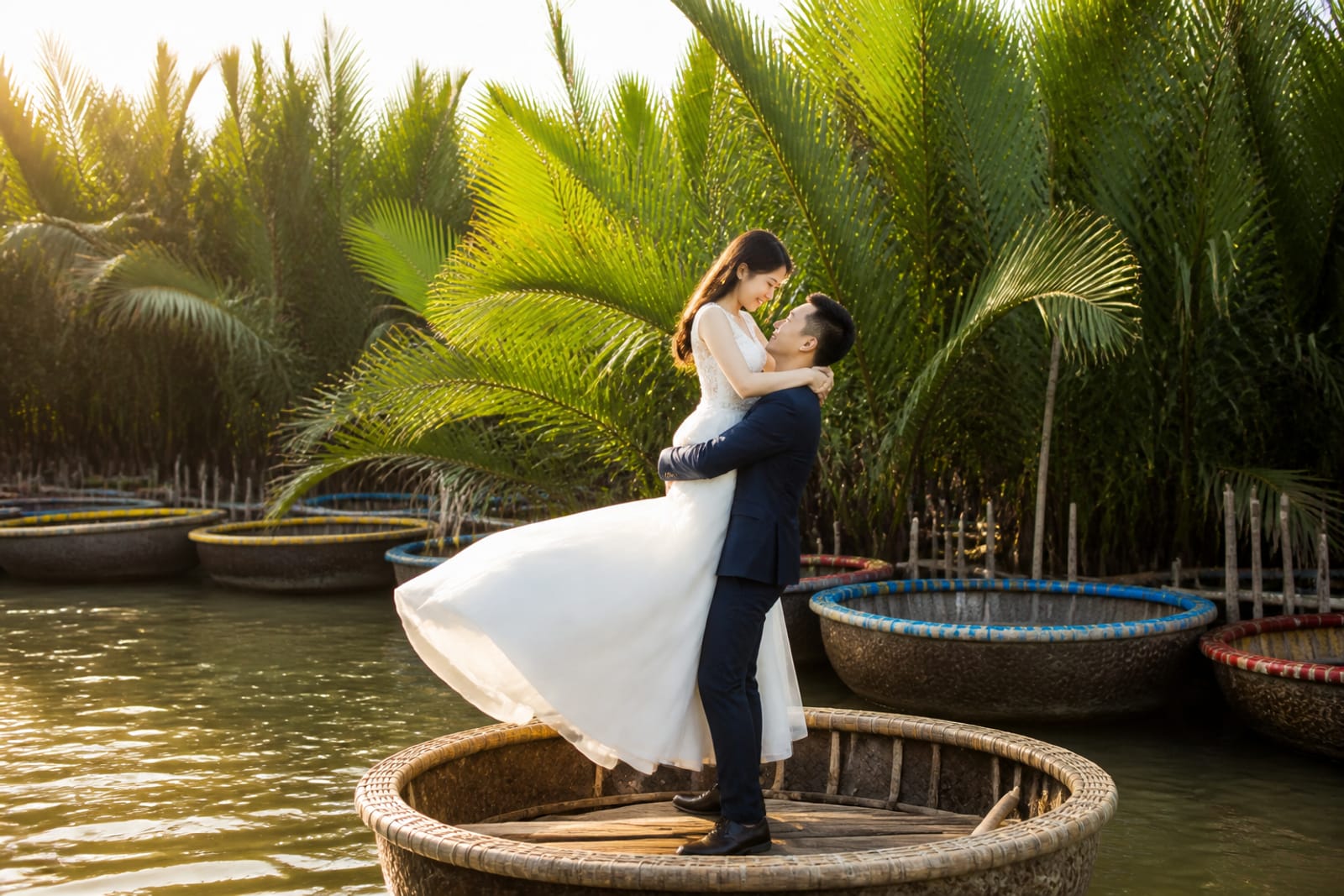
What clothing layers actually work under an ao dai at the beach?
Your undergarments must be seamless and quick-drying because water splashes are inevitable. Many brides wear a thin moisture-wicking slip or bike shorts under the traditional silk—visibility matters because wet fabric clings. Grooms wear tailored trousers, often in linen or cotton blend, paired with a traditional tunic or bare chest (cultural choice—discuss this with the team beforehand). Jewelry and rings can tarnish in saltwater, so remove or confirm they're water-safe. Avoid padded bras under ao dai silk; instead, use sticky-cup options or go unpadded—ao dai tailoring compensates.
| Layer choice | Best for | Why it works | Key consideration |
|---|---|---|---|
| Seamless moisture-wicking slip | Brides who wade or stand in shallow water | Dries in minutes; stays invisible under silk when wet | Check fit during alterations; too loose causes bunching |
| Structured bike shorts + bandeau | Couples doing dynamic poses (walking, kneeling) | Holds shape during movement; no chafing in sand | Avoid thick seams; sand gets trapped in loose elastic |
| None (bare chest under male tunic) | Grooms choosing cultural authenticity | Tunic drapes naturally; no visible layering lines | Sunscreen essential; wind exposure during longer shoots |
| Thin cotton leggings under female ao dai | Conservative preferences; cool-season shoots | Offers coverage without bulk; lightweight | Can show as a line under thin silk if wet—pre-test |
How do tides and light timing work together on shoot day?
Sunrise comes around 5:30–6:30 a.m. February–August in Hoi An; tides are independent and shift every 50 minutes daily. A low tide exposes compact sand that's easier to walk on and looks cleaner in photos; high tide brings water closer, letting you shoot with waves as backdrop but risks wet hems and footprints washing away. Check a tidal prediction app or local weather site the night before—tide height affects where you can stand without sinking. Golden light lasts roughly 30–40 minutes after sunrise before turning neutral. Plan to arrive at the beach 20 minutes before your target shooting time so the makeup and styling crew can set up while light is still soft. If tides are high, shoot in the drier sand strip above the waterline; if low, use the wet, reflective zone. Wind picks up after 7:30 a.m., so tight timeline matters.
Which outfits and accessories survive saltwater best?
Traditional red or pink silk ao dai shows water stains, so ask your rental or seamstress about fabric treatment beforehand. Matte finishes hide moisture better than glossy silks. Accessories like wooden combs, fabric flowers and bone hairpins tolerate saltwater; metal jewelry (rings, bracelets, earrings) should be removed or confirmed corrosion-safe with the jeweler. Shoes are problematic on wet sand—go barefoot for comfort and authentic movement, or wear water sandals off-camera and carry them. Groom's vests and turbans in cotton or linen-blend fabrics dry faster than velvet or satin. Bring a small soft towel for quick drying between shots if water splashes are unavoidable. Cáo Studio's team typically packs moisture-safe emergency supplies (fabric spray, touch-up powder, emergency pins), so confirm what's included when you book on WhatsApp.
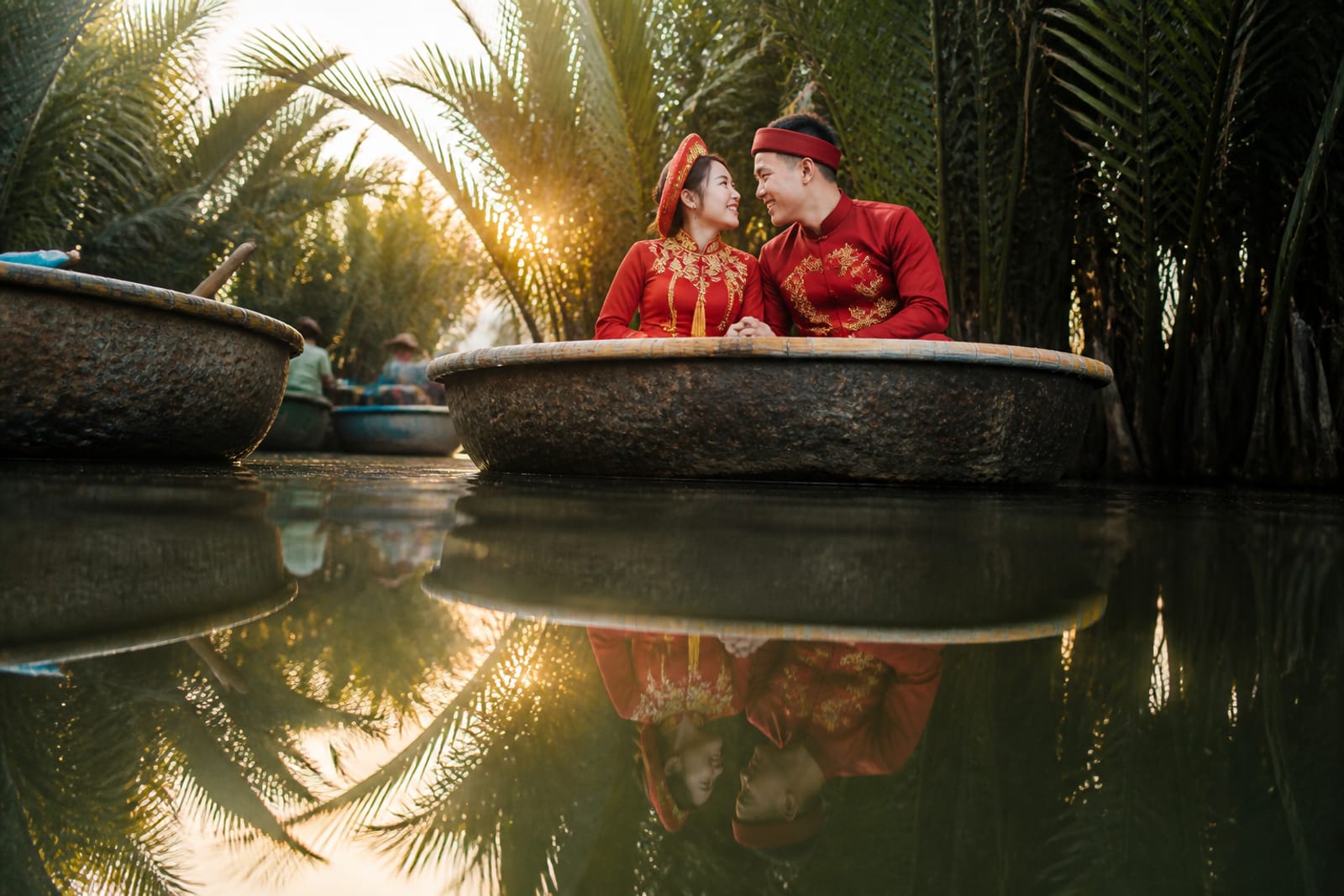
What practical steps should you take the day before and morning of?
Evening before:
- Check tide tables and sunrise time; screenshot or note both.
- Confirm ao dai and groom outfit fit; ask seamstress about hem length when standing in water.
- Confirm all jewelry is saltwater-safe or plan to remove it.
- Review parking or meeting point with the studio team (WhatsApp).
Morning of:
- Arrive 15–20 minutes early; bring water and a light snack for the crew.
- Do a moisture test on ao dai fabric if it's your first saltwater shoot.
- Apply waterproof makeup or confirm your makeup artist is using saltwater-resistant products.
- Wear flip-flops to the beach; remove them at the shoreline.
- Do a quick walk-through shot to check comfort level wading.
During the shoot:
- Communicate with your photographer if water splashes feel uncomfortable.
- Take a 10-minute break mid-shoot to dry off and reset makeup if needed.
- Protect your phone and the photographer's gear from sand and spray.
---
How does Cáo Studio book Hoi An pre-wedding sessions, and what should you confirm first?
Cáo Studio – Makeup & Photoshoot operates branches in Hanoi and Ho Chi Minh City, but travels to Hoi An by appointment only. Your first step is to WhatsApp the team with your preferred dates and session length; the team will confirm availability and discuss your vision. Because Hoi An sessions require travel time from Hanoi or Saigon, booking windows are tighter—aim to book 2–4 weeks in advance during high season (Feb–Apr). Confirm the exact inclusions with the team on WhatsApp: makeup and hair timing, number of outfits, how many edited files you receive, and delivery schedule. Ask whether the quoted price factors in travel time or if there's a separate logistics fee (Cáo Studio clarifies this via WhatsApp). Check what happens in case of bad weather or typhoon risk during Sep–Dec (Hoi An's rainy and flooding season)—postponement and reschedule options should be clear upfront.
Before committing, compare this with other options:
| Option | Best for | Logistics | What to check first |
|---|---|---|---|
| Cáo Studio traveling to Hoi An | Couples wanting Hanoi/Saigon studio quality on a Hoi An beach | Team arrives with full makeup/styling kit; you coordinate timing locally | Availability ≥2 weeks ahead; weather backup plan; inclusions on WhatsApp |
| Local Hoi An photographer | Budget-conscious couples; last-minute bookings | Photographer meets you at Cua Dai; you arrange own makeup/styling | Portfolio for saltwater shoots; language if you don't speak Vietnamese; editing samples |
| DIY (friend with camera) | Ultra-budget; casual aesthetic acceptable | Full responsibility for timing, positioning, light management | Someone must miss being in shots; sand damage risk to phones; no professional editing |
| Ao dai photoshoot package in Hanoi studio | Couples wanting guaranteed studio lighting and backdrop control | Shoot indoors; no tidal or weather risk | Whether ao dai rental is included; backdrop and outfit options |
---
What to check before you book
- Season and weather risk: Feb–Apr is optimal (dry, mild, green rice fields); May–Aug is dry but very hot (35°C+), so sunrise is non-negotiable. Sep–Dec is rainy with typhoon risk and flooding in the Ancient Town—confirm your shoot date avoids peak flood months (Oct–Nov) and that the studio offers a reschedule guarantee.
- Ao dai rental or your own? Ask Cáo Studio whether ao dai is included or if you need to source it locally (rental shops near the Ancient Town are abundant). If you bring your own, confirm the seamstress understands saltwater impact on hem and train.
- Makeup and hair longevity: Saltwater and humidity are hostile to makeup. Ask the team whether they use waterproof products and whether touch-ups are included during the session. Humidity-resistant hair styling (braids, low buns) works better than loose waves that frizz.
- Parking and access: Cua Dai has a small parking area that fills quickly. Confirm the meeting point and whether the studio team will help coordinate arrival or if you're finding your own transport. Ask about tide-related access changes if tides are extreme.
- Editing timeline and format: On WhatsApp, confirm how many edited images you receive, file format (digital or print-ready), and delivery date. Pre-wedding couples often need images for save-the-dates or engagement announcements.
- Weather backup: Hoi An's dry season (Feb–Aug) is safer, but sudden drizzle happens. Confirm whether the studio reschedules for rain or shoots in light rain if you're willing (wet ao dai can look ethereal but is riskier for fabric and electronics).
---
Consider couple photoshoot sessions in other Hoi An settings—riverside temples or rice fields—for a second outfit option. Makeup & hair at your hotel service is also available if you want to start the day at your accommodation before heading to the beach. For wedding-day coverage or additional video, ask the studio about wedding photographer and wedding video packages.
---
FAQ
What time should we arrive at Cua Dai Beach for a pre-wedding shoot?
Aim to arrive 20 minutes before your scheduled shooting time to allow makeup touch-ups and light setup. Sunrise is roughly 5:30–6:30 a.m. Feb–Aug; golden light lasts 30–40 minutes. Parking fills quickly after 6:30 a.m., so earlier arrival is safer.
Can we do a pre-wedding shoot at Cua Dai in October or November?
Oct–Nov is Hoi An's peak flood and typhoon season; the Ancient Town floods, and coastal conditions are unpredictable. Feb–Apr (dry, mild, green rice) or May–Aug (dry, hot, sunrise only) are far safer. Confirm weather guarantees and reschedule options with the studio on WhatsApp before booking Oct–Nov dates.
Do we need to rent an ao dai, or can we bring our own?
You can bring your own ao dai (traditional choice) or rent locally near Hoi An Ancient Town. If you bring your own, confirm the seamstress understands saltwater impact on silk and hem length when wading. Cáo Studio can advise on rental options via WhatsApp.
What happens to makeup and hair in saltwater and humidity?
Saltwater and humidity break down standard makeup fast. Cáo Studio uses waterproof and humidity-resistant products (confirm this on WhatsApp). Hair works best in braids or low buns rather than loose waves. Bring a small towel; expect touch-ups mid-shoot if you're wading.
How much should we budget for a pre-wedding shoot at Cua Dai?
Costs depend on session length, number of outfits, whether ao dai is rented locally or included, and whether the studio travels from Hanoi or Saigon. WhatsApp Cáo Studio with your dates and vision; the team will send a quote that clarifies what's included and any travel-related factors.
Is the beach crowded in the early morning?
Cua Dai is quietest before 7 a.m.; vendors and day-trippers arrive after 8 a.m. Sunrise shoots (5:30–6 a.m.) are almost empty, which is why they're preferred for authentic, crowd-free photos.
What if the tide is high on shoot day?
High tide brings water closer, letting you shoot with waves as backdrop, but risks wet hems and footprints washing away. You'll stand in the drier sand strip above the waterline instead. Check tide tables the night before and coordinate outfit and shot list with the studio.
Can we do multiple outfits at Cua Dai in one session?
Yes, but outfit changes on the beach take time (10–15 minutes) due to sand and moisture. Confirm the number of outfit changes included when you book on WhatsApp; the session length and light window will determine feasibility. Many couples choose one ao dai and one second outfit (Western dress, casual beachwear).
FAQ
What time should we arrive at Cua Dai Beach for a pre-wedding shoot?
Aim to arrive 20 minutes before your scheduled shooting time to allow makeup touch-ups and light setup. Sunrise is roughly 5:30–6:30 a.m. Feb–Aug; golden light lasts 30–40 minutes. Parking fills quickly after 6:30 a.m., so earlier arrival is safer.
Can we do a pre-wedding shoot at Cua Dai in October or November?
Oct–Nov is Hoi An's peak flood and typhoon season; the Ancient Town floods, and coastal conditions are unpredictable. Feb–Apr (dry, mild, green rice) or May–Aug (dry, hot, sunrise only) are far safer. Confirm weather guarantees and reschedule options with the studio on WhatsApp before booking Oct–Nov dates.
Do we need to rent an ao dai, or can we bring our own?
You can bring your own ao dai (traditional choice) or rent locally near Hoi An Ancient Town. If you bring your own, confirm the seamstress understands saltwater impact on silk and hem length when wading. Cáo Studio can advise on rental options via WhatsApp.
What happens to makeup and hair in saltwater and humidity?
Saltwater and humidity break down standard makeup fast. Cáo Studio uses waterproof and humidity-resistant products (confirm this on WhatsApp). Hair works best in braids or low buns rather than loose waves. Bring a small towel; expect touch-ups mid-shoot if you're wading.
How much should we budget for a pre-wedding shoot at Cua Dai?
Costs depend on session length, number of outfits, whether ao dai is rented locally or included, and whether the studio travels from Hanoi or Saigon. WhatsApp Cáo Studio with your dates and vision; the team will send a quote that clarifies what's included and any travel-related factors.
Is the beach crowded in the early morning?
Cua Dai is quietest before 7 a.m.; vendors and day-trippers arrive after 8 a.m. Sunrise shoots (5:30–6 a.m.) are almost empty, which is why they're preferred for authentic, crowd-free photos.
What if the tide is high on shoot day?
High tide brings water closer, letting you shoot with waves as backdrop, but risks wet hems and footprints washing away. You'll stand in the drier sand strip above the waterline instead. Check tide tables the night before and coordinate outfit and shot list with the studio.
Can we do multiple outfits at Cua Dai in one session?
Yes, but outfit changes on the beach take time (10–15 minutes) due to sand and moisture. Confirm the number of outfit changes included when you book on WhatsApp; the session length and light window will determine feasibility. Many couples choose one ao dai and one second outfit (Western dress, casual beachwear).
Ao dai, makeup, hair and a local photographer in Hanoi or Saigon — one WhatsApp message.