/pre-wedding-photoshoot
Pre-wedding photoshoot at Ta Phin village, Sapa: complete guide
Ta Phin village sits 1,600 metres above sea level in Sapa's northwestern highlands, where rice terraces and Red Dao villages create intimate pre-wedding backdrops. A half-day shoot (4–5 hours including light, location changes and wardrobe switches) runs from sunrise around 06:00 or late afternoon around 15:00 to avoid midday glare. You'll hike between 6–8 km over uneven terrain; wear sturdy hiking boots and plan for cool, variable weather even in dry months. Cáo Studio – Makeup & Photoshoot coordinates shoots in Hanoi, Ho Chi Minh City and Hoi An; for Sapa, you'll need to hire a local freelance photographer or guide familiar with Ta Phin's light and pathways. The remote location means longer setup time, limited editing-on-site options and the need to scout routes beforehand to maximise golden-hour shots during clear weather windows. ---
Why Ta Phin works for pre-wedding shoots — and when it doesn't
Ta Phin's appeal lies in its layered terrain: terraces create natural leading lines, Red Dao houses add cultural authenticity, and isolation means fewer tourists in your frames. The village sits on a ridge; morning light rakes across western-facing slopes around 06:30–08:00, while afternoon sun (15:00–17:30) hits eastern terraces. This works because the landscape is large enough to move through light without repeating backdrops.
It doesn't work if: you want quick turnarounds (the 45-minute drive from Sapa town plus 1–2 km uphill walks add fatigue), you're uncomfortable with altitude (some couples experience breathlessness), or you dislike unpredictable weather (clouds roll in fast even in Feb–Mar). Choose Ta Phin only if both of you enjoy hiking and want a narrative rooted in landscape rather than cultural tourism.
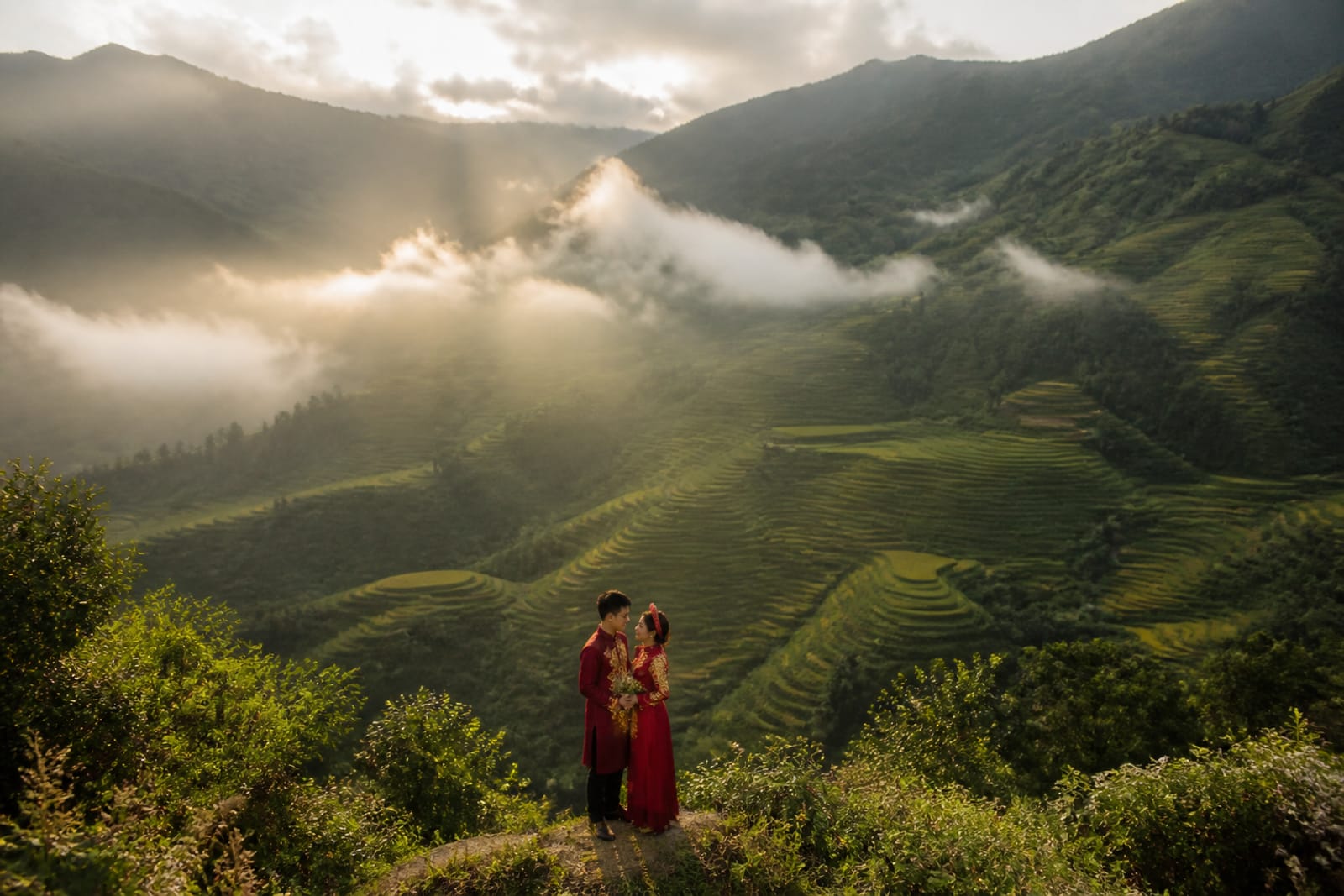
Best season: light, terrain and crowd factors
| Season | Light quality | Terrain | Crowds | Best for |
|---|---|---|---|---|
| Feb–Mar | Clear, crisp; long shadows | Dry, some mud patches | Lightest | Ae đai + jewel tones; sharp-focus shots |
| Apr–May | Hazy; filtered, soft | Muddy after rains; lush green | Growing | Muted tones; texture-heavy compositions |
| Jun–Aug | Overcast; diffuse (rarely direct) | Waterlogged; terraces full | Heaviest | Skip unless you want moody/atmospheric mood |
| Sep–Oct (harvest) | Golden-hour deep colour; low angle | Firm, golden stubble | Moderate | Ao dai pop; harvest narratives |
| Nov–Jan | Brittle, clear; cool light | Dry, dusty; bare terraces | Light–moderate | Jewel tones; clean silhouettes |
Feb–Mar and Nov–Jan are optimal. Feb–Mar has crisp light, least rain and mild temperature (12–18°C). Nov–Jan stays dry and cool (5–15°C; bring a shawl or light jacket for makeup touch-ups). Avoid Jun–Aug: mist swallows the valley, paths are sodden, and afternoon downpours strike without warning. Oct (early harvest) is second-best but crowds spike mid-Oct.
Outfit choices for altitude, terrain and cultural respect
Mountain shoots demand outfits that move, breathe and honour local dress norms.
Ao dài: Wear a silk or cotton ao dài in jewel tones (emerald, sapphire, burgundy) rather than pastels; they hold colour under variable light and contrast terraces better. Pair it with lightweight, opaque pants (not bare legs—respect local custom). Have a seamstress add interior shorts so you can sit on earth or stone without soiling fabric. For muddy sections, wear flat sandals that grip; carry formal shoes for standing shots and swap them in the editing suite (footwear out of frame). An ao dài works best Feb–Mar when you're not overheating.
Western dress: If you choose a wedding dress, bring separates (detachable skirt or a silk slip dress) because hiking a 3-metre train over exposed terrain risks tears and stains. A short (knee-length) cocktail dress in a structured fabric (not chiffon) is safer. Groom: khakis or tailored trousers in a neutral (charcoal, cream) with a fitted shirt, rolled sleeves. Add a statement accessory (vintage watch, cufflinks) since close-ups of hands and details matter in landscape work.
Footwear strategy: Hike in waterproof hiking shoes with ankle support. Bring a cloth bag for outfit changes; swap into formal shoes only for posed shots at stops, then swap back immediately. Your photographer will frame wide enough that feet matter less than you think.
Hair and makeup: Plan for wind and variable humidity. Bring bobby pins, a light fixing spray (not heavy—sweat + humidity = sheet shine). Makeup applied at a Sapa salon the morning of the shoot works better than pre-application because the 45-minute drive and altitude changes will shift colour. Ask your local photographer for recommendations—they know which salons work for outdoor shoots.
📸 Book on WhatsApp — ao dai photoshoot
Logistics: transport, timing and photo team on the ground
Getting there: Fly or overnight bus to Sapa town (from Hanoi, roughly 5–6 hours by bus). Stay in Sapa town the night before; hire a taxi or negotiate with your accommodation for a 45-minute drive to Ta Phin village early morning. Alternatively, hire a Sapa-based tour guide who moonlights as a photographer's assistant (they know safe paths and timing).
Photographer options in Sapa:
- Local freelancers: Search Instagram hashtags #sapa.photographer or ask your guesthouse. Request a portfolio of pre-wedding shoots specifically (not just tourist portraits). Ask for references from couples and confirm they've shot Ta Phin during your intended season—light changes dramatically year-round.
- Sapa tour companies with photo guides: Some offer guided pre-wedding shoots as add-ons; they handle logistics but may lack editorial vision. Vet their samples carefully.
- Vetting before booking: Request a test shot (ask them to photograph a simple scene and edit it; you'll see their colour work, speed and problem-solving). Confirm they own a backup camera and have shot in rain/mist (common even in "dry" season).
Timing your shoot day:
- Sunrise (06:00–08:30): Arrive by 05:30. Light is warm, low and directional. Energy is highest. Book 2–3 hours here; you'll hike uphill and want breaks. Golden-hour magic peaks 06:45–07:45.
- Midday (09:00–14:00): Skip this or use it for outfit changes, snacks and interviews (video for reels). Light is flat, couples tire. If you must shoot, position into shadow and use fill flash or reflectors.
- Late afternoon (15:00–17:30): Second golden hour; light rakes lower. Plan for 2–3 hours. Sunset at Ta Phin happens around 17:45 in winter, 18:15 in autumn. The light after sunset (blue hour, ~10 minutes) is brief but magical.
Physical endurance: Expect to walk 6–8 km over a half day, uphill and downhill on rocky paths. Couples aged 30–55 typically manage without issue; factor extra time if either partner is less active. Bring water (at least 1.5 litres per person), light snacks and a small first-aid kit.
What goes wrong and how to avoid it
Weather: Clouds obscure light and terraces disappear. Avoid: booking during the rainy season (May–Sep) without a 2-day buffer. If it happens: shoot in the mist anyway (moody aesthetic) or ask your photographer to return the next clear morning if your contract allows it.
Altitude fatigue: Both partners breathe hard by hour three. Avoid: booking for more than 4 hours or starting too late (sunset pressure rushes decisions). Build in a 15-minute seated rest mid-shoot.
Outfit mishaps: Ao dài hems catch on rocks; dress fabrics stain. Avoid: by scouting paths the night before, wearing protective undergarments (internal shorts) and carrying a damp cloth. Western wedding dress on mountain terrain is risky; choose separates.
Light pollution and editing delays: Remote locations mean no power for on-site editing or backup drives. Avoid: by confirming your photographer has two memory cards, a portable charger and a backup laptop. Agree on a minimum editing timeline (often 2–3 weeks for remote shoots) before the day.
Permits and permissions: No official permit is needed for Ta Phin, but the Red Dao community appreciates courtesy. Avoid: treating the village as a set; hire a local guide (roughly covers their fee and shows respect).
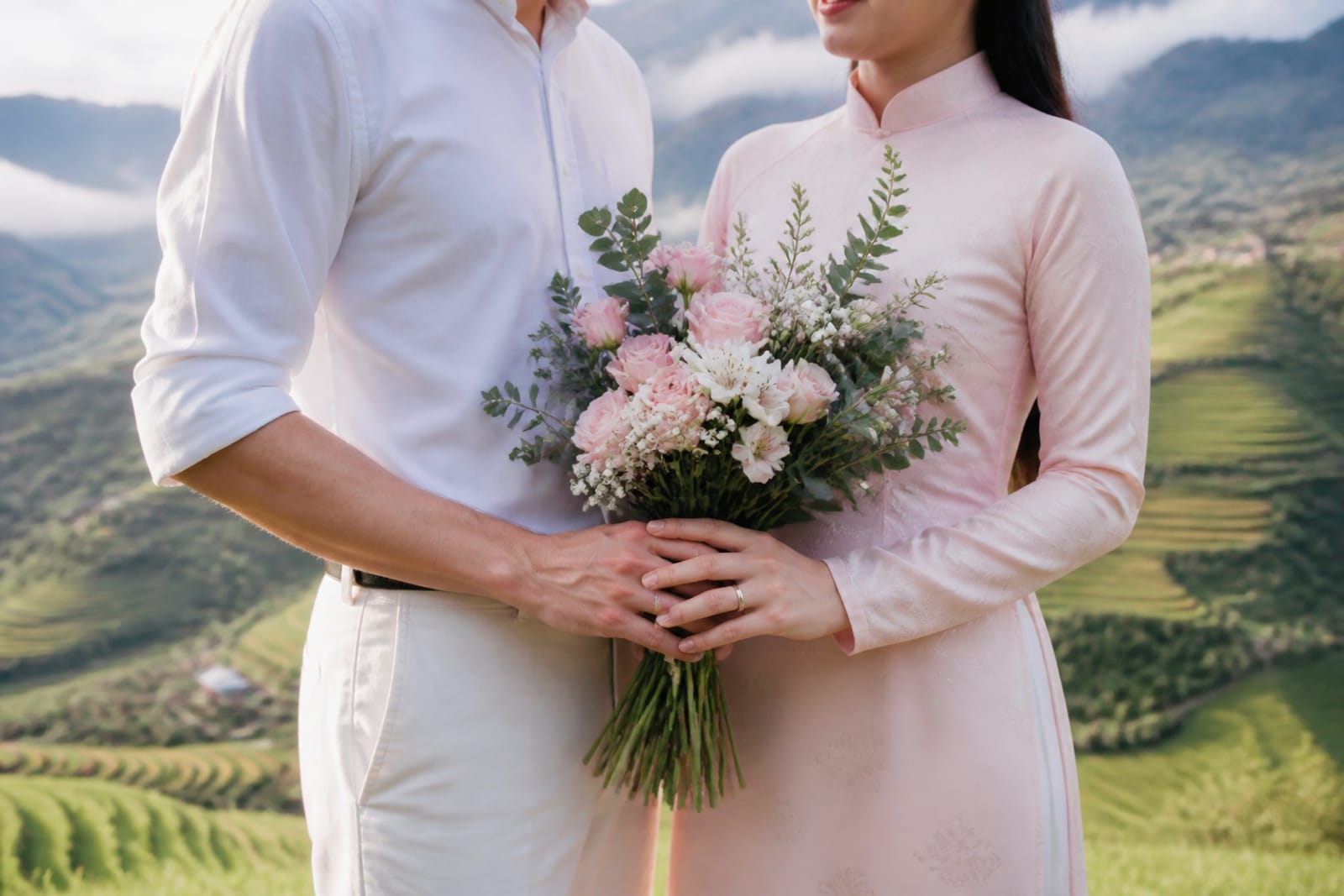
Pre-wedding shoot at Ta Phin vs. other Sapa options
| Shoot type | Best for | Light | Effort | Uniqueness |
|---|---|---|---|---|
| Ta Phin village (guided) | Landscape intimacy, cultural narrative | Golden-hour raking light; variable | High (hiking, altitude) | Layered terraces, isolation, authenticity |
| Fansipan summit (cable car) | Scale and drama, easier access | Crisp but often clouded; blue-hour brief | Moderate (cable car, then 30 min walk) | Vistas and altitude, but crowded mid-day |
| Sapa town streets (colonial) | Colour, architecture, local life | Soft (urban shade); predictable | Low (walking, town-based) | Heritage buildings, fewer logistics |
| Muong Hoa Valley floor | Green lushness, stream/bridge elements | Diffuse (valley-bottom shade); moody | Moderate (steep descent, sunrise only) | Water and greenery, but narrow light window |
Ta Phin suits couples wanting dramatic landscape-as-storytelling and willing to hike. If you prefer minimal effort and reliable light, Sapa town streets or Fansipan work. If you want lush greenery, Muong Hoa Valley is closer to Sapa town but has a narrower shooting window.
What to check before you book a local photographer
- Portfolio: At least 8 full pre-wedding shoot samples (not engagement or tourist photos). Ask specifically for Ta Phin or similar altitude/terrain work.
- Backup gear: Confirm they carry two cameras, two lenses and an external hard drive. Sapa weather is unpredictable; single-camera operators risk losing images.
- Editing timeline: Confirm the number of edited images, the delivery format (full-res, print-ready) and timeline (often 2–4 weeks for remote work). Get this in writing.
- Day-of communication: Confirm they respond to calls/WhatsApp before 06:00 (shoots start early). Ask what happens if they're sick—do they have a backup?
- Fee structure: Ask what's included (location scouting, outfit changes, video, drone footage if applicable) and what costs extra (assistant, return visits, rush editing). Avoid ambiguity; get a quote on WhatsApp before committing.
- References: Request contact details of two couples who booked Ta Phin shoots with them in your intended season. Call and ask about light, comfort, edits and turnaround.
Comparison: Sapa pre-wedding with Cáo Studio (Hanoi) vs. local booking
| Factor | Cáo Studio (Hanoi-based, travel) | Local Sapa photographer |
|---|---|---|
| Consistency | Known style; travel adds cost & logistics | Variable; relies on portfolio review |
| Editing | Studio colour science, fast turnaround | Depends on freelancer workflow |
| Support before/after | Responsive WhatsApp; familiar with timezones | Timezone lag; may be seasonal |
| Local knowledge | Basic; may scout on arrival day | Deep; knows light by season |
| Cost factors | Travel time, coordination overhead | Lower baseline, but vetting takes time |
| Reliability | Established business structure | Personality-dependent; no fallback |
If you want a proven team and don't mind coordinating logistics, contact Cáo Studio on WhatsApp to discuss whether they can travel to Sapa or recommend a trusted local partner. If you prefer to book locally and reduce overall cost, vet a freelancer rigorously using the checklist above.
---
Related shoots and post-production
Once you've captured Ta Phin, consider these services to extend your story:
- Pre-wedding & elopement for a full shoot strategy (multiple days, multiple locations).
- Ao dai photoshoot for a dedicated ao dài-focused session (if you want a second shoot day in lighter terrain).
- Couple & family photoshoot if you're bringing family members to Sapa.
- Wedding photographer for your ceremony day itself (coordinate timing with your pre-wedding team).
- Wedding & pre-wedding video to capture interviews, movement and sound (especially powerful in a natural setting).
- Photo prints & frames to display Ta Phin images at your wedding or home.
📸 Book on WhatsApp — pre-wedding photoshoot
---
FAQ
What's the best time of year to shoot at Ta Phin for a pre-wedding?
Feb–Mar offers crisp light, minimal rain and mild temperature (12–18°C). Nov–Jan is dry but cooler (5–15°C). Avoid Jun–Aug (mist, rain, heat). Oct (harvest) is beautiful but crowded mid-month. Book at least 2–3 months ahead to secure a photographer and accommodation.
Do I need a permit to photograph at Ta Phin village?
No official permit exists, but the Red Dao community appreciates courtesy. Hire a local guide (they'll help with logistics and show respect). Ask your photographer to introduce you to locals and avoid photographing homes or individuals without permission.
How many hours should I book for a Ta Phin pre-wedding shoot?
Plan 4–5 hours for a half-day shoot (sunrise or late afternoon). This covers light, two outfit changes, walking between locations and rest breaks. Full-day shoots (sunrise + late afternoon) are 8+ hours and include midday breaks; they're tiring but yield more variety.
What should I wear under an ao dài for a mountain shoot?
Wear lightweight, opaque pants and have a seamstress add interior shorts sewn into the ao dài for sitting on earth or stone without soiling the outer fabric. Choose flat, water-resistant hiking sandals or shoes for walking; carry formal shoes in a cloth bag and swap them in for standing/close-up shots only.
Can I hire Cáo Studio – Makeup & Photoshoot for a Sapa shoot?
Cáo Studio operates in Hanoi, Ho Chi Minh City and Hoi An. For Sapa, contact them on WhatsApp to discuss partnership with a trusted local freelancer, or vet a Sapa-based photographer using the checklist in this guide. Cáo Studio can coordinate your hair and makeup if you're in one of their service cities before or after your Sapa trip.
What's the most common mistake couples make when booking a Ta Phin shoot?
Starting too late in the day and underestimating walking time. Golden hour is brief; book a sunrise slot (05:30 start, 06:45–08:00 peak light) or plan an early return visit if afternoon light is clouded. Also: bringing impractical footwear or outfits that restrict movement. Test your shoes and outfit on a local hike before the shoot day.
FAQ
What's the best time of year to shoot at Ta Phin for a pre-wedding?
Feb–Mar offers crisp light, minimal rain and mild temperature (12–18°C). Nov–Jan is dry but cooler (5–15°C). Avoid Jun–Aug (mist, rain, heat). Oct (harvest) is beautiful but crowded mid-month. Book at least 2–3 months ahead to secure a photographer and accommodation.
Do I need a permit to photograph at Ta Phin village?
No official permit exists, but the Red Dao community appreciates courtesy. Hire a local guide (they'll help with logistics and show respect). Ask your photographer to introduce you to locals and avoid photographing homes or individuals without permission.
How many hours should I book for a Ta Phin pre-wedding shoot?
Plan 4–5 hours for a half-day shoot (sunrise or late afternoon). This covers light, two outfit changes, walking between locations and rest breaks. Full-day shoots (sunrise + late afternoon) are 8+ hours and include midday breaks; they're tiring but yield more variety.
What should I wear under an ao dài for a mountain shoot?
Wear lightweight, opaque pants and have a seamstress add interior shorts sewn into the ao dài for sitting on earth or stone without soiling the outer fabric. Choose flat, water-resistant hiking sandals or shoes for walking; carry formal shoes in a cloth bag and swap them in for standing/close-up shots only.
Can I hire Cáo Studio – Makeup & Photoshoot for a Sapa shoot?
Cáo Studio operates in Hanoi, Ho Chi Minh City and Hoi An. For Sapa, contact them on WhatsApp to discuss partnership with a trusted local freelancer, or vet a Sapa-based photographer using the checklist in this guide. Cáo Studio can coordinate your hair and makeup if you're in one of their service cities before or after your Sapa trip.
What's the most common mistake couples make when booking a Ta Phin shoot?
Starting too late in the day and underestimating walking time. Golden hour is brief; book a sunrise slot (05:30 start, 06:45–08:00 peak light) or plan an early return visit if afternoon light is clouded. Also: bringing impractical footwear or outfits that restrict movement. Test your shoes and outfit on a local hike before the shoot day.
Ao dai, makeup, hair and a local photographer in Hanoi or Saigon — one WhatsApp message.