/pre-wedding-photoshoot
Pre-wedding photoshoot in Hanoi for Japanese couples
A Hanoi pre-wedding photoshoot for Japanese couples is a half- to full-day session combining Vietnamese aesthetics (ao dai, temples, Old Quarter architecture) with Japanese visual sensibility—minimalism, seasonal cycles, soft light. Cáo Studio – Makeup & Photoshoot, based in Hanoi with branches in Ho Chi Minh City and Hoi An, specializes in English-speaking international couples; the team works with Japanese couples regularly, scouting locations in advance, timing shoots for autumn (October–November) when Hanoi's light is grey-gold and Phan Dinh Phung street's trees turn yellow. Sessions include makeup & hair if needed, outfit changes (often ao dai rentals), and work across landmarks like Hoan Kiem Lake, Tran Quoc Temple and Old Quarter alleys. Cost factors include season (autumn costs more), location travel time, outfit count and editing timeline. Avoid Dec–Feb's overcast drizzle; spring haze; or May–Sep's heat unless you want moody, dramatic tones. Book 4–8 weeks ahead on WhatsApp.
Why do Japanese couples choose Hanoi over other Asian cities?
Hanoi attracts Japanese couples for three reasons: cultural novelty (ao dai, pagodas, wet-market textures feel authentically "other"), nostalgic architecture (French colonial villas, narrow alleys, motorbike rhythms), and seasonal light. October–November's mild, grey autumn aligns with Japan's own soft-light aesthetic—what photographers call kitsui tsumetai (crisp, cool tones). The Old Quarter's vertical chaos and Hoan Kiem Lake's ceremonial calm offer both dramatic and meditative backdrops. Hanoi also costs less than Tokyo or Seoul shoots, and visa processing is straightforward for Japanese citizens. Japanese couples often request minimal, documentary-style coverage rather than posed glamour—Hanoi's everyday street life and temple grounds suit that philosophy perfectly.
📸 Book on WhatsApp — pre-wedding shoot | 💄 Makeup & hair at your hotel | 🌸 See the lookbook
What season gives the best light for pre-wedding photos in Hanoi?
Autumn (October–November) is Hanoi's golden window: daytime temps are 20–25°C, humidity drops below 70%, and the sky turns soft grey-gold instead of bleached white. Morning shoots (6–10 am) yield amber-tinted light on pagoda walls and lotus ponds; late afternoon (3–5 pm) flatters ao dai silk against Old Quarter stone. This season fills Hanoi's schedule fastest—book 8 weeks ahead. Spring (March–April) offers mild temps but frequent haze and drizzle, softening colours but adding moodiness if you want it. Summer (May–September) is hot, humid and rainy, best avoided unless you embrace moody, rain-soaked drama. Winter (December–February) is cool (10–20°C) but overcast and drizzly, dulling colours—many couples avoid it, leaving slots available. Hanoi's light quality is determined by monsoon cycles, so choosing your season is your first planning decision.
| Season | Light Character | Crowds | Weather Risk | Best For |
|---|---|---|---|---|
| Oct–Nov (autumn) | Soft grey-gold, warm mornings | Very busy | Rare rain | Classic, romantic tones |
| Mar–Apr (spring) | Hazy, milky | Moderate | Frequent drizzle | Moody, artistic shots |
| Dec–Feb (winter) | Flat grey, cool | Low | Overcast, damp | Intimate, textural focus |
| May–Sep (summer) | Harsh, humid glare or storm grey | Low | Typhoon rain | Dramatic, rain-soaked mood |
How does an ao dai rental fit into a pre-wedding shoot?
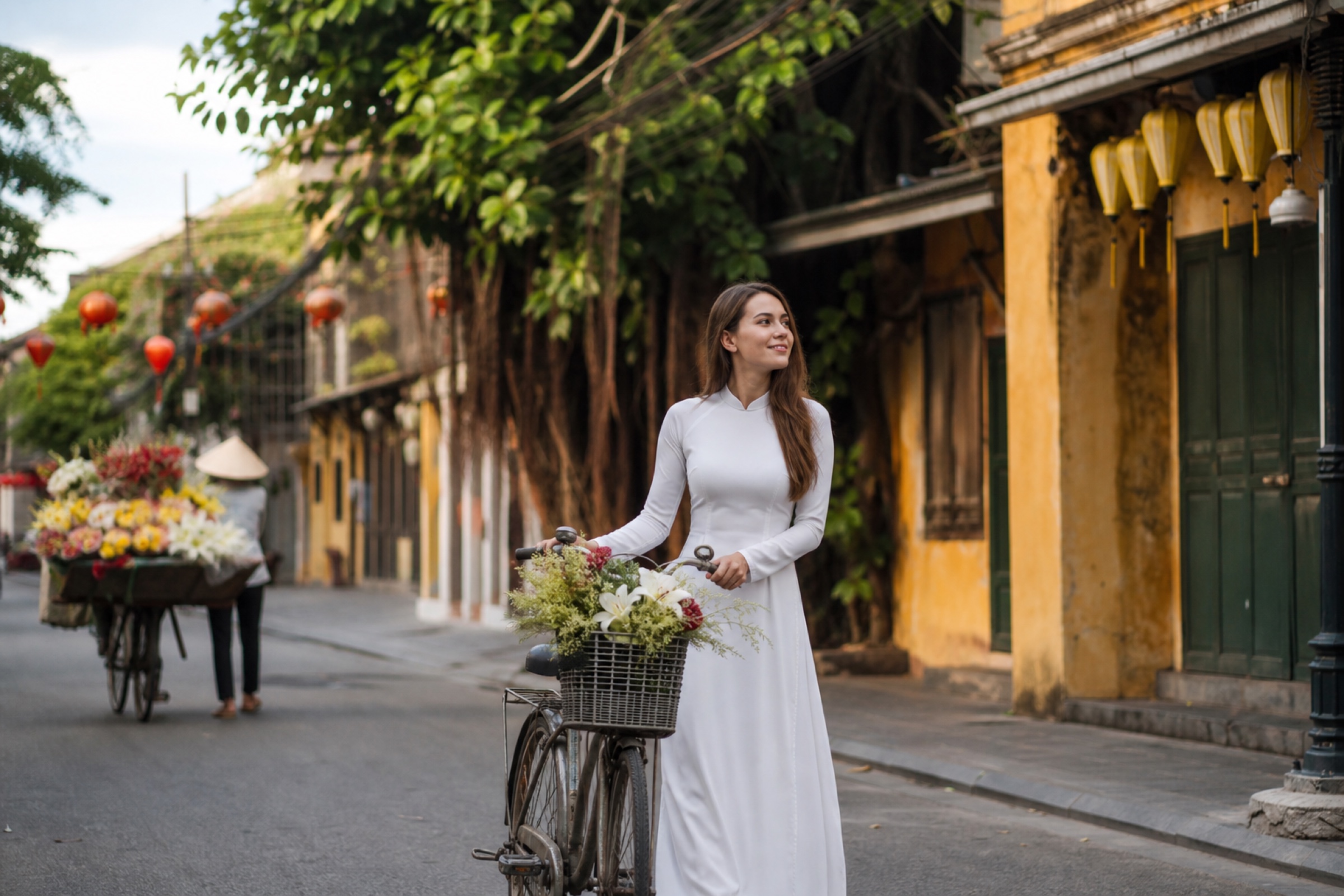
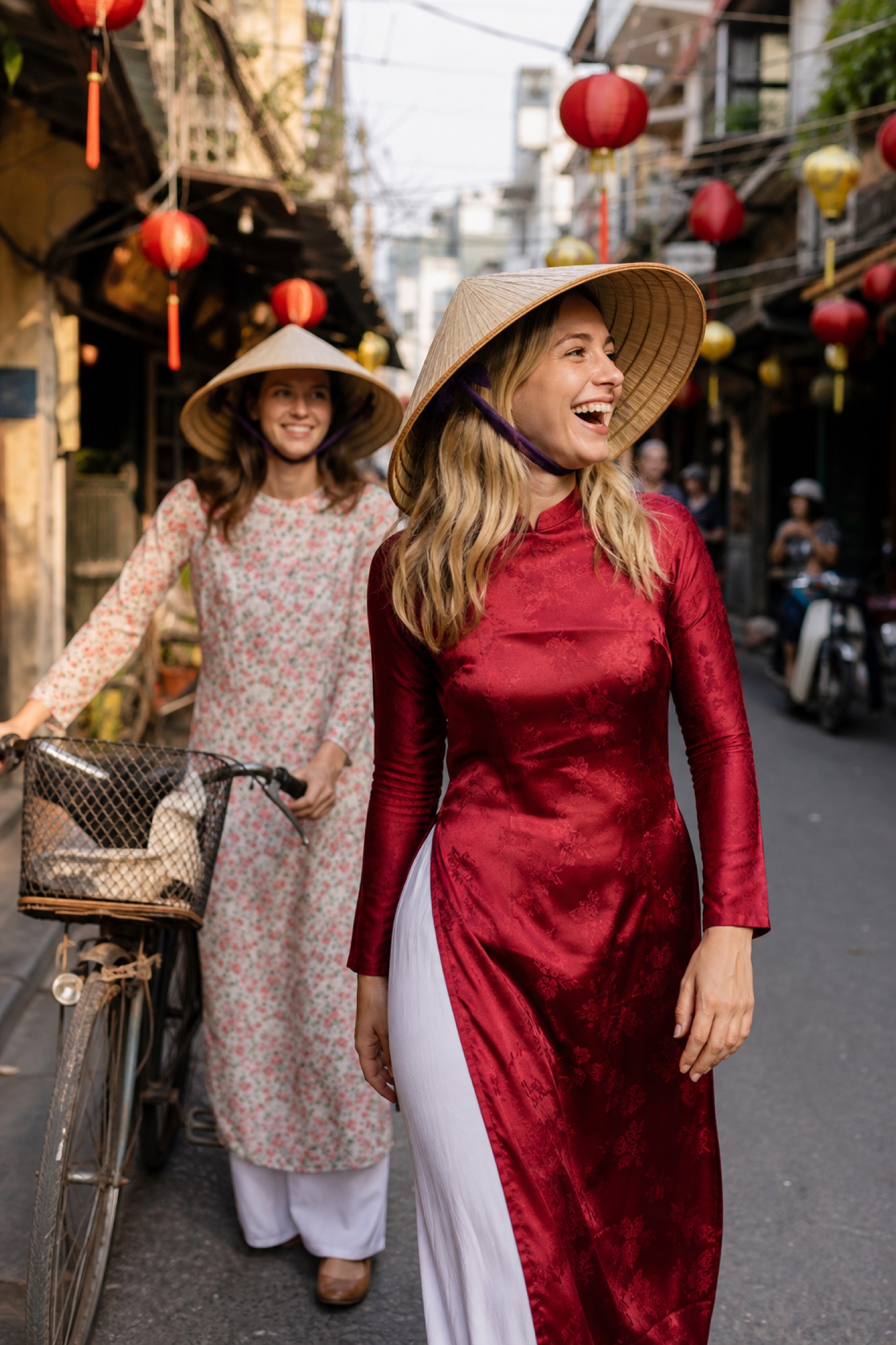
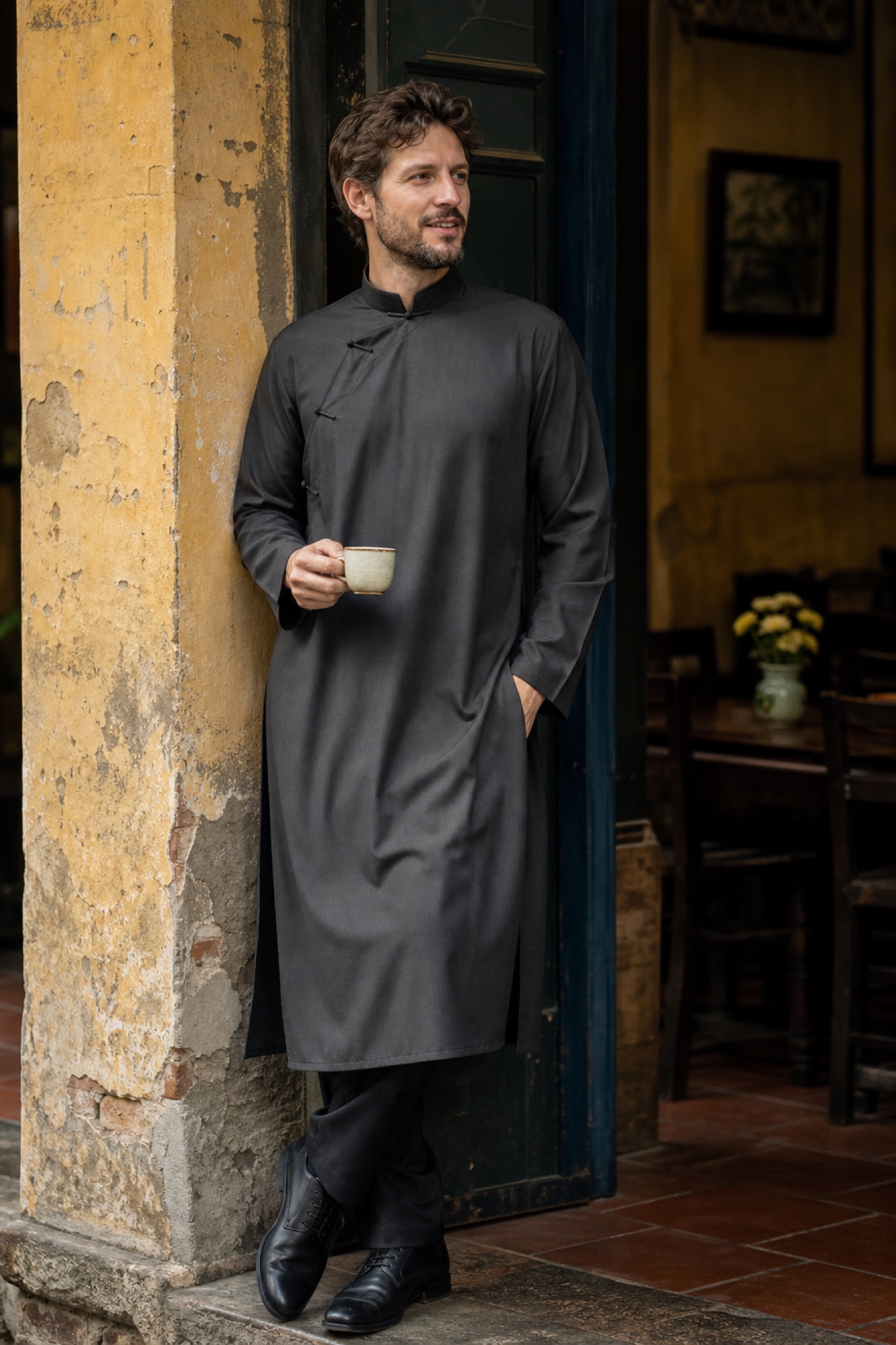
An ao dai rental is central to a Japanese couple's Hanoi shoot because it anchors your visual identity in local culture—no couple looks "out of place" in an ao dai; the garment flatters most body types, photographs cleanly, and reads as a genuine cultural moment rather than costume. Cáo Studio's ao dai rental partners in Hanoi stock 100+ styles (classic white, jewel tones, embroidered silk); fittings happen 2–3 days before your shoot or on the morning of, depending on booking. The groom typically wears a suit or traditional silk áo ghi (vest), hired locally or brought from Japan. Ao dai creates a two-outfit visual arc: one heritage look (temple, lake, formal pose) and one Western bridal or casual outfit (Old Quarter, candid movement). Rental cost is a primary expense factor—discuss outfit count and style on WhatsApp to lock in the package. Many Japanese couples rent two ao dai in different colours, creating a stronger narrative through the gallery.
What locations in Hanoi work best for Japanese aesthetic sensibilities?
Japanese photographers value negative space, symmetry and seasonal detail. Hanoi offers:
- Tran Quoc Temple (oldest in the city, on an island in West Lake): stone archways, lotus ponds in June–July, minimal crowds at dawn. Quiet, contemplative mood.
- Hoan Kiem Lake & Turtle Tower (pedestrian-only on weekend evenings, 7–9 pm): reflections, bridge geometry, soft urban light. Very crowded on weekends; book weekday morning shoots to avoid queues.
- Phan Dinh Phung street (tree-lined French colonial avenue): golden canopy in Oct–Nov, cafés, faded shutters. Best 7–9 am before traffic.
- Old Quarter alleyways (Hang Dao, Silver Street): wet stone, hanging laundry, motorbike texture. Walk narrow lanes; watch for uneven ground and vendors.
- Long Bien Bridge (historic iron span): industrial symmetry, river light, motorbike taxis. Foreground traffic means tight shots or dawn timing.
📸 Book on WhatsApp — ao dai shoot | 💄 Makeup & hair at your hotel | 🌸 See the lookbook
What logistical steps should a Japanese couple take before booking?
- Pin your season: October–November books fast; confirm your travel dates 2–3 months ahead.
- Decide outfit count: 2–4 changes (ao dai, Western dress, casual, groom suit) affect schedule and cost. Discuss on WhatsApp.
- Scout locations: Cáo Studio's team will propose sites based on your aesthetic; send reference photos (Pinterest boards, films, Japanese photographers you admire) to guide direction.
- Confirm makeup & hair: Decide if you want hotel pickup and styling. State any skin sensitivities or product preferences.
- Plan timeline: Half-day (4 hours) covers 1–2 locations; full-day (8+ hours) allows 3–4 sites plus travel. Hanoi's traffic means 30–45 minutes between major landmarks.
- Book 6–8 weeks early: Autumn slots fill; popular temples may have permit/access restrictions Cáo Studio will navigate.
- Confirm delivery timeline: Ask on WhatsApp when edited files are ready—typically 2–4 weeks post-shoot.
Before you book, check:
- Your visa type allows a commercial photoshoot (tourist visas are fine; confirm locally if unsure).
- Weather forecast 1 week before—drizzle in monsoon season may shift timing; Cáo Studio will advise.
- Temple access rules: some sites charge entry fees or have photography restrictions at certain hours—ask on WhatsApp.
- Ao dai rental fit: arrange fittings at least 2 days before the shoot to allow alterations.
- Edited photo turnaround: confirm when you'll receive the full gallery so you can plan your wedding timeline.
How does Cáo Studio work with Japanese couples differently?
Cáo Studio's team has experience with Japanese couples' preferences: they request detailed shot lists, expect punctuality and clear communication, and often want a mix of posed (formal, editorial) and documentary (candid, movement) coverage. The studio offers WhatsApp coordination (text, video call, image uploads) to bridge time zones; many Japanese clients book from Japan and land in Hanoi with a detailed shot plan ready. The team avoids over-the-top posing or heavy retouching—Japanese aesthetic typically favours clean, minimal edits. For couples without Vietnamese experience, Cáo Studio provides a cultural guide: what to wear under ao dai (slip dress, specific undergarments to avoid VPL), temple etiquette (shoes off, no pointing at altars, respectful dress), and how to move naturally in heritage garment. This preparation means less on-the-day anxiety and stronger final images. Language is handled via bilingual WhatsApp chat and, if needed, a translator on set; confirm this when booking.
🌸 See the lookbook | 📸 Book on WhatsApp | 💄 Makeup & hair
---
What if you want to extend your pre-wedding shoot into a larger wedding project?
Pre-wedding shoots often grow into full wedding packages. If your engagement or wedding falls in Hanoi or Ho Chi Minh City, Cáo Studio offers wedding day photography and wedding video. A pre-wedding session in October can lead to a wedding-day booking in December, combining editorial engagement coverage with ceremony and reception documentation. Discuss timeline and package bundling on WhatsApp. If you're planning a proposal or anniversary celebration, pre-wedding imagery can become part of your love story album. For a larger family presence, add a family photoshoot before or after your couple session. Hanoi shoots can also extend to Hoi An photoshoots (by appointment; the team travels) for a multi-city tour spanning heritage towns.
---
FAQ
Do I need to speak Vietnamese or have a translator during the shoot?
No. Cáo Studio communicates via WhatsApp (English) and the team is bilingual. Discuss translator needs when booking; if you prefer on-set language support, ask on WhatsApp—this may affect timing and cost factors.
Can we bring our own ao dai or outfit, or must we rent?
You can bring your own ao dai or wedding dress. Renting locally (via Cáo Studio's partners) is easier if you're flying from Japan; rental includes fitting and cleaning. Discuss your preference on WhatsApp when booking.
What happens if it rains on shoot day?
Light drizzle in autumn is rare; if it occurs, Cáo Studio will either reschedule or pivot to moody, rain-soaked shots (some couples love this aesthetic). Confirm the rescheduling policy on WhatsApp before you book.
How many edited photos do we receive, and when?
The exact number of edited files and delivery timeline are confirmed on WhatsApp based on your package—never invent this detail yourself. Typically 2–4 weeks; ask for specifics before committing.
Is Hoi An available for a pre-wedding shoot, or just Hanoi?
Cáo Studio shoots pre-wedding in Hanoi, Ho Chi Minh City, and Hoi An (by appointment; the team travels). Ask on WhatsApp for Hoi An dates and logistics.
What's the best time of day to shoot at Tran Quoc Temple?
Early morning (6–8 am, before tourists and bright sun) or late afternoon (4–5 pm) yield the softest light. Midday sun is harsh and crowds peak around 10 am–3 pm. Confirm access hours and any photography permits on WhatsApp when booking.
Do we need to pay entry fees for temples, and who covers those?
Some Hanoi temples charge entry; Tran Quoc Temple typically requires a small donation. Confirm current fees and who pays when booking your shoot. Cáo Studio will advise on which sites require permits or fees.
FAQ
Do I need to speak Vietnamese or have a translator during the shoot?
No. Cáo Studio communicates via WhatsApp (English) and the team is bilingual. Discuss translator needs when booking; if you prefer on-set language support, ask on WhatsApp—this may affect timing and cost factors.
Can we bring our own ao dai or outfit, or must we rent?
You can bring your own ao dai or wedding dress. Renting locally (via Cáo Studio's partners) is easier if you're flying from Japan; rental includes fitting and cleaning. Discuss your preference on WhatsApp when booking.
What happens if it rains on shoot day?
Light drizzle in autumn is rare; if it occurs, Cáo Studio will either reschedule or pivot to moody, rain-soaked shots (some couples love this aesthetic). Confirm the rescheduling policy on WhatsApp before you book.
How many edited photos do we receive, and when?
The exact number of edited files and delivery timeline are confirmed on WhatsApp based on your package—never invent this detail yourself. Typically 2–4 weeks; ask for specifics before committing.
Is Hoi An available for a pre-wedding shoot, or just Hanoi?
Cáo Studio shoots pre-wedding in Hanoi, Ho Chi Minh City, and Hoi An (by appointment; the team travels). Ask on WhatsApp for Hoi An dates and logistics.
What's the best time of day to shoot at Tran Quoc Temple?
Early morning (6–8 am, before tourists and bright sun) or late afternoon (4–5 pm) yield the softest light. Midday sun is harsh and crowds peak around 10 am–3 pm. Confirm access hours and any photography permits on WhatsApp when booking.
Do we need to pay entry fees for temples, and who covers those?
Some Hanoi temples charge entry; Tran Quoc Temple typically requires a small donation. Confirm current fees and who pays when booking your shoot. Cáo Studio will advise on which sites require permits or fees.
Ao dai, makeup, hair and a local photographer in Hanoi or Saigon — one WhatsApp message.