/pre-wedding-photoshoot
Pre-wedding photoshoot in Sapa in January: weather, light and crowds
January in Sapa offers the year's clearest skies and minimal tourist crowds, making it ideal for unhurried pre-wedding shoots—but temperatures drop to near freezing at night, so layering under your ao dai or dress is essential. Light is softest between 9 am and 3 pm; early morning and late afternoon can be misty. The rice terraces are dormant (brown), so the focus stays on you, the stone paths and the valley's geometry. Plan 3–4 hours for outfit changes and movement between spots (Fansipan cable car, Ham Rong Bridge, Cat Cat Village). Cáo Studio does not operate in Sapa, so you'll need to hire a local photographer familiar with winter conditions and ao dai styling in cold weather. Check the official Sapa tourism site for permit requirements and current cable car hours before booking. 📸 Book on WhatsApp — ao dai photoshoot | 💄 Makeup & hair at your hotel | 🌸 See the lookbook
January in Sapa is Hanoi's mountain escape: cool, dry and almost empty. The valley floor sits around 1,000 metres, so daytime temperatures hover between 10–15°C (50–59°F), and nights near freezing. Snow is rare but frost on paths is common. This clarity—zero rain days on average in January—means you get sharp, shadowless light and uncluttered backgrounds. The dormant rice paddies are muddy-brown, not green, so the eye rests on faces, fabric and stone. For a pre-wedding session, this is the opposite of Sapa's rainy summer: you're shooting for intimacy, not landscape drama.
Why is January the clearest month for Sapa photoshoots?
January has the lowest rainfall and cloud cover of any month in Sapa's winter season (Dec–Feb). Clear skies mean consistent, shadowless light from 9 am onward; morning mist clears by mid-morning. The town empties after New Year's, so paths, bridges and terraces are yours alone. Fansipan's cable car runs daily (weather permitting), and visibility from the summit can stretch 50+ kilometres on clear days. The trade-off: you must dress warmly underneath your ao dai or gown, and plan indoor breaks between outdoor shots.
What light do you get, and when should you shoot?
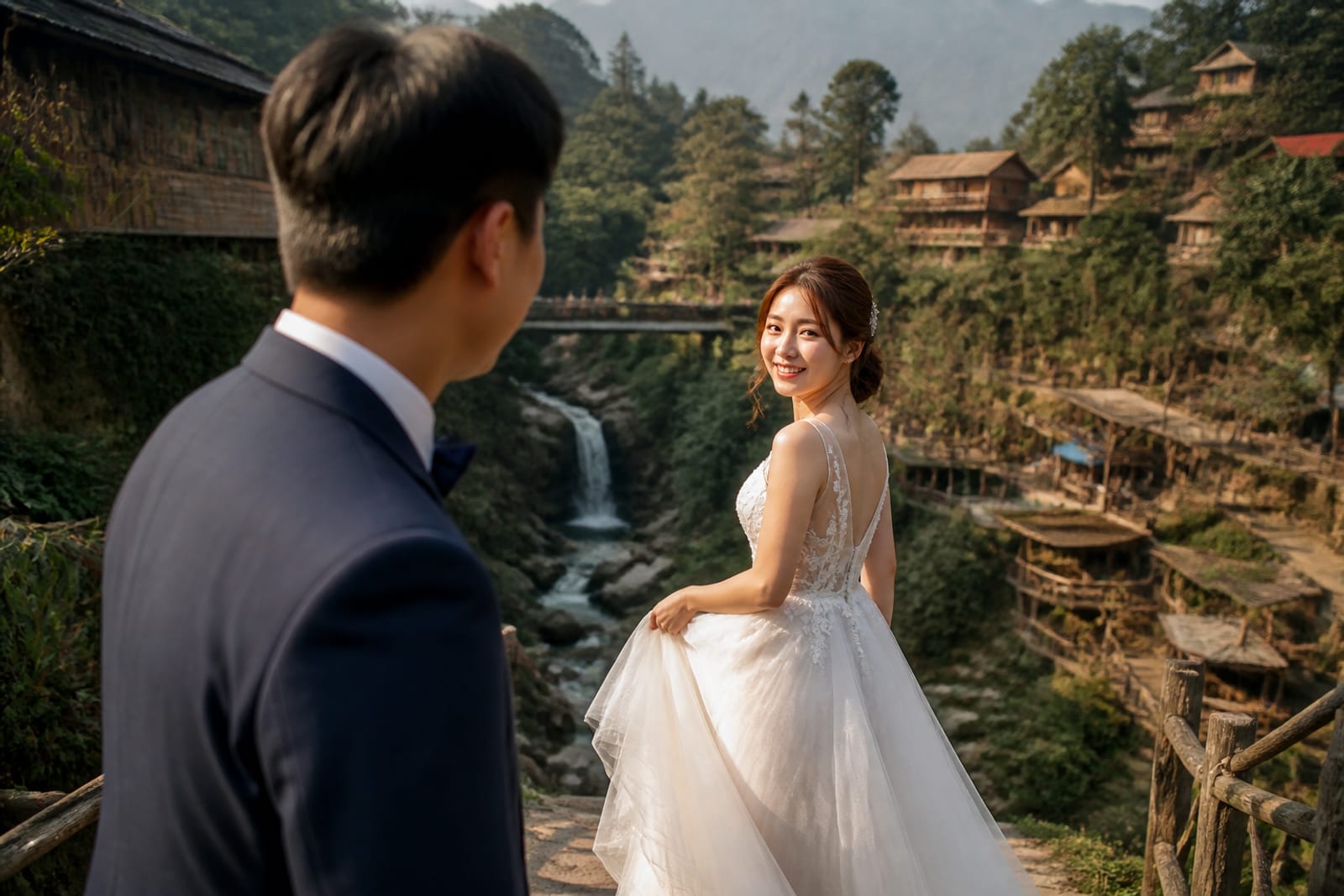
Mid-morning (9 am–noon) offers the softest, most even light: clouds scatter direct sun, and shadows on faces are gentle. Avoid before 8:30 am—mist lingers on the valley floor, dimming colour. After 2 pm, light begins to slant; by 4 pm the valley shadows you. Cloudy mornings are common, but clouds here mean diffused light, not grey flatness—perfect for skin tones. Sunset shots are rare in January because the sun dips below the ridgeline by 4:30 pm, and temperatures drop fast. Plan your shoot between 9 am and 3 pm, with a long break or indoor outfit change at midday if you want two looks.
How do you layer clothes under an ao dai in freezing weather?
Wear thermal leggings under your ao dai pants, or a thin merino base layer under a dress. A silk or cotton slip under the ao dai tunic (áo) keeps the fabric from clinging to your body and insulates without bulk. Wear warm socks—locals favour wool—tucked into ankle boots or traditional Vietnamese slippers (if going barefoot for close-ups, bring thick socks to change into between shots). A scarf or pashmina in a neutral or complementary colour doubles as a styling prop during breaks. Avoid puffy jackets in your photo outfits; instead, carry a blanket or shawl to wrap around yourself off-camera, then remove it for each frame. Your hair and makeup artist should be briefed on the cold—makeup takes longer to set, and wind is constant on exposed paths.
Which Sapa spots work best for pre-wedding frames?
| Spot | Best for | Light window | Why it works |
|---|---|---|---|
| Ham Rong Bridge | Wide, layered landscape | 10 am–1 pm | Stone steps, valley drop-off, soft shadow play on faces. Crowds thin by late morning. |
| Cat Cat Village | Walking, detail, intimate angles | 9–11 am | Narrow stone alleys, morning light through gaps. Your guide can help navigate wet steps safely. |
| Fansipan cable car base & station | Framing against ridgeline | 11 am–1 pm | Clear backdrop without competing detail. Station is sheltered for quick outfit changes. |
| Y Linh Ho terraces | Movement, layered figures | 9:30–11:30 am | Brown terraces recede, draw eye to you. Paths are walkable but muddy—wear boots. |
| Stone pathways, town centre | Candid, walking shots | Any daylight | Less iconic but intimate. Quiet streets, local architecture as soft background. |
Don't shoot major landmarks at the same hour as other tour groups; book your photographer early in the day, 8:30 am onwards.
How do you find and vet a local Sapa photographer?
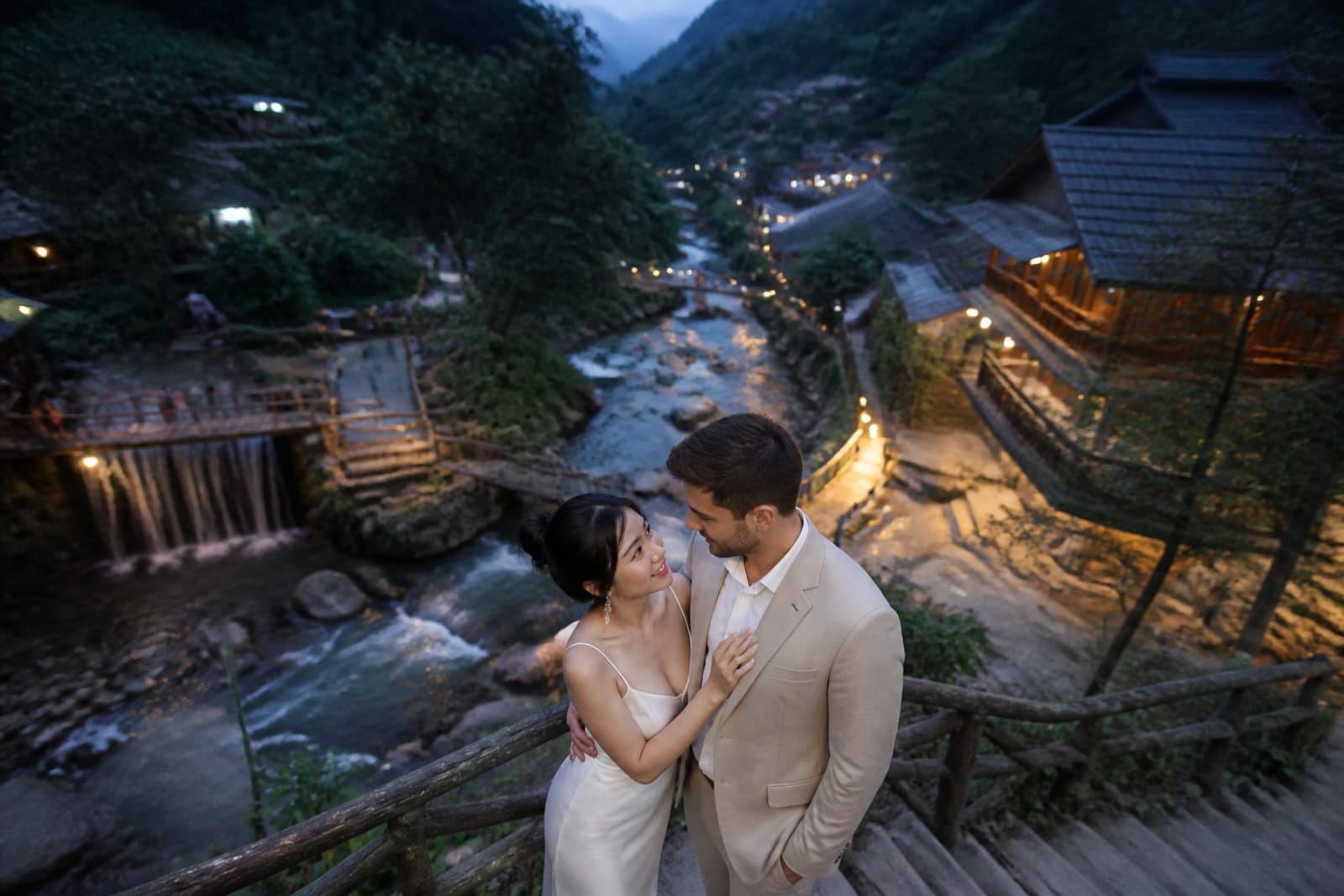
Cáo Studio operates in Hanoi, Ho Chi Minh City and Hoi An, not Sapa—you'll need a local vendor. Ask your hotel concierge or guesthouse for a recommendation; word-of-mouth is more reliable than online reviews in Sapa. When vetting a photographer, ask to see examples of pre-wedding or couple shoots in January—light and colours change month to month. Check that they understand ao dai styling and have shot in cold weather before (you'll notice if they've positioned models awkwardly to hide shivering). Confirm they have a backup indoor plan (your hotel, a cafe or homestay) in case weather turns unexpectedly. Agree on a shot list and timeline in writing; January light is tight, so knowing your priorities (walk, bridge, close-up at the cable car) keeps the session focused. Request edited files within 48 hours if you're leaving Sapa the next day. A local photographer familiar with the terrain is cheaper than flying in a vendor, and they'll know which paths are safest and least crowded.
📸 Book on WhatsApp — ao dai photoshoot | 💄 Makeup & hair at your hotel | 🌸 See the lookbook
What to pack and avoid for a January Sapa pre-wedding session
Bring: thermal base layers, wool socks, waterproof boots, a light scarf or pashmina, hair clips (wind is strong), a compact mirror for makeup touch-ups, and a small towel (frost and mist will dew your face). Avoid: long, trailing skirts (mud and wet hems), heavy makeup (it'll streak in wind and mist), loose hairstyles without pins, and metal jewellery (it conducts cold). If wearing an ao dai, bring a second pair of pants or leggings in case the first gets wet at the hem. Ask your hotel to press your outfit the night before—humidity in Sapa is high, and wrinkles show in close-ups. Eat a warm breakfast before your session; standing still on a cold path is harder than walking. Bring a thermos of hot tea or coffee for you and your photographer—it's a small gesture that keeps energy and morale up during a 3–4 hour shoot.
📸 Book on WhatsApp — ao dai photoshoot | 💄 Makeup & hair at your hotel | 🌸 See the lookbook
If you're planning a full pre-wedding shoot and want professional hair, makeup and styling on top of photography, consider booking these services in your base city (Hanoi or Ho Chi Minh City) before travelling to Sapa. Many couples book a couple photoshoot in their home city first, then do a intimate Sapa session with a local photographer—it spreads the cost and lets you refresh your look between shoots. For wedding day photography or a wedding video, your main photographer should be based near your venue; Sapa's mountain roads and weather make last-minute travel risky.
---
What to check before you book a Sapa pre-wedding shoot in January
- Cable car & permit status: Fansipan cable car closes occasionally for maintenance. Check the official site 2 weeks before your shoot date.
- Weather forecast: January is dry, but check the 5-day forecast 1 week out. A misty morning doesn't ruin the shoot (soft light is good), but heavy rain does—confirm your photographer's indoor backup plan.
- Outfit and footwear: Test your ao dai or dress with thermal layers at least once before the shoot day. Wet hems and cold hands are the biggest complaints.
- Transport and timing: Allow 30 minutes from town centre to Cat Cat Village or the cable car base. If you're shooting at sunrise (rare in January, and not recommended), book your transport the night before.
- Local guide: A guide who knows the paths and can communicate with locals (especially if you don't speak Vietnamese) is worth the cost. They can spot hazards and help with quick location changes.
- Shot list: Write down 3–5 priorities (e.g. "walking shot on Ham Rong Bridge, close-up in the cable car station, detail of the ao dai at Y Linh Ho"). Share it with your photographer 24 hours before the session.
---
FAQ
Is January too cold for an outdoor pre-wedding shoot in Sapa?
No. Daytime temperatures are 10–15°C (50–59°F)—cool but manageable with thermal layers under your ao dai or dress. The trade-off is worth it: January has zero rain and the clearest light of the year. Early mornings (before 9 am) and late afternoons (after 3 pm) are genuinely cold; stick to mid-day windows.
Will the brown rice paddies in January ruin the landscape?
They change the aesthetic, not ruin it. Dormant terraces are muddy-brown, so the eye stays on you, not the scenery. This is actually ideal for pre-wedding work—the landscape becomes a textured backdrop, not a distraction. If you want green paddies, shoot in June–August instead (but expect rain and crowds).
How do I find a photographer in Sapa if Cáo Studio doesn't shoot there?
Ask your hotel concierge or guesthouse for a recommendation—word-of-mouth is most reliable in Sapa. When vetting, ask to see pre-wedding or couple shoots from January, confirm they've styled ao dais in cold weather, and agree on a written shot list and delivery timeline before the session.
Can I shoot at Fansipan summit in January?
Yes, via cable car (confirm hours on the official site; it closes occasionally for maintenance). Visibility is excellent on clear days. Be aware: the summit is 3,143 metres high, temperatures drop 10°C colder than the valley, and wind is strong. Dress warmly and plan a 20-minute summit visit, not a 2-hour session.
What's the best time of day to shoot in Sapa in January?
9 am–3 pm. Morning mist clears by 9 am, light is soft and shadowless, and crowds are minimal. Avoid before 8:30 am (mist dims light) and after 3 pm (light slants, temperature drops fast, cable car closes by 4:30 pm).
Should I book a makeup artist in Sapa, or prepare myself?
Hire a local makeup artist if you want a polished look that lasts 3–4 hours outdoors. Sapa is small—ask your hotel or photographer for a recommendation. If you prefer DIY, bring wind-resistant products (powder, setting spray, long-wearing lipstick) and allow 15 minutes for touch-ups between outfit changes. Humidity and wind make makeup harder in January.
FAQ
Is January too cold for an outdoor pre-wedding shoot in Sapa?
No. Daytime temperatures are 10–15°C (50–59°F)—cool but manageable with thermal layers under your ao dai or dress. The trade-off is worth it: January has zero rain and the clearest light of the year. Early mornings (before 9 am) and late afternoons (after 3 pm) are genuinely cold; stick to mid-day windows.
Will the brown rice paddies in January ruin the landscape?
They change the aesthetic, not ruin it. Dormant terraces are muddy-brown, so the eye stays on you, not the scenery. This is actually ideal for pre-wedding work—the landscape becomes a textured backdrop, not a distraction. If you want green paddies, shoot in June–August instead (but expect rain and crowds).
How do I find a photographer in Sapa if Cáo Studio doesn't shoot there?
Ask your hotel concierge or guesthouse for a recommendation—word-of-mouth is most reliable in Sapa. When vetting, ask to see pre-wedding or couple shoots from January, confirm they've styled ao dais in cold weather, and agree on a written shot list and delivery timeline before the session.
Can I shoot at Fansipan summit in January?
Yes, via cable car (confirm hours on the official site; it closes occasionally for maintenance). Visibility is excellent on clear days. Be aware: the summit is 3,143 metres high, temperatures drop 10°C colder than the valley, and wind is strong. Dress warmly and plan a 20-minute summit visit, not a 2-hour session.
What's the best time of day to shoot in Sapa in January?
9 am–3 pm. Morning mist clears by 9 am, light is soft and shadowless, and crowds are minimal. Avoid before 8:30 am (mist dims light) and after 3 pm (light slants, temperature drops fast, cable car closes by 4:30 pm).
Should I book a makeup artist in Sapa, or prepare myself?
Hire a local makeup artist if you want a polished look that lasts 3–4 hours outdoors. Sapa is small—ask your hotel or photographer for a recommendation. If you prefer DIY, bring wind-resistant products (powder, setting spray, long-wearing lipstick) and allow 15 minutes for touch-ups between outfit changes. Humidity and wind make makeup harder in January.
Ao dai, makeup, hair and a local photographer in Hanoi or Saigon — one WhatsApp message.