/pre-wedding-photoshoot
Pre-wedding photoshoot in Vung Tau, November: weather, light, crowds
November is Vung Tau's dry season (Dec–Apr peak), with warm daytime light, low rain risk, and fewer day-trippers than weekends. Pre-wedding shoots here run best between 5:45–7:15 am for soft, golden side light on the beach and rocky foreshore, or 4:30–6:00 pm as the sun moves west over the town. Humidity remains high (still tropical), so makeup sets differently than cool-season shoots: powder, setting spray, and frequent blotting matter. Crowds are lightest on weekday mornings; Saturdays draw families and motorbike visitors by 9 am. Cáo Studio coordinates beach timing (tides, permit logistics, light direction) from Ho Chi Minh City, a two-hour drive, so sessions require travel time planning. The real challenge is not weather—it's finding a calm foreshore window and steering clear of the weekend rush. 📸 Book on WhatsApp — pre-wedding photoshoot | 🌸 See the lookbook ---
Why November is Vung Tau's strongest pre-wedding season
November marks the start of Vietnam's central-and-southern dry window. Vung Tau, a coastal town two hours south of Ho Chi Minh City, experiences consistent blue skies, warm (not scorching) air, and almost no afternoon downpours—a stark contrast to the May–November wet season that ends in October. Rain risk drops sharply; most days stay cloud-free from dawn to dusk. This stability matters for pre-wedding work: you're not rescheduling, not dealing with grey-sky delays, and not watching makeup run mid-session. The ocean is calm, foreshore light is predictable, and the town's rhythm settles into its quieter, post-summer groove. Many couples book November precisely because the weather removes one major variable from a day already full of emotion and logistics.
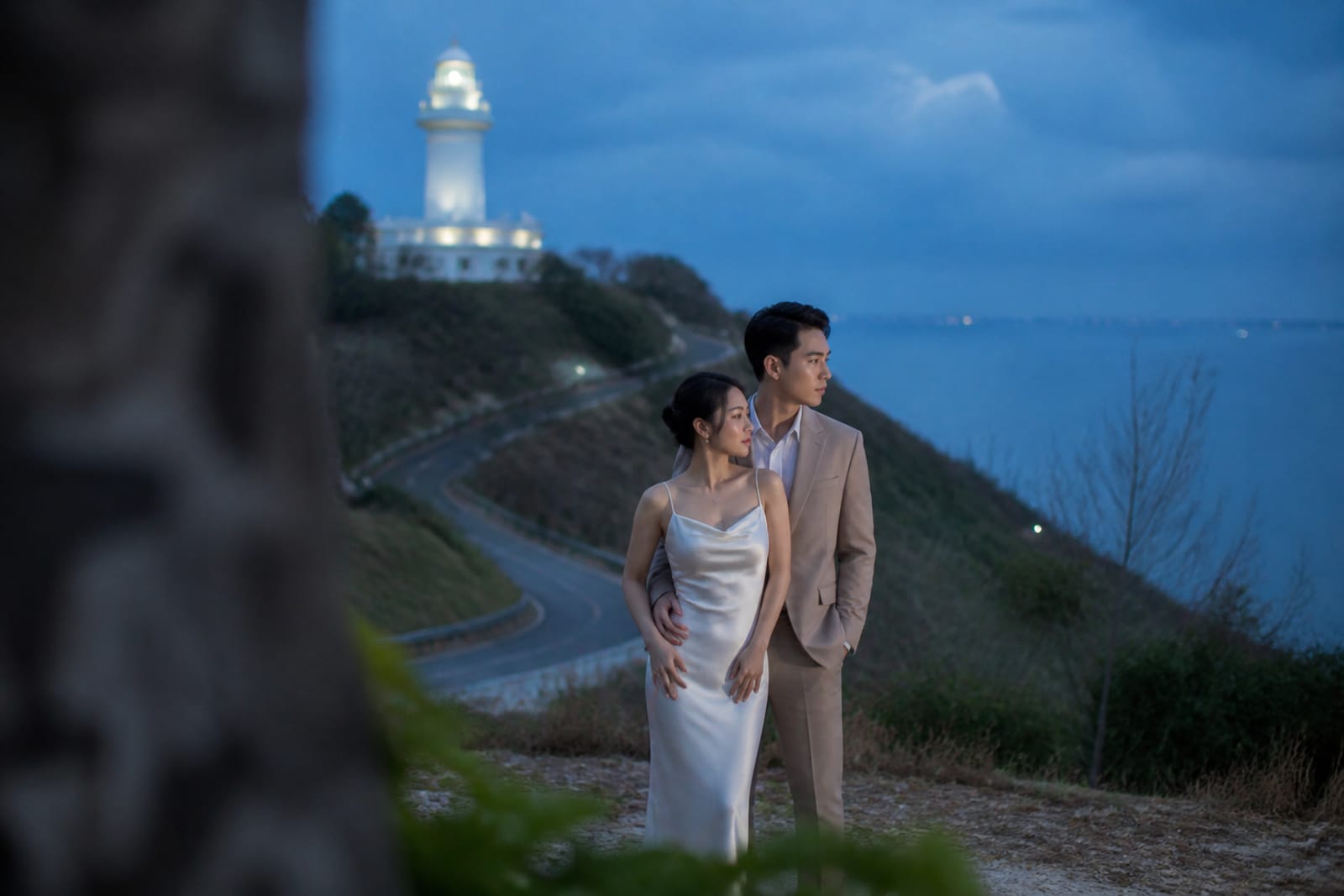
When exactly should you shoot—and why those hours matter most
Morning light (5:45–7:15 am): The sun rises due east. Beach-facing shoots catch side light that sculpts the body and face without flattening detail. Golden tone, low contrast, zero blown highlights on skin. Most foreshore is empty; locals are eating breakfast, not posing for photos. By 7:30 am, day-trippers begin; by 9 am, families and motorbike groups occupy the main strips.
Afternoon light (4:30–6:00 pm): Sun moves west over town buildings and the ocean. Back-light and side-light overlap—creates rim light on hair and edges, warm foreground, cooler water behind. Wind often picks up at 5 pm (salt breeze from the sea), which affects hair and fabric; this is actually useful: ao dai and dresses move naturally, not stiffly. Crowds are leaving; beaches empty by 6 pm.
Why midday fails: 11 am–3 pm produces overhead, harsh light, hard shadows under eyes and chin, blown-out skin in full sun. Humidity peaks. Nobody shoots mid-day in Vung Tau unless forced. The foreshore is also heaving with tourists and locals seeking shade.
Weak light hours (before 5:45 am or after 6:15 pm) are too dim for color work and video; you lose the water and sky detail that makes Vung Tau special.
How weather and humidity shift makeup and hair mid-shoot
Vung Tau in November sits at 75–80% humidity, even in the "dry" season. This is not Hanoi's cool, crisp autumn. Salt spray from the sea accelerates makeup breakdown: foundation oxidizes faster, cream blush merges, and eyeshadow creases by minute 45. Hair responds by relaxing waves and adding frizz, especially near the hairline and where fabric touches the neck. A Hanoi winter shoot might skip setting spray; Vung Tau always needs it. Powder is layered (not heavy—it catches light), and blotting papers stay on hand throughout.
For ao dai or bridal wear, the same salt air means fabric clings slightly after 6 pm (condensation). Clutches and bouquets absorb moisture; metal hardware can spot. These are minor, solvable problems—you just plan for them. Long-wear foundations, transfer-proof lip color, and a humidity-rated hair styling routine are non-negotiable. Makeup and hair coordination ensures these details are locked before the camera rolls.
Weekday mornings versus weekend chaos: a crowd and logistics map
| Time & Day | Best for | Light quality | Crowd level | Foreshore access |
|---|---|---|---|---|
| Weekday, 5:45–7 am | Intimate, unhurried couple work | Golden, side-light, shadows sculpting | Nearly empty; locals jogging only | Clear, calm, moody water |
| Weekday, 4:45–6 pm | Fashion, movement, wind-assisted hair | Warm back-light, sky color deepens | Light foot traffic, vendors closing | Rock pools, breakwater accessible |
| Saturday/Sunday, before 8 am | If weekend-only option exists | Good, but light rushed | Starting to fill; families arriving | Busy parking, some foreshore claimed |
| Saturday/Sunday, 9 am–4 pm | Not recommended | Harsh, overhead | Packed; motorbikes, sunbathers | Chaotic; hard to frame clean shots |
The practical truth: weekday mornings are worth rescheduling work for. You shoot relaxed, your makeup and hair stay set, and the frame stays clean. Weekends mean fighting for angles, re-touching mid-shoot, and waiting for strangers to leave your background. A two-hour drive from Saigon is worth the timing control.
What to wear under an ao dai for Vung Tau's salt-air and heat
If you're wearing a traditional ao dai, the undergarment matters as much as the outer silk. Lightweight, fitted slip pants (usually provided with rental) breathe but must be pale enough not to show through wet fabric—salt spray can dampen the áo outer layer by late afternoon. Bra choice is critical: underwires show through silk and ache after four hours in heat; a seamless, light-support style works better. Avoid tan lines if possible (wear a strapless or convertible back style). For bridal wear (often imported gowns), bring a moisture-wicking slip; tulle and satin absorb salt air and feel heavier when damp.
Shoes are almost always removed for foreshore work (sand, rocks, foam), so bring backup flip-flops and a towel. Wet feet are fine; wet hems and sleeves are a reshoot problem. Ao dai rental and styling can advise on Vung Tau–specific fits if you're booking a full pre-wedding package.
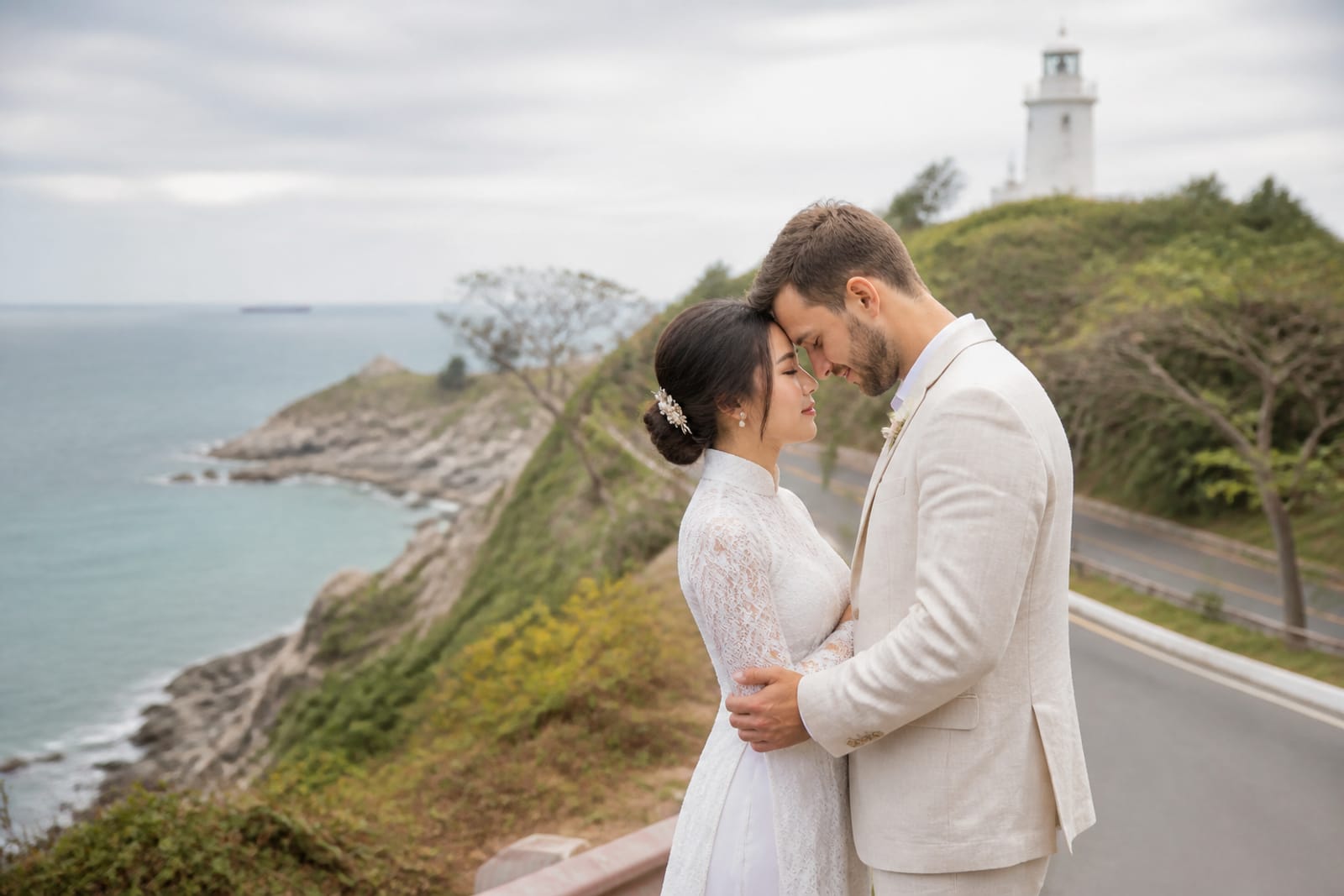
How tide and permit timing fold into booking logistics
Vung Tau's foreshore has public-access zones, but some rock pools and quieter stretches require awareness of tide times and local custom. Low tide (roughly 6–12 hours apart) exposes more sand and interesting formations; high tide closes some walking paths. A 6 am session often hits receding tide, giving you two hours of optimal foreshore. Mid-afternoon tide is messier to predict. Permits are not formally required for still photography on public beaches, but drones, large crews, and commercial-looking setups can draw local attention—Cáo Studio travels light (one photographer, one makeup artist, one or two assistants), so logistics are straightforward.
The two-hour drive from Saigon means departure by 4 am for a 6 am shoot, or afternoon travel for an evening slot. Fuel, ferry or bridge tolls, and guide fees are factors when budgeting a Vung Tau session. Ask on WhatsApp for specifics on how Cáo Studio structures these coastal sessions; timing and cost hinge on where you're based.
---
Comparing Vung Tau to other November pre-wedding spots near Saigon
If you're choosing between coastal options, Vung Tau competes with Mui Ne (a three-hour, more remote town; stronger dunes, lonelier light) and staying in Saigon itself. Vung Tau wins on accessibility (two hours), calm water, urban-meets-beach mood, and light that suits both ao dai and Western dress. Mui Ne is sandier, windier, and better for dramatic color-grade work; Saigon offers urban geometry and temples but no ocean. For a November pre-wedding photoshoot, Vung Tau is the quickest turnaround and most reliable weather play from Ho Chi Minh City.
What to check before you book a November shoot in Vung Tau
- Tide times: Confirm low tide aligns with your shoot slot (check 7–10 days before, not months ahead—tides shift).
- Weekday vs. weekend: Be honest about your calendar. Weekday mornings are worth the effort.
- Humidity prep: Bring extra blotting papers, setting spray, and a second makeup touch-up kit. Humidity is non-negotiable.
- Travel contingency: Plan for a 4 am departure if shooting at 6 am. If traffic is heavy (rare in early morning, but it happens), you're delayed. Buffer time matters.
- Outfit count and fitting: Wet salt air can wilt unprepped garments. Finalize ao dai or dress fits at least a week before. Last-minute rentals can miss humidity-resistant finishes.
- Post-shoot care: Salt dries fabric and hardware. Rinse rental ao dai gently the same day; don't leave it folded damp in a bag.
🌸 See the lookbook | 📸 Book on WhatsApp — pre-wedding photoshoot
---
Pairing your Vung Tau shoot with keepsake products
A pre-wedding session in November deserves a frame that lasts. Cáo Studio delivers edited photos and a short vertical film within 48 hours, but the real story lives in a print. Photo prints and frames let you live with one standout image—the 6 am golden light, the foreshore wind in the ao dai, the moment between you and your partner—year after year. Some couples also commission a wedding photo album as the centerpiece of a proposal reveal or rehearsal dinner. These keepsakes sidestep the archive problem: digital files blur into storage; a physical frame on the wall tells the November story every day.
If you're also planning a wedding day photographer or wedding video for a later date, a November pre-wedding shoot builds the creative relationship with Cáo Studio and settles the visual language (light direction, pose style, color grade) before the main event.
---
How Cáo Studio runs a Vung Tau pre-wedding session from Saigon
Cáo Studio operates from Ho Chi Minh City, two hours' drive from Vung Tau. A pre-wedding booking here includes a Saigon-based photographer, makeup artist, and assistant traveling on-site. You confirm timing (usually 5:45 am or 4:30 pm start, based on tide and light), outfit count, and hair/makeup style. The team handles direction on location: where to walk, how to move fabric, when to pause for light shifts. You're not posed stiffly; you're guided through natural movement against a foreshore that reads as cinematic in the edit. Includes makeup and hair coordination (all artists from one team, no kit-swapping mid-shoot), location scouting, and 48-hour turnaround on edited stills plus a short vertical film. Exact session details (outfit count, edit style, delivery format, inclusions) are confirmed on WhatsApp.
---
FAQ
Is November actually dry in Vung Tau, or is the 75% humidity still rain-heavy?
November is dry—rain happens maybe 2–3 days the whole month. Humidity is tropical (75–80%), so you feel damp, but clouds are rare and afternoon downpours don't occur like in the May–November wet season. It's the difference between "sticky air" and "actual rain cancelling your shoot."
Can we shoot at midday in November, or does heat and light really ruin the photos?
Midday light is harsh, unflattering overhead, and creates hard shadows under eyes and jaw. Salt-air makeup breaks down faster under direct sun. Morning (5:45–7:15 am) and late afternoon (4:30–6 pm) are when the foreshore actually looks cinematic. Midday is technically possible but produces a different, harsher aesthetic—not what pre-wedding work aims for.
Do we need a permit to shoot pre-wedding photos on Vung Tau's beaches?
No formal permit is required for still photography on public foreshore. Cáo Studio's small crew (photographer, makeup artist, assistant) blends in. Large commercial crews or drones may draw local attention, but a couple with one camera is standard and welcomed.
How much does salt spray actually damage rental ao dai or wedding dresses?
Salt air dampens and stiffens fabric over time if not rinsed. A 48-hour humidity shoot won't destroy a dress, but damp folds can set creases. Rinse gently the same day you return it. Metalware (clips, eyelets) can spot if left salty overnight. These aren't show-stoppers—just rinse-and-dry care, same day.
Should we book a Vung Tau pre-wedding shoot on a weekend to avoid taking weekday time off?
Weekends are packed with day-trippers and families by 8 am. Frames are cluttered, makeup re-touches are frequent, and the shoot feels rushed. If you can swap a weekday or take a long Friday morning, the quality difference (clean frames, relaxed pace, three-hour light window) is worth it. Weekends are a compromise, not ideal.
What if we're staying at a Saigon hotel and want makeup done there, then travel to Vung Tau for 6 am light?
Cáo Studio coordinates this: makeup and hair happen at your hotel, then the team and you drive to Vung Tau for the 5:45 am golden window. Depart the hotel by 4 am. It's early, but it's one seamless session, not two bookings. Confirm travel logistics on WhatsApp when you reserve.
FAQ
Is November actually dry in Vung Tau, or is the 75% humidity still rain-heavy?
November is dry—rain happens maybe 2–3 days the whole month. Humidity is tropical (75–80%), so you feel damp, but clouds are rare and afternoon downpours don't occur like in the May–November wet season. It's the difference between "sticky air" and "actual rain cancelling your shoot."
Can we shoot at midday in November, or does heat and light really ruin the photos?
Midday light is harsh, unflattering overhead, and creates hard shadows under eyes and jaw. Salt-air makeup breaks down faster under direct sun. Morning (5:45–7:15 am) and late afternoon (4:30–6 pm) are when the foreshore actually looks cinematic. Midday is technically possible but produces a different, harsher aesthetic—not what pre-wedding work aims for.
Do we need a permit to shoot pre-wedding photos on Vung Tau's beaches?
No formal permit is required for still photography on public foreshore. Cáo Studio's small crew (photographer, makeup artist, assistant) blends in. Large commercial crews or drones may draw local attention, but a couple with one camera is standard and welcomed.
How much does salt spray actually damage rental ao dai or wedding dresses?
Salt air dampens and stiffens fabric over time if not rinsed. A 48-hour humidity shoot won't destroy a dress, but damp folds can set creases. Rinse gently the same day you return it. Metalware (clips, eyelets) can spot if left salty overnight. These aren't show-stoppers—just rinse-and-dry care, same day.
Should we book a Vung Tau pre-wedding shoot on a weekend to avoid taking weekday time off?
Weekends are packed with day-trippers and families by 8 am. Frames are cluttered, makeup re-touches are frequent, and the shoot feels rushed. If you can swap a weekday or take a long Friday morning, the quality difference (clean frames, relaxed pace, three-hour light window) is worth it. Weekends are a compromise, not ideal.
What if we're staying at a Saigon hotel and want makeup done there, then travel to Vung Tau for 6 am light?
Cáo Studio coordinates this: makeup and hair happen at your hotel, then the team and you drive to Vung Tau for the 5:45 am golden window. Depart the hotel by 4 am. It's early, but it's one seamless session, not two bookings. Confirm travel logistics on WhatsApp when you reserve.
Ao dai, makeup, hair and a local photographer in Hanoi or Saigon — one WhatsApp message.