/pre-wedding-photoshoot
Thanh Ha Pottery Village Wedding Photos: Best Time & Light
Thanh Ha pottery village (near Hoi An, central Vietnam) offers textured clay-brick walls, working pottery wheels and kiln structures that photograph best in early morning light (5:30–7:00 a.m.) or late afternoon (4:00–6:00 p.m.), when sun is low and warm. February–April is ideal: dry, mild weather and green rice-field backgrounds. Avoid May–August (intense heat, 35°C+, harsh midday shadows) and October–November (typhoon season, flooding risk). A pre-wedding shoot at Thanh Ha typically runs 2–3 hours with multiple outfit changes; you'll walk unpaved potter's paths, so wear supportive footwear under your ao dai or gown. Cáo Studio – Makeup & Photoshoot arranges Hoi An shoots by appointment, traveling from Hanoi or Saigon; confirm exact dates and what's included on WhatsApp before booking. ---
Which time of day captures the best light at Thanh Ha?
Early morning (5:30–7:00 a.m.) and late afternoon (4:00–5:30 p.m.) are non-negotiable for Thanh Ha. Before 8 a.m., sunlight rakes across clay walls at a low angle, deepening terracotta reds and casting fine shadows that sculpt your silhouette against handmade pottery stacks. Midday (11 a.m.–3 p.m.) is harsh: direct overhead sun flattens texture, burns out highlights on white garments and creates unflattering shadows under your chin. Afternoon light (4:00–6:00 p.m.) warms clay to honey-gold and softens as it drops; kiln-house doorways glow from within. Golden hour is brief—plan for one shoot window only, not two in a single day, because travel time from Hoi An Ancient Town adds 30–45 minutes each way. Shoot early to beat village foot traffic and heat; return to your hotel for makeup touch-ups if you book a second sunset slot on a different day.
📸 Book on WhatsApp — pre-wedding photoshoot
How does season affect pottery-village backdrop light and comfort?
| Season | Light Quality | Temperature & Comfort | Rain/Flood Risk | Best for |
|---|---|---|---|---|
| Feb–Apr | Soft, golden, low-angle | 20–28°C, mild; ao dai comfortable | None | Premium choice—clear skies, green fields |
| May–Aug | Harsh, overhead; high contrast | 32–35°C+; heavy sweating in layers | Rare | Sunrise-only shoots; avoid gown |
| Sep–Dec | Soft when dry; overcast in rain | 22–30°C; pleasant if dry | High (Oct–Nov typhoons, flooding) | Late Dec–early Jan only; skip Oct–Nov |
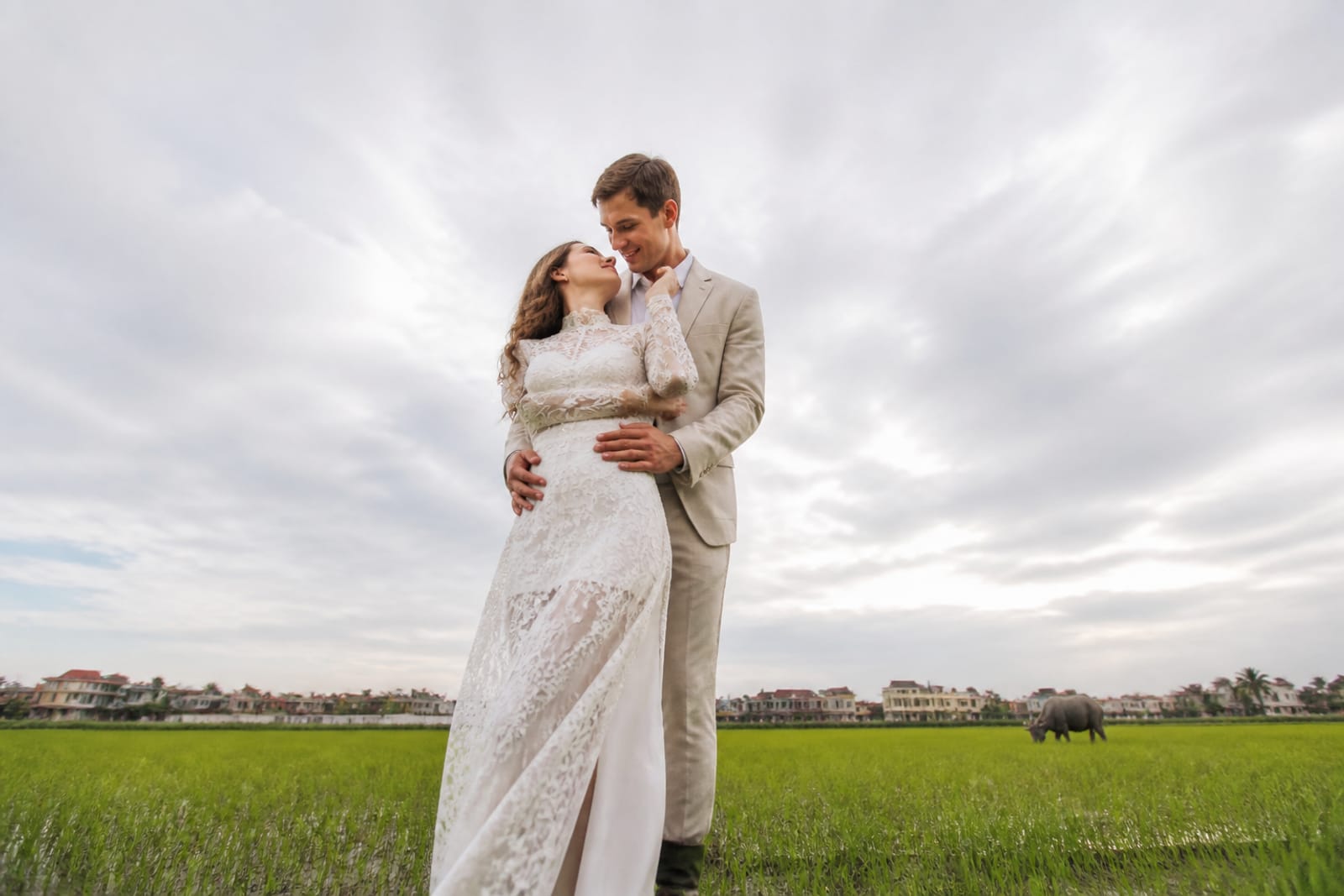
February–April is the unmatched window: clay kilns photograph warm and textured, rice paddies frame backgrounds in pale green, and humidity is low so makeup lasts through a 2–3-hour shoot. Your ao dai won't cling; sweat won't ruin layers. May–August demands sunrise shoots only (5:30–6:30 a.m.) because by 7:30 a.m. heat becomes punishing and clay looks washed-out. October–November brings typhoon rain, flooding across roads to potters' workshops and reduced visibility—never shoot then. Late December–January is cool and sometimes drizzly, softening light but adding cloud cover; suits couples who prefer overcast days (no harsh shadows) but expect duller clay tones. Plan your Hoi An visit around Feb–Apr; if you're traveling another month, ask Cáo Studio on WhatsApp whether a single early-morning slot suits your season.
What should you wear under an ao dai at Thanh Ha to stay comfortable and photograph well?
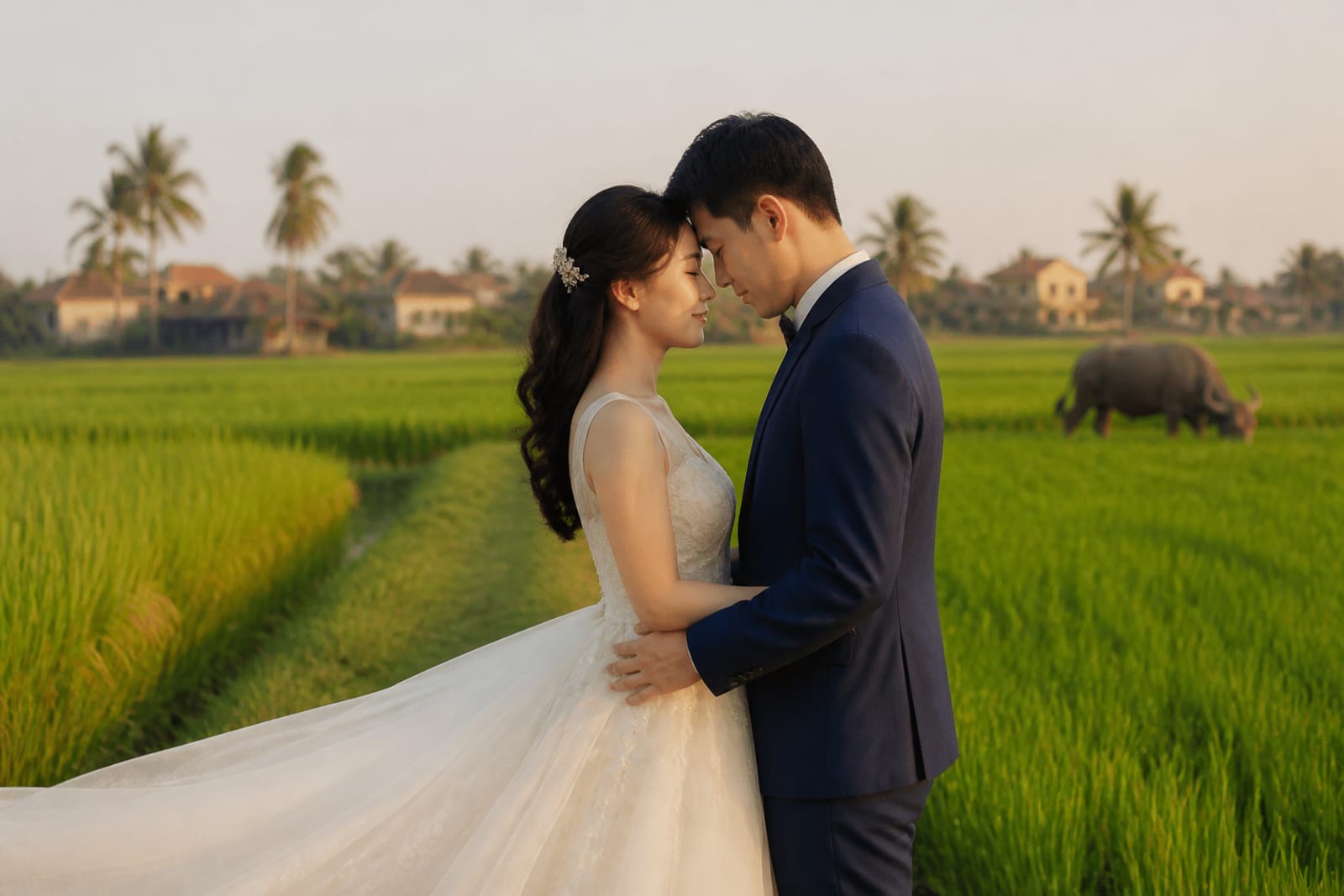
Thanh Ha's paths are uneven clay and brick—wear flat, closed-toe shoes with grip (leather slip-ons or soft ballet flats; never heels). Beneath an ao dai, layer a fitted slip or underdress (white or matching color) to prevent transparency under low-angle morning light and to reduce fabric cling in any humidity. If you're in a Western gown, bring a lightweight shawl or wrap for sun protection and to add depth to backlit photos. Choose light colors (cream, ivory, soft pastels) or deep jewel tones; bright neon flattens against terracotta clay. Avoid heavy beading or metallic embroidery that catches midday glare and reads as blown-out highlights in photos. If shooting pre-wedding (both bride and groom/partner), coordinate one outfit per location: groom in a linen ao dai or lightweight suit, bride in ao dai or gown—not both in heavy formal wear. Plan changes between light windows (e.g., ao dai for sunrise, Western dress for a follow-up sunset slot on another day). Ask Cáo Studio to advise on outfit transitions during your WhatsApp consultation—they know Thanh Ha's paths and can suggest what works logistically.
Should you hire a local photographer in Thanh Ha, or book Cáo Studio?
Local Hoi An photographers offer lower day-rates and same-day file delivery; good for couples on tight budgets wanting a single-location shoot. They know village potters, can negotiate early-access (some workshops open at 4:30 a.m. for workers), and work fast. Drawbacks: language barriers in planning, inconsistent editing style, limited portfolio range and no back-up if they're unavailable. Cáo Studio – Makeup & Photoshoot (Hanoi–based, with a Saigon branch) travels to Hoi An by appointment, bringing a senior photographer, makeup artist and consistent brand aesthetic. You get coordinated hair and makeup, styled outfit consultation beforehand, professional editing and a curated look across all images—worth the travel cost if you want gallery-quality work and stress-free direction during the shoot. Cáo Studio suits couples who book a pre-wedding photoshoot as part of a longer Hoi An stay (3–5 days) and want makeup included; local photographers suit walk-in or same-day bookings with minimal planning. Ask Cáo Studio on WhatsApp for exact dates they can travel to Hoi An and what shoot + makeup + editing package includes; compare that quote against local studio rates (ask your hotel concierge for 3 local studio contacts). Factor in Cáo Studio's travel time (arrive day before, shoot early morning, return or stay another day) versus a local shoot the next morning.
What should you check before booking a Thanh Ha pre-wedding shoot?
Timing & access: Confirm whether your photographer can access potters' workshops before 6:00 a.m. (some may restrict early access). Book a specific date at least 2–3 weeks ahead; Thanh Ha is informal (no official permits), but your photographer should know individual potters and arrange visits. Ask Cáo Studio on WhatsApp whether they include workshop-owner coordination in the booking or if you arrange it separately.
Weather backup: Feb–Apr is reliable, but sudden rain can happen. Ask your photographer's cancellation and reschedule policy—do you get a full refund, a credit for another date, or a partial refund? Cáo Studio's exact terms should be confirmed before you pay.
Outfit logistics: If you're changing between a morning ao dai and an evening gown, plan 45–60 minutes for that transition (travel, makeup touch-up, accessory swap). Factor that into your booking—a 3-hour morning slot plus a sunset shoot might mean a full-day booking, which affects the quote. Ask Cáo Studio whether they charge per shoot window or per day.
Photo delivery: Clarify how many edited photos you receive, when you get them, and in what format (digital files, prints, album). The exact inclusions should be confirmed on WhatsApp; never assume a "package" includes everything you want.
Backup outfits: Bring at least one extra top or accessory in case your primary choice doesn't photograph as expected against clay in real light. Cáo Studio can advise on backup styling during your consultation.
---
Thanh Ha pottery village works best for couples who prioritize natural light, texture and a working-craft backdrop—not couples seeking formal, manicured garden settings. The trade-off: early mornings, unpaved walking and planning around a narrow seasonal window (Feb–Apr). If you're visiting Hoi An and want to combine pottery-village photos with a styled couple photoshoot in the Ancient Town or rice fields, Cáo Studio can coordinate both over 2–3 days, including makeup and hair at your hotel beforehand. Contact them on WhatsApp to outline your vision, dates and what "complete pre-wedding experience" means to you. For destination weddings in Hoi An, also explore wedding-day photography and video coverage; many couples shoot pre-wedding in Thanh Ha weeks before their ceremony, creating a two-part narrative. Check the FAQ for general questions about Cáo Studio's process, turnaround times and revision policy, and visit the lookbook to see real Hoi An shoots in daylight.
FAQ
Can we shoot at Thanh Ha without booking Cáo Studio?
Yes. Hire a local Hoi An photographer (ask your hotel for referrals), arrange access directly with potters (speak Vietnamese or use a translator), and scout locations beforehand. Cáo Studio offers professional makeup, consistent editing and portfolio quality if you want a polished look; local studios are faster and cheaper for walk-in shoots.
Is October–November really too wet for Thanh Ha photos?
Yes. Typhoons and heavy rain are common October–November; roads flood and light is dim and grey. December–January is safer but still cool and drizzly. Book February–April for guaranteed dry, warm light.
How long does a Thanh Ha shoot usually run?
Typically 2–3 hours, covering one early-morning window (5:30–7:00 a.m.) or one late-afternoon slot (4:00–5:30 p.m.), with one or two outfit changes. Travel from Hoi An town adds 30–45 minutes each way. Full-day bookings with multiple light windows require separate sessions on different days.
What if the kiln-house owners don't want us there at 5:30 a.m.?
Confirm access beforehand with your photographer. Cáo Studio coordinates with known potters if you book through them; local photographers have their own contacts. Some workshops are family-run and close to outsiders before 6:00 a.m.—ask during booking, not on shoot day.
Should we wear traditional ao dai or Western wedding dress at Thanh Ha?
Ao dai photographs beautifully against terracotta clay and suits the cultural backdrop; Western gowns are elegant but risk transparency and discomfort on uneven paths in heat. Many couples shoot both (ao dai at sunrise, gown at sunset another day) or blend styles (ao dai skirt, Western top). Discuss outfit choice with your photographer during consultation.
Can Cáo Studio edit photos if the light was overcast or the clay looked dull that day?
Editing adjusts tone, saturation and contrast, but cannot create light that wasn't there. Shooting in ideal seasons (Feb–Apr) ensures warm, rich clay tones and golden hour glow; editing enhances, not invents. Confirm Cáo Studio's editing scope (number of photos, revision rounds) on WhatsApp before you book.
FAQ
Can we shoot at Thanh Ha without booking Cáo Studio?
Yes. Hire a local Hoi An photographer (ask your hotel for referrals), arrange access directly with potters (speak Vietnamese or use a translator), and scout locations beforehand. Cáo Studio offers professional makeup, consistent editing and portfolio quality if you want a polished look; local studios are faster and cheaper for walk-in shoots.
Is October–November really too wet for Thanh Ha photos?
Yes. Typhoons and heavy rain are common October–November; roads flood and light is dim and grey. December–January is safer but still cool and drizzly. Book February–April for guaranteed dry, warm light.
How long does a Thanh Ha shoot usually run?
Typically 2–3 hours, covering one early-morning window (5:30–7:00 a.m.) or one late-afternoon slot (4:00–5:30 p.m.), with one or two outfit changes. Travel from Hoi An town adds 30–45 minutes each way. Full-day bookings with multiple light windows require separate sessions on different days.
What if the kiln-house owners don't want us there at 5:30 a.m.?
Confirm access beforehand with your photographer. Cáo Studio coordinates with known potters if you book through them; local photographers have their own contacts. Some workshops are family-run and close to outsiders before 6:00 a.m.—ask during booking, not on shoot day.
Should we wear traditional ao dai or Western wedding dress at Thanh Ha?
Ao dai photographs beautifully against terracotta clay and suits the cultural backdrop; Western gowns are elegant but risk transparency and discomfort on uneven paths in heat. Many couples shoot both (ao dai at sunrise, gown at sunset another day) or blend styles (ao dai skirt, Western top). Discuss outfit choice with your photographer during consultation.
Can Cáo Studio edit photos if the light was overcast or the clay looked dull that day?
Editing adjusts tone, saturation and contrast, but cannot create light that wasn't there. Shooting in ideal seasons (Feb–Apr) ensures warm, rich clay tones and golden hour glow; editing enhances, not invents. Confirm Cáo Studio's editing scope (number of photos, revision rounds) on WhatsApp before you book.
Ao dai, makeup, hair and a local photographer in Hanoi or Saigon — one WhatsApp message.