/pre-wedding-photoshoot
Tra Que Wedding Photos: Best Light & Time of Day
Tra Que vegetable village (Hoi An district, Quang Nam) shoots best in golden hour—sunrise (5:30–6:30 a.m., Feb–Aug) or late afternoon (5:00–6:30 p.m., Feb–Apr)—when mist rises from flooded fields and light turns warm on woven baskets and farmers' faces. Winter (Dec–Jan) is cool but often drizzly; summer (May–Aug) is scorching but offers clearer pre-dawn skies if you start by 6 a.m. The village is active early (farmers work until 10 a.m.), so an early session captures authentic movement and softer light. Cáo Studio – Makeup & Photoshoot arranges Tra Que shoots by appointment; the team travels from Hanoi or Ho Chi Minh City to Hoi An. Avoid midday (10 a.m.–4 p.m.): harsh shadows, heat stress, and crowds disrupt farmers. Plan 1–2 hours on-site, allow travel time from your Hoi An hotel (15–30 minutes), and confirm weather 48 hours ahead—typhoon season (Sep–Dec, worst Oct–Nov) brings sudden flooding. ---
What time of day gives the softest light at Tra Que?
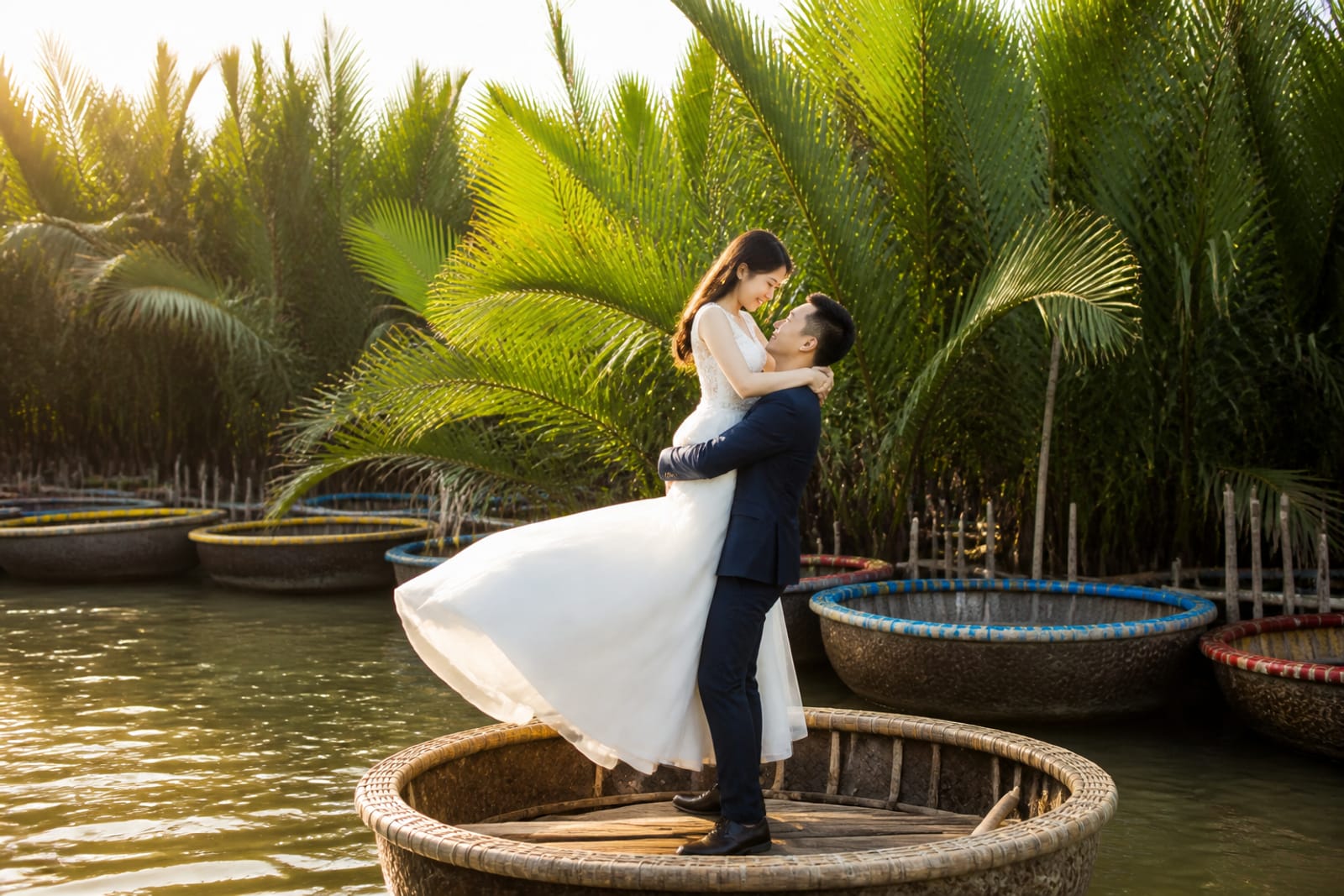
Sunrise (5:30–6:30 a.m., Feb–Aug) produces the most romantic light: horizontal rays catch mist rising from flooded paddies, turn green vegetables golden, and create long shadows on woven baskets. The sky is soft blue or rose-tinted; no harsh glare. Farmers are actively harvesting and carrying produce, adding authentic movement to portraits. Late afternoon (5:00–6:30 p.m., Feb–Apr) is second-best—the sun is low, warm, and direct over western fields, but the window closes faster and villages become quieter. Winter sunrise (Dec–Jan, 6:00–7:00 a.m.) is later but often grey or drizzly; dress warmly and bring a backup indoor spot.
Recommendation: Shoot sunrise Feb–Aug if you can wake at 4:30 a.m.; late afternoon Feb–Apr if sunrise feels too early.
How does season change the look and logistics?
| Season | Light & Crops | Weather | Walking & Muddy Paths | Why It Works (or Doesn't) |
|---|---|---|---|---|
| Feb–Apr | Warm & golden; green shoots + transplanting | Dry, mild (20–28°C), occasional drizzle | Dry, easy walking in boots | Best: clear skies, green fields, farmers active, few tourists |
| May–Aug | Hot & harsh midday; lush greens; early harvest | Dry until late May; scorching (30–35°C+) | Dry paths; extreme heat by 8 a.m. | Sunrise only (5:30–6:30); soft pre-dawn light; must leave by 7 a.m. |
| Sep–Dec | Muted greens; late/second harvest; bare patches | Rainy Sep–Dec; typhoons Oct–Nov; flooding Oct–Nov in low areas | Muddy, slippery; standing water; paths unsafe | Avoid Oct–Nov (flooding, typhoons); Dec–Jan cool but drizzle-prone; Sep & early Dec possible if no rain forecast |
Conclusion: Feb–Apr is the only true "best season"—comfort, light, and safe logistics align. May–Aug works if you commit to a 5:30 a.m. start.
Should you book Cáo Studio's Hoi An team or hire a local photographer?
Cáo Studio – Makeup & Photoshoot travels to Hoi An by appointment, bringing makeup, hair, and styling consistency. The team knows Vietnamese light, posing angles, and cultural etiquette (farmers' families may prefer not to be photographed close-up; the studio respects this). You get a vetted, English-speaking professional familiar with Hoi An's pre-wedding trends and your aesthetic from the lookbook.
A local Hoi An freelancer is cheaper and knows daily village rhythms; they can predict where farmers work at 6 a.m. and negotiate access to private family plots. The trade-off is communication, revision rounds, and file delivery may take longer.
Hybrid approach: Book Cáo Studio for the shoot and styling; ask on WhatsApp if the team can recommend a local guide or coordinate with a village contact for exclusive access to a specific plot.
🌸 See the lookbook | 💄 Makeup & hair at your hotel
What do you need to pack and prepare for a Tra Que morning shoot?
For the couple:
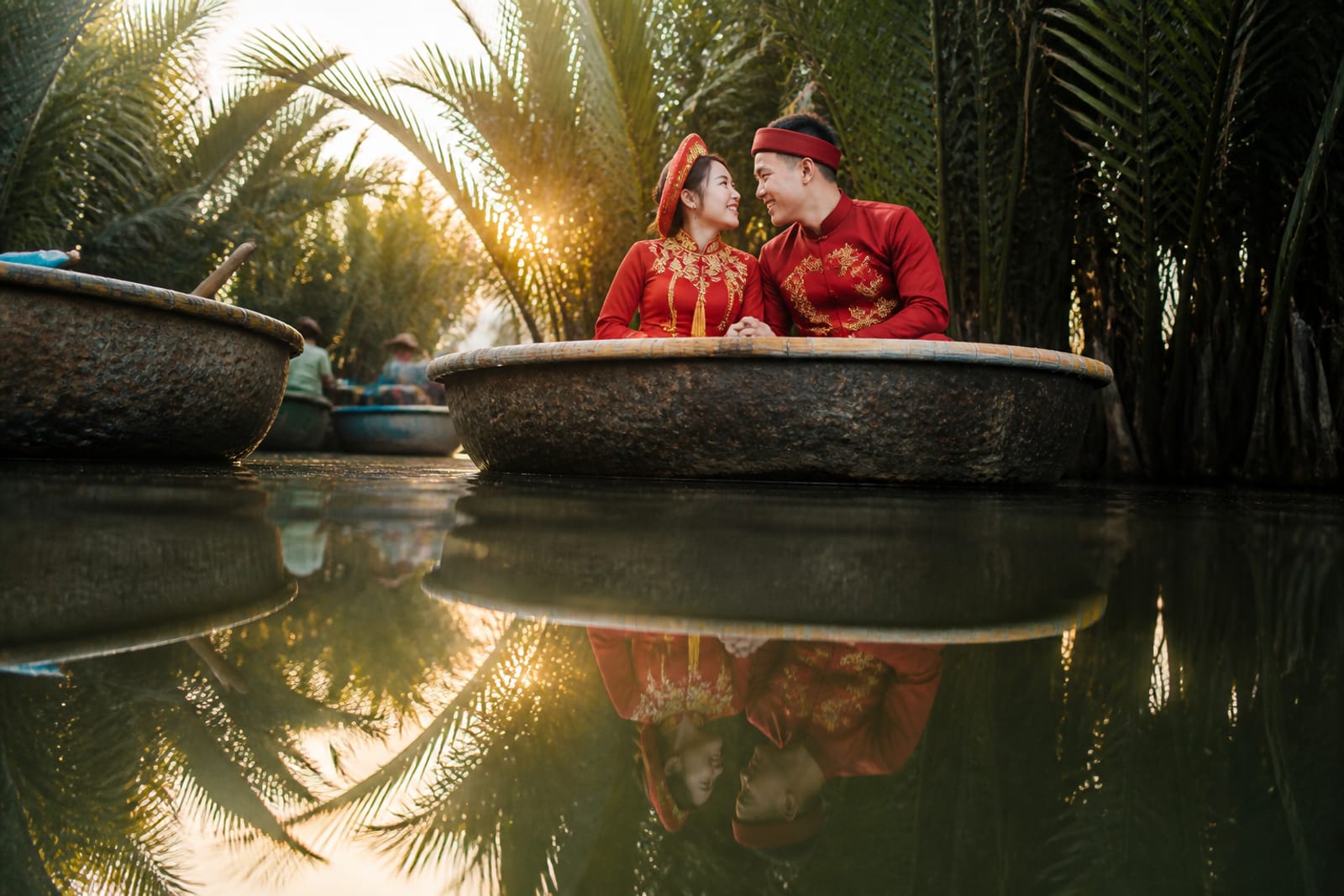
- Change of clothes (ao dai is romantic but impractical in mud; wear it for part of the session, then switch to practical farming clothes for candid shots near water).
- Waterproof boots or slip-ons (paths flood after rain; mud is real, especially Feb–Apr post-irrigation).
- Insect repellent (mosquitoes are worst at dawn in rainy season; carry anyway).
- Water and light snacks (sunrise shoots run 5:30–7:30 a.m.; you've had no breakfast).
For the photographer:
- Tripod (sunrise light needs longer exposures; handheld shots risk blur on misty fields).
- Wide-angle lens (to capture the expanse of flooded paddies) and 50 mm (for intimate portraits among baskets).
- ND filter (optional; controls exposure on very bright fields).
- Rain cover (drizzle is common Dec–Jan; morning dew wets lenses).
Coordination with Cáo Studio: Confirm the exact start time 48 hours ahead (depending on sunrise time and travel from your Hanoi or Saigon hotel). Discuss outfit changes and whether the team will bring makeup touch-up kits for a second outfit. Arrange transportation—Cáo Studio does not provide transport; you arrange pickup to meet the team at Tra Que or a central Hoi An point.
How do you book a pre-wedding shoot at Tra Que with full styling?
Step 1: Contact Cáo Studio on WhatsApp. Message +84 338 762 340 with your preferred dates (ideally Feb–Apr, sunrise preferred, give a 2-week window). Mention if you want ao dai, casual, or a mix. The team confirms availability and travel logistics for Hoi An.
Step 2: Discuss the shoot structure. Ask on WhatsApp whether the session includes on-site hair and makeup (common for Cáo Studio's Hoi An appointments) or if you'll have makeup done at your hotel beforehand. Confirm session length, number of outfits, and how edited photos are delivered.
Step 3: Scout the location (optional but recommended). If you're in Hoi An 2–3 days before, walk Tra Que at sunrise to see light, identify a specific field or corner, and note farmer schedules. Take a photo of a spot you love and share it with Cáo Studio—the team can plan poses and angles beforehand.
Step 4: Prepare transport and weather backup. Arrange your own car or taxi from your Hoi An hotel to Tra Que (or ask Cáo Studio where to meet). Check the weather forecast 48 hours ahead; if heavy rain or typhoon warning is forecast (Sep–Dec), reschedule immediately—flooded paths and poor visibility ruin the shoot and risk safety.
Step 5: Confirm details via WhatsApp 24 hours ahead. Reconfirm the exact time, location meeting point, number of outfit changes, and any last-minute weather concerns. Ask the team if they need you to bring anything (e.g., a second pair of shoes, extra fabric for styling).
📸 Book on WhatsApp — ao dai photoshoot
What makes Tra Que special compared to other Hoi An pre-wedding spots?
Tra Que's appeal is authenticity and layers: working farmers, flooded paddies, woven baskets, and morning market bustle create narrative depth impossible in a studio or manicured garden. Light here is directional and changes minute-to-minute as mist clears—no flat, even studio light.
Compare to alternatives:
- Ancient Town + lantern night: Crowded, requires paid entry ticket, lanterns lit at dusk (7:00 p.m., so late session needed). Best for heritage ao dai shots; light is moody but busy.
- Hoi An beaches (Cua Dai): Open, windier, salt-spray fades makeup. Light is harsher at midday; good for casual/boho couples, but less story-telling than village work.
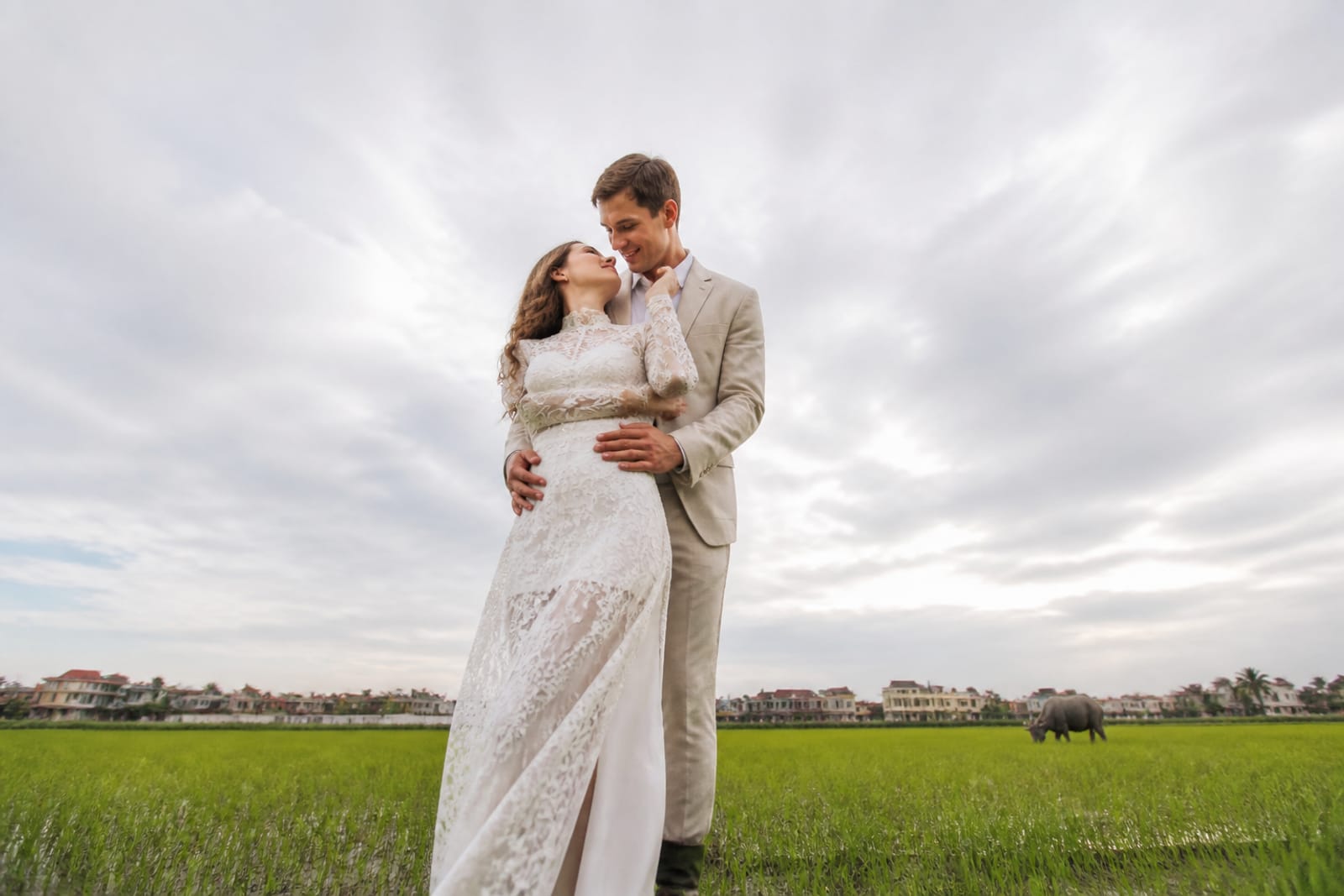
- Rice fields inland (e.g., Cam Thanh, Tu Ly): Quieter than Tra Que, mist less predictable, farmer presence less pronounced. Suited to couples who want isolation over cultural richness.
Tra Que wins if you want "a day in the village" framed as romance. It loses if you prioritize ao dai grandeur (Ancient Town's architecture beats it) or pure beach aesthetics. See the lookbook to judge if Tra Que's aesthetic matches your vision.
---
What to check before you book
- Season & light preference: Do you want guaranteed golden-hour glow (Feb–Apr sunrise) or are you flexible? Confirm your choice matches your travel dates.
- Physical readiness: Tra Que involves early mornings (4:30–5:30 a.m. wakeup), uneven muddy terrain, and 1–2 hours of standing/walking. Not suitable if you have mobility concerns.
- Outfit realism: Ao dai looks stunning in photos but is restrictive for farming-village walks; plan a practical second outfit (linen shirt + trousers, or casual dress) for candid movement shots.
- Weather contingency: Oct–Nov typhoon risk and Jan–Feb drizzle can cancel or shorten shoots. Confirm the team's rescheduling policy on WhatsApp before paying any deposit.
- Communication & edits: Clarify turnaround time for edited photos (Cáo Studio confirms details on WhatsApp, not here). If you're traveling home after Hoi An, ask how long you'll wait for files.
- Cultural respect: Farmers and their families may appear in background shots. Discuss with Cáo Studio whether you need to introduce yourself or ask permission (the studio handles this).
📸 Book on WhatsApp — pre-wedding photoshoot | 🌸 See the lookbook
---
Related services for your Hoi An trip
A Tra Que pre-wedding shoot pairs well with other Cáo Studio services. Book makeup and hair at your hotel the morning of the shoot (usually 1–2 hours before travel to Tra Que). If you want a second session—say, an ao dai photoshoot in the Ancient Town or a couple photoshoot on the beach—the team can coordinate back-to-back bookings over 2–3 days in Hoi An.
For ceremonies and events, see wedding day photographer and wedding & pre-wedding video services.
---
FAQ
What's the earliest time we can start a Tra Que shoot?
Sunrise is 5:30–6:30 a.m. Feb–Aug, 6:00–7:00 a.m. Dec–Jan. You'll need to wake at 4:30 a.m., arrange transport, and meet the team by 5:15–5:45 a.m. Cáo Studio confirms exact timing on WhatsApp. Earlier starts aren't recommended—light isn't mature enough before 5:20 a.m., and farmers aren't yet active.
Can we shoot if it rained the night before?
Yes, if rain stopped by dawn and paths are just damp. Muddy water and standing puddles create beautiful reflections. However, if the forecast shows rain during the session (Sep–Dec risk), reschedule—constant drizzle kills light and makes boots slip. Always check 48 hours ahead.
How much does a Tra Que pre-wedding shoot cost?
Cáo Studio sends quotes on WhatsApp based on session length, outfit changes, and travel from Hanoi or Ho Chi Minh City to Hoi An. Cost factors include team transport, duration, and number of edited photos. Message +84 338 762 340 with your dates and preferences for a custom quote.
Do we need a permit to shoot in Tra Que village?
No formal permit is required for tourists to walk through Tra Que or for a photographer to take photos for personal use (pre-wedding albums). Commercial film or drone use may need local approval; ask Cáo Studio on WhatsApp if you plan video or drone footage.
Is Tra Que accessible if we're not early risers?
Late afternoon (5:00–6:30 p.m., Feb–Apr only) is the backup, but light is weaker and farmers are winding down by 6:00 p.m. If sunrise isn't possible, consider an ao dai photoshoot in the Ancient Town or a beach couple photoshoot instead. Discuss alternatives with Cáo Studio on WhatsApp.
Can we bring family or guests to watch the shoot?
Yes, but keep the group small (1–2 people). Large crowds distract the photographer, spook farmers, and clutter background frames. If family want photos too, book a family photoshoot as a separate session. Cáo Studio can coordinate group sessions.
FAQ
What's the earliest time we can start a Tra Que shoot?
Sunrise is 5:30–6:30 a.m. Feb–Aug, 6:00–7:00 a.m. Dec–Jan. You'll need to wake at 4:30 a.m., arrange transport, and meet the team by 5:15–5:45 a.m. Cáo Studio confirms exact timing on WhatsApp. Earlier starts aren't recommended—light isn't mature enough before 5:20 a.m., and farmers aren't yet active.
Can we shoot if it rained the night before?
Yes, if rain stopped by dawn and paths are just damp. Muddy water and standing puddles create beautiful reflections. However, if the forecast shows rain during the session (Sep–Dec risk), reschedule—constant drizzle kills light and makes boots slip. Always check 48 hours ahead.
How much does a Tra Que pre-wedding shoot cost?
Cáo Studio sends quotes on WhatsApp based on session length, outfit changes, and travel from Hanoi or Ho Chi Minh City to Hoi An. Cost factors include team transport, duration, and number of edited photos. Message +84 338 762 340 with your dates and preferences for a custom quote.
Do we need a permit to shoot in Tra Que village?
No formal permit is required for tourists to walk through Tra Que or for a photographer to take photos for personal use (pre-wedding albums). Commercial film or drone use may need local approval; ask Cáo Studio on WhatsApp if you plan video or drone footage.
Is Tra Que accessible if we're not early risers?
Late afternoon (5:00–6:30 p.m., Feb–Apr only) is the backup, but light is weaker and farmers are winding down by 6:00 p.m. If sunrise isn't possible, consider an [ao dai photoshoot](/ao-dai-photoshoot) in the Ancient Town or a beach [couple photoshoot](/couple-photoshoot) instead. Discuss alternatives with Cáo Studio on WhatsApp.
Can we bring family or guests to watch the shoot?
Yes, but keep the group small (1–2 people). Large crowds distract the photographer, spook farmers, and clutter background frames. If family want photos too, book a [family photoshoot](/family-photoshoot) as a separate session. Cáo Studio can coordinate group sessions.
Ao dai, makeup, hair and a local photographer in Hanoi or Saigon — one WhatsApp message.