/pre-wedding-photoshoot
Traditional Vietnamese Pre-Wedding Photos in Hanoi
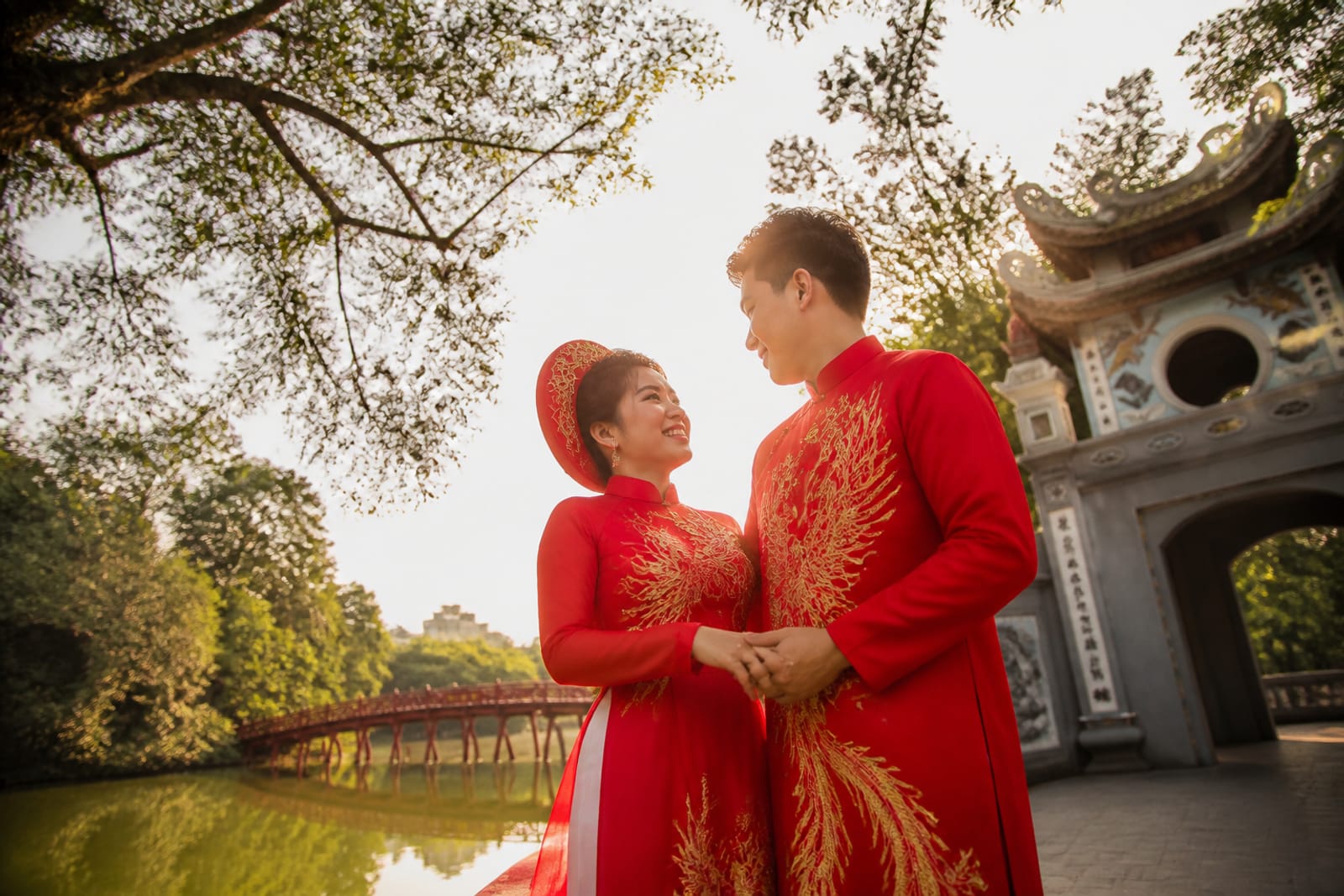
Traditional pre-wedding photoshoots in Hanoi center on the ao dai, Vietnam's iconic silk tunic worn over fitted trousers, shot during soft morning or late-afternoon light at landmarks like Huc Bridge, Hoan Kiem Lake, or Old Quarter streets. A session typically runs half a day, with one team (photographer, makeup artist, stylist) managing outfit changes, hair touch-ups, and framing on location. Autumn (October–November) offers mild weather and soft light; winter (December–February) is cool and often overcast, which flattens shadows; spring (March–April) brings humidity and haze. Cáo Studio books pre-wedding shoots in Hanoi and Ho Chi Minh City, handling everything in-house so styling, light direction, and framing stay aligned—no coordination gaps between separate vendors. Cost depends on season, travel time between locations, number of outfits, and whether you add video; quote on WhatsApp. Avoid booking during Tet (late January–mid February) when many services close and landmarks crowd; check Train Street access with us beforehand, as local authorities restrict it periodically. 🌸 See the lookbook ---
Why does the ao dai matter for pre-wedding frames?
The ao dai is not a costume—it's the frame that tells your story. The silk drapes differently in morning light than evening light, and how it moves when you walk or turn matters more than posing still. A pre-wedding shoot built around the ao dai works because the garment itself guides the eye: the fitted bodice, the long panels, the paired trousers. You're not fighting the outfit for attention; the outfit is the visual. Cáo Studio's approach films you moving naturally in ao dai rather than standing in front of it, so the fabric becomes part of the narrative, not a prop.
What light and season make the best pre-wedding images?
| Season | Light character | Weather | Best for | Plan around |
|---|---|---|---|---|
| Oct–Nov (autumn) | Soft, golden, low-angle; trees turn yellow | 20–28°C, dry | First choice: clarity without harsh shadows | Book early; slots fill fast |
| Dec–Feb (winter) | Soft, overcast; muted tones | 10–20°C, drizzly | Moody, intimate frames; ao dai silk deepens | Layering under ao dai; wet streets add texture |
| Mar–Apr (spring) | Hazy, diffused; weak contrast | 18–28°C, humid; drizzle risk | Soft focus aesthetic | Plan indoor backup (e.g., hotel spaces) |
| May–Sep (summer) | Harsh, midday blowout; avoid | 30–35°C+, downpours | Not recommended | Avoid unless early morning only |
Autumn is the most popular shoot season in Hanoi because soft light, cool air, and dry ground mean you walk between locations without sweating or rain damage. Winter works if you embrace muted, moody tones and layer thoughtfully beneath the ao dai. Late spring (April) can trap you—humidity rises, haze thickens, and afternoon showers appear without warning. Summer is too hot for sustained outdoor work and ao dai comfort. Cáo Studio plans timing by season: autumn shoots often run late morning into early evening; winter may shift to midday to catch any available light.
📸 Book on WhatsApp — ao dai photoshoot
How does one team (photographer, makeup, hair) shoot better than three separate vendors?
When you hire a photographer, a makeup artist, and a hair stylist separately, each answers to a different brief. The makeup artist aims for flawless complexion; the stylist thinks about volume and longevity; the photographer frames what's in front of the lens. No one is talking about light. If you shoot in soft morning side-light, heavy makeup reads flat. If the stylist builds height for a 2 p.m. shoot, it's wilting by 5 p.m. in Hanoi's humidity. If the photographer wants you backlit to silhouette the ao dai, the makeup artist may worry the underlit face looks sick.
Cáo Studio books one team for a reason: the makeup artist knows the light direction and places glow where it catches. The stylist positions volume where the camera sees it. The photographer frames knowing exactly how much makeup weight the light carries and where the hair sits. On location, you get real-time adjustments—lipstick refresh before the Huc Bridge shot, a hair pin replaced after walking through Old Quarter. No hand-offs. No waiting for a separate vendor to arrive. No explaining to a third person why we're shooting at 6:10 a.m. instead of noon. Coordination happens once, at the start, not three times on the day. This is why couples choose one team—the frames are more cohesive because every decision serves the same vision.
Where in Hanoi do traditional pre-wedding shoots happen?
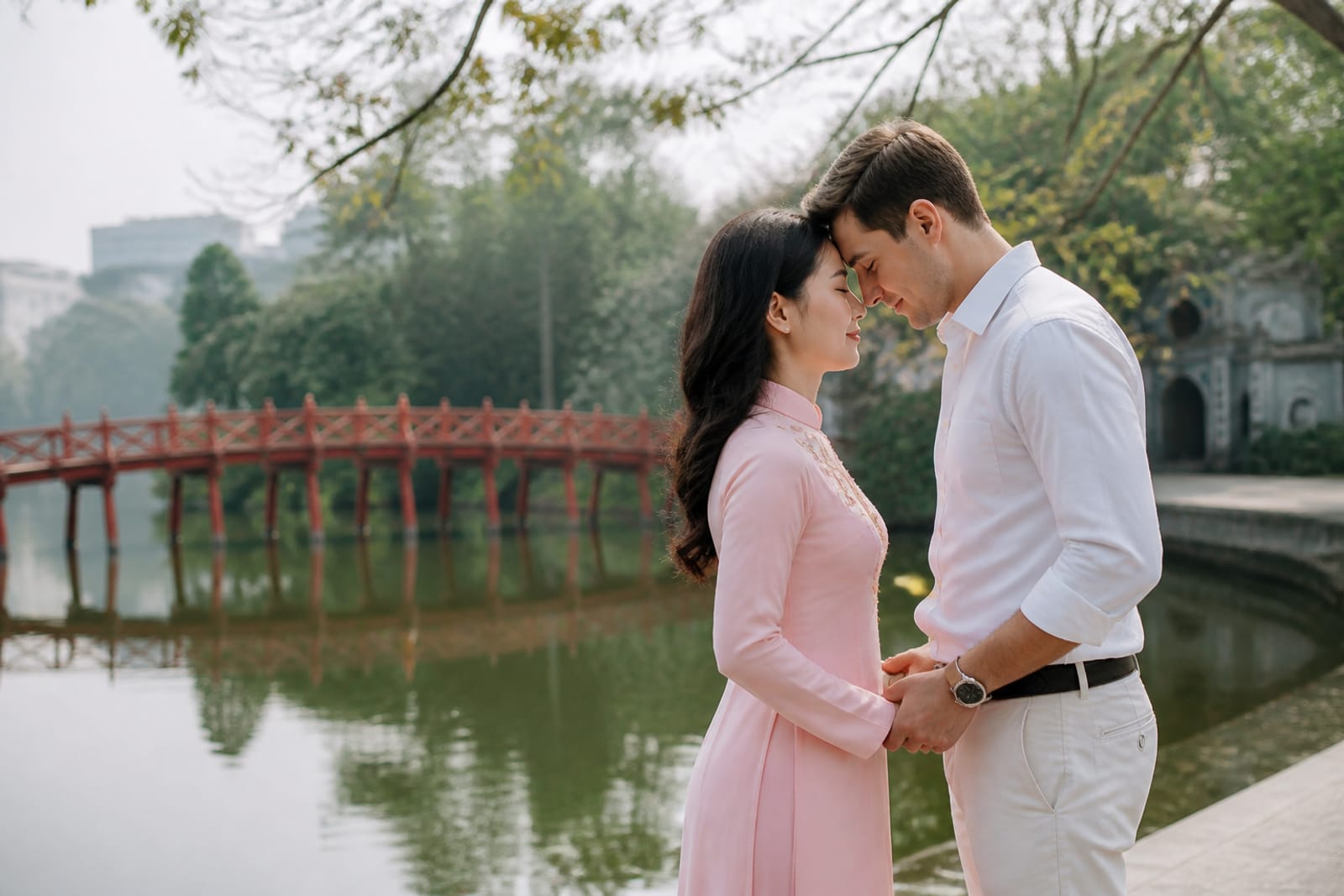
Huc Bridge at soft-light hours (6–7 a.m. or 5–6 p.m.) is the standard opening frame. The bridge is pedestrian-only, the water reflects light upward, and by 7 a.m. crowds thin. Morning side-light is softer than midday, and the bridge's red railings hold colour without blown highlights on skin. Evening shoots here face the low sun directly, so you're often backlit, which silhouettes the ao dai but darkens faces—plan for a reflector or accept moody, rim-lit frames. Cáo Studio shoots Huc Bridge early to catch that soft upper-light before foot traffic peaks.
Hoan Kiem Lake perimeter works year-round: tree-lined paths, reflective water, and shade that diffuses direct sun. Weekday mornings are quieter; weekend evenings (roughly 6–9 p.m. when the area becomes pedestrian-only) pack crowds but also streetlight and golden hour. Winter crowds are lighter than summer.
Old Quarter streets (Phan Dinh Phung, Ta Hien, Cha Ca) offer texture—narrow lanes, weathered shutters, hanging lanterns. Autumn brings yellow leaves across Phan Dinh Phung; these frames anchor your story. Morning light is best because afternoon crowds (tourists and motorbikes) overwhelm framing. Streets are active, so you're walking and looking at each other, not posing.
Hanoi Train Street (Tran Phu) is visually striking but access is restricted by local authorities at unpredictable intervals—always ask Cáo Studio before planning a shoot there. If accessible, early morning (6–7 a.m.) is safest for safety and light.
Temple interiors (e.g., Tran Quoc Pagoda, Ngoc Son Temple) require respect: modest dress, quiet movement, no commercial photography without permission. Soft indirect light inside works beautifully for close-ups and detail shots. Cáo Studio coordinates temple access beforehand if this matters to you.
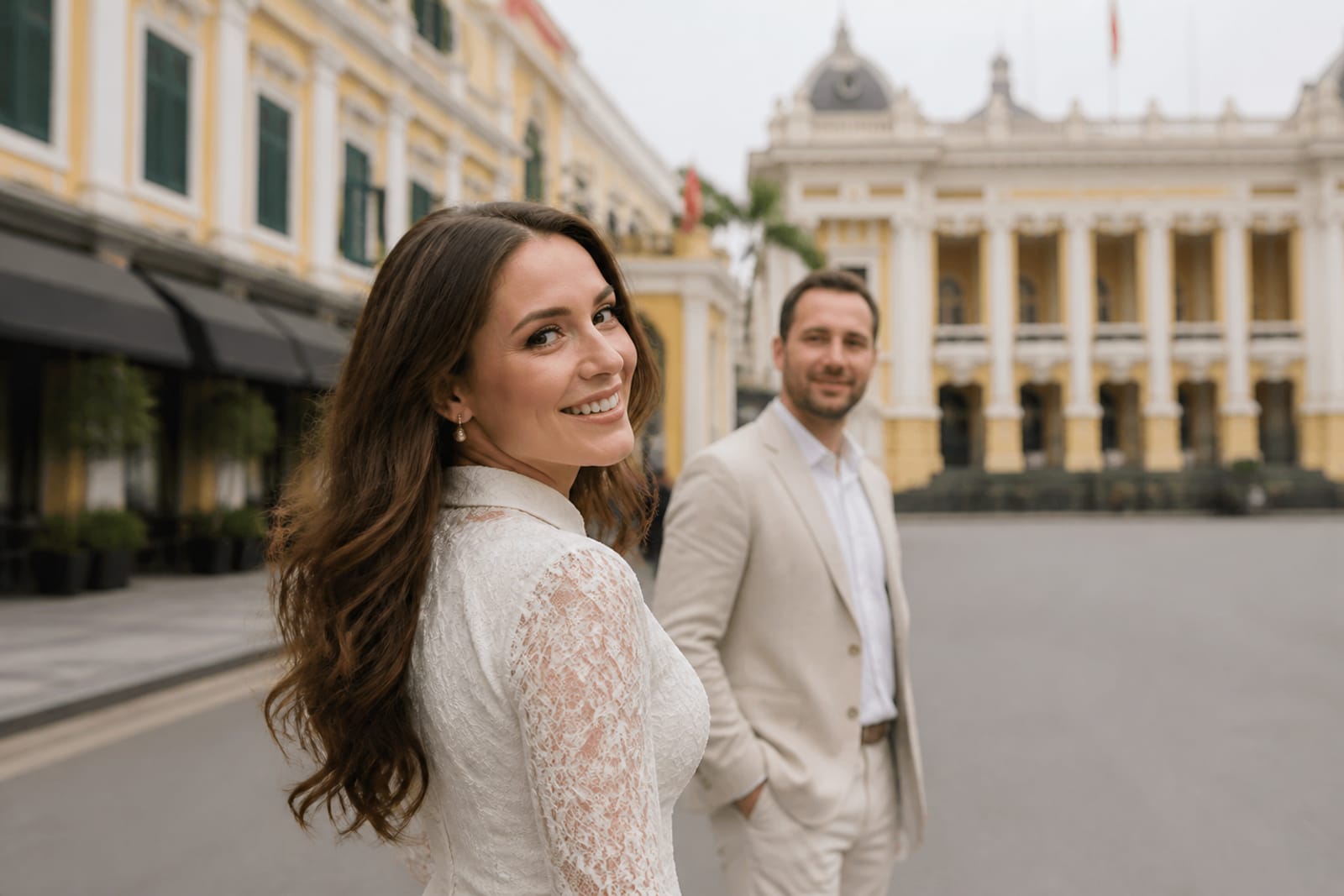
French Quarter villas and gardens (Ba Dinh, Kim Ma area) offer softer, more intimate backdrops with less crowds. Light bounces off colonial architecture differently than Old Quarter brick; the ao dai reads quieter, less urban. These spots suit couples wanting narrative depth over landmark recognition.
What outfit and weather decisions matter before booking?
Ao dai choice. Traditional silk ao dai drapes and moves differently than modern polyester versions. Silk breathes in autumn but requires careful layering in winter (moisture and cold stiffen it). Brocade or embroidered ao dai reads richer on camera but is heavier and hotter—save these for cooler months or shorter sessions. Cáo Studio can advise on rental options; ask on WhatsApp if ao dai rental suits your plan or if you're bringing your own.
Layering under the ao dai. A fitted long-sleeve silk camisole or merino base layer prevents chafing and keeps you warm in December–February without bulk. Cotton absorbs sweat and wrinkles visibly. Avoid anything with a visible waistband; the ao dai's high side split reveals your torso, so seams or elastic show.
Footwear. Traditional embroidered flat shoes (satin or silk) are authentic but slippery on wet streets and temple tiles. Modern flat sandals or soft ballet flats work for walking; carry a second pair for close-ups if needed. Heels are traditional in old photos but impractical for a half-day shoot with location changes. Cáo Studio usually avoids heels unless you're staying in one spot.
Weather backup. If rain threatens (common in March–April and December–February), ask Cáo Studio about indoor alternatives—your hotel room, a colonial villa interior, covered laneway backdrops. These aren't second-rate; they're intentional. Soft window light in a hotel room often outframes harsh midday sun on a street.
Groom or family outfit. If your partner is wearing a suit or an ao dai, coordinate colour with your ao dai: cream ao dai often pairs with charcoal or navy suiting. If bringing a family member (mother, sibling), their outfit should complement, not compete. Cáo Studio discusses this during booking; you can rent from suit & groom outfit or bring your own.
What should you check before booking a traditional pre-wedding shoot?
1. Season and light direction. Confirm your preferred month and ask which time of day works best for that season. Autumn? Book early morning. Winter? Midday catches available light. Cáo Studio will propose times; you confirm.
2. Location access. Tell Cáo Studio which landmarks matter to you (Huc Bridge, Old Quarter, temples, lakes). Ask if there are access restrictions (Train Street, temple photography permits, private gardens). Planning a Hoi An shoot instead? Ask on WhatsApp about Hoi An dates—the team travels by appointment.
3. Outfit count and style. How many ao dai changes do you want? Each change costs time and energy on location. Traditional silk ao dai or modern? Rental or your own? Groom in suit or ao dai? These decisions affect pacing and total duration.
4. Video or photo-only. Cáo Studio offers pre-wedding & elopement video alongside stills. If you want both, confirm it's included in your quote or budgeted separately.
5. Delivery timeline. Ask how long edited photos take (Cáo Studio typically delivers within 48 hours but confirm for your dates). If you need frames before a certain event (engagement party, save-the-date design), mention it upfront.
6. Weather contingency. If your shoot is in a season prone to rain (December–February, March–April), discuss backup dates or indoor locations with Cáo Studio.
7. Makeup and hair included. Confirm whether makeup & hair at your hotel is part of your package or separate. If you already have a preferred artist, ask if Cáo Studio can work with an outside vendor or if coordination is smoother with their team.
8. Album or print format. After you receive edited digital files, do you want a printed wedding photo album or photo prints & frames? Discuss this before shooting so framing choices can account for print proportions.
9. Pricing factors. Quote depends on season (autumn costs more), travel time between locations, number of outfits, and add-ons (video, extended hours, a second photographer). Ask Cáo Studio for a breakdown of these factors, not just a final number.
10. Tet avoidance. If your wedding is around Lunar New Year (late January–mid February), book early or later. Services close, landmarks crowded, light is unpredictable.
---
How does Cáo Studio's approach differ from other pre-wedding studios in Hanoi?
Most pre-wedding studios in Hanoi manage photography, makeup, and hair as separate transactions. You book a photographer, then call a makeup artist, then hire a stylist. On shoot day, you're coordinating three schedules and three creative visions. Cáo Studio operates differently: one team, one message. The photographer directs the light and framing; the makeup artist and stylist execute to that direction. No vendor miscommunication. No last-minute scrambles because the hair stylist didn't know you'd be backlit. Every person on set is solving the same problem—turning soft light, an ao dai, and your presence into frames that tell a story.
Cáo Studio also prioritizes real movement over posed stiffness. Instead of standing in front of Huc Bridge, you're walking toward it, looking at your partner, with the camera catching the moment light hits the ao dai's fabric. These frames age better because they're not dated by pose trends. They're about presence, not perfection.
---
Comparison: Hanoi pre-wedding shoots vs. other options
| Option | Best for | Why it works | Logistics to consider |
|---|---|---|---|
| Full pre-wedding shoot (Cáo Studio) | Couples wanting complete story across multiple locations | One team, styled outfit changes, professional video, short turnaround | Half-day commitment; multiple locations means walking and travel time |
| Ao dai photoshoot only | Solo or couples wanting a single outfit, shorter session | Focused on one garment, one story; faster setup; lower complexity | Limits outfit variety; best for intimate framing, not landmark coverage |
| Couple & family photoshoot | Couples with siblings or parents involved in frames | Broader narrative; family connection visible; shared keepsake | Scheduling more people; outfit coordination for multiple bodies |
| Vacation & solo photoshoot | Travellers in Hanoi for short stays who want professional frames | Shorter sessions fit short travel windows; no wedding-specific prep needed | Less formal than pre-wedding; lighter styling and fewer outfits |
---
FAQ
Can I wear my own ao dai, or does Cáo Studio provide one?
You can bring your own or rent through Cáo Studio. Rental ensures proper fit and authentic fabric (silk, traditional embroidery). Ask on WhatsApp about ao dai rental options, colours, and whether alteration is possible on short notice.
Is October really the best month for a pre-wedding shoot in Hanoi?
October–November offer soft light, dry weather, and mild temperature—ideal for sustained outdoor work and ao dai comfort. Summer (May–September) is too hot and rainy; spring (March–April) is humid with haze; winter (December–February) is cool and muted but workable if you embrace moody tones. Book October early; slots fill fast.
What if my shoot falls on a rainy day?
Cáo Studio discusses indoor or covered backups during booking—hotel interiors, temple spaces, covered laneway shoots. These aren't inferior; soft window light or indirect temple light often yields beautiful frames. Rain adds texture to streets (reflections, wet pavement); some couples prefer this mood over blue-sky predictability.
Can I do a pre-wedding shoot in Ho Chi Minh City or Hoi An instead of Hanoi?
Yes. Cáo Studio shoots pre-wedding photoshoots in Ho Chi Minh City year-round and travels to Hoi An by appointment. Ho Chi Minh's light is more intense and tropical; Hoi An's Ancient Town offers lanterns and river at dusk. Ask on WhatsApp which suits your vision and availability.
How many edited photos do I receive, and when?
Exact inclusions (number of photos, edited files, formats) are confirmed on WhatsApp when you quote. Cáo Studio typically delivers edited photos within 48 hours. If you need frames faster or have specific deadline (engagement party, design), mention it—rush delivery may affect scheduling.
Do I need a separate videographer for pre-wedding video?
Cáo Studio offers wedding & pre-wedding video as an add-on, shot by the same team. This keeps audio sync and visual style consistent. If you want video only (no stills), or stills only (no video), confirm that preference so pricing reflects it.
What if I want frames for a wedding album afterward?
Pre-wedding frames can be printed into a wedding photo album after the main wedding shoot. Discuss album style and binding during pre-wedding booking so framing choices align with how pages will lay out.
Is Tet a bad time for a pre-wedding shoot?
Tet (late January–mid February) is challenging: many vendors close for several days, landmarks are crowded just before, and weather is cool and drizzly. If your wedding or engagement is around Tet, book well ahead and ask Cáo Studio which specific dates work. Early February often quiets down; January fills fast.
Can I book a male partner in an ao dai for pre-wedding frames?
Yes. Ao dai suits any gender. Cáo Studio books male partners, non-binary partners, and any configuration. Ao dai drape and color can be tailored to fit your vision. Discuss this during booking so outfit selection reflects your style.
How much does a pre-wedding shoot in Hanoi cost?
Cost factors include season (autumn is busier, thus pricier), travel time between locations, number of outfit changes, and video add-ons. Exact pricing is quoted on WhatsApp based on your specific needs. Ask Cáo Studio to break down these factors so you understand what drives the quote. --- Internal links embedded: - /pre-wedding-photoshoot (pillar, referenced multiple times) - /ao-dai-photoshoot (ao dai focus) - /couple-photoshoot (couple/partner frames) - /makeup-and-hair (styling team) - /hanoi (geography) - /saigon (alternative city) - /hoi-an (Hoi An option) - /lookbook (visual proof) - /ao-dai-rental (outfit sourcing) - /suit-rental (groom outfit) - /wedding-video (video add-on) - /photo-album (print option) - /photo-prints (frames and prints) - /vacation-photoshoot (related session type) CTA lines (standalone markdown): 1. 🌸 See the lookbook 2. 📸 Book on WhatsApp — ao dai photoshoot 3. 💄 Makeup & hair at your hotel
FAQ
Can I wear my own ao dai, or does Cáo Studio provide one?
You can bring your own or rent through Cáo Studio. Rental ensures proper fit and authentic fabric (silk, traditional embroidery). Ask on WhatsApp about [ao dai rental](/ao-dai-rental) options, colours, and whether alteration is possible on short notice.
Is October really the best month for a pre-wedding shoot in Hanoi?
October–November offer soft light, dry weather, and mild temperature—ideal for sustained outdoor work and ao dai comfort. Summer (May–September) is too hot and rainy; spring (March–April) is humid with haze; winter (December–February) is cool and muted but workable if you embrace moody tones. Book October early; slots fill fast.
What if my shoot falls on a rainy day?
Cáo Studio discusses indoor or covered backups during booking—hotel interiors, temple spaces, covered laneway shoots. These aren't inferior; soft window light or indirect temple light often yields beautiful frames. Rain adds texture to streets (reflections, wet pavement); some couples prefer this mood over blue-sky predictability.
Can I do a pre-wedding shoot in Ho Chi Minh City or Hoi An instead of Hanoi?
Yes. Cáo Studio shoots [pre-wedding photoshoots in Ho Chi Minh City](/saigon) year-round and travels to [Hoi An by appointment](/hoi-an). Ho Chi Minh's light is more intense and tropical; Hoi An's Ancient Town offers lanterns and river at dusk. Ask on WhatsApp which suits your vision and availability.
How many edited photos do I receive, and when?
Exact inclusions (number of photos, edited files, formats) are confirmed on WhatsApp when you quote. Cáo Studio typically delivers edited photos within 48 hours. If you need frames faster or have specific deadline (engagement party, design), mention it—rush delivery may affect scheduling.
Do I need a separate videographer for pre-wedding video?
Cáo Studio offers [wedding & pre-wedding video](/wedding-video) as an add-on, shot by the same team. This keeps audio sync and visual style consistent. If you want video only (no stills), or stills only (no video), confirm that preference so pricing reflects it.
What if I want frames for a wedding album afterward?
Pre-wedding frames can be printed into a [wedding photo album](/photo-album) after the main wedding shoot. Discuss album style and binding during pre-wedding booking so framing choices align with how pages will lay out.
Is Tet a bad time for a pre-wedding shoot?
Tet (late January–mid February) is challenging: many vendors close for several days, landmarks are crowded just before, and weather is cool and drizzly. If your wedding or engagement is around Tet, book well ahead and ask Cáo Studio which specific dates work. Early February often quiets down; January fills fast.
Can I book a male partner in an ao dai for pre-wedding frames?
Yes. Ao dai suits any gender. Cáo Studio books male partners, non-binary partners, and any configuration. Ao dai drape and color can be tailored to fit your vision. Discuss this during booking so outfit selection reflects your style.
How much does a pre-wedding shoot in Hanoi cost?
Cost factors include season (autumn is busier, thus pricier), travel time between locations, number of outfit changes, and video add-ons. Exact pricing is quoted on WhatsApp based on your specific needs. Ask Cáo Studio to break down these factors so you understand what drives the quote. --- Internal links embedded: - [/pre-wedding-photoshoot](#) (pillar, referenced multiple times) - [/ao-dai-photoshoot](#) (ao dai focus) - [/couple-photoshoot](#) (couple/partner frames) - [/makeup-and-hair](#) (styling team) - [/hanoi](#) (geography) - [/saigon](#) (alternative city) - [/hoi-an](#) (Hoi An option) - [/lookbook](#) (visual proof) - [/ao-dai-rental](#) (outfit sourcing) - [/suit-rental](#) (groom outfit) - [/wedding-video](#) (video add-on) - [/photo-album](#) (print option) - [/photo-prints](#) (frames and prints) - [/vacation-photoshoot](#) (related session type) CTA lines (standalone markdown): 1. [🌸 See the lookbook](/lookbook) 2. [📸 Book on WhatsApp — ao dai photoshoot](/book) 3. [💄 Makeup & hair at your hotel](/makeup-and-hair)
Ao dai, makeup, hair and a local photographer in Hanoi or Saigon — one WhatsApp message.