/pre-wedding-photoshoot
What Affects the Cost of a Pre-Wedding Photoshoot in Mu Cang Chai
Mu Cang Chai pre-wedding photoshoots cost more than Hanoi or Ho Chi Minh City sessions because of one factor: location. The valley sits five hours' drive north of Hanoi over mountain roads; a photographer must travel, scout terrain, and time light for unfamiliar vistas. Season matters hugely—May to June (water-filled terraces) and mid-September to early October (golden fields) are peak, pushing local photographer rates higher and requiring earlier booking. You're paying for access (jeep or guide to high terraces), timing (sunrise shoots mean overnight stays), and skill in that light. Cáo Studio does not operate in Mu Cang Chai; the guide below shows you how to find, vet, and book a local photographer there, and outlines the cost factors you'll negotiate on WhatsApp before committing.
The landscape of Mu Cang Chai is singular—endless rice terraces stacked into valleys, with light that shifts in minutes and villages accessible only by steep paths or 4x4. This beauty carries logistical weight. A pre-wedding shoot there is not a half-day city session; it's an expedition. The cost reflects that.
Why is location logistics the biggest cost driver in Mu Cang Chai?
A photographer working Mu Cang Chai must solve problems a Hanoi studio doesn't face. Getting your team—bride, groom, photographer, stylists—to the right terrace at dawn means a vehicle that handles unpaved tracks, sometimes a local guide, and overnight accommodation. The photography hour (sunrise, 5:30–6:30 am in peak season) requires the team on-site the evening before. A Hanoi couple photoshoot can be shot 15 minutes from the city center; Mu Cang Chai starts with a 5-hour drive. That travel cost, split across a local photographer's team, increases per-couple fees. A photographer who specializes in Mu Cang Chai builds this into quotes.
What to compare: Does the photographer own or rent the vehicle? Do they already have local guides on call? Are overnight costs (your lodging, their team's lodging) included or separate? Ask these before requesting a formal quote.
Which seasons command higher rates, and why does timing matter so much?
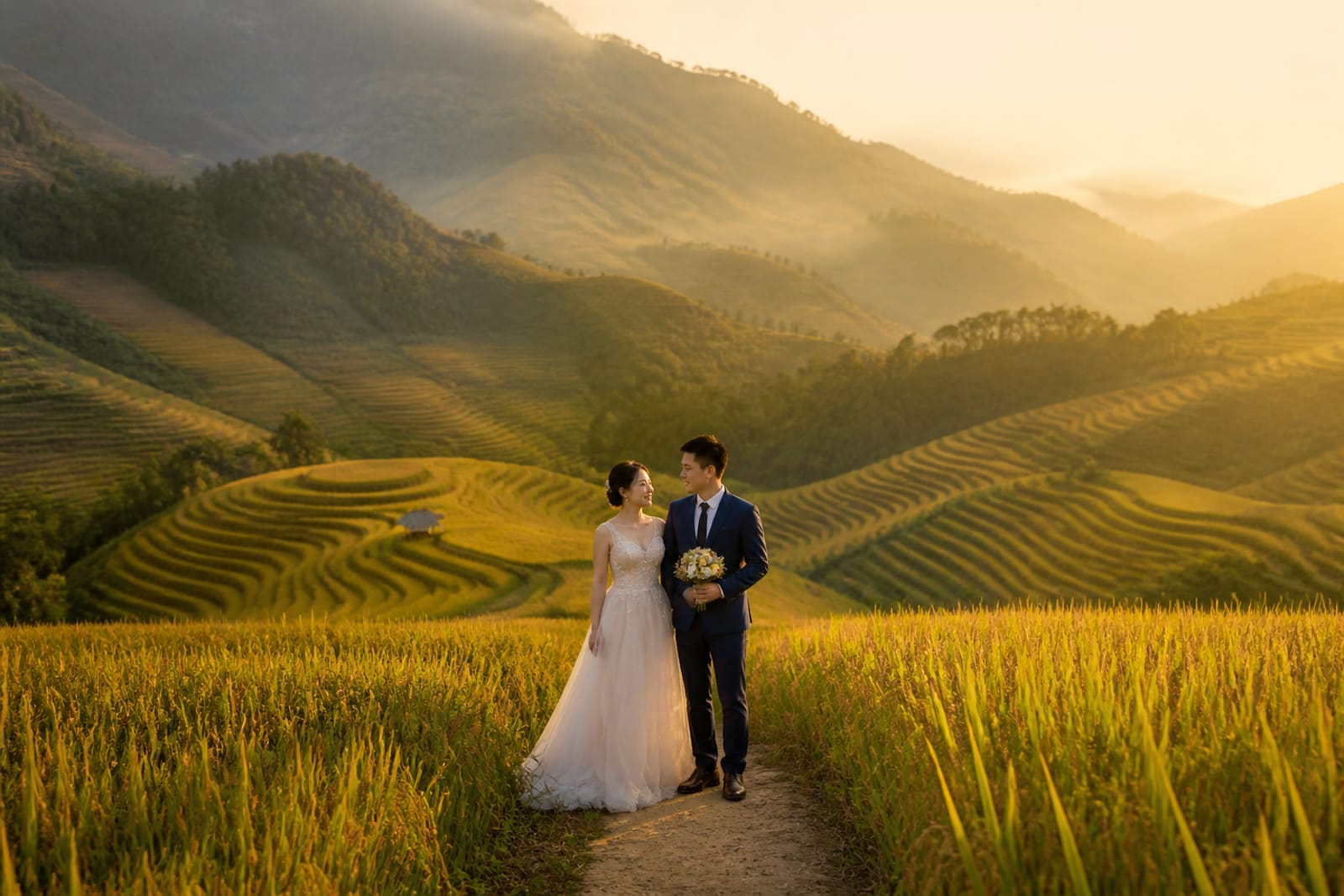
Mu Cang Chai has two premium windows: May to June, when water fills the terraces (mirrors the sky, soft reflections) and September to mid-October, when rice ripens to gold. Both compress into 6–8 weeks. Local photographers book up fast, and rates rise—sometimes by 30–50% compared to off-season months—because demand outpaces supply and the light conditions are exceptional. Winter (December–February) is dry and hazy; late summer (July–August) brings heavy rain and cloud; November sees typhoon risk and flooding. These months cost less, but you forfeit the signature Mu Cang Chai look: golden or silvered terraces, clear skies, and walkable paths.
A secondary timing factor: sunrise shoots (best light) require you to arrive before dawn; sunset (6–7 pm) avoids the overnight stay but brings harder, warmer light and shorter working window. A midday shoot is cheapest but produces harsh shadows across stepped terrain.
Decision: Book May–June or Sep–Oct if budget allows; expect higher rates. If you're flexible on light quality, off-season shoots cost less and book faster.
How do photographer fees differ between local Mu Cang Chai specialists and Hanoi teams?
A Hanoi-based photographer who travels to Mu Cang Chai operates under one model: they budget travel, add a markup, and quote per couple. A local Mu Cang Chai photographer (based in Van Chan district or nearby) works from home turf—no travel cost, existing guides, known light—so base rates may be lower, but their availability fills quickly in peak season. Neither is cheaper; they differ in knowledge and overhead.
Cáo Studio operates in Hanoi, Ho Chi Minh City, and Hoi An—not Mu Cang Chai. For a Hanoi-based team (Cáo or another studio) to shoot Mu Cang Chai, they absorb the 5-hour drive, overnight stay, and guide fees; this costs more than their city rates. For a local photographer, you negotiate directly and pay lower logistics costs, but you forfeit the studio's hair, makeup, and dress coordination that many couples expect in a pre-wedding photoshoot.
Your choice:
| Option | Best for | Overhead | Fit |
|---|---|---|---|
| Hanoi studio (travel) | Couples who want all-in: hair, makeup, dress, photos | Vehicle, lodging, guide, team time | Convenience; higher cost |
| Local Mu Cang Chai specialist | Couples who hire separate hair/makeup or self-style | Minimal; they're on-site | Lower base rate; local light knowledge |
| Solo freelance photographer from city | Budget-conscious couples willing to coordinate vendors | Shared vehicle or group transport | Cheapest logistics; requires you to manage other vendors |
What hidden costs should you budget for before booking?
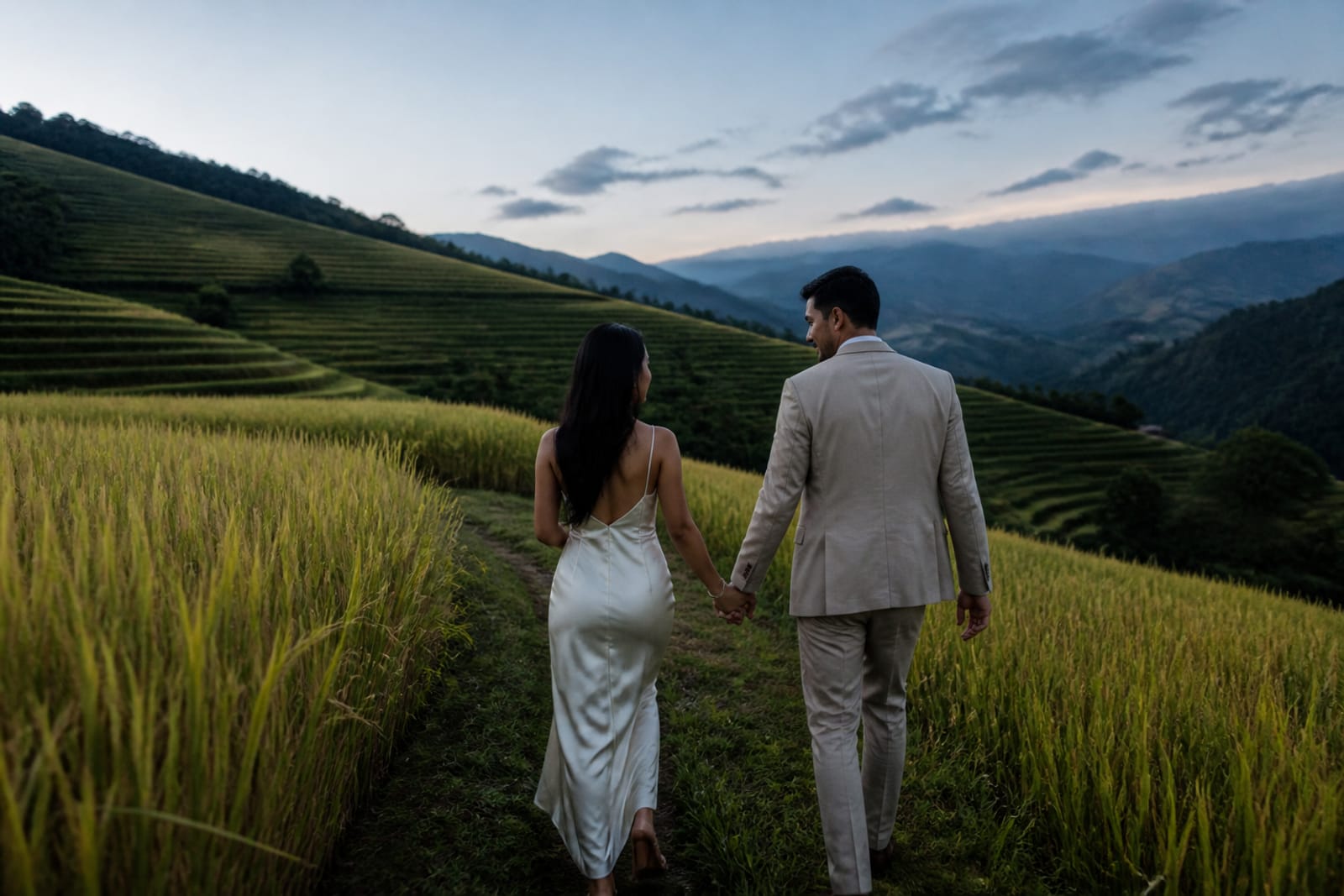
Beyond the photographer's fee, pre-wedding shoots in Mu Cang Chai incur expenses that differ from city sessions:
- Vehicle rental & fuel. If the photographer doesn't provide transport, a 4x4 or van for two days costs substantially more than a Hanoi taxi. Some teams split this across multiple couples; ask if a group shoot is available (cheaper per couple, less control over timing).
- Local guide. Many prime terraces require a guide to navigate safely and secure permission from locals. Budget this separately unless the photographer includes it.
- Overnight lodging. Your team needs rooms; homestays in Van Chan or Mu Cang Chai town are cheap (check local listings), but two nights for a Hanoi photographer's crew multiplies cost.
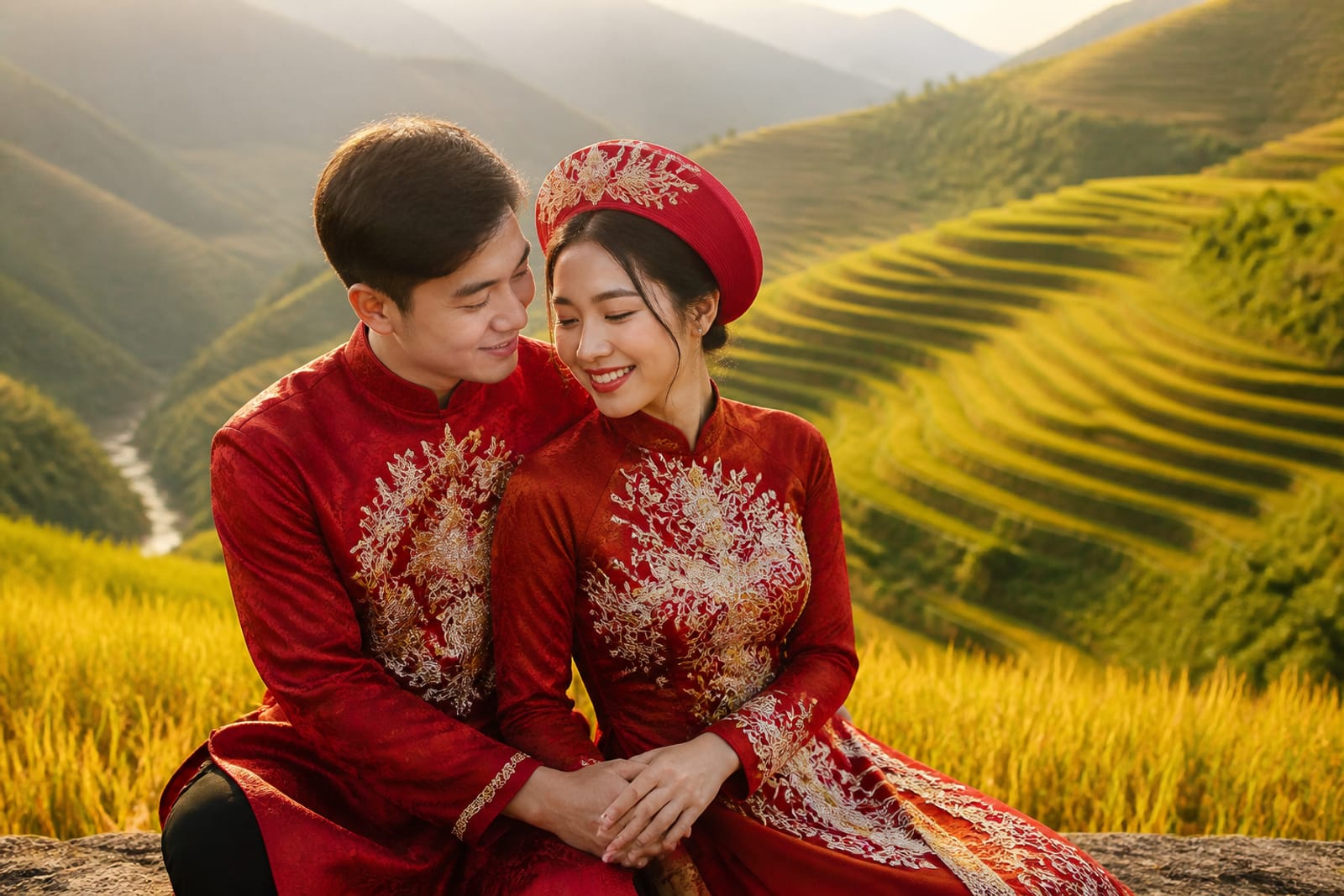
- Outfit transport & contingency. If you're bringing an áo dài or wedding dress, factor in a backup outfit (weather, terrain, mud). Hotel makeup and hair teams won't travel to remote valleys; you may need to self-style or find a local stylist.
- Meals & supplies. A long shoot day (dawn to midday) requires catering, water, and first aid for cuts on rocky terrain.
- Permit or cultural fees. Some villages expect a small gift or donation; ask your photographer.
Check before booking:
- Does the photographer's quote include vehicle, guide, and overnight lodging?
- What's the backup plan if weather closes the road or light fails?
- Are all your outfits transportable, or do you need a wardrobe-swap location?
- Is there a contingency budget (10–15% of total) for delays or last-minute changes?
How does one team versus multiple vendors affect your total cost?
A studio like Cáo—which brings photographer, hair, makeup, and styling in one booking—coordinates all logistics under one plan, one vehicle, one timeline. Stitching together a Mu Cang Chai photoshoot from separate vendors (photographer, hairstylist, makeup artist, dress rental) multiplies transport, communication delays, and last-minute misalignments. One vendor forgets the kit; another runs late; the photographer shoots in a direction that shadows your face because the stylist wasn't there to see the light. The hidden cost is time wasted and re-shoots needed.
Cáo Studio does not operate in Mu Cang Chai, but the principle applies: a couple photoshoot with in-house makeup and hair in Hanoi or Ho Chi Minh City costs less total than hiring three separate vendors—because one team anticipates, moves together, and solves problems on the fly. In a remote location like Mu Cang Chai, coordination friction is higher, so a single photographer who can also advise on hair and outfit fit saves you unexpected fees.
Bottom line: A local Mu Cang Chai photographer + you sourcing hair/makeup separately = cheaper upfront, costlier in hidden delays and re-shoot requests. A visiting studio team = higher upfront, faster turnaround, fewer surprises.
What questions should you ask a photographer before committing to Mu Cang Chai?
Before you request a quote from a local photographer or consider a Hanoi team, clarify these:
- Light and season. "What month do you recommend, and what does the landscape look like then?" Their answer shows local knowledge. Ask for a lookbook from that season.
- Logistics included. "Does your fee cover vehicle, guide, and overnight lodging, or are those quoted separately?"
- Backup weather plan. "If it rains the morning of the shoot, what's the reschedule policy?" Mountain weather changes fast; clarity avoids disputes.
- Outfit fit. "Can you advise on áo dài or dress fit for terrace walking, or should I bring practical alternatives?" A photographer unfamiliar with terrain may not catch that heavy fabrics tear on rocks.
- Deliverables and timeline. "How many edited photos, and when do I get them?" Cáo Studio delivers edits within 48 hours in-city; a Mu Cang Chai local may take longer if editing is outsourced.
- Group or private. "Are other couples shooting the same day?" Shared shoots split costs but limit exclusivity and light-time.
Ask these over WhatsApp or a video call before the formal quote. Their answers reveal whether they've managed pre-wedding shoots in mountain terrain or are new to it.
---
If you're set on a pre-wedding shoot in Mu Cang Chai and want a full-service experience with coordinated hair, makeup, and professional photography, consider booking a team in Hanoi or Ho Chi Minh City that can travel, or plan a pre-wedding photoshoot in a nearby accessible destination (Ninh Binh, Hoi An, or Hanoi Old Quarter) and save the Mu Cang Chai adventure for a vacation photoshoot with flexible timing and lighter logistics.
📸 Book a pre-wedding shoot in Hanoi or Saigon | 💄 Makeup & hair at your hotel | 🌸 See the lookbook
FAQ
Does Cáo Studio shoot pre-wedding sessions in Mu Cang Chai?
No. Cáo Studio operates in Hanoi, Ho Chi Minh City, and Hoi An. For Mu Cang Chai, this guide shows you how to find and vet a local photographer, and outlines cost factors to negotiate. Ask us on WhatsApp if you'd like a pre-wedding photoshoot in a city base instead.
What's the cheapest season to book a Mu Cang Chai photoshoot?
Off-season (November–April, excluding Tet) costs less because fewer couples book and local photographers have availability. You forfeit the iconic golden or silver-water terraces but save substantially on fees and logistics.
Can I hire a photographer in Hanoi and have them travel to Mu Cang Chai?
Yes. A Hanoi studio or photographer will add travel, overnight, and guide costs to their base rate. Ask upfront whether these are included or quoted separately before you commit.
How many hours should I book for a Mu Cang Chai pre-wedding shoot?
Most sessions run 4–6 hours (sunrise to midday) because light fades or becomes harsh after noon and the terrain is steep. A full-day shoot (sunrise to sunset) requires a mid-day rest and more logistics.
What should I wear under an áo dài on steep terraces?
Wear fitted, dark leggings or shorts that won't show under the fabric and won't catch on rocks or roots. Avoid heavy skirts or loose pants. Bring backup bottoms; mud and tears are common.
Does the photographer provide a stylized lookbook after a Mu Cang Chai shoot?
Most photographers deliver edited photos within 1–3 weeks. A wedding video or short film is less common unless you book it upfront. Ask for delivery timeline and final file count when you request a quote.
Can I combine a Mu Cang Chai shoot with a city pre-wedding session?
Yes. Some couples do a 2–3 day trip: one day in Hanoi with makeup, hair, and professional styling, then travel to Mu Cang Chai for a natural-light, off-the-beaten-path session. This spreads cost and outfits across two distinct looks.
FAQ
Does Cáo Studio shoot pre-wedding sessions in Mu Cang Chai?
No. Cáo Studio operates in Hanoi, Ho Chi Minh City, and Hoi An. For Mu Cang Chai, this guide shows you how to find and vet a local photographer, and outlines cost factors to negotiate. Ask us on WhatsApp if you'd like a [pre-wedding photoshoot](/pre-wedding-photoshoot) in a city base instead.
What's the cheapest season to book a Mu Cang Chai photoshoot?
Off-season (November–April, excluding Tet) costs less because fewer couples book and local photographers have availability. You forfeit the iconic golden or silver-water terraces but save substantially on fees and logistics.
Can I hire a photographer in Hanoi and have them travel to Mu Cang Chai?
Yes. A Hanoi studio or photographer will add travel, overnight, and guide costs to their base rate. Ask upfront whether these are included or quoted separately before you commit.
How many hours should I book for a Mu Cang Chai pre-wedding shoot?
Most sessions run 4–6 hours (sunrise to midday) because light fades or becomes harsh after noon and the terrain is steep. A full-day shoot (sunrise to sunset) requires a mid-day rest and more logistics.
What should I wear under an áo dài on steep terraces?
Wear fitted, dark leggings or shorts that won't show under the fabric and won't catch on rocks or roots. Avoid heavy skirts or loose pants. Bring backup bottoms; mud and tears are common.
Does the photographer provide a stylized lookbook after a Mu Cang Chai shoot?
Most photographers deliver edited photos within 1–3 weeks. A [wedding video](/wedding-video) or short film is less common unless you book it upfront. Ask for delivery timeline and final file count when you request a quote.
Can I combine a Mu Cang Chai shoot with a city pre-wedding session?
Yes. Some couples do a 2–3 day trip: one day in Hanoi with [makeup, hair, and professional styling](/makeup-and-hair), then travel to Mu Cang Chai for a natural-light, off-the-beaten-path session. This spreads cost and outfits across two distinct looks.
Ao dai, makeup, hair and a local photographer in Hanoi or Saigon — one WhatsApp message.