Cáo Studio · Mga gabay sa photoshoot sa Vietnam · Pre-Wedding Photoshoot Vietnam: Hanoi, Saigon & Hoi An Guide
Wedding photos at Da Lat Railway Station: light, season & booking guid
Cáo Studio team · Hanoi · 2026-10-03
Da Lat Railway Station (Ga Da Lat) sits in the Central Highlands — a cool, misty landscape that shoots best in dry season (Dec–Apr) with clear mornings and side light around 6–8 am. The platform, vintage train car, and arched brick station building offer cinematic depth, but the site requires early arrival (before 8 am to avoid foot traffic and coach tours). A local photographer or visiting team like Cáo Studio (based in Ho Chi Minh City) will coordinate timing and scout light angles beforehand; avoid midday harsh sun and plan outfit changes on the platform — the station itself has limited shelter. One team handling hair, makeup and camera in one session beats stitching three vendors together on a sloped platform in cool weather. Always confirm current access rules and whether the train operates on shoot day.
Da Lat Railway Station is not a museum backdrop — it is an active (though limited-schedule) heritage site where light changes minute by minute, crowds build after 8 am, and a wrong outfit choice leaves you cold in the highland wind. Pre-wedding couples choose it because the restored 1932 building and platform geometry create frames that feel editorial, not tourist-snapshot. This guide is written from the perspective of a director who has shot there in every season and knows what works, what fails, and when to book a local versus travel with a full team.
Why Da Lat Railway Station works for pre-wedding shoots — and when it doesn't
Does the light here suit your timeline? Da Lat sits at 1,500 m elevation; it is cool and often misty, especially Nov–Feb. Dry season (Dec–Apr) offers the clearest, most predictable light — crisp side light on the platform around 6–8 am, then increasingly harsh sun after 9 am. Rainy season (May–Nov) brings afternoon downpours and thick mist that erases the background; morning shoots can work if the mist clears by 7 am, but you are gambling. If you want bright, clean frames with the station's full stonework visible, book Dec–Apr. If you prefer moody, mist-wrapped shots, come in early rainy season (May–Jun) and arrive by 5:30 am — the mist often burns off by 7 am, leaving soft, diffused light. Spring (Jan–Feb) has occasional cherry blossoms in Da Lat town; winter (Dec–Feb) is coldest (10–15°C mornings), so brides need layering beneath the áo dài or a warm robe between setups.
Conclusion: Da Lat Railway Station is not an all-season location — dry season light and early morning are non-negotiable.
How to choose: local photographer, visiting team, or DIY with a friend
| Option | Best for | Light & timing | Why it works (or doesn't) |
|---|---|---|---|
| Solo local photographer (hired in Da Lat) | Budget-conscious couples, simple frame count | Knows peak-light windows; can move fast on platform | No makeup/hair on-site; you coordinate separately; may not speak English fluently; hard to vet from afar |
| Visiting team + makeup (e.g., Cáo Studio from HCMC) | Couples who want one contact, full creative control | Team scouts light 24 hours before; arrives with all gear & artists; moves intentionally through three shot types (wide, medium, detail) | Travel time from HCMC ~6 hours; higher overall cost (team accommodation, transport); requires 48–72 hour lead time |
| DIY with hired camera operator + borrowed áo dài | Elopements, intimate shots, friends as stylists | Flexible timing; no vendor stress | Platform is public; bystanders in frame after 8 am; no professional hair/makeup; light direction goes unused; edit-heavy workflow |
| Destination wedding vendor package (hotel + photographer + transport) | Couples planning multi-day Da Lat trip | Hotel manages logistics; photographer included | Generic poses; photographer may be tired (multiple clients per day); light windows missed due to rigid schedule |
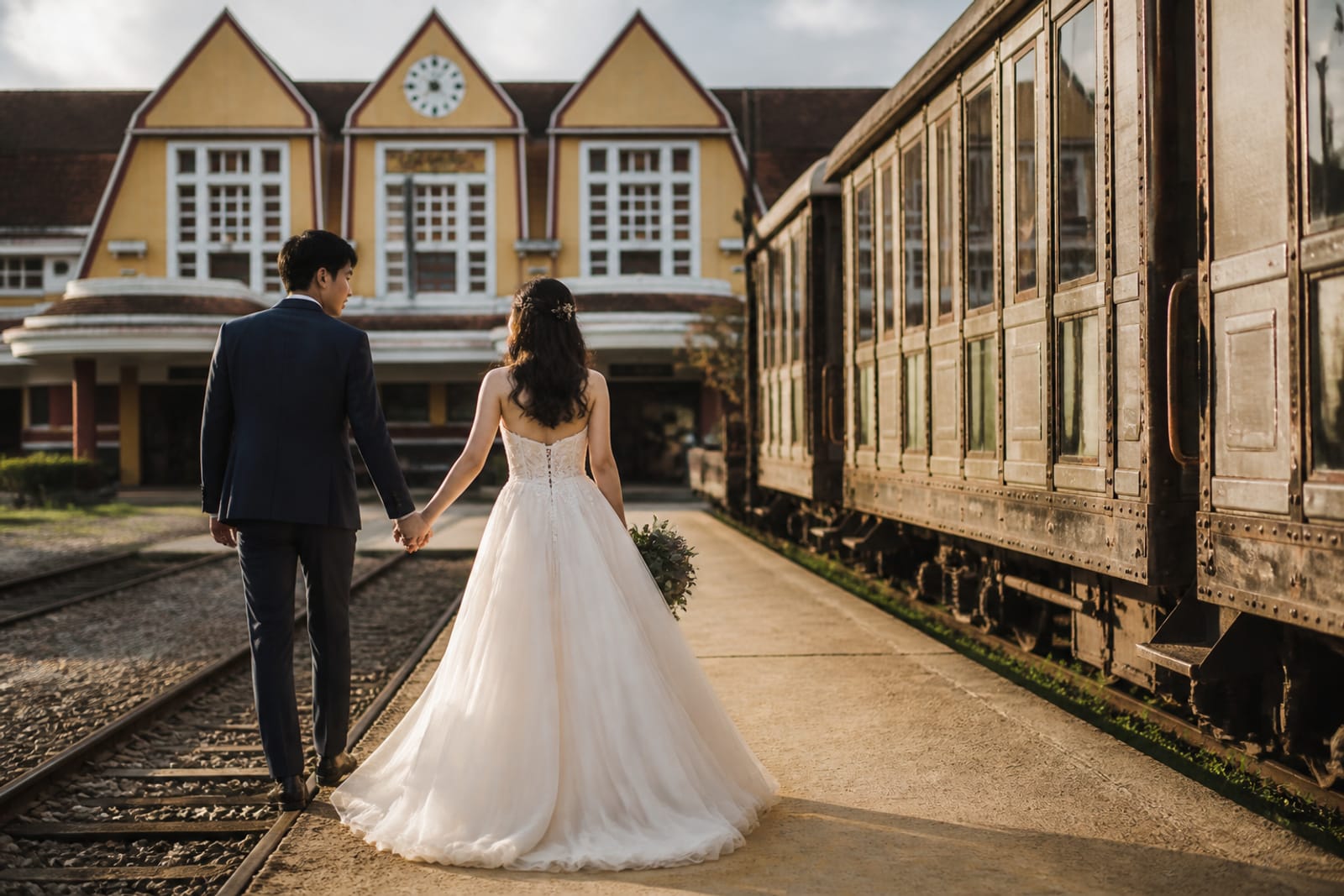
The core trade-off: control and creative direction versus speed and cost. A visiting full-service team (makeup, hair, one photographer, one director) gives you one message across outfit, styling, and framing — the platform geometry is shot wide-first (entry shot), then medium (couple walking or posed on steps), then detail (hands, dress fold, station clock). A local photographer is faster to book and cheaper, but you assemble the team yourself and risk misaligned vision on a tight schedule.
Conclusion: choose based on whether you want one integrated creative direction or whether you're comfortable coordinating vendors separately.
What to wear: layering, áo dài fit, and platform safety
Da Lat in winter (Dec–Feb) can feel like autumn in Manila — cool, windy, and unpredictable. An áo dài in silk or cotton (not velvet) works well, but you need a warm layer underneath or a robe between shots. Modern couples wear:
- Áo dài + long slip (avoid thin fabrics that blow in highland wind; silk holds shape better than cotton in movement)
- Layered traditional: áo dài over a lightweight thermal shirt in matching tone, hidden by the outer layer
- Groom: formal áo dài or tailored Western suit (if Western, a structured blazer + tailored trousers, not casual; the platform has strong lines — clothes need to match that sharpness)
- Accessories: avoid dangling jewelry that catches light or tangles in fabric; platform-safe shoes (the brick is sloped and uneven; heels catch; opt for flat or slight-heel close-toe shoes)
Platform logistics: the station platform slopes downhill toward the tracks. A bride in a floor-length áo dài needs to walk slowly and be spotlit from the side (the photographer shoots her walking down-slope, not climbing). Groom walks beside, slightly ahead, so light hits both of you evenly. Train-car interior is dark and cramped — light from doorway only, so position yourself in the doorway for silhouette or ambient-light shots, not inside the car.
Do not shoot mid-platform (center) unless the train is present — the background is boring track. Shoot the arched station entrance, the brick alcoves near the platform edge, or the train-car door frame. A director worth their fee will have scouted these pockets the day before.
Conclusion: dress in layers, choose stable footwear, and trust the photographer to avoid the platform's flat, exposed zones.
Timing, crowds, and permits: the truth about shooting before 8 am
Da Lat Railway Station opens early, and the platform is accessible to visitors year-round. However:
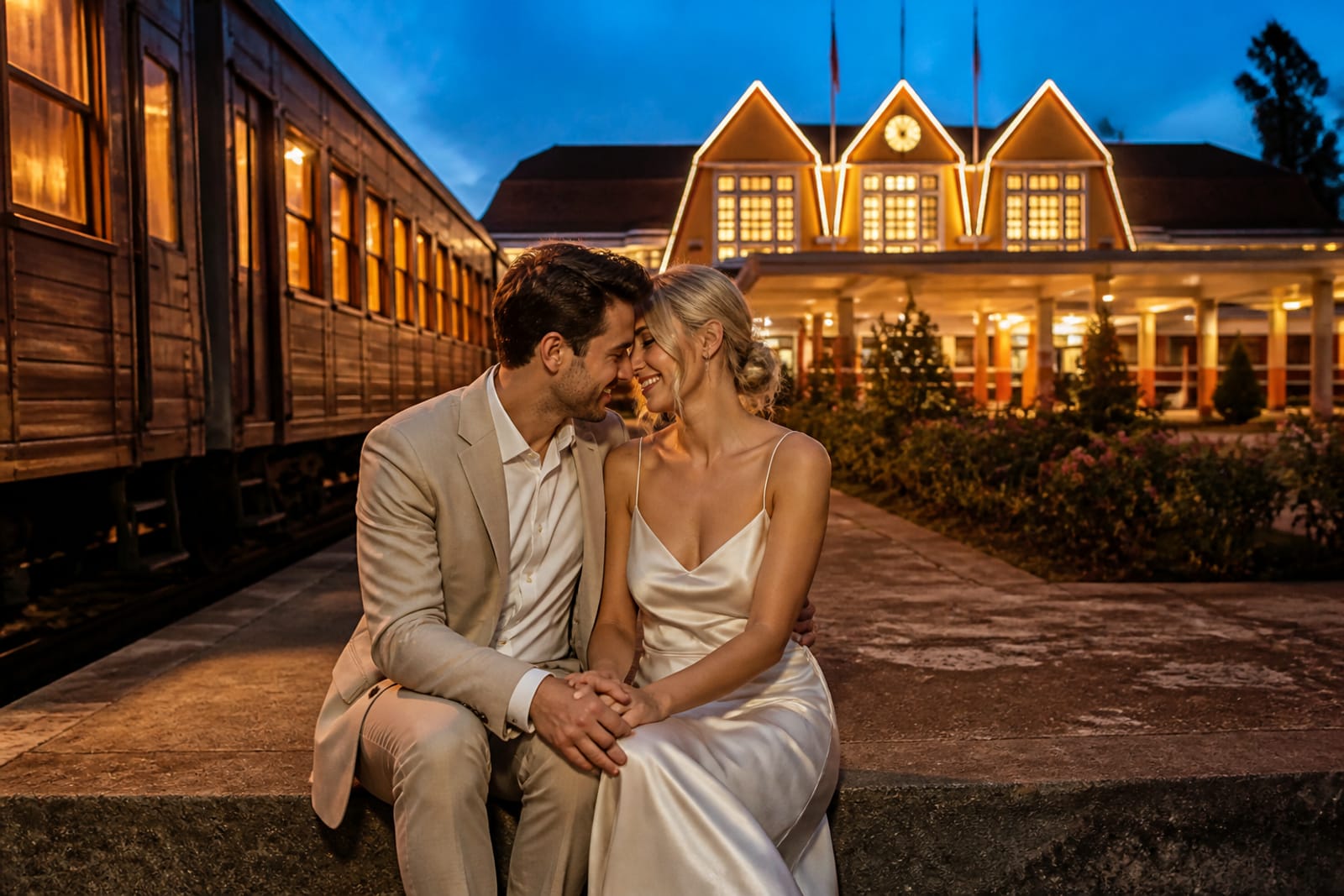
- Before 7 am: almost no foot traffic; cool, calm light; mist often present (Dec–Feb). Early tour groups arrive around 8 am, so if you're set up by 6:30 am, you have a 90-minute window of near-solitude.
- 7–9 am: light is directional and soft; domestic tourists begin arriving; stray bystanders in wide shots are likely.
- After 9 am: harsh sun overhead; tour coaches park nearby; platform crowded. Not viable for pre-wedding shoots unless you're using the crowd itself (rare, risky).
Permit / access: there is no specific "wedding shoot permit" for the station. You are shooting on the public platform. The station staff may approach if they see a professional setup (tripod, reflectors, posed shots); being respectful, brief, and offering a small thank-you gesture (coffee, snacks) helps. A local photographer knows the station-master by name and has cleared this informally; a visiting team should arrive 15 minutes early to greet the staff, explain the shoot, and show a quick portfolio frame.
Train schedule: trains are infrequent — the station is heritage, not commuter. Check the current Da Lat Railway schedule online before booking. If a train is present on your shoot day, use it as a prop (platform framing, doorway silhouettes); if not, the station itself is rich enough.
What to avoid: do not block the platform; do not interrupt actual passengers; do not attempt a formal sit-down ceremony (the station is public, not a event venue). Keep the shoot mobile — walk, pose mid-stride, use the architecture as a frame, keep it under 2 hours.
Conclusion: book a pre-dawn (5:30–7:30 am) slot in dry season, confirm train presence, and brief the staff on arrival.
Cáo Studio's approach: how a visiting team works from Ho Chi Minh City
Cáo Studio is based in Hanoi and Ho Chi Minh City. For Da Lat shoots (a 6-hour drive from HCMC), the team:
- Schedules a 48-hour lead: you confirm the date; the director travels to Da Lat the afternoon before to scout light, test camera angles, and meet the station staff.
- Coordinates on-site services: hair and makeup happen at your hotel (nearby) before 5 am, so you arrive at the platform camera-ready by 5:45 am. (See makeup & hair at your hotel for specifics.)
- Shoots in three phases: wide shots first (you entering the platform, walking the perimeter, framing the arch); medium shots (couple close, details of the dress and light); detail shots (hands, clock, station signage, fabric texture). This sequence takes ~90 minutes.
- Delivers in 48 hours: edited photos plus a short vertical film. No separate editor, no middle vendors — one team, one voice.
Da Lat is not Cáo Studio's home city, so it is treated as a destination package. Cost factors include: team accommodation (one night), transport from HCMC, 48-hour on-call scouting, and makeup/hair coordination. A quote is sent on WhatsApp after you confirm the date and style (áo dài, Western formal, mixed outfits).
If you are based in or travel from Ho Chi Minh City, a visiting team reduces coordination chaos and ensures light is not missed due to vendor miscommunication. If you live in Da Lat or arrive a week early, hiring a local photographer is faster and allows you to change the date if weather fails.
Conclusion: a visiting full-service team trades cost and lead time for creative cohesion and a single creative director.
What to check before you book: a pre-shoot checklist
Use this checklist before confirming your session:
- Light forecast: check the weather 1 week out; if mist or rain is heavy, discuss rescheduling with your photographer. (Da Lat weather is unpredictable; flexibility saves disappointment.)
- Platform access: call the station or ask your local photographer — confirm the platform is open on your date and that no maintenance is scheduled.
- Train schedule: check online; if a train arrives during your shoot window, use it. If not, focus on the building.
- Outfit fittings: if wearing an áo dài (rented or owned), try it on and walk the station stairs or slope in it before the shoot day. Does the hem drag? Do the sleeves restrict arm movement? Adjust in advance.
- Hair & makeup timing: if hiring a local vendor, confirm they can arrive at your hotel by 4:30 am for a 5:45 am platform arrival. If using a visiting team, confirm accommodation and makeup-slot details on WhatsApp.
- Backup date: set a rain date 2–3 weeks out. Da Lat in rainy season requires this; dry season is more forgiving.
- Shoes & accessories: test your footwear on the slope beforehand. Slippery soles are dangerous; platform uneven; you need stable footing for the photographer to shoot movement safely.
- Phone / emergency: carry a power bank and a light layer. Platform is exposed; weather changes fast.
Honest reality: Da Lat Railway Station is a gorgeous, unusual backdrop, but it is not a controlled environment. Wind, mist, and public foot traffic are features, not bugs — they make the frames feel alive. Budget flexibility and trust your photographer's judgment calls in the moment.
Conclusion: go in prepared, flexible, and with one trusted creative lead — not a checklist of rigid ideas.
---
📸 Book on WhatsApp — ao dai photoshoot | 💄 Makeup & hair at your hotel | 🌸 Ideas & lookbook
---
If you're a couple choosing your first pre-wedding shoot, Da Lat Railway Station is a strong choice if you want an off-the-beaten-track, cinematic backdrop. It is not about luxury resort decor or manicured gardens — it is about light, architecture, and the quiet discipline of one team moving intentionally through a space. Learn how Cáo Studio's pre-wedding & elopement packages work, or browse couple & family photoshoot ideas if you're thinking beyond the wedding itself.
For outfit inspiration, see áo dài photoshoot if you're leaning traditional, or wedding dress rental if Western formal suits your vision. And if this shoot is part of a bigger trip — family photos, engagement, honeymoon frames — vacation & solo photoshoot and family photoshoot pages have ideas too.
FAQ
Is Da Lat Railway Station free to shoot, or do I need a permit?
The platform is public and free. No wedding permit required. The station staff may approach if you have a professional setup; polite engagement and a thank-you gesture (coffee, snacks) are customary. Confirm current access rules with a local photographer or the station ahead of time.
What month has the best light for pre-wedding photos at Da Lat Railway Station?
December to April (dry season) offers the clearest light and fewest rainy days. Early mornings (5:30–7:30 am) in this window have side light that defines the stone architecture and dress detail. Jan–Feb is coldest; bring layers beneath the áo dài or a warm robe.
Can I shoot in rainy season (May–Nov) and get good frames?
Yes, but with conditions. Mist and soft diffusion can look editorial — book early morning (5:30 am) when mist often clears by 7 am. Afternoon showers are likely; have a backup date ready. Dry season is far safer if you want predictable light.
Should I hire a photographer in Da Lat, or bring a team from Ho Chi Minh City?
If budget is tight and you want fast booking, hire locally — a Da Lat photographer knows the station intimately. If you want one integrated creative direction (hair, makeup, styling, photography, direction from one team), bring a visiting team from HCMC. Cost factors differ; ask Cáo Studio for a quote on WhatsApp.
How early do I need to arrive for the best light and fewest crowds?
Arrive by 5:45 am; the photographer should be set up by 5:30 am. The platform is nearly empty before 7 am; after 8 am, tour groups arrive. A 90-minute window before 8 am is ideal. Allow 30 minutes travel time from your hotel.
Can I wear a Western wedding dress, or should it be an áo dài?
Both work. An áo dài (traditional) photographs beautifully on the colonial platform and blends with the heritage aesthetic. A Western dress is striking in bright light and makes the platform geometry more dramatic. Discuss outfit choice with your photographer beforehand; they will frame it accordingly. Avoid heavy fabrics in highland wind.
What happens if the weather is bad on my shoot day?
Agree on a rain date before booking — set it 2–3 weeks out. Da Lat weather is unpredictable, especially May–Nov. A professional photographer will advise you 24 hours before if conditions look unshootable; rescheduling is better than harsh shadows or low mist.
How long does a pre-wedding shoot at Da Lat Railway Station take?
Typically 90 minutes to 2 hours, from arrival to final frame. This covers wide shots (entry, platform walk), medium shots (couple poses, movement), and detail shots (dress, station features). Makeup and hair happen at your hotel beforehand, not on-site.
Mga karaniwang tanong
Is Da Lat Railway Station free to shoot, or do I need a permit?
The platform is public and free. No wedding permit required. The station staff may approach if you have a professional setup; polite engagement and a thank-you gesture (coffee, snacks) are customary. Confirm current access rules with a local photographer or the station ahead of time.
What month has the best light for pre-wedding photos at Da Lat Railway Station?
December to April (dry season) offers the clearest light and fewest rainy days. Early mornings (5:30–7:30 am) in this window have side light that defines the stone architecture and dress detail. Jan–Feb is coldest; bring layers beneath the áo dài or a warm robe.
Can I shoot in rainy season (May–Nov) and get good frames?
Yes, but with conditions. Mist and soft diffusion can look editorial — book early morning (5:30 am) when mist often clears by 7 am. Afternoon showers are likely; have a backup date ready. Dry season is far safer if you want predictable light.
Should I hire a photographer in Da Lat, or bring a team from Ho Chi Minh City?
If budget is tight and you want fast booking, hire locally — a Da Lat photographer knows the station intimately. If you want one integrated creative direction (hair, makeup, styling, photography, direction from one team), bring a visiting team from HCMC. Cost factors differ; ask Cáo Studio for a quote on WhatsApp.
How early do I need to arrive for the best light and fewest crowds?
Arrive by 5:45 am; the photographer should be set up by 5:30 am. The platform is nearly empty before 7 am; after 8 am, tour groups arrive. A 90-minute window before 8 am is ideal. Allow 30 minutes travel time from your hotel.
Can I wear a Western wedding dress, or should it be an áo dài?
Both work. An áo dài (traditional) photographs beautifully on the colonial platform and blends with the heritage aesthetic. A Western dress is striking in bright light and makes the platform geometry more dramatic. Discuss outfit choice with your photographer beforehand; they will frame it accordingly. Avoid heavy fabrics in highland wind.
What happens if the weather is bad on my shoot day?
Agree on a rain date before booking — set it 2–3 weeks out. Da Lat weather is unpredictable, especially May–Nov. A professional photographer will advise you 24 hours before if conditions look unshootable; rescheduling is better than harsh shadows or low mist.
How long does a pre-wedding shoot at Da Lat Railway Station take?
Typically 90 minutes to 2 hours, from arrival to final frame. This covers wide shots (entry, platform walk), medium shots (couple poses, movement), and detail shots (dress, station features). Makeup and hair happen at your hotel beforehand, not on-site.