Cáo Studio · Mga gabay sa photoshoot sa Vietnam · Pre-Wedding Photoshoot Vietnam: Hanoi, Saigon & Hoi An Guide
Wedding photos sa Muong Hoa valley rice terraces, Sapa: step-by-step g
Cáo Studio team · Hanoi · 2026-10-03
Muong Hoa valley, outside Sapa town (northwest Vietnam), is a terraced rice landscape best shot at sunrise (6:00–7:30 am) or late afternoon (4:00–5:30 pm) when side light sculpts the curves. Pre-wedding shoots here work best May through early October when fields are full or turning gold; avoid Dec–Feb (fog) and September's typhoon risk. A session takes 2–3 hours on foot, so book a photographer experienced in mountain terrain and pack layers—morning mist rises fast, temperatures drop, and paths are uneven. Cáo Studio does not operate in Sapa; instead, we offer pre-wedding shoots in Hanoi, Ho Chi Minh City and Hoi An, where we control light and styling end-to-end. If your heart is set on Muong Hoa, hire a local Sapa guide-photographer and use this guide to plan light, outfit and timing.
Muong Hoa valley is a 10-minute motorbike ride southwest of Sapa town. The valley is a series of cascading rice paddies that fall toward a distant mountain ridge. On clear mornings, the light is soft and comes from the side, carving shadow into each terrace step. On overcast days, the whole valley glows evenly—no drama, no depth. This matters: your wedding photos live or die by the light.
Most international couples who come to Sapa for wedding photos have one of two images in mind: terraces flooded knee-deep in May (reflections, mirror effects) or terraces turning gold in late September (harvest). Both are real. Both require timing, footwork and a photographer who has done this before. Many wedding photographers based in Hanoi or Ho Chi Minh City will say yes to a Sapa shoot; few have stood in Muong Hoa at 6 am on a June morning and know how fog rolls, where the light clears first and which terrace steps are stable under an ao dai hem.
Kailan ang liwanag ay best para sa wedding photos sa Muong Hoa?
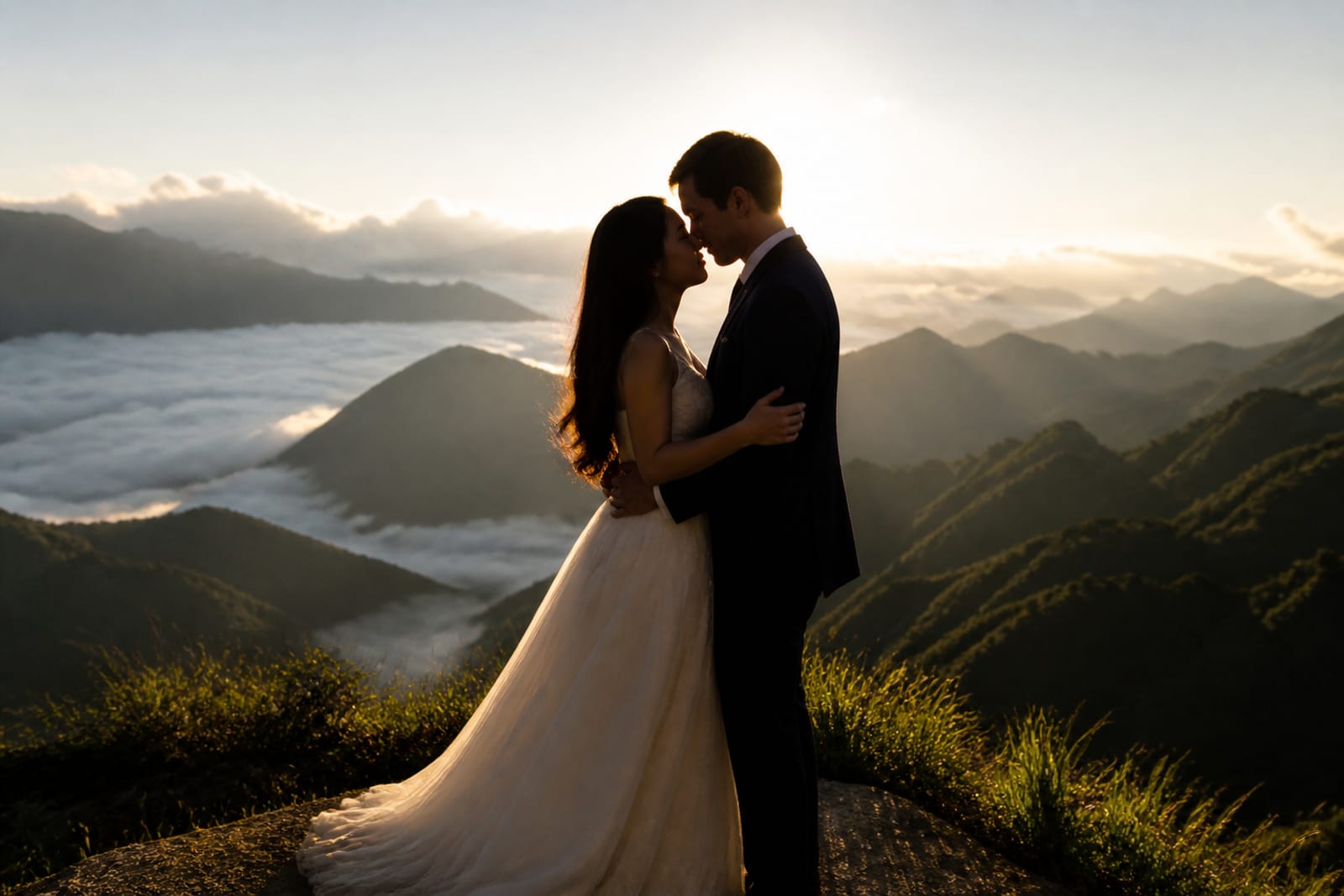
Sunrise (5:50–7:30 am) offers the softest, warmest light. At 6:10 am, the sun hits the eastern ridge and light slides down the terraces from above. Shadows are long and side-lit—the curves of each paddy field cast dark lines that separate one step from the next. This is the frame people remember: you two walking along a terrace edge, light on one side of your face, the valley floor below. The catch: you must be on location by 5:45 am. That means a jeep pickup from your hotel at 5:15 am, a cold motorbike ride uphill, and layers you can shed as the sun warms things. Fog often lingers until 6:30 or 7:00 am, so a skilled photographer works with the mist—silhouettes, diffused light, intimate framing—rather than waiting for it to clear.
Late afternoon (4:00–5:30 pm) is quieter and easier logistically. Light comes from the west and is warmer (more amber). Shadows point eastward. The downside: terraces often fill with tour groups by 3 pm, and the light is more contrasty (harder to expose for both sky and face). This works if your photographer knows how to meter and use reflectors, or if you embrace the golden-hour backlighting style.
Conclusion: sunrise wins for romance and soft line-work; afternoon is a practical second choice if mornings are too logistically tight.
Alin na season ang most photogenic para sa Muong Hoa rice terraces?
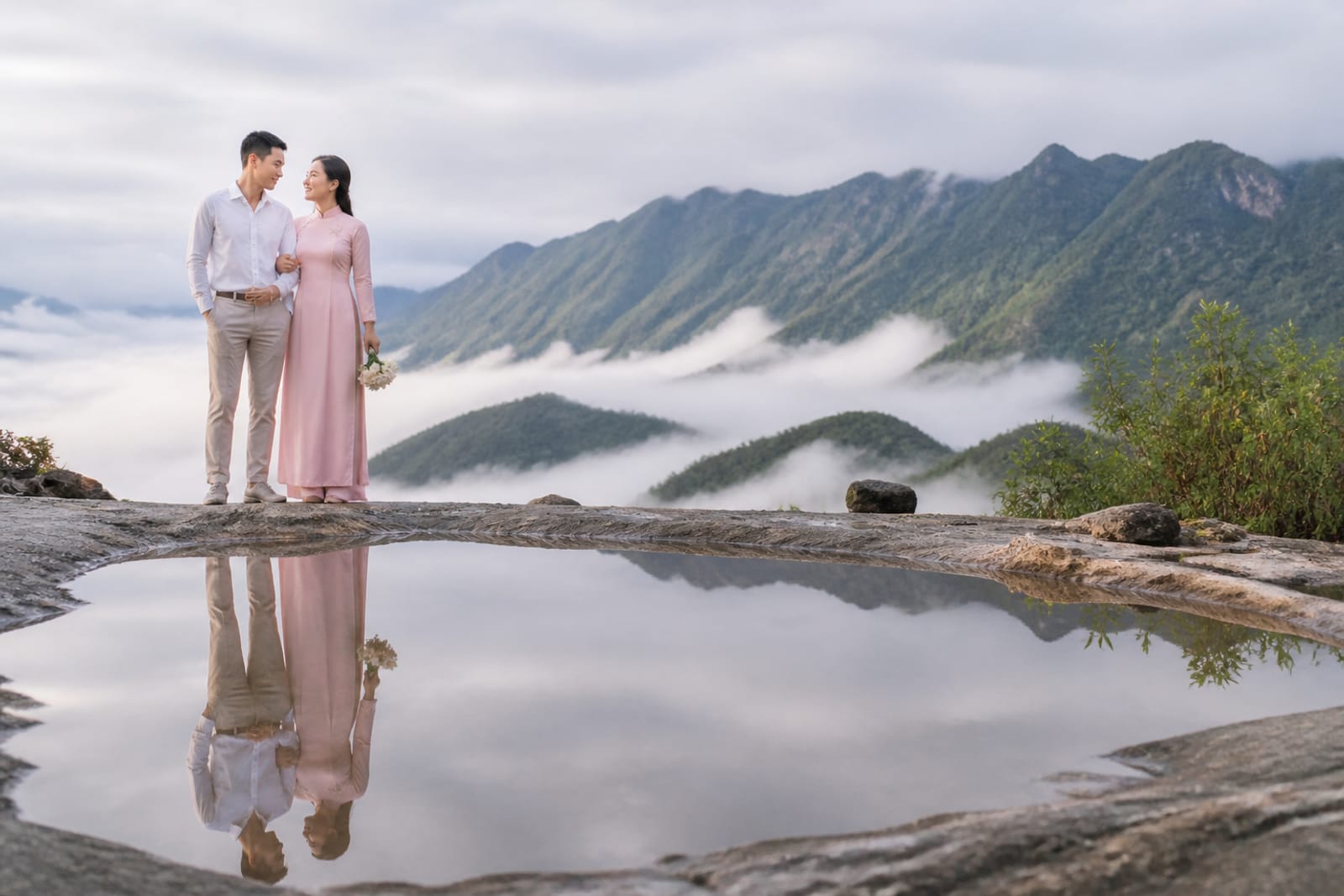
May (May throughout; monsoon begins late May), June, July, early August: terraces are flooded or freshly planted. Fields are emerald green. Water mirrors the sky. Paths are muddy and your ao dai hem will be wet. The light is softer (more cloud cover typical) but diffused, sometimes flat. This is the reflections season.
Mid-August through early October: fields are taller (heading toward harvest). Late September through early October (golden rice, pre-harvest) is the iconic postcard moment. Light is drier, clearer, warmer. Paths are dry. Crowds peak here. Book a local photographer weeks ahead if you want late September.
November through February: cool, foggy, often grey. Terraces are dormant or newly planted (muddy). December–January temperatures drop to 10–15°C. Frost is possible. Fog rarely lifts before 9 or 10 am. Only book this season if moody, mist-shrouded frames appeal to you and your photographer has winter-fog portfolio work.
March, April: warm, clear, unpredictable rain. Good light windows exist but are shorter and less reliable.
Conclusion: May–early June (green) and late September–early October (gold) are the strongest seasons; Feb–March is atmospheric only if you love fog.
Paano mag-outfit para sa Muong Hoa wedding shoot para sa comfort at mga photo?
An ao dai is iconic for Sapa wedding shots. The áo dài's fitted bodice and flowing silk skirt photograph beautifully against open landscape and move well in side light. Book ao dai rental through a Sapa tailor or arrive with your own; confirm that the hem is short enough to clear muddy or wet paths but long enough to frame the leg. Wear silk inner trousers (part of áo dài tradition) or request a fitted slip to reduce wind flutter. Underneaths: a plain white or neutral silk camisole keeps the frame clean and temperature-regulated as you move between sun and shade.
For the groom: fitted trousers (dark), a white shirt or linen overshirt, and a waistcoat or light jacket if the morning is cool. Avoid heavy fabric—the walk uphill to the best terraces is 15–20 minutes of climbing. Boots or sturdy flat shoes (not heels) are essential; stone steps are wet and uneven.
Accessories: a small shawl or pashmina for both of you (wraps keep the frame sophisticated and provide warmth as mist clears). Skip bags—a photographer or guide carries water and a phone.
Weather layers: bring a thin long-sleeved layer to pull on at 5:45 am. By 7:00 am, the sun will warm you enough to remove it. Humidity means your hair and makeup will shift; work with a makeup and hair artist familiar with mountain humidity and request a lightweight, sweat-resistant approach—not heavy powder or rigid styling.
Conclusion: áo dài + fitted undergarments + weatherproof shoes + one wrap layer = photogenic and functional.
| Option | Best for | Light window | Why it works |
|---|---|---|---|
| Sunrise, May–June (green) | romantic, soft, reflections | 6:00–7:00 am | Mist diffuses; water mirrors sky; solo silhouettes pop |
| Sunrise, late Sept–early Oct (gold) | crisp, warm, harvest drama | 5:50–7:00 am | Clear air; golden rice; shadow depth; most iconic season |
| Late afternoon, year-round | accessible, amber tone | 4:00–5:30 pm | Less logistically demanding; warm backlight; fewer crowds past 4:30 pm |
| Winter fog, Dec–Feb | moody, intimate, atmospheric | 7:00–9:00 am (variable) | Soft overcast; layered silhouettes; fewer tourists; couples seeking quiet mood |
Paano humanap ng experienced photographer para sa Muong Hoa?
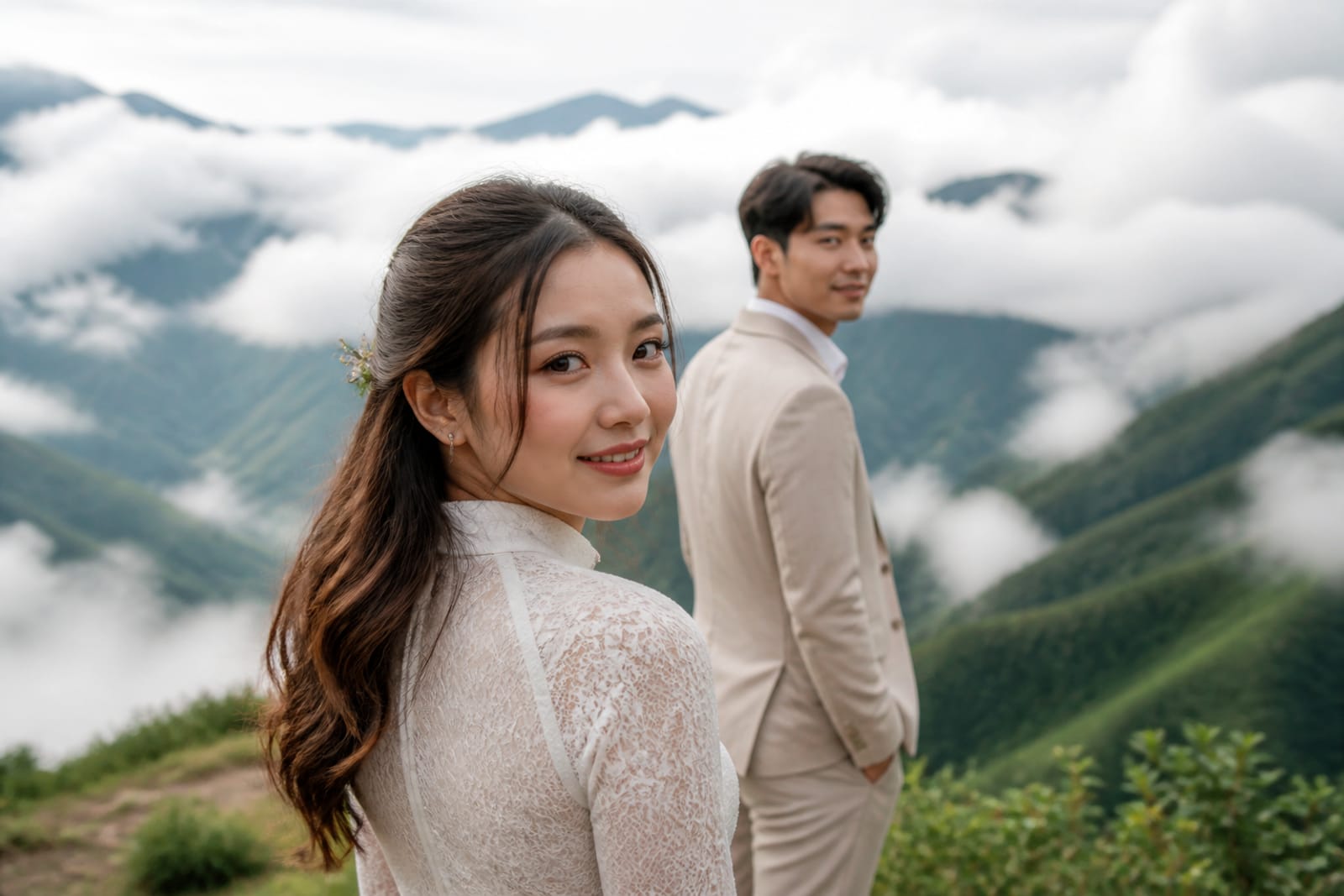
A Muong Hoa pre-wedding shoot is not a walk-in option. You need a photographer or guide who has done this before, owns a 4WD or motorbike to access the high terraces, and understands how light moves through the valley hour by hour. Start by asking your hotel for local photographer recommendations. Vet portfolios: look for images taken in Muong Hoa or similar terraced terrain, with attention to light, composition and the subject's comfort. Ask directly: "Have you shot here in the season I'm visiting? Do you know which terraces catch light first? Can you work in fog or overcast?" A photographer who pauses and gives you specific answers (e.g., "In June, the mist clears over the eastern ridge by 6:45 am; I shoot wide from the top terrace, then move to the side for profiles") knows the place.
Alternatively, book a guided tour company that offers photography sessions; some Sapa operators pair you with a local photographer and a valley guide. Confirm that the photographer has a camera bag, spare batteries and a weather-safe lens plan—mountain light changes fast and a kit that works in clear dawn may fail in mist.
If you want a seamless experience with one team (photographer + makeup + styling + a single creative direction), Cáo Studio does not operate in Sapa but offers full pre-wedding shoots in Hanoi, Ho Chi Minh City and Hoi An. In those cities, one creative director oversees light, outfit and framing from start to finish.
Conclusion: hire local, vet portfolio work in that valley, ask specific light-and-season questions, and confirm logistics (transport, backup kit, weather contingency).
Ano ang red flags at practical checklist bago mag-book ng Muong Hoa shoot?
What to check before you commit:
- Photographer's insurance and liability. Mountain terrain carries risk (wet steps, uneven ground, motorbike transport). Confirm the photographer is insured and communicates safety protocols.
- Season timing. Confirm the photographer has portfolio work from your chosen season. Spring portfolios may not reflect monsoon light; winter portfolios may not show golden-season contrast.
- Transport plan. Will the photographer arrange or coordinate jeep/motorbike access? Will you meet at the hotel or a trailhead? Will they guide you through the valley or just photograph you moving along pre-chosen paths?
- Weather contingency. What happens if fog doesn't lift or rain arrives? Do you reshoot at a different time or location? Is a partial refund an option?
- Outfit and makeup. Confirm the photographer has experience working with áo dài and mountain humidity. Ask if they recommend a makeup or styling consultation beforehand.
- Deliverables and timeline. How many edited photos will you receive? When? Digital-only or printed album option? Ask in writing so expectations are clear.
- Backup gear. Does the photographer carry an extra camera body, lens or battery pack? Mountain weather is unpredictable.
Red flags:
- Photographer has no Sapa/Muong Hoa work in their portfolio.
- They promise "guaranteed perfect light" or "no fog" (light and weather are not guarantees).
- They avoid questions about season-specific shooting or weather contingency.
- They do not mention a backup transport or communication plan for your Sapa logistics.
Conclusion: ask direct, specific questions and request answers in writing before signing any contract.
---
📸 Book on WhatsApp — pre-wedding photoshoot | 💄 Makeup & hair at your hotel | 🌸 Ideas & lookbook
---
If Muong Hoa's mountain logistics feel too complex or you prefer a shoot where one team handles every detail—light, outfit, hair, makeup and camera—consider booking a pre-wedding session in Hanoi, Ho Chi Minh City or Hoi An with Cáo Studio. In those cities, we scout light, manage styling, and deliver edited frames in 48 hours. No hidden variables, no local coordination needed. Or use this guide to plan a Muong Hoa shoot with a local photographer and return home with frames that only those terraces can offer.
FAQ
Paano nag-iba ang Muong Hoa light sa iba't ibang oras ng taon?
May–early June brings soft, green light with cloud cover and reflections on flooded fields. Late September–early October offers clear, warm, golden light with shadow depth. Winter (Dec–Feb) is grey and foggy. Spring (Mar–Apr) and summer monsoon (late May–August) have unpredictable clouds. Sunrise light is softest year-round if you can book an early start.
Safe ba ang pre-wedding photoshoot sa Muong Hoa para sa couples sa heels o formal gowns?
Hindi. Muong Hoa terraces have uneven stone steps, wet paths and steep climbs. Heels will slip; heavy gowns will snag or mud-stain. Wear flat, grippy shoes and breathable fabric (áo dài, linen) or a styled wedding dress designed for movement. Test your outfit and footwear on a practice walk before the shoot day.
Ilang oras ang haba ng typical Muong Hoa pre-wedding session?
Karamihan ay 2–3 oras on foot. Includes a 15–20 minute climb to the main terrace, 60–90 minutes of shooting (movement, poses, light changes), and descent. Add 30 minutes for travel from Sapa town. Early starts (sunrise) mean a 4:30–5:00 am hotel pickup.
Mayroon na ba akong backup plan kung nag-rain o fog buong araw?
Magtanong sa photographer bago mag-book: do they offer a reshoot date, a partial refund or an alternative location (e.g., a nearby ridge or Sapa town backdrops)? Confirm this in writing. May schedule flexibility (extra days in Sapa) kung walang guarantee ang weather.
Magkano ang typical cost ng Muong Hoa pre-wedding shoot with a local photographer?
Presyo ay nag-vary depending on photographer experience, number of hours, number of edited photos, and whether makeup at styling ay included. Ask directly sa local photographers o tour operators sa Sapa; prices shift by season and demand. Cáo Studio does not shoot in Sapa but can quote pre-wedding sessions in Hanoi, Ho Chi Minh City or Hoi An on WhatsApp.
Kailangan ba namin ng visa o permit para mag-shoot sa Muong Hoa valley?
Walang special permit kailangan para sa personal pre-wedding photoshoot. Muong Hoa ay accessible via Sapa town. Commercial/professional shoots may require local permission—check with your photographer or Sapa travel authority if unsure. Tourist visas (e-visa or on-arrival) cover your time.
Puwede ba kaming mag-hire ng makeup artist at stylist specifically para sa mountain shoot?
Oo. Maraming Sapa salons ay nag-offer ng bridal makeup at styling; tanungin ang hotel mo para sa recommendations. O, magtanong sa photographer kung may trusted makeup artist sila na experienced sa mountain humidity at áo dài. Ask for portfolio work in similar terrain. Cáo Studio's makeup and hair service covers Hanoi and Ho Chi Minh City only, hindi Sapa.
Mga karaniwang tanong
Paano nag-iba ang Muong Hoa light sa iba't ibang oras ng taon?
May–early June brings soft, green light with cloud cover and reflections on flooded fields. Late September–early October offers clear, warm, golden light with shadow depth. Winter (Dec–Feb) is grey and foggy. Spring (Mar–Apr) and summer monsoon (late May–August) have unpredictable clouds. Sunrise light is softest year-round if you can book an early start.
Safe ba ang pre-wedding photoshoot sa Muong Hoa para sa couples sa heels o formal gowns?
Hindi. Muong Hoa terraces have uneven stone steps, wet paths and steep climbs. Heels will slip; heavy gowns will snag or mud-stain. Wear flat, grippy shoes and breathable fabric (áo dài, linen) or a styled wedding dress designed for movement. Test your outfit and footwear on a practice walk before the shoot day.
Ilang oras ang haba ng typical Muong Hoa pre-wedding session?
Karamihan ay 2–3 oras on foot. Includes a 15–20 minute climb to the main terrace, 60–90 minutes of shooting (movement, poses, light changes), and descent. Add 30 minutes for travel from Sapa town. Early starts (sunrise) mean a 4:30–5:00 am hotel pickup.
Mayroon na ba akong backup plan kung nag-rain o fog buong araw?
Magtanong sa photographer bago mag-book: do they offer a reshoot date, a partial refund or an alternative location (e.g., a nearby ridge or Sapa town backdrops)? Confirm this in writing. May schedule flexibility (extra days in Sapa) kung walang guarantee ang weather.
Magkano ang typical cost ng Muong Hoa pre-wedding shoot with a local photographer?
Presyo ay nag-vary depending on photographer experience, number of hours, number of edited photos, and whether makeup at styling ay included. Ask directly sa local photographers o tour operators sa Sapa; prices shift by season and demand. Cáo Studio does not shoot in Sapa but can quote [pre-wedding sessions in Hanoi, Ho Chi Minh City or Hoi An](/fil/pre-wedding-photoshoot) on WhatsApp.
Kailangan ba namin ng visa o permit para mag-shoot sa Muong Hoa valley?
Walang special permit kailangan para sa personal pre-wedding photoshoot. Muong Hoa ay accessible via Sapa town. Commercial/professional shoots may require local permission—check with your photographer or Sapa travel authority if unsure. Tourist visas (e-visa or on-arrival) cover your time.
Puwede ba kaming mag-hire ng makeup artist at stylist specifically para sa mountain shoot?
Oo. Maraming Sapa salons ay nag-offer ng bridal makeup at styling; tanungin ang hotel mo para sa recommendations. O, magtanong sa photographer kung may trusted makeup artist sila na experienced sa mountain humidity at áo dài. Ask for portfolio work in similar terrain. Cáo Studio's [makeup and hair service](/fil/makeup-and-hair) covers Hanoi and Ho Chi Minh City only, hindi Sapa.