/ao-dai-photoshoot
Ao Dai Wedding Photos at Hoi An Yellow Walls: Guide & Booking
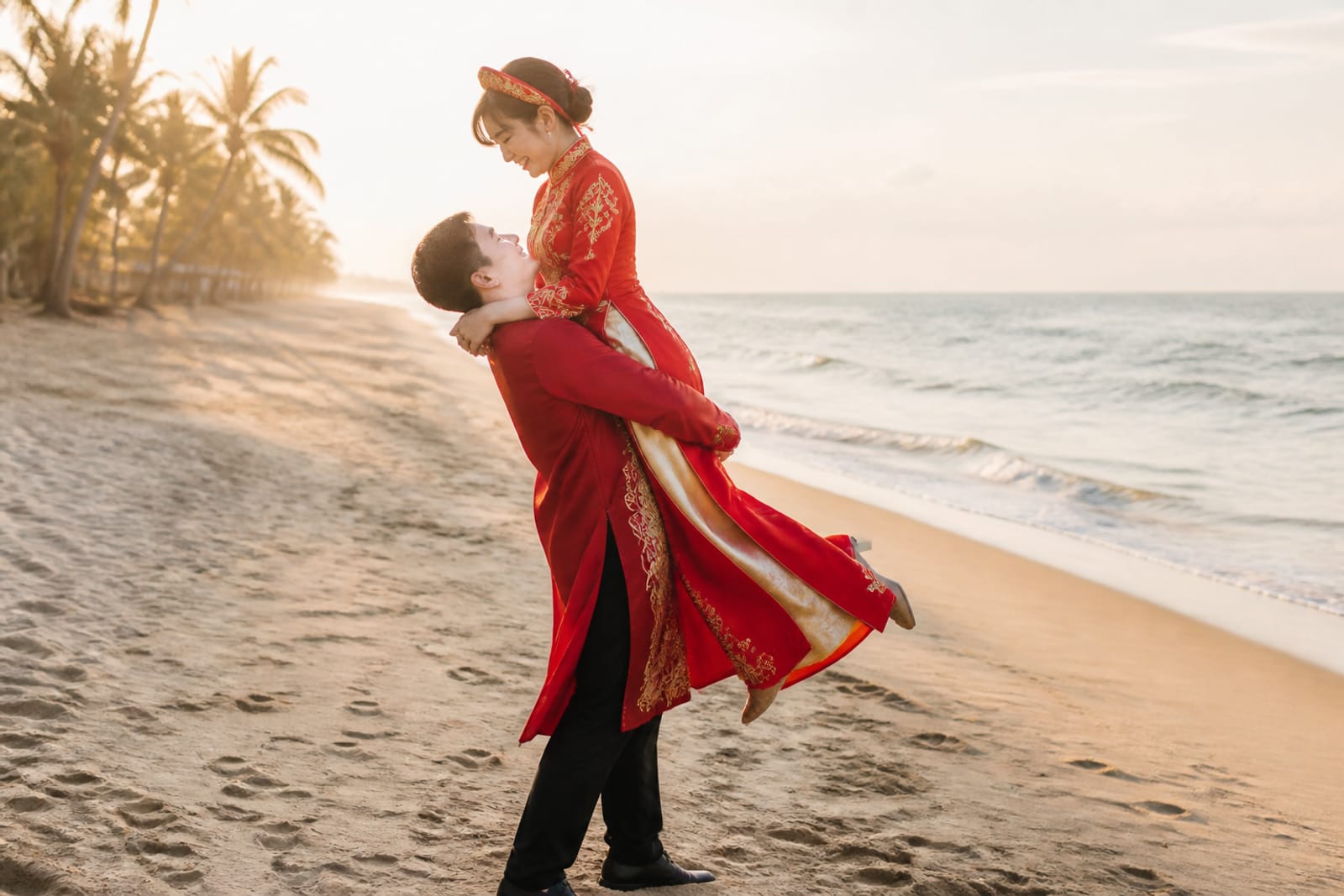
Ao dai wedding photos on Hoi An's yellow-painted streets work best February through April, when skies are clear and the Ancient Town feels less crowded at sunrise. The iconic French colonial architecture—shuttered windows, lantern-hung alleyways, weathered plaster—frames the ao dai's silk without competing. Sessions typically start before 6:30 a.m. when the entrance fee is not yet collected (confirm current rules locally), and the soft golden light flatters skin and fabric equally. Cáo Studio – Makeup & Photoshoot operates in Hoi An by appointment; the team travels from Hanoi or Ho Chi Minh City to shoot on your chosen dates. Avoid the rainy season (September–December, worst October–November) when flooding closes sections of the Ancient Town and humidity fogs lenses. Plan 2–3 hours for a full session including makeup, hair, and multiple locations within the old quarter. The main factor affecting cost is travel dates (peak Feb–Apr), number of outfits, and whether you book makeup and hair on location. 📸 Book on WhatsApp — ao dai photoshoot ---
Why Hoi An's Yellow Walls Suit Ao Dai Photography
The mustard and saffron tones of Hoi An's colonial buildings were originally a French design choice—now they're a signature Vietnamese visual heritage. An ao dai in jewel tones (emerald, sapphire, burgundy, blush) or classic white contrasts naturally against these warm walls without needing heavy editing. The texture of aged plaster and moss adds depth; lanterns overhead create pools of light. Unlike modern urban backdrops, the Ancient Town's narrow lanes force you to move slowly—there's no rush. This rhythm suits ao dai photography because the garment deserves time: hem placement, hand position, the drape of the overskirt. The walls stay consistent throughout the day, but light angle and crowd density shift dramatically. Sunrise delivers the best balance: soft side-lighting, nearly empty streets, and the alley-stone still cool underfoot. By 9 a.m., tour groups fill the main intersections. If you prefer a daytime aesthetic, plan for the shaded lane running east–west (Nguyen Hue Street interior) where natural shade and reflected light keep the ao dai visible without harsh shadows.
When to Book: Season and Light Timing
| Month Range | Best For | Light & Weather | Crowds & Access | Why It Works or Doesn't |
|---|---|---|---|---|
| Feb–Apr | Soft mornings; wedding & pre-wedding shoots | Clear skies; golden-hour light 5:30–6:30 a.m.; mild 20–28°C | Quietest before 7 a.m.; Ancient Town opens gradually | Ideal: dry, cool, minimal rain; walls photograph true color |
| May–Aug | Summer elopers; heat-tolerant couples | Dry but hot (often 35°C+); harsh midday glare; soft light after 5:30 p.m. | Morning crowds thin by 8 a.m.; afternoon quieter; shade essential | Works if you shoot dawn or dusk; midday requires reflectors & patience |
| Sep–Dec | Not recommended | Rainy, typhoon risk; humidity; Oct–Nov flooding in Ancient Town | Unpredictable; streets may close; slippery stone | Flooding worst Oct–Nov; damp air fogs lenses; ao dai soaks up moisture |
| Tet (late Jan–mid Feb) | Avoid | Variable; many shops closed | Landmark crowds; some services unavailable | Plan around Tet dates; confirm locally |
The takeaway: book February through April for the most predictable light, mild temperature, and access. If you're committed to May–August, plan a sunrise session (5:00–7:00 a.m.) before heat peaks and crowds arrive.
What to Wear Under an Ao Dai for Comfort and Photos
The ao dai's fitted bodice and flowing overskirt create an ethereal silhouette only if the undergarment sits right. Wear a fitted camisole or thin tank (white, nude, or matching your ao dai) under the bodice—it prevents the silk from clinging to your skin in the humidity of a Hoi An morning. Hoi An in February can be mild, but humidity is always present; antiperspirant and breathable base layers keep you confident through a 2–3 hour session. For the pants (the lower part of the ao dai), a slip or lightweight legging in matching color prevents the silk from riding up as you walk the uneven stone streets. Avoid shorts or thick undergarments that create visible lines. Shoes matter enormously on Hoi An's cobbles: flat sandals or silk-embroidered slippers keep your feet steady and photograph elegantly. If you're wearing a traditional ao dai rental from Cáo Studio's rental service, ask the team about sizing the undergarments during fitting—they'll advise on what works best for movement and heat. Bring a small cotton scarf (optional, traditional) and a fan; the team can keep it out of frame between shots.
Hoi An Ancient Town Access and Timing Rules
Entrance to the Hoi An Ancient Town requires a ticket during official operating hours (roughly 7:00 a.m. onward—check current times locally). To photograph at sunrise without delay, coordinate with Cáo Studio in advance: the team can advise whether pre-dawn access is possible or if you should arrive just as gates open. The stone alleyways can be slippery after rain, even weeks after bad weather, so wear shoes with grip. The most photogenic streets are Tran Phu (the main north–south lane), the lantern-hung western section, and the quieter east-running alleys near the old French church. Avoid the central market area (chaotic, narrow, not ideal for ao dai movement). Sunrise timing in February is roughly 6:00–6:30 a.m., shifting slightly earlier in late March and April. By 7:30 a.m., the first clusters of tourists begin; by 9:00 a.m., most prime spots are occupied. If you're shooting in May–August (higher heat), starting at 5:00 a.m. means you finish before peak temperature—essential for comfort in a silk garment.
Pre-Booking Checklist: What to Confirm with Cáo Studio
Before you book, clarify these specifics on WhatsApp:
- Date and time: Confirm sunrise access or arrival time, and exact weather plan (rain date, alternative indoor location).
- Hoi An travel: Ask whether the team is already in Hoi An on your dates or if they're traveling from Hanoi/Ho Chi Minh City—travel time affects session cost factors.
- Ao dai fit: If you're renting, bring exact measurements (or schedule a pre-fitting call). If bringing your own, confirm the team has experience with your fabric type and color in Hoi An's light.
- Makeup and hair: Specify whether you want the team to apply makeup at your hotel before arrival or on location. Outdoor makeup in morning light requires shaded space and electricity; this impacts timing.
- Outfit count: Decide how many ao dais or outfit changes you want. Each change adds time; factor this into your session length.
- Edited file count and delivery: Confirm how many fully edited images you'll receive and when—expectations should be written down before booking.
- Weather backup: Ask what happens if it rains or floods. Is there a rain date included, or do you reschedule?
- Walking distance and physical comfort: Mention if you have mobility concerns; the team can select shorter routes or quieter nearby spots.
Ask these on WhatsApp: 📸 Book on WhatsApp — ao dai photoshoot
Comparison: Hoi An vs. Hanoi vs. Ho Chi Minh City for Ao Dai Photography
You might also consider a session in Hanoi or Ho Chi Minh City. Here's how they differ:
| Location | Iconic Backdrop | Best Season | Light & Logistics | Crowd Factor | Suits Best For |
|---|---|---|---|---|---|
| Hoi An Ancient Town | Yellow colonial walls, lanterns, river reflection | Feb–Apr | Sunrise essential; stone streets require careful footing | Thinnest before 7 a.m.; fills by 9 a.m. | Timeless, heritage-focused couples; traditional ao dai vibes |
| Hanoi Old Quarter / Lake | Narrow tube houses, Hoan Kiem Lake, temple gardens | Feb–Apr, Oct–Nov | Multiple light directions; more urban chaos; lakeside calmer | Early morning works; daytime navigable | Couples seeking modern + tradition mix; faster session pace |
| Ho Chi Minh City parks & streets | War Remnants Museum, Saigon River, wide boulevards | Dec–Feb | Bright, flat light; less textured; requires creative framing | Daytime busy; sunset less crowded | Contemporary ao dai styles; modern wedding aesthetic |
Each location tells a different story. Hoi An whispers heritage and stillness; Hanoi hums with energy; Ho Chi Minh City buzzes. Choose based on the mood you want your ao dai to convey. For a pre-wedding photoshoot, Hoi An offers timelessness; for a couple photoshoot with an urban edge, Hanoi or Saigon might suit better.
After the Shoot: Edits, Prints, and Keepsakes
Once you've finished the session in Hoi An, Cáo Studio sends edited images according to your booking agreement (confirm exact count and delivery timeline on WhatsApp). Many couples order prints or a wedding photo album to commemorate the session. Photo prints and frames preserve the ao dai imagery in a physical form—especially meaningful if the session marked an engagement, anniversary, or pre-wedding milestone. Some choose to pair the ao dai photos with a wedding dress rental or Western gown for a second-day or complementary session. If you're planning a full wedding day, ask about wedding day photographer and wedding video services to extend coverage beyond the ao dai session.
---
What to Check Before You Book
- Season fit: Is February–April your travel window? If not, confirm the team can accommodate summer (heat management) or late year (flood risk).
- Hoi An travel logistics: How far is the team traveling, and does that affect availability or cost factors?
- Makeup on-site or at hotel: Outdoor morning makeup needs shade and power; hotel makeup adds time but guarantees comfort.
- Ao dai ownership: Rent or bring your own? Rentals are coordinated; personal ao dais require pre-approval photos sent on WhatsApp.
- Image delivery: How many edited files, in what format, and by when?
- Weather contingency: What's the plan if it rains or flooding closes the Ancient Town?
- Mobility and comfort: Hoi An's streets are uneven and narrow; mention any concerns.
---
FAQ
What's the best time of day to shoot ao dai photos in Hoi An?
Sunrise (5:30–6:30 a.m.) is ideal—soft golden light, almost empty streets, and cool temperature. By 9 a.m., the Ancient Town fills with tourists. Avoid midday harsh glare (11 a.m.–3 p.m.) unless shooting in shaded laneways.
Do I need to buy a ticket to the Ancient Town for a photoshoot?
Yes, entrance tickets are required during official hours (roughly 7:00 a.m. onward). Ask Cáo Studio on WhatsApp whether pre-dawn shooting before gates open is possible on your booking date—rules vary.
Can I wear my own ao dai, or should I rent one?
Either works. If you own one, send photos on WhatsApp so the team can advise on fit and light compatibility. Cáo Studio's rental service offers fitted, professionally maintained ao dais in many colors and sizes, with undergarment guidance included.
What if it rains or the weather is bad in Hoi An?
Confirm your rain-date or backup plan on WhatsApp before booking. October–November flooding can close sections of the Ancient Town—avoid those months. If you book February–April, rain is less likely but still possible; the team can suggest shaded indoor-outdoor spots or reschedule.
How long does a typical ao dai photoshoot session last?
Most sessions run 2–3 hours depending on outfit changes, makeup inclusion, and location variety. Sunrise sessions often finish by 8–9 a.m., leaving the rest of your day free to explore Hoi An.
Can I combine an ao dai shoot with other photography (couple, family, pre-wedding)?
Yes. Ask about couple photoshoots, family photoshoots, or pre-wedding packages on WhatsApp. Many couples book a full day with multiple session types and outfit changes.
What should I bring to the photoshoot?
Comfortable flat shoes (the streets are uneven), a small fan, antiperspirant, and water. If shooting makeup at your hotel, bring your preferred skincare. The team manages camera, reflectors, and styling accessories.
How are photos delivered, and can I order prints?
Edited images are delivered per your booking agreement—confirm count and timeline on WhatsApp. Yes, you can order prints and frames or a photo album afterward.
Is Hoi An the only option, or can I shoot ao dai in Hanoi or Ho Chi Minh City?
Cáo Studio shoots ao dai photos in Hanoi, Ho Chi Minh City, and Hoi An (by appointment). Each location has different aesthetics. Hanoi offers Old Quarter heritage and lake reflections; Ho Chi Minh City suits contemporary style. Ask which fits your vision.
What if I'm visiting solo or with family, not as a couple?
Solo vacation photoshoots and family photoshoots in ao dai are available. Mention your group size and vibe on WhatsApp—the team tailors poses and pacing to your comfort.
FAQ
What's the best time of day to shoot ao dai photos in Hoi An?
Sunrise (5:30–6:30 a.m.) is ideal—soft golden light, almost empty streets, and cool temperature. By 9 a.m., the Ancient Town fills with tourists. Avoid midday harsh glare (11 a.m.–3 p.m.) unless shooting in shaded laneways.
Do I need to buy a ticket to the Ancient Town for a photoshoot?
Yes, entrance tickets are required during official hours (roughly 7:00 a.m. onward). Ask Cáo Studio on WhatsApp whether pre-dawn shooting before gates open is possible on your booking date—rules vary.
Can I wear my own ao dai, or should I rent one?
Either works. If you own one, send photos on WhatsApp so the team can advise on fit and light compatibility. [Cáo Studio's rental service](/ao-dai-rental) offers fitted, professionally maintained ao dais in many colors and sizes, with undergarment guidance included.
What if it rains or the weather is bad in Hoi An?
Confirm your rain-date or backup plan on WhatsApp before booking. October–November flooding can close sections of the Ancient Town—avoid those months. If you book February–April, rain is less likely but still possible; the team can suggest shaded indoor-outdoor spots or reschedule.
How long does a typical ao dai photoshoot session last?
Most sessions run 2–3 hours depending on outfit changes, makeup inclusion, and location variety. Sunrise sessions often finish by 8–9 a.m., leaving the rest of your day free to explore Hoi An.
Can I combine an ao dai shoot with other photography (couple, family, pre-wedding)?
Yes. Ask about [couple photoshoots](/couple-photoshoot), [family photoshoots](/family-photoshoot), or [pre-wedding packages](/pre-wedding-photoshoot) on WhatsApp. Many couples book a full day with multiple session types and outfit changes.
What should I bring to the photoshoot?
Comfortable flat shoes (the streets are uneven), a small fan, antiperspirant, and water. If shooting makeup at your hotel, bring your preferred skincare. The team manages camera, reflectors, and styling accessories.
How are photos delivered, and can I order prints?
Edited images are delivered per your booking agreement—confirm count and timeline on WhatsApp. Yes, you can order [prints and frames](/photo-prints) or a [photo album](/photo-album) afterward.
Is Hoi An the only option, or can I shoot ao dai in Hanoi or Ho Chi Minh City?
Cáo Studio shoots ao dai photos in [Hanoi](/hanoi), [Ho Chi Minh City](/saigon), and Hoi An (by appointment). Each location has different aesthetics. Hanoi offers Old Quarter heritage and lake reflections; Ho Chi Minh City suits contemporary style. Ask which fits your vision.
What if I'm visiting solo or with family, not as a couple?
[Solo vacation photoshoots](/vacation-photoshoot) and [family photoshoots](/family-photoshoot) in ao dai are available. Mention your group size and vibe on WhatsApp—the team tailors poses and pacing to your comfort.
Ao dai, makeup, hair and a local photographer in Hanoi or Saigon — one WhatsApp message.