/pre-wedding-photoshoot
Elopement photos at Thanh Toan tile-roofed bridge: planning your shoot
Thanh Toan tile-roofed bridge, near Hoi An ancient town, is a timber-frame structure with a distinctive curved roof, built in the 17th century. Elopement shoots here work best in early morning (6–8 a.m.) or late afternoon (4–6 p.m.) when light is softest and foot traffic is lowest. A typical session runs 1.5–2 hours on foot; expect to wear an áo dài or light layers and wade through ankle-deep water for reflections. Cáo Studio – Makeup & Photoshoot can arrange makeup and hair at your Hoi An hotel before a shoot in the area—ask about travel dates on WhatsApp. Peak season is February to April; avoid September to November (rain and flood risk). Check local entry requirements and water conditions before booking, and bring a second outfit or accessory to vary the frame. ---
Why is Thanh Toan bridge the right choice for an elopement shoot?
The bridge sits inside an active farm village, framed by water, trees, and distant mountains—none of which you can recreate elsewhere in Hoi An. Early morning visitors are often solo photographers and locals; couples are rare. The wooden railing and tunnel-like roof create framing that other landmarks (Hoi An Ancient Town, the Japanese bridge) don't offer. Water reflections appear only when the paddies are flooded (Dec–May). If you want intimate, quiet, and "undiscovered," the trade-off is a 20-minute drive from the ancient town and no café or shelter if weather shifts.
---
What are the light and timing conditions?
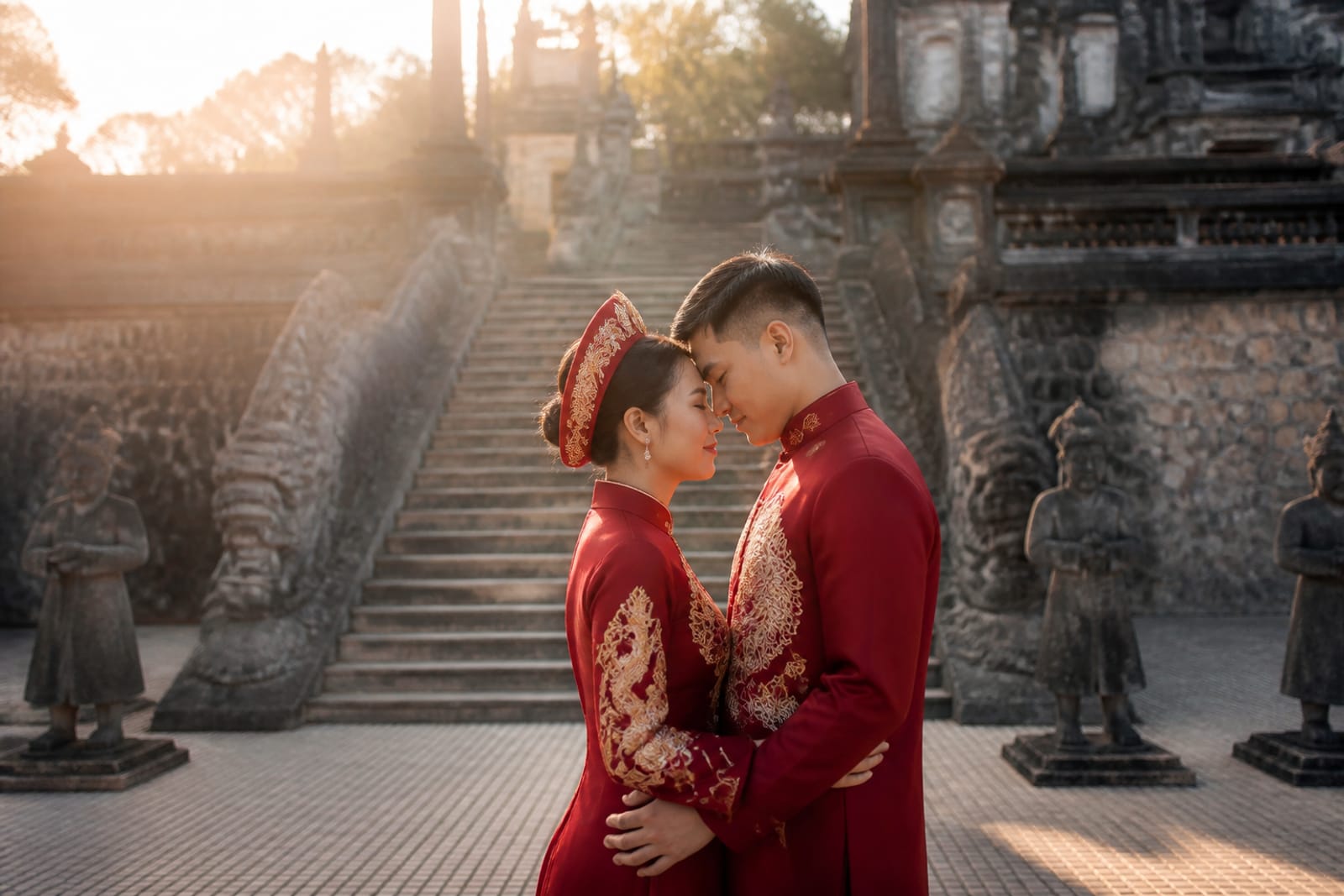
6–8 a.m.: golden light hits the bridge roof from the east, warming the timber. Sky is pale; mountains emerge. Paddies are often mist-covered. Best for soft, romantic frames. Crowds are near zero. Water is coldest; wear leggings under the áo dài.
10 a.m.–3 p.m.: harsh sun, heavy shadows under the roof. The bridge darkens; you lose detail. Farm activity peaks. Only shoot here if you want high-contrast, moody frames—rare for elopements.
4–6 p.m.: golden light from the west; longer shadows. Sky burns orange or grey (season-dependent). Paddies glow. School runs end; families arrive. It's busier, but still manageable. Ideal if you prefer afternoon light.
Night: the bridge is not lit; skip this.
Spend 30 minutes at the bridge; backdrops (water paths, entrance) add another 30 minutes. Sunrise requires a 5 a.m. start from your hotel.
---
How do season and weather affect your shoot?
| Season | Light & Sky | Water Level | Crowds & Access | What to Wear | Why It Works |
|---|---|---|---|---|---|
| Feb–Apr | Golden, soft, clear skies | Full (best reflections) | Low; morning is quietest | Áo dài, leggings, slip-ons | Dry, predictable; 2–3 hour sessions possible |
| May–Sep | Hot, hazy; afternoon storms | Low or muddy | Moderate–high | Light layers, sandals | Early morning only; sudden rain risk |
| Oct–Nov | Grey, humid; typhoon & flood risk | Overflowing or impassable | Unpredictable closures | Rain jacket, secured outfit | Avoid; flash floods common; bridge may close |
| Dec–Jan | Clear, cool mornings; frost possible | Medium–full | Very low before 8 a.m. | Áo dài, warm cardigan | Short window; book early; wading is cold |
Best months: February, March, April. Light is reliable, water is full, and rain is unlikely. Book 4–6 weeks ahead if you want dawn light and a calm day.
Worst months: October, November. Hoi An's central coast gets tropical downpours, and flash flooding closes rural bridges. Many photographers and studios suspend outdoor bookings.
---
Ao dai, accessories, and how to prepare on the day
Wear an áo dài if you're going for tradition; a light dress or suit works if you prefer simplicity. Under the áo dài: fitted leggings or slip shorts (white or black), not a full crinoline—you'll wade in water, and bulk traps mud. Bring slip-on sandals or water-friendly shoes; you'll remove them for barefoot frames.
Accessories: a bouquet (silk or fresh—check with your florist about 2-hour durability in humid air), a shawl, or a hat for sun protection. Avoid heavy jewelry; water splashes and ruin some metals. Bring a light scarf for wind control.
Makeup & hair: arrange this at your hotel 1–1.5 hours before. Strong makeup (waterproof foundation, powder) survives water spray and sweat. Hair in a low bun or braid resists humidity better than loose waves. If you're booking with Cáo Studio, the makeup & hair at your hotel team can advise on fade-resistant products for outdoor morning shoots.
What to bring: a dry towel, wet wipes, flip-flops for after, a phone charger, and water. The village has no shops; bring cash if you want to tip locals who might wander into frames.
---
Should you book a local guide or a traveling studio photographer?
Option A: Hire a local Hoi An photographer
- Pros: knows the bridge intimately, understands water tides and crowd times, quick turnaround (2–3 days for raw files).
- Cons: communication may need translation; portfolio style varies widely; you have no makeup/hair service; they may not offer album or print products.
- Cost factors: usually undercut by travel-based studios, but add a site fee or guide fee.
- Best for: couples who live in Vietnam, want ultra-local knowledge, or speak Vietnamese.
Option B: Book a traveling makeup & photoshoot studio (Cáo Studio model)
- Pros: professional makeup and hair are included; consistent editing style; they manage all logistics; you get a unified package.
- Cons: longer pre-booking consultation (WhatsApp-based); they travel to Hoi An by appointment (not every day); photo delivery takes 1–2 weeks.
- Cost factors: higher rate, but bundled with hair, makeup, and often a secondary outfit or location.
- Best for: international couples, elopers who want one vendor handling everything, and those who value consistent branding and album products.
Option C: Self-directed shoot + local hired model/assistant
- Pros: cheapest upfront; you control the timeline entirely.
- Cons: you handle your own camera/gear; no professional framing; water can damage equipment; you miss moments while operating the camera.
- Best for: photographers or couples with a second camera operator.
Comparison take-away: If you want makeup, hair, and a studio-level edit, go with Option B. If you're on a tight budget and happy with a simpler style, Option A works. Option C is risky for elopement-level quality.
---
What to check before you book an elopement session
- Photographer's backup plan for rain. Hoi An can see sudden downpours in May–September. Ask: do they reschedule, move indoors, or shoot in the rain? Who covers the extra cost?
- Water level and access. Contact a local Hoi An hotel concierge in advance to confirm the bridge is open and walkable on your date. October–November flooding can close it for weeks.
- Makeup & hair durability. If booking a studio, ask if they use waterproof, long-wear products. Morning shoots in humidity are tough on makeup.
- Outfit rental & tailoring. If you're renting an áo dài, order 3–4 weeks early and allow time for alterations. Wet fabric clings; confirm the tailor accounts for this. Cáo Studio's ao dai rental page has details on lead times.
- Edit timeline and album options. Some studios deliver raw files in 2 days; others take 3 weeks. Confirm the edit count and whether prints, albums, or video are included in your quote.
- Transportation and timing. The bridge is 20 minutes outside Hoi An town. If your makeup team travels with you, confirm departure time. Building in 30 minutes for traffic and a location scout means your session starts confidently, not rushed.
- Local guide or cultural notes. Thanh Toan village is still a working farm; ask your photographer if locals prefer you to avoid certain areas or times. Respect for the community extends the shoot's welcome.
---
Cáo Studio's elopement shoots in Hoi An
Cáo Studio – Makeup & Photoshoot travels to Hoi An by appointment to coordinate elopement and pre-wedding shoots. The team handles makeup and hair at your hotel, then moves on-site with you. For specific dates, availability, and what's included in an elopement package, message on WhatsApp. You can also explore vacation & solo photoshoots or couple shoots if you want a less formal session at the same location.
📸 Book on WhatsApp — pre-wedding photoshoot | 💄 Makeup & hair at your hotel | 🌸 See the lookbook
---
After the shoot: prints, albums, and keepsakes
Once you have edited files, print choices matter. Elopement frames—intimate, one-of-a-kind moments—often suit small-format prints (4×6, 5×7) in a wedding photo album or a series of framed prints. Some couples choose a single oversized print of the bridge reflection as wall art. Others order a hardcover album to gift family after the ceremony. Discuss these options with your photographer or studio during booking; some offer album design as part of the package, others charge separately.
If you're working with Cáo Studio, ask about photo album and print & frame options when you request your quote.
---
Related Cáo Studio services for your Hoi An trip
- Ao dai photoshoots: wear traditional dress at the bridge or elsewhere. See ao dai photoshoot.
- Makeup & hair at your hotel: essential for morning shoots. Book via makeup & hair.
- Hoi An location shoots: Cáo Studio coordinates shoots around Hoi An ancient town, surrounding villages, and nearby temples. Ask on WhatsApp about availability.
- Pre-wedding & elopement packages: full service with multiple outfits or locations. See pre-wedding photoshoot.
- Wedding photographer & videographer: if you're planning a larger ceremony, explore wedding photographer and wedding & video services.
For all inquiries, contact Cáo Studio on WhatsApp.
📸 Book on WhatsApp — pre-wedding photoshoot | 💄 Makeup & hair at your hotel | 🌸 See the lookbook
---
FAQ
What time should I arrive at the bridge for an early morning shoot?
Aim to be there by 6 a.m. to catch the first golden hour. Your makeup artist should finish at your hotel by 5 a.m., allowing 20–30 minutes travel. Sunrise at Thanh Toan is around 6:20–6:45 a.m. (depending on season); shooting from 6–8 a.m. captures the best light window.
Can we shoot in the afternoon instead of dawn?
Yes. Late afternoon (4–6 p.m.) offers golden light and fewer crowds than midday. The trade-off is slightly higher foot traffic as school ends and farm work winds down. Both windows are valid; choose based on your energy and commute comfort.
Is the water clean enough to wade in?
The water is agricultural runoff from rice paddies—not pristine, but not sewage. Most elopers are fine wading up to the ankle. If you have sensitive skin or concern, bring waterproof leggings or ask your photographer about barefoot alternatives (dry frames at the entrance, for instance).
What if it rains the morning of the shoot?
Light drizzle in February–April is rare but possible. Confirm your photographer's rain policy before booking: will they reschedule, shoot in soft rain (moody frames), or refund? October–November downpours are heavier and more likely; avoid this season entirely for reliability.
Can we rent an ao dai in Hoi An instead of bringing one?
Yes, many rental shops near the ancient town have ao dai in various styles. Order or reserve 2–3 weeks ahead and allow time for alterations. Confirm the rental includes pressing and delivery to your hotel on the shoot day, or pick it up the afternoon before to avoid stress.
How long does the full session take, including travel and makeup?
Makeup at your hotel takes 45–90 minutes. Travel to the bridge is 20–30 minutes each way. The actual shoot is 1.5–2 hours. Plan 4–5 hours total. If you're booking with Cáo Studio, the team coordinates timing; ask on WhatsApp for a detailed itinerary.
Will there be other tourists in the shot?
Early morning (before 8 a.m.) is nearly empty. By 9 a.m., casual visitors and school groups arrive. Late afternoon (after 5 p.m.) has fewer tourists but more locals. Your photographer can work around passersby or reschedule a frame if needed.
Do we need a permit or permission to shoot at Thanh Toan?
The bridge is in a public agricultural village, but it's an historical landmark. Professional photography may require a local permit or guide fee. Ask your photographer or studio to confirm current requirements; Cáo Studio will clarify this when you inquire on WhatsApp.
FAQ
What time should I arrive at the bridge for an early morning shoot?
Aim to be there by 6 a.m. to catch the first golden hour. Your makeup artist should finish at your hotel by 5 a.m., allowing 20–30 minutes travel. Sunrise at Thanh Toan is around 6:20–6:45 a.m. (depending on season); shooting from 6–8 a.m. captures the best light window.
Can we shoot in the afternoon instead of dawn?
Yes. Late afternoon (4–6 p.m.) offers golden light and fewer crowds than midday. The trade-off is slightly higher foot traffic as school ends and farm work winds down. Both windows are valid; choose based on your energy and commute comfort.
Is the water clean enough to wade in?
The water is agricultural runoff from rice paddies—not pristine, but not sewage. Most elopers are fine wading up to the ankle. If you have sensitive skin or concern, bring waterproof leggings or ask your photographer about barefoot alternatives (dry frames at the entrance, for instance).
What if it rains the morning of the shoot?
Light drizzle in February–April is rare but possible. Confirm your photographer's rain policy before booking: will they reschedule, shoot in soft rain (moody frames), or refund? October–November downpours are heavier and more likely; avoid this season entirely for reliability.
Can we rent an ao dai in Hoi An instead of bringing one?
Yes, many rental shops near the ancient town have ao dai in various styles. Order or reserve 2–3 weeks ahead and allow time for alterations. Confirm the rental includes pressing and delivery to your hotel on the shoot day, or pick it up the afternoon before to avoid stress.
How long does the full session take, including travel and makeup?
Makeup at your hotel takes 45–90 minutes. Travel to the bridge is 20–30 minutes each way. The actual shoot is 1.5–2 hours. Plan 4–5 hours total. If you're booking with Cáo Studio, the team coordinates timing; ask on WhatsApp for a detailed itinerary.
Will there be other tourists in the shot?
Early morning (before 8 a.m.) is nearly empty. By 9 a.m., casual visitors and school groups arrive. Late afternoon (after 5 p.m.) has fewer tourists but more locals. Your photographer can work around passersby or reschedule a frame if needed.
Do we need a permit or permission to shoot at Thanh Toan?
The bridge is in a public agricultural village, but it's an historical landmark. Professional photography may require a local permit or guide fee. Ask your photographer or studio to confirm current requirements; Cáo Studio will clarify this when you inquire on WhatsApp.
Ao dai, makeup, hair and a local photographer in Hanoi or Saigon — one WhatsApp message.