/pre-wedding-photoshoot
Elopement photos at Tra Que vegetable village: what to book
Elopement photos at Tra Que vegetable village means a sunrise or late-afternoon shoot in the village's herb fields, basket-making areas, and waterside paths, about 3km northeast of Hoi An Ancient Town. The setting works best February to April (dry, mild light, green fields) and August (dry, hot but sunrise-friendly); avoid September to November (rainy, flooded fields, typhoon risk). Cáo Studio – Makeup & Photoshoot coordinates shoots there by appointment, traveling from Hanoi or Ho Chi Minh City or working with the Hoi An team. A typical session runs 2–3 hours; you'll wear an ao dai, casual Vietnamese clothing, or Western elopement wear. Expect narrow paths, working farmers, muddy edges after rain, and 20–30 minutes walking. Book 2–3 weeks ahead and confirm the exact date and light time on WhatsApp—village access, entry rules, and guide availability shift seasonally. ---
Why Tra Que beats the Ancient Town for intimate elopement shots
Hoi An Ancient Town is beautiful but saturated: lanterns, cobblestones, and tourist crowds from 8 a.m. onwards. Tra Que offers space, greenery, and labor—the fields are alive with farmers harvesting basil, mint, and mustard greens. Light is soft and directional at dawn; the absence of storefronts means no reflections or neon. An elopement here feels like stealing a moment in a living village, not posing in a monument. The trade-off is logistical: no paved main street, no cafés, and you're walking between plots. For couples wanting intimacy over Instagram-famous backdrops, Tra Que works.
📸 Book on WhatsApp — ao dai photoshoot
What season and time of day matters most at Tra Que
| Timeframe | Light quality | Field state | Crowds | Best for | Why |
|---|---|---|---|---|---|
| Feb–Apr, 5:30–7 a.m. | Golden, soft, directional | Wet, green, actively planted | None | Ao dai, romantic pairs | Rice fields lush; farmers not yet working; no heat |
| Feb–Apr, 4–6 p.m. | Golden, warm, low angle | Dry, dusty, picked-over | Few | Casual wear, active poses | Later fields cleared; golden hour long |
| May–Aug, 5–6:30 a.m. | Bright, harsh, bleaches pastels | Dry or sparse | None | Light colors, sunglasses optional | Sunrise only; midday unbearable (35°C+) |
| May–Aug, 4–5:30 p.m. | Direct, contrasty, deep shadows | Bone dry, stubbled | Few | Layered lighting, strong silhouettes | Extreme heat; short golden window |
| Sep–Dec, any time | Often overcast or grey | Waterlogged, muddy, flooded (Oct–Nov worst) | Light | None recommended | Typhoon, rain, field access closed; ao dai heavy when wet |
Choosing between ao dai, Western dress, or casual wear
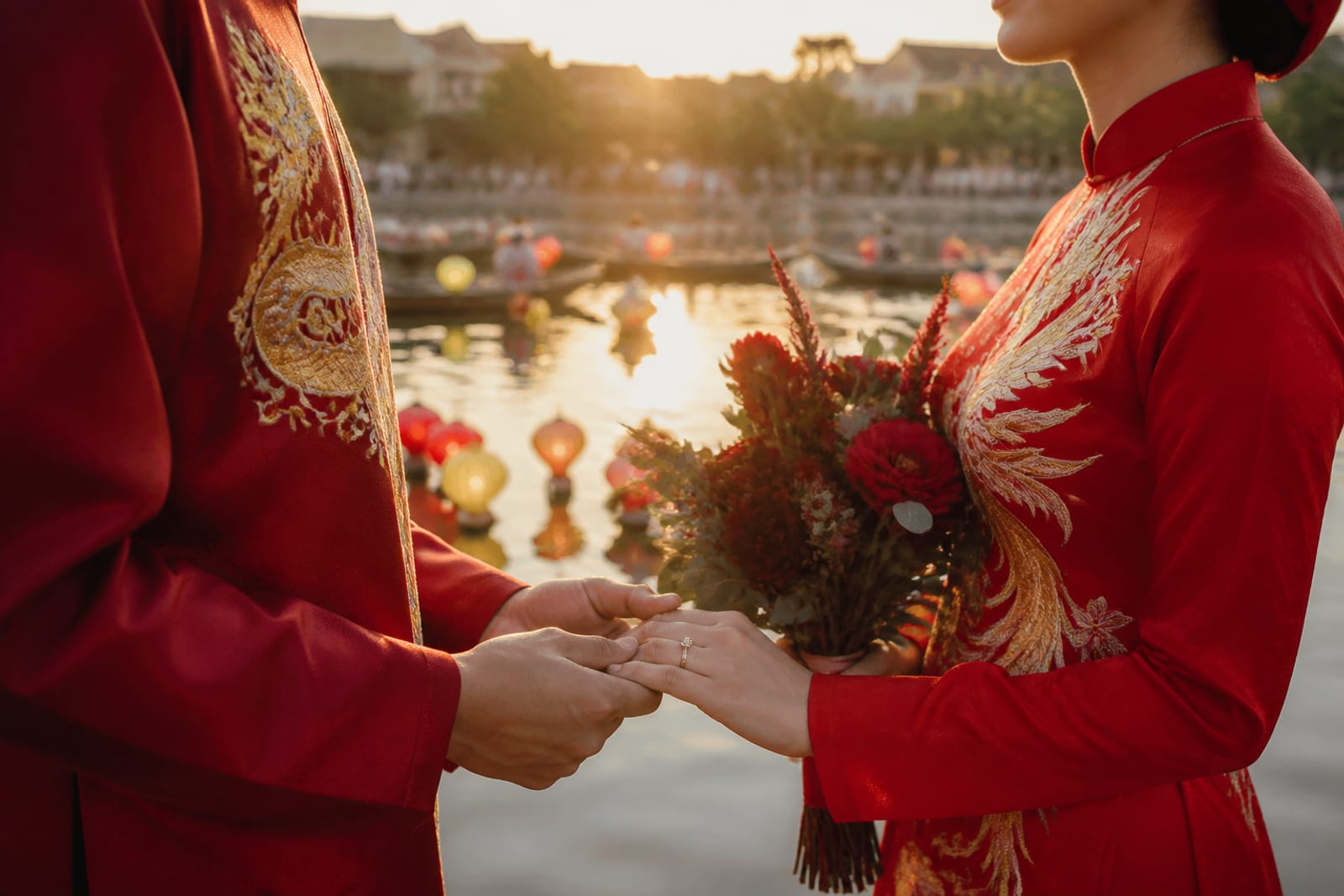
An ao dai is the most cohesive choice for Tra Que: it mirrors the village's cultural setting, drapes beautifully in morning light, and the traditional silhouette contrasts the raw agricultural backdrop. Silk and embroidery photograph as texture against earth tones. Rent one locally or book makeup and hair at your hotel before transport to the fields—wet hems and muddy hems are real. Western elopement dresses work if you're willing to carry the skirt up narrow paths and accept that cream or white dresses show dust and mud. Casual Vietnamese clothing (linen shirts, wide-leg trousers, vintage patterns) suits the daytime vibe and is practical. Avoid fully black or all-white: the fields demand color to separate you from the green and grey.
Logistics: how to book and what to confirm before shooting
Contact Cáo Studio on WhatsApp to discuss your elopement date and preferred season. The team will ask:
- Date and backup date: Tra Que access and weather are unpredictable; confirm 2–3 weeks ahead and have a rain date.
- Light time: sunrise (5:30–7 a.m.) or golden hour (4–6 p.m.). Sunrise is quieter and cooler; golden hour is warmer but farmers may still be working.
- Outfit and makeup: ao dai rental, Western dress, or casual wear. Makeup applied at hotel or on-site affects timing and heat resistance.
- Transport and parking: arrange your own taxi or ride-share to the village entrance (GPS: coordinates check locally; no studio parking at the fields). The team meets you on-site.
- Group size and guide: solo couple, family, or friends in frame. A village guide (arranged by the studio or hired locally) may be required to navigate paths and negotiate working-farmer spaces.
- Shot list and duration: confirm session length (often 2–3 hours) and priority shots (embrace in baskets, silhouettes at water's edge, harvest labor in frame).
A quote and booking confirmation are sent on WhatsApp; no cancellation or weather policy is standard—ask explicitly.
What goes wrong at Tra Que and how to avoid it
Flooded or inaccessible fields. Rain in the 48 hours before a shoot can muddy paths and close some plots. Confirm access on the morning of the shoot; a backup date is essential.
Ao dai hems dragging. Fields are uneven and wet. Tie the hem, wear flats, or ask for a shorter rental. A stylist from makeup & hair at your hotel can advise on length before you travel to the village.
Harsh midday light in May–August. Sunrise is non-negotiable in summer; golden hour is brief. Book the earliest slot and confirm the time with the photographer 24 hours ahead.
Tourists or other photographers. Tra Que is less touristy than the Ancient Town, but Instagram-famous. Sunrise minimizes crowds; an official booking with Cáo Studio often grants priority access or reserved timing.
Muddy or dusty clothes. Bring a change of shoes, a small towel, and accept that hems will be soiled. Laundry at your hotel can refresh fabrics before you leave Hoi An.
Misaligned expectations on edited files. Confirm on WhatsApp exactly how many edited photos you'll receive, when, and in what format. Don't assume unlimited or same-day delivery.
---
How Tra Que elopement photos compare to other Hoi An options
A pre-wedding photoshoot at Tra Que is slower, more naturalistic, and cheaper (in time and logistics) than a full-day session spanning the Ancient Town, countryside, and hotel. It suits couples who want a single, intimate location and a 2–3 hour commitment. If you're also shooting in the Ancient Town or at a luxury hotel, book Tra Que as an add-on—the morning light and farmland aesthetic complement lantern-and-merchant shots in a single day. If you're doing a couple photoshoot that includes portraiture, rehearsal comfort, and multiple outfit changes, Tra Que's practical constraints (paths, working farmers, limited shelter) may frustrate you—consider a hybrid: 1–2 hours at Tra Que, then 2–3 hours at a resort or temple grounds with more space.
For a vacation photoshoot that's less formal, Tra Que works even better—wear what you'd normally pack, skip the ao dai, and embrace the working village as your backdrop. The light and labor become the story, not your attire.
---
Before you book: questions to ask Cáo Studio
- What's included in the quoted session? Confirm photographer hours, edited photos, makeup/hair if desired, outfit rental or advisory, guide coordination, and file delivery timeline on WhatsApp.
- What if it rains? Ask about the rain policy, backup date flexibility, and refund or credit terms.
- Do I rent an ao dai through you or locally? Check whether rental, delivery, and styling are part of the package or separate.
- Are there entry fees or guide costs I pay separately? Confirm what's bundled in your quote.
- Can I see a sample of Tra Que photos from past couples? Request the lookbook or portfolio to see real light, field conditions, and outfit choices.
---
Related services to combine with your Tra Que elopement shoot
If you're eloping in Hoi An, consider pairing Tra Que with:
- Makeup & hair at your hotel: have your ao dai or elopement look prepared in comfort before transport to the fields, then touch-ups after the shoot.
- Ao dai rental: if you don't own or travel with an ao dai, rent locally to simplify luggage and fit issues.
- Photo prints and frames: after the shoot, order prints of your favorite Tra Que moments to take home or frame in your newlywed space.
For a full elopement experience, also explore wedding day photographer or wedding & pre-wedding video to document the entire day—not just the photoshoot.
---
FAQ
Is Tra Que village open to tourists for photography?
Yes. It's an active agricultural community, not a museum. Access is informal; a local guide or studio coordinator helps navigate paths and respect working farmers. Sunrise shoots are quietest.
Do I need a guide, or can I explore on my own?
A guide is recommended, especially if you're unfamiliar with Vietnamese agricultural etiquette. Cáo Studio coordinates guide access when you book on WhatsApp.
What if I'm not comfortable in an ao dai?
Wear casual Vietnamese linen, Western elopement clothing, or whatever you feel confident in. The village accommodates many styles; jeans and a simple shirt work fine.
How early must I wake for a sunrise shoot?
Plan to be on-site by 5:30–6 a.m. depending on season. This means hotel pickup around 5 a.m. and transport time from central Hoi An (15–20 minutes). Ask on WhatsApp for pickup logistics.
What if the fields are muddy or flooded when I arrive?
Confirm access with the team 24 hours before. If a plot is impassable, you'll move to drier sections or reschedule. This is why a backup date matters.
How many edited photos will I receive?
Ask on WhatsApp when you get your quote. Studio packages vary; confirm the exact number, editing style, and file format before booking.
Can I bring family or friends into the shots?
Yes. Tell Cáo Studio your group size and shot preferences. Larger groups need more time and wider paths—adjust session length and logistics accordingly.
Do you offer wedding video at Tra Que?
Yes. Inquire about video or cinematic add-ons on WhatsApp when booking your photoshoot.
FAQ
Is Tra Que village open to tourists for photography?
Yes. It's an active agricultural community, not a museum. Access is informal; a local guide or studio coordinator helps navigate paths and respect working farmers. Sunrise shoots are quietest.
Do I need a guide, or can I explore on my own?
A guide is recommended, especially if you're unfamiliar with Vietnamese agricultural etiquette. Cáo Studio coordinates guide access when you book on WhatsApp.
What if I'm not comfortable in an ao dai?
Wear casual Vietnamese linen, Western elopement clothing, or whatever you feel confident in. The village accommodates many styles; jeans and a simple shirt work fine.
How early must I wake for a sunrise shoot?
Plan to be on-site by 5:30–6 a.m. depending on season. This means hotel pickup around 5 a.m. and transport time from central Hoi An (15–20 minutes). Ask on WhatsApp for pickup logistics.
What if the fields are muddy or flooded when I arrive?
Confirm access with the team 24 hours before. If a plot is impassable, you'll move to drier sections or reschedule. This is why a backup date matters.
How many edited photos will I receive?
Ask on WhatsApp when you get your quote. Studio packages vary; confirm the exact number, editing style, and file format before booking.
Can I bring family or friends into the shots?
Yes. Tell Cáo Studio your group size and shot preferences. Larger groups need more time and wider paths—adjust session length and logistics accordingly.
Do you offer [wedding video](/wedding-video) at Tra Que?
Yes. Inquire about video or cinematic add-ons on WhatsApp when booking your photoshoot.
Ao dai, makeup, hair and a local photographer in Hanoi or Saigon — one WhatsApp message.